0%

Choosing a reliable supplier for Heavy Duty Double Deep Pallet Racking takes more than comparing prices. This storage system places pallets two positions deep, helping warehouses use floor space more efficiently. It can also make some pallets less accessible. That trade-off matters.

For buyers in China, supplier selection should begin with practical questions. What pallet dimensions and loads must the racks support? Which forklifts will serve the aisles? How will the layout handle daily picking patterns and future changes? A qualified supplier should explain its design assumptions, provide clear load information, and discuss installation and inspection support. Ask for drawings that show beam levels, aisle widths, and safety features. Small details count. A rack that looks suitable in a brochure may not fit a real operating routine.

This guide explores what to assess when comparing China-based suppliers, including manufacturing experience, customization, quality documentation, communication, and after-sales service. It also considers how to check whether a proposed system suits your warehouse, rather than simply accepting the densest layout. No supplier is automatically the right choice. Evidence matters, and so does asking uncomfortable questions about lead times, replacement parts, and project limitations. A careful comparison may take longer. That is not always a bad thing.
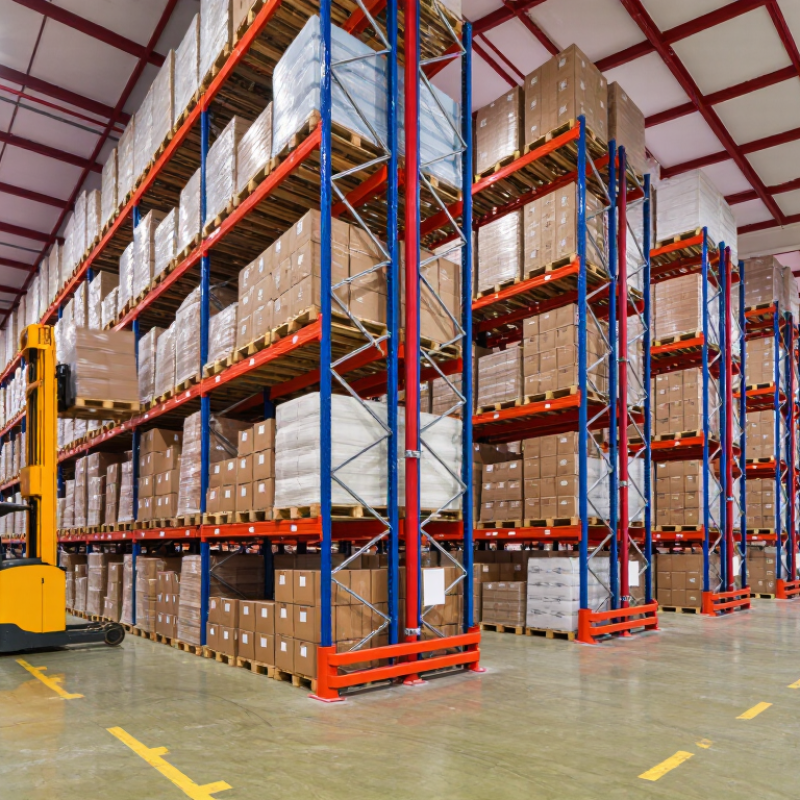
China Top Heavy Duty Double Deep Pallet Racking Suppliers?

What Is Heavy-Duty Double-Deep Pallet Racking?

Heavy-duty double-deep pallet racking is a high-density storage system designed to hold two pallets deep in each rack lane. Instead of placing every pallet directly beside an aisle, it positions one pallet behind another. This reduces the number of access aisles and can increase storage capacity within the same warehouse footprint. A reach truck with extended forks typically retrieves the rear pallet. It must move the front pallet first. That extra handling matters.

The system suits warehouses that store multiple pallets of the same product and can manage access in last-in, first-out order. Each lane needs compatible pallet dimensions, stable loads, and clear operating procedures. Upright frames, beams, floor anchors, and rack protection should be specified for the intended loads and handling equipment. Small details count. A few centimeters of clearance can affect safe truck movement. Compared with selective racking, double-deep layouts usually reduce direct access to individual pallets and may require specialized trucks. That trade-off is easy to underestimate. Before installation, measure aisle widths, pallet overhang, ceiling height, and floor condition, then review the layout with a qualified storage-system professional. Because rear pallets are less visible, routine checks and accurate inventory records are especially useful. The layout can be efficient, but only when daily operations fit its limits.

How Does Double-Deep Pallet Racking Store and Retrieve Loads?

Double-deep pallet racking places two pallet loads behind each other, reducing the number of aisles needed for storage. Each bay has front and rear positions. A compatible reach truck with extended or telescopic forks handles the rear pallet through the front opening. It takes practice.

To store a rear pallet, the operator places the front load first, then reaches past it to set the second load in position. Retrieval usually follows a last-in, first-out pattern: the front pallet must be removed before the rear one is accessible. This arrangement works best when each lane holds the same product or when stock rotation is planned around delivery dates. Mixed products in one lane can create avoidable handling.

Before choosing this system, check pallet dimensions, load weights, truck capabilities, and aisle clearances. These details affect safe placement and usable capacity. A small positioning error can make the rear pallet difficult to reach. Double-deep storage can increase density, but it reduces direct access to every pallet. That trade-off deserves a careful look. Regular checks of rack condition, pallet quality, and operator practices help keep storage and retrieval predictable.

What Are Its Main Applications and Limitations?

Double-deep pallet racking places two pallets behind each other, increasing storage density without extending the rack footprint. It can suit warehouses with substantial quantities of the same product, such as packaged food, building materials, or seasonal stock. Fewer aisles may leave more floor space for storage. A practical example is a distribution center holding several pallets of one carton size and batch.

It is not ideal for every inventory profile. The rear pallet is less accessible, so workers usually move the front pallet first. That can slow picking when each SKU has only a few pallets. A double-reach forklift is typically needed, and operators require clear sightlines and careful training. Costs matter.

Before installation, check pallet dimensions, load weights, aisle width, floor capacity, and required fire protection with qualified professionals. Stock rotation also needs attention: products with strict date controls may be harder to manage when access is restricted. The system can improve space use, but it may reduce direct access. A small pilot area can reveal awkward turning movements or replenishment delays before the full warehouse is changed.

Double-Deep Pallet Racking: Applications and Limitations

Storage depth per lane by rack configuration

Applications: Double-deep racks suit warehouses storing multiple pallets of the same SKU, where higher storage density is more important than direct access to every pallet. Limitations: The rear pallet is less accessible and typically requires a deep-reach truck; this can reduce selectivity and may require inventory rotation planning. The chart shows pallet positions deep, not capacity or performance.

How Should Buyers Evaluate Racking Suppliers in China?

China Top Heavy Duty Double Deep Pallet Racking Suppliers?

How Should Buyers Evaluate Racking Suppliers in China?

Choosing a racking supplier is not just a price comparison. For double-deep systems, check whether the supplier can explain how load capacity changes with beam length, pallet dimensions, and storage height. Ask for a layout based on your actual warehouse measurements, including aisle widths and forklift turning space. Small errors matter. A few centimeters can affect daily operations.

Request material specifications, production drawings, and written load data for the proposed configuration. Clarify how the supplier checks welds, dimensions, and surface coating during production. A useful quote should identify components, installation scope, delivery terms, and any assumptions about floor conditions. Ask for references or examples of comparable projects, then verify what the supplier handled directly. Good answers are specific. Vague promises are not enough.

Communication deserves a practical test. Send a drawing with one awkward corner or unusual pallet size and see how carefully the team responds. Do they flag risks, or simply agree? That distinction can reveal a lot. I would also ask about replacement parts and after-sales support before signing. Some buyers focus too heavily on the initial price; I have seen that approach overlook installation details. Still, supplier claims should be checked against documents and site requirements, not accepted on confidence alone.

China Top Heavy Duty Double Deep Pallet Racking Suppliers? - How Should Buyers Evaluate Racking Suppliers in China?

Use this supplier-evaluation framework to compare quotations and verify project suitability. Suggested weights are a buyer-side scoring model, not measured rankings of individual suppliers.

Evaluation dimension Suggested weight What buyers should verify Useful evidence or acceptance check
Structural design and load capacity 20% Confirm that beam, upright, frame, bracing, base plate, and connection designs match the stated pallet loads, bay configuration, rack height, and site conditions. Project-specific drawings and calculations; clearly stated load assumptions and limitations; design references such as EN 15512 or ANSI MH16.1 where applicable.
Double-deep system suitability 15% Check that the proposed layout accounts for two pallet positions in depth, access to rear pallets, inventory rotation, aisle dimensions, and the specified handling equipment. Warehouse layout showing aisle and rack dimensions; confirmation of compatible reach-truck or other handling equipment; operating assumptions for access and stock rotation.
Product quality and manufacturing control 15% Assess material traceability, fabrication consistency, dimensional control, weld inspection where relevant, and the supplier’s process for handling nonconforming parts. Material certificates where specified; inspection records; documented quality procedures; sample or pre-shipment inspection plan. A quality-system certificate alone does not prove product capacity.
Standards, safety, and documentation 12% Verify which design and operational standards apply in the destination market, and whether the supplier provides complete installation, inspection, and safe-use information. Applicable design documentation; installation and inspection instructions; rack load notices; references such as EN 15629, EN 15635, or local requirements as applicable.
Material and corrosion protection 10% Match steel specifications and coating system to the indoor or outdoor environment, humidity, cleaning regime, and any cold-storage conditions. Material and coating specifications; stated coating process and inspection method; written confirmation that the selected finish suits the operating environment.
Customization and engineering support 8% Evaluate the ability to work from site measurements, pallet dimensions, floor conditions, and handling-equipment requirements without relying on unverified standard layouts. Revision-controlled drawings; documented design review; clear process for approving changes before production.
Delivery, packaging, and export readiness 7% Compare production lead-time assumptions, packing protection, shipment documentation, and responsibility for freight, insurance, customs, and unloading. Written production and shipping schedule; packing list; agreed trade terms; confirmation of document requirements for the destination country.
Installation and after-sales support 7% Clarify who is responsible for installation, handover, replacement components, technical queries, and response times after delivery. Written scope of service; warranty terms; spare-parts process; installation checklist and handover records.
Total cost and quotation clarity 6% Compare equivalent specifications rather than headline price alone. Check what is included and identify exclusions, optional items, and potential site costs. Itemized quotation covering rack components, accessories, coating, packing, freight basis, installation, taxes, and payment milestones as applicable.
Communication and change control 5% Check whether technical questions receive clear answers and whether drawing, specification, and delivery changes are recorded and approved. Named project contact; written records of approvals; consistent document versions; agreed process for handling changes.
Total suggested weighting 100% Score each supplier against the same project specification and evidence requirements before comparing final results.

Buyer note: Rack capacity depends on the complete design and actual installation conditions. Have the proposed system reviewed against the project’s applicable local codes and site requirements; do not treat a generic load figure as approval for a specific installation.

What Quality and Safety Standards Should Suppliers Meet?

When comparing China’s top heavy-duty double-deep pallet racking suppliers, ask for documented quality controls, not just polished product photos. A reliable supplier should provide drawings, steel specifications, weld inspection records, and clearly stated load ratings for each beam level and bay. Capacity depends on the actual layout, pallet dimensions, and floor conditions. One rating does not fit every warehouse.

Check whether the supplier can demonstrate compliance with relevant rack design and safety standards, such as EN 15512 and EN 15635, where applicable to your project. Request test reports from qualified independent laboratories and confirm that the supplied components match the tested design. Look closely at upright frames, beam connectors, locking pins, and base plates. Small defects matter. Installation guidance should cover anchoring, clearances, and protection from forklift impact. Double-deep systems also need suitable handling equipment and safe access for inspection.

Tips: Request a sample inspection checklist and a project-specific layout before ordering. Verify that labels show load limits, and ask how damaged parts should be reported and replaced. Keep inspection records after installation. A certificate alone is not enough; paperwork can be incomplete, so compare it with the delivered components.

FAQS

What is heavy-duty double-deep pallet racking?

It stores two pallets behind each other in one rack lane. This layout reduces aisle space and increases storage density. A reach truck with extended forks usually accesses the rear pallet. The front pallet must move first.

Which warehouses benefit most from double-deep racking?

It suits warehouses storing many pallets of identical products. Packaged food, building materials, and seasonal stock may fit well. One carton size is easier to manage. Mixed inventory can create delays.

What is the main limitation of this storage system?

Direct pallet access is reduced. Workers usually handle the front pallet before reaching the rear one. Picking may become slower for products with only a few pallets. The trade-off is easy to underestimate.

What forklift does double-deep racking usually require?

A double-reach forklift is typically needed. The truck requires enough aisle width and turning space. Operators need clear sightlines and careful training. Small errors can matter.

What measurements should buyers check before installation?

Measure pallet length, width, weight, and overhang. Check aisle width, ceiling height, floor capacity, and turning space. Also review anchors, rack protection, and fire-protection requirements. A few centimeters may change safe movement.

How can buyers evaluate a storage-system supplier?

Ask for layout drawings based on actual warehouse measurements. Request material specifications, production drawings, and written load data. The supplier should explain capacity changes from beam length, pallet size, and rack height. Vague promises are not enough.

What production and service details should buyers confirm?

Confirm how welds, dimensions, and surface coating are inspected. Clarify installation scope, delivery terms, and floor-condition assumptions. Ask about replacement parts and after-sales support. The cheapest quote may omit important work.

Should a warehouse test the layout before full installation?

A small pilot area can reveal awkward turns and replenishment delays. Test one unusual pallet size or difficult corner. Watch actual truck movements. I would not trust drawings alone.

Conclusion

Heavy Duty Double Deep Pallet Racking is a high-density storage system that places pallets two positions deep on each side of an aisle. It can increase warehouse capacity and make better use of floor space, but retrieving the rear pallet generally requires moving the one in front. This arrangement is best suited to warehouses storing multiple pallets of the same product, while operations needing frequent access to every pallet may prefer a more selective layout.

When choosing a supplier in China, buyers should compare structural design, load-capacity calculations, material quality, manufacturing controls, installation support, and after-sales service. Ask for clear specifications that match the facility’s floor conditions, pallet dimensions, handling equipment, and intended loads. Suppliers should also provide suitable documentation and follow recognized quality and safety requirements, including applicable local standards. Careful evaluation helps buyers balance storage density, accessibility, durability, and safe warehouse operation.

Oliver

Oliver

Oliver is a professional marketing specialist dedicated to helping businesses understand how thoughtful strategy, reliable products, and clear communication can create lasting value. With extensive knowledge of the company’s solutions, he combines market insight with practical product expertise to......