
Accumulation Engineering
Certified Steel Structures. Engineered for Seismic and Dynamic Resistance.
Designed in full compliance with EN 15512 and RMI standards to ensure maximum structural integrity and operator safety.
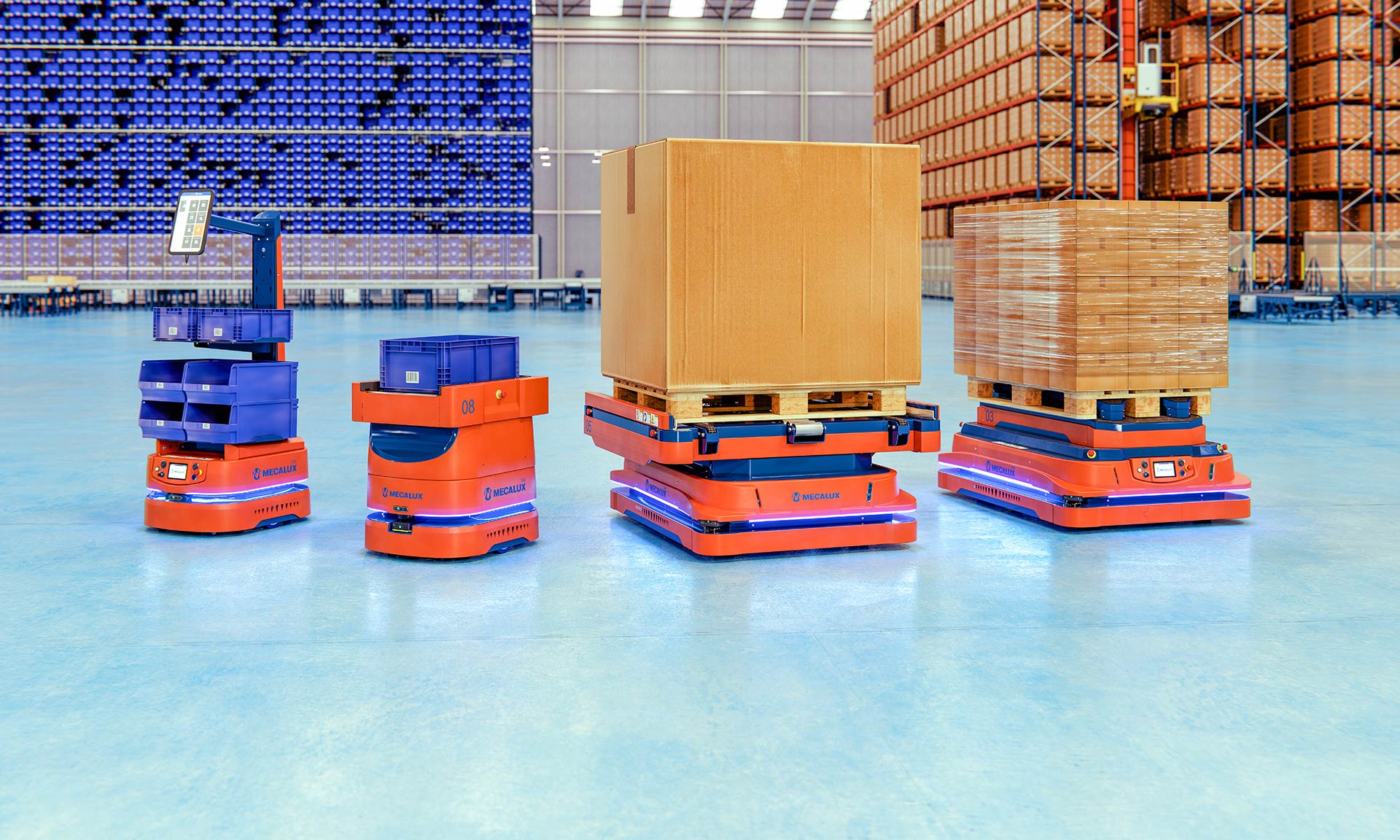
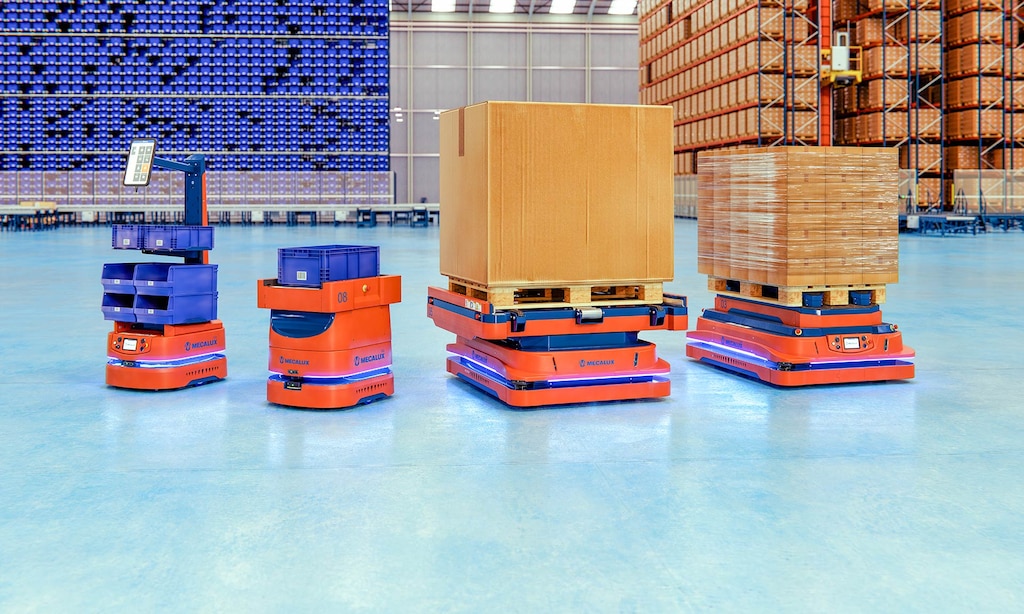
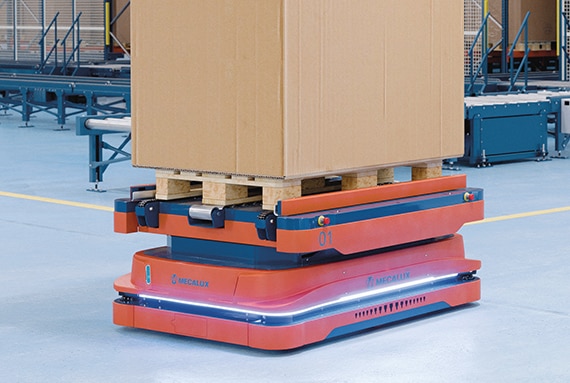
Intralogistics Evolution
From Manual Forklift Lanes to Semi-Automated High-Density Execution
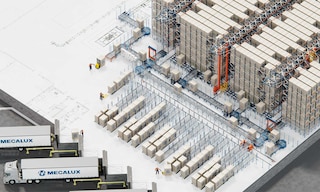
Seamless transition paths connecting Drive-In channels with automated shuttles, AMRs, and real-time WMS telemetry.
MECALUX RACKING: Engineered Excellence in Drive-In Racking Systems
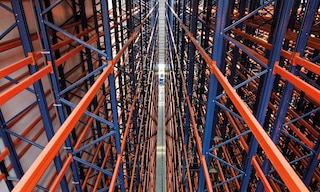
As global supply chains face escalating industrial real estate lease prices and intense cold chain energy inflation, the Drive-In Racking System remains the standard for maximizing pallet accumulation per square meter. Operating on continuous pallet support rails rather than transverse horizontal load beams, this system enables counterbalanced or reach forklifts to drive directly into deep storage bays, eliminating individual working corridors.
Backed by 60 years of structural calculations, 12 cutting-edge production facilities, and specialized R&D engineering divisions, MECALUX RACKING delivers high-density accumulation racking tailored for heavy pallets, low-SKU inventory profiles, and temperature-controlled environments worldwide.
85% Floor Space Cube UtilizationReplaces intermediate forklift aisles with unified accumulation tunnels up to 10+ pallets deep.
Engineered Cold Room EfficiencyDramatically decreases the refrigerated cubic volume required per stored pallet, reducing utility expenses.
Heavy-Duty Impact ShieldingIncorporates heavy floor-anchored guide rails, reinforced upright boots, and rigid top tie bracing.
Engineered Recommendations
Selecting the Ideal High-Density Configuration for Your Facility
Warehouse procurement managers must align rack design with rotational inventory turnover rules, SKU concentration, mast clearances, and building envelope limits.
Classic Drive-In Racking (LIFO)
The premier density solution for large volumes of uniform products with non-critical shelf-life constraints, manufactured with heavy cold-formed omega steel uprights.
- Last-In, First-Out (LIFO) stock management across unified lanes
- Single front operating aisle maximizes storage wall-to-wall
- Engineered galvanized pallet rails with integrated entry funnels
Drive-Through Racking (FIFO)
Configured with dual operating corridors allowing pallets to be loaded from the rear loading aisle and dispatched from the front picking aisle for strict batch rotation.
- First-In, First-Out (FIFO) turnover ideal for batch expiration tracking
- Separation of internal replenishment flows and outbound order staging
- Overhead structural longitudinal portal bracing for superior stability
Cold Storage & Deep-Freeze Drive-In Racks
Optimized specifically for sub-zero chambers down to -30°C (-22°F), featuring specialized ductile low-temperature structural steels and thermal convection channel planning.
- Low-temperature compliant high-yield certified European steels
- Minimizes refrigerated empty space, generating rapid thermal power ROI
- Fully compatible with heated-cab narrow reach trucks and wire-guided masts
WMS-Orchestrated Accumulation System
Combines heavy accumulation structural racking with digital lot tracking, pallet channel slotting logic, and operator route optimization through MECALUX RACKING Easy WMS.
- Eliminates the "honeycombing" effect through intelligent lane fill algorithms
- Prevents pallet trapping through real-time turnover visualization
- Barcode and RFID tracking mounted on tunnel entry uprights
Technical Benchmarking
Comparative Analysis: High-Density Accumulation Systems
Procuring the optimal industrial storage framework requires calculating floor area efficiency, capital cost per pallet position, structural clearance, and forklift travel mechanics.
| Storage Technology | Footprint Efficiency | Selectivity & Rotation | Relative CapEx / Pallet | Throughput Speed | Optimal Operation Profile |
|---|---|---|---|---|---|
| Drive-In Racking System | Up to 85% | LIFO / Channel-based | Low to Moderate ($) | Moderate (forklift drives into bays) | Homogeneous goods, cold rooms, raw materials, seasonal surges |
| Drive-Through Racking | Up to 75% | FIFO / Channel-based | Moderate ($$) | Moderate (separate load/unload corridors) | Perishables, food packaging, date-sensitive batch inventory |
| Pallet Shuttle System | Up to 90% | FIFO or LIFO | Moderate to High ($$$) | Fast (automated shuttle travels in lane) | High-throughput distribution hubs, ultra-deep freezing facilities |
| Push-Back Racking | Up to 70% | LIFO (gravity nested carts) | Moderate ($$) | Fast (forklift stays in main aisle) | Medium-turnover items with 2 to 6 pallets per SKU |
| Pallet Flow (Live Storage) | Up to 85% | FIFO (gravity dynamic rollers) | High ($$$$) | Very Fast (continuous gravity feed) | Fast-moving consumer goods (FMCG), buffer lanes for shipping |
| Selective Pallet Racking | 40% – 50% | 100% Direct Selectivity | Baseline ($) | Fast direct access | High SKU count, varied load dimensions, fast-picking operations |
Structural Note: System metrics are derived from MECALUX RACKING engineering testing in accordance with EN 15512 and FEM intralogistics standards. Final installation performance depends on clear warehouse heights, concrete slab strength, seismic zones, and forklift mast configurations.
Market Intelligence
Future Procurement & Technological Trends in Drive-In Storage
How evolving industrial automation, smart sensor diagnostics, cold storage cost spikes, and modular upgrades are transforming high-density racking investments.
1. Retrofit-Ready Modular Structures
Global procurement directors are increasingly demanding high-density racking that protects against technology lock-in. MECALUX RACKING designs Drive-In steel uprights with universal modular perforations. This allows operations initially configured for manual forklift drive-in channels to seamlessly transition into motorized Pallet Shuttle tracks or automated stacker crane aisles with zero structural welding and minimal facility downtime.
2. Cold Chain Decarbonization Mandates
With power and refrigeration representing over 65% of cold storage operational costs, warehouse owners are maximizing storage density to reduce thermal loss. Accumulation racking reduces the cubic volume per pallet position by 35% compared to selective layouts, directly reducing HVAC electrical consumption and aiding corporate ESG compliance targets.
3. Structural Health Sensors & Smart Diagnostics
Because forklifts enter directly into the racking superstructure, structural impact detection is crucial for risk management. Emerging intralogistics procurement specifications now integrate IoT impact monitors, wireless tilt sensors, and LiDAR laser scanners at channel entry columns to notify plant managers of mast impacts, deflection thresholds, or displaced load rails in real time.
4. High-Strength Ultra-Lightweight Steels
Finite element analysis (FEA) has enabled the production of cold-rolled upright sections from micro-alloyed, high-yield-strength steels. These offer increased impact resistance and higher load capacities while reducing total steel weight. This lowers raw material costs, freight shipping carbon footprints, and floor slab point-load stresses during seismic events.
Global Engineering Leadership in Turnkey Industrial Storage
MECALUX RACKING combines advanced mechanical steel structural engineering with industry-leading warehouse software. Recognized in global technology matrices including the Gartner® Magic Quadrant™ for WMS, our certified engineers calculate, manufacture, and assemble industrial storage systems designed for safety, operational throughput, and high return on investment.
Inquire Now Enterprise Validation
Field Performance Across Global Supply Chains
Discover how leading manufacturers and distributors leverage high-density accumulation racking and integrated WMS technology to maximize operational volume.
Würth · Spain
Turnkey High-Density Clad-Rack & Pallet Storage System
MECALUX RACKING delivered a complete turnkey storage facility in La Rioja, Spain, engineered to manage thousands of heavy pallet loads of assembly fasteners, metal hardware, and construction tools with maximum cube utilization.
IndustryIndustrial Hardware & Assembly
LocationLa Rioja, Spain
Storage TechnologyHigh-Density Heavy Pallet System
Engineering ScopeStructural Design, Manufacturing & Integration
Renault · Spain
Optimized High-Density Logistics for Automotive Manufacturing
In its Seville automotive gearbox plant, Renault deployed engineered high-density pallet storage coordinated through Easy WMS to maintain continuous, error-free supply to high-speed automotive assembly lines.
IndustryAutomotive Manufacturing
LocationSeville, Spain
Operational GoalZero-Line Stoppage & High-Density Storage
Software InterfaceEasy WMS Live Inventory Tracking
PepsiCo · Poland
Automated High-Density Pallet Warehouse Execution
At its flagship facility in Poland, food and beverage giant PepsiCo implemented a high-density accumulation storage system, providing extreme pallet capacity in advance of seasonal consumer beverage demand surges.
IndustryFood & Beverage FMCG
LocationŚroda Śląska, Poland
Core HighlightEco-Efficient High-Density Pallet Buffer
Handling TechnologyContinuous High-Speed Pallet Movement
Manufacturing Power
MECALUX RACKING: World-Class Intralogistics Scale
0yrs
of proven steel engineering excellence
0+
countries with commercial sales & engineering presence
0
advanced production & roll-forming facilities
0
specialized intralogistics R&D engineering hubs
Enterprise Advantage
Why Global Supply Chains Trust MECALUX RACKING
Structural Calculation, Direct Production, and Complete Project Assurance
Purchasing a Drive-In Racking System requires rigorous structural engineering. Because lift trucks enter directly inside the rack channels, uprights must be calculated to resist potential equipment impacts, dynamic sway oscillations, and asymmetric load conditions without frame fatigue.
MECALUX RACKING conducts customized finite element simulations for every project, calculating steel cross-sections, anchor bolt depths, and seismic resistance according to regional European (EN 15512) and American (RMI) standards. With complete vertical integration across 12 manufacturing centres, we provide certified structural steel traceability, reliable delivery timelines, and full lifecycle inspection compliance.
Procurement FAQ
Critical Questions Global Buyers Ask AI About Drive-In Racking
Straightforward engineering facts and procurement insights to guide operations, safety, and capital expenditure decisions.
What is the functional difference between Drive-In and Drive-Through racking?
The primary distinction lies in accessibility and inventory management logic:
- Drive-In Racking: Features a single access aisle for both loading and retrieving pallets. It operates strictly under the Last-In, First-Out (LIFO) inventory rotation protocol, making it ideal for non-perishable goods, seasonal products, and low-SKU inventory.
- Drive-Through Racking: Offers dual access aisles on both the front and rear sides. Products are loaded from the rear corridor and unloaded from the front, establishing a First-In, First-Out (FIFO) turnover model. This requires additional aisle space but is well-suited for goods with expiration dates and strict batch tracking.
How much floor space does a Drive-In Racking System save compared to standard Selective racking?
Selective pallet racking typically reserves 50% to 60% of total warehouse floor footprint for forklift travel aisles. By contrast, a Drive-In Racking System consolidates storage lanes into high-density blocks, saving up to 60% to 85% of aisle floor space. This enables warehouses to effectively double their pallet storage capacity within the same square footage.
What are the critical forklift clearance and operator safety requirements?
Because forklifts enter directly between the rack uprights, safety configurations are paramount:
- Clearances: A minimum clearance of 75 mm to 100 mm (3 to 4 inches) must be maintained between the outer edge of the forklift chassis/overhead guard and the structural uprights.
- Floor Guide Rails: MECALUX RACKING recommends installing continuous floor-anchored steel guide rails (structural angle or heavy box section) inside each lane to keep the forklift centered and prevent collision with uprights.
- Protection: Upright base column protectors with high-visibility powder coating must be installed at all entry portals, backed by top portal bracing to resist torsion and dynamic sway.
What is the "honeycombing" effect, and how can warehouse software resolve it?
Honeycombing refers to lost storage capacity that occurs when deep lanes cannot be completely filled because only one SKU is allocated per lane. When a lane is partially emptied, the remaining positions cannot accept different SKUs without blocking access. MECALUX RACKING resolves this challenge by integrating Easy WMS, which employs algorithmic slotting logic, lot consolidation, and dynamic channel reassignment to achieve lane occupancy rates above 90%.
Why is Drive-In racking widely installed in cold storage and freezer warehouses?
Cold storage facilities incur substantial electrical expenses per cubic meter of conditioned air. By eliminating unproductive open corridors and maximizing storage density, Drive-In systems minimize the volume of air requiring active refrigeration per stored pallet. This significantly lowers refrigeration energy costs per unit load, delivering a strong return on investment for food distribution and pharmaceutical cold chains.
Can a Drive-In racking structure be converted to a Pallet Shuttle system later?
Yes. MECALUX RACKING designs upright upright frames with standardized hole matrices. If pallet throughput demands increase in future years, warehouses can replace the manual pallet support rails with motorized Pallet Shuttle running rails. This conversion eliminates forklift travel inside the bays, improves loading cycle times, reduces impact hazards, and transitions the installation to semi-automation without replacing the primary steel structure.
Engineering Insights
Technical Papers & High-Density Storage Insights
Floor Rail Guidance Systems: Minimizing Mast Deflection and Frame Damage
Algorithmic Channel Slotting: How Smart Software Keeps Drive-In Racks at 95% Capacity
Structural Steel Selection in Sub-Zero Freezers: Ductility and Impact Resistance
Global Reach
Direct Support for International Storage Projects
MECALUX RACKING operates through direct engineering branches in 23 countries with commercial installations spanning more than 70 nations worldwide. Our in-house technical teams calculate, deliver, inspect, and certify storage racking to regional building and seismic codes.
- EuropeSpain, Germany, France, Italy, UK, Poland, Portugal
- North AmericaUnited States, Canada, Mexico
- Latin AmericaBrazil, Argentina, Chile, Colombia, Uruguay
- Eurasia & Middle EastTurkey and Central & Eastern Europe
Enterprise Trust
Selected by Global Industry Leaders
Automotive OEMs, food processing conglomerates, and high-volume cold chain operators depend on MECALUX RACKING systems.




MECALUX RACKING HeadquartersSilici, 1 – 08940 Cornellà de Llobregat, Spain
Project Consultation
Request a Structural Layout & Feasibility Study
Our engineering team will assess your warehouse dimensions, pallet specifications, floor slab characteristics, and daily movement rates to design an optimal, cost-effective Drive-In Racking configuration.
01
Supply Project Data
Share building drawings, clear heights, pallet load weights, and SKU volumes.
02
Structural Engineering Design
Our specialists calculate steel upright capacities and produce custom 2D/3D CAD layouts.
03
Manufacturing & Commissioning
Direct production in 12 facilities, certified installation, and lifecycle maintenance support.