Featured Four-Way Shuttle & Pallet Systems
Factory-direct OEM/ODM modular pallet racking, radio shuttles, vertical elevators, and logistics pallets verified under strict ISO and CE regulatory compliance.
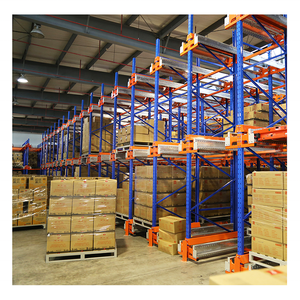
Customizable Heavy Duty Steel Pallet Shuttle Rack for Warehouse Storage Cargo OEM/ODM
Ultra-high tensile Q355B cold-formed structural steel framework configured for seamless integration with multi-depth radio shuttles.
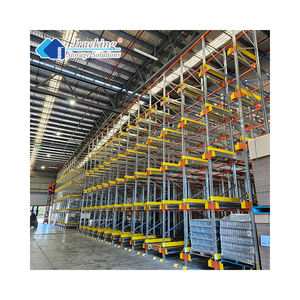
Jracking Four-Way Radio Shuttle Racking - Maximize Efficiency Automated System
Autonomous bi-directional lane changing and cross-aisle travel delivering uninhibited 3D spatial pallet mobility under heavy load profiles.
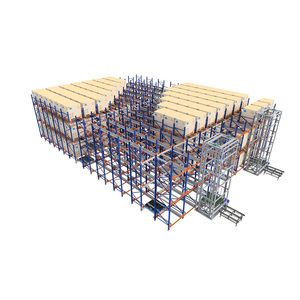
Heavy Duty Electric 4 Way Direction Shuttle Pallet Rack Warehouse System with Elevator
Synchronized high-speed vertical reciprocating lift elevators paired with horizontal shuttles for multi-tier continuous warehouse operations.
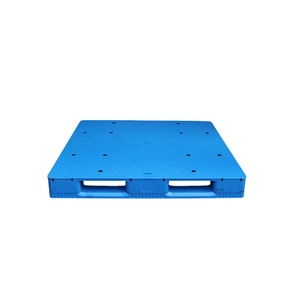
NEXARA PP Recycled Material Mould Racking 1414 1400*1400*160mm Flat Surface Logistics Plastic Pallet
Reinforced 3-runner Euro 4-way heavy mould pallet engineered for zero deflection during automated shuttle handling and high-bay racking loads.
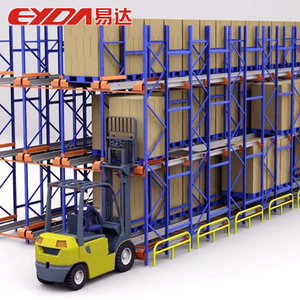
Warehouse Stacking Racks Shelves Radio Shuttle Racking System 2 Way / 4 Way
Epoxy powder-coated corrosion-resistant pallet racks designed for harsh ambient cold storage (-30°C) and demanding FMCG environments.
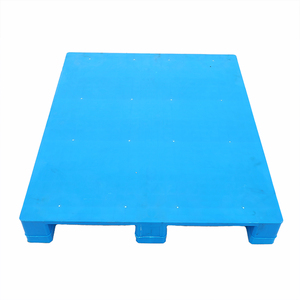
Flexography 4-Way Warehouse Rack Pallet Euro Single Faced Pallets 1200x1000 Mm
Precision-molded dimensionally stable pallets with anti-skid surfaces, fully optimized for automated optical sensor tracking within shuttle guides.
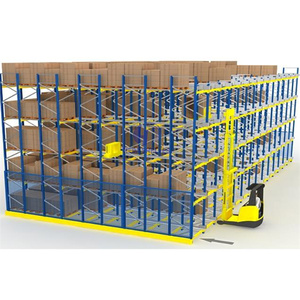
High-Density Shuttle Rack System ASRS 4-Way Shuttle Racking Turnkey Solution
Full-scale automated warehouse layout integrating laser-guided robotic shuttles, mother elevators, maintenance decks, and WCS software.
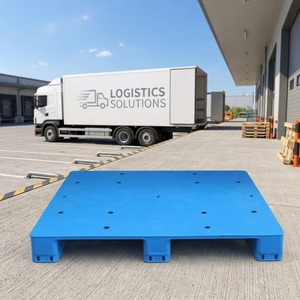
NEXARA Recycled Material Mould Racking 1414 Flat Surface Logistics Pallet Turnover
High-load sustainable polymer construction with structural steel insert tubes for heavy stamping tools, die storage, and multi-tier AS/RS racking.
Engineering Foundations of CE Certified 4-Way Shuttle Storage
A deep-dive technical briefing on mechanical kinematics, structural calculation under Eurocodes, and the digital orchestration driving modern compact intralogistics.
In modern industrial intralogistics, real estate land value appreciation, rising energy expenses, and strict occupational safety regulations require warehouse operators to maximize vertical cubic volume without sacrificing throughput agility. While traditional selective pallet racking provides complete selectivity, it caps spatial storage density below 40% due to expansive operating aisles required by reach trucks and forklifts. Conversely, traditional high-density drive-in systems increase density at the expense of dynamic selectivity, requiring forklifts to enter physical rack structures—a primary cause of beam impacts, upright deformations, and catastrophic structural failure risks.
A certified CE four-way shuttle system incorporates electro-mechanical precision engineering. Operating on ultra-flat cold-rolled guide rails, our 4-way robotic vehicles utilize dual-motor drive architectures paired with hydraulic or mechanical cam lifting tables. Shuttles transition effortlessly between primary access lanes and deep secondary channels by shifting drive wheels 90 degrees in under 2.5 seconds. Through precise optical laser positioning, RFID tag verification, and industrial PLC control nodes, the system ensures millimeter-level landing accuracy even under maximum 1,500 kg dynamic payload capacities.
Structural Calculation
Calculated in accordance with EN 15512, EN 15620, and FEM 10.2.02. Uprights and horizontal beams undergo finite element analysis (FEA) accounting for seismic acceleration, second-order global frame effects, and dynamic shuttle acceleration.
CE Machinery Directive
Compliant with 2006/42/EC, EN ISO 12100, and EN ISO 13849-1 (PLd/SIL 2). Safety features include triple-redundant LiDAR obstacle scanning, perimeter light curtains, automated interlocks, and emergency stopping circuits.
Power & Fast-Charging
Equipped with safe lithium iron phosphate (LiFePO4) or supercapacitor power arrays. Automatic busbar contact charging delivers continuous 24/7 duty cycles with a 15-minute quick recharge supplying 4 hours of intense continuous operation.
Dynamic Temperature
Engineered to operate reliably from deep-freeze cold chains (-30°C) up to high ambient dry zones (+50°C). Anti-condensation heated sensor housings, specialized synthetic low-temperature lubricants, and stainless IP65 enclosures protect key drive electronics.
Comparative Engineering Performance Matrix
| Evaluation Parameter | Selective Racking | Drive-In Racking | Stacker Crane AS/RS | 4-Way Shuttle Racking (Our System) |
|---|---|---|---|---|
| Volumetric Spatial Density | 35% – 45% Low | 60% – 70% Medium | 75% – 85% High | 85% – 92% Maximum Density |
| Stock Rotation Flexibility | 100% FIFO / LIFO Selectivity | Strict LIFO (Limited FIFO) | Full FIFO / LIFO via Software | Dynamic Software Arbitrated FIFO / LIFO |
| System Redundancy & Risk | High (Forklift Dependable) | High (Structural Collision Risk) | Single Point of Failure (Crane Down) | High Redundancy (Fleet Swapping Flexibility) |
| Civil Height Adaptability | Limited by reach truck mast | Restricted to forklift height | Requires bespoke tall building | Flexible from 4m up to 30m existing buildings |
| Energy Consumption Ratio | High (Diesel/Electric Forklifts) | High (Continuous Truck Ingress) | High (Heavy crane tare weight) | Ultra-Low (Lightweight kinetic shuttle body) |
| Scalability & Phased CAPEX | Low CAPEX / High OPEX | Low CAPEX / High Damage Cost | High Upfront CAPEX / Inflexible | Modular CAPEX (Add shuttles as volume grows) |
Future Procurement & Technology Trends (2026–2030)
Anticipating supply chain shifts, regulatory decarbonization targets, and the architectural evolution of intelligent warehouse automation.
1. Phased CAPEX Modular Deployment
B2B buyers are moving away from monolithic automated systems requiring 100% upfront capital investment. Global supply chains increasingly mandate modular shuttle racking infrastructure where civil steel structures and tracks are built in Phase 1, while autonomous shuttle vehicle quantities are scaled incrementally to align precisely with evolving pallet turnover demand.
2. Decarbonization & Cold Chain Efficiency
With commercial energy tariffs accelerating cold storage operating costs, four-way shuttle racking provides dramatic refrigeration reductions. By eliminating forklift circulation clearance and condensing the refrigerated cube volume by up to 50%, facilities experience thermal leakage reductions exceeding 38%, qualifying operations for sustainability grants and ISO 50001 certification.
3. Convergence of WES, WCS, and AI Agents
Next-generation installations pair physical shuttle kinematics with AI-driven Warehouse Execution Systems (WES). Instead of reactive order routing, predictive algorithmic dispatching pre-sorts pallets based on outbound shipping manifest schedules during low-throughput nighttime shifts, completely eliminating dispatch bottlenecks during daytime operational peaks.
Why Global Tier-1 Enterprises Partner With Us
Combining 60 years of structural engineering heritage with global turn-key manufacturing, rigorous testing facilities, and comprehensive lifecycle field services.
12 State-of-the-Art Production Centers
We operate 12 advanced direct manufacturing plants equipped with continuous automated multi-roll forming production lines, laser profile cutting, robotic welding cells, and automated epoxy polyester powder coating tunnels to ensure unmatched metallurgical precision.
Stringent Quality Testing & CE Certification
Every racking component and four-way shuttle platform undergoes dynamic load cycle simulation, metallurgical tensile inspections, and weld non-destructive testing (NDT). Full conformance with CE Machinery Directives guarantees international regulatory approval.
Global Export Footprint & Local Support
With an active commercial installation network across 70+ countries and regional direct support hubs in 23 countries, our multi-lingual project engineering teams manage structural layout drafting, shipping logistics, site erection, and lifecycle SLA maintenance.
Frequently Asked Questions by Industrial Buyers
In-depth technical answers addressing operational variables, structural capacity, and electrical parameters before contract award.
What concrete floor slab specifications are required for 4-way shuttle racking?
How does the 4-way system handle varied pallet dimensions and types?
Can 4-way shuttle systems be retrofitted into existing warehouse buildings?
What is the failure recovery procedure if a shuttle stops inside a deep channel?
How does the shuttle maintain reliable wireless connectivity across deep steel racks?
What international testing standards validate structural safety against earthquakes?
Accelerate Your Warehouse Volumetric Efficiency
Connect directly with our senior intralogistics applications engineers. We provide comprehensive AutoCAD system layouts, full static calculations, dynamic throughput simulations, and turnkey budgetary quotations.
Get Catalog