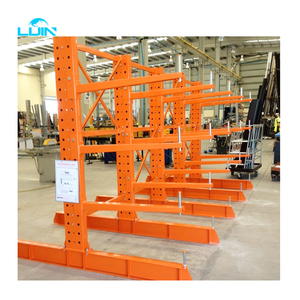
Steel Heavy Duty Cantilever Racking System for PVC Pipe
Designed for unyielding storage of long profiles, extruded PVC pipes, and timber bundles. Features hot-rolled I-beam uprights with bolted pivot arms to eliminate structural buckling.
Explore our certified structural storage lines engineered to meet rigorous structural integrity thresholds, high seismic dampening coefficients, and optimal space utilization across cold chain, distribution, and heavy manufacturing warehouses.
Designed for unyielding storage of long profiles, extruded PVC pipes, and timber bundles. Features hot-rolled I-beam uprights with bolted pivot arms to eliminate structural buckling.
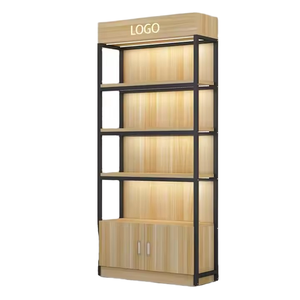
Heavy-gauge modular steel architecture with anti-corrosive powder coating. Engineered for front-facing commercial retail display and backroom inventory consolidation.
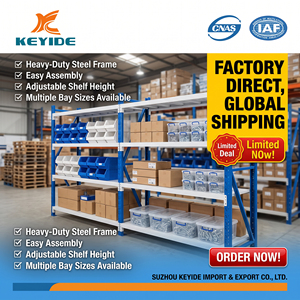
Precision-slotted boltless industrial bay configuration optimized for high-temperature and humidity environments. Rapid interlocking beam-to-column connectors.
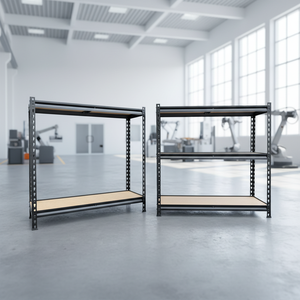
Multi-tier modular picking system with heavy epoxy-polyester electrostatic coating. Tested to eliminate torsion flexure under concentrated box and container loads.
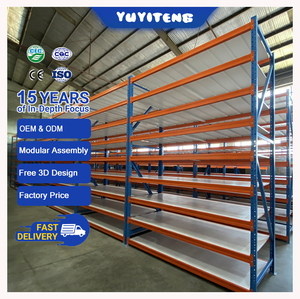
Engineered to bespoke structural blueprints accommodating non-standard pallet depths, overhead sprinkler systems, and asymmetrical column placement limitations.
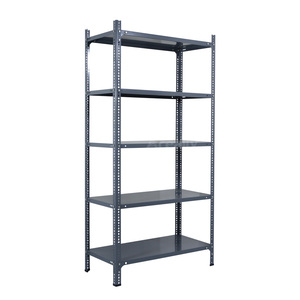
Cost-efficient cold-formed angle profiles for archive storage, maintenance cribs, and lightweight fulfillment lines. Pre-punched patterns allow flexible shelf adjustments.
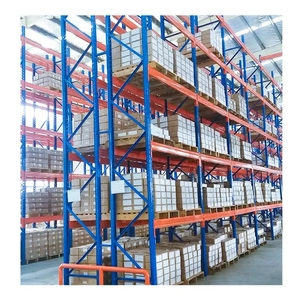
Two-pallet deep storage per access aisle that bridges selective accessibility and high compaction. Best deployed with pantograph reach trucks to reduce aisle footprints by 30%.
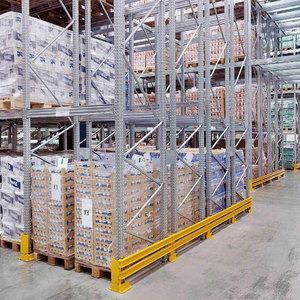
Robust structural steel composition with reinforced baseplates and guide rails. Certified for maximum verticality stability in heavy distribution facilities up to 12 meters clear height.
In modern industrial facilities where cubic floor costs continue to accelerate, high-density warehousing configurations are paramount. Understand how Last-In, First-Out (LIFO) architectures optimize floor footprint efficiency while preserving structural integrity under dynamic loading.
Push-back racking utilizes nested, inclined rolling carts running along structural steel channels. When an operator inserts a pallet, it gently pushes the preceding pallet back. Defying mechanical complexity, this pure gravity-assisted LIFO configuration offers 2 to 6 pallet positions in depth per bay, eliminating standard access aisles and increasing overall building utilization by up to 75% compared to standard selective setups.
For homogenous, high-volume pallet SKU distribution, Drive-In LIFO racking maximizes storage cubic meter density. Forklifts enter the structural lanes directly to deposit pallets upon continuous cold-formed supporting side rails. Fabricated from certified high-yield structural steel, our drive-in uprights integrate wrap-around column protectors, floor-anchored guide rails, and top horizontal bracing to mitigate lateral impact fatigue.
Representing the technological evolution of LIFO storage, autonomous radio-frequency shuttles navigate deep storage channels along internal running tracks. By executing hoisting and transport tasks independently inside the lane, the shuttle protects the outer steel framework from lift-truck collisions, cuts cycle load times by 50%, and functions reliably in extreme cold storage operations down to -30°C.
Evaluating warehouse layout strategies requires balancing density metrics, selectivity ratios, cycle turnaround speed, and mechanical installation investment.
| Storage Topology | Space Utilization | Selectivity Profile | Inventory Rotation | Structural Standards Compliance | Optimum Industry Application |
|---|---|---|---|---|---|
| Push-Back (Cart/Roller) | Up to 75% High Density | 1 SKU per Channel Lane | Pure LIFO Velocity | EN 15512, RMI MH16.1, CE | Cold Storage, FMCG Non-perishables, Chemicals |
| Drive-In Pallet Racking | Up to 85% Maximum Density | 1 SKU per Entire Lane | LIFO Batched | EN 15620, ISO 9001, FEM 10.2.07 | Beverage Processing, Raw Material Staging, Seasonal Batches |
| Pallet Shuttle (LIFO Mode) | Up to 90% Ultra Density | 1 SKU per Depth Channel | Programmed LIFO / Hybrid | CE Machinery Directive 2006/42/EC | Deep-Freeze Hubs, High-Volume E-Commerce Hubs |
| Double-Deep Selective | Up to 60% Moderate Density | 50% Direct Accessibility | 2-Deep LIFO Staging | EN 15635, ASTM Structural Steel | General Distribution, Automotive Parts Logistics |
| Standard Selective Racks | 40% Low Density Baseline | 100% Total Selectivity | FIFO / Free Access | EN 15512, FEM Global | High-SKU Retail Fulfillment, Pharmaceutical Sorting |
Global supply chain procurement is shifting rapidly from transactional steel purchasing to integrated intralogistics engineering. Major industrial trends driving this transformation include:
Procurement teams are prioritizing structures embedded with real-time strain gauges and vibration monitoring arrays. These digital-twin systems record structural stress deviations, warn warehouse supervisors of micro-deflections caused by lift-truck impacts, and prevent beam collapse before visible structural fatigue manifests.
Sustainability and carbon border adjustments (CBAM) are transforming steel procurement. Buyers favor high-strength micro-alloy grades (such as S355 and S420MC). These yield-tested structural alloys reduce total steel weight by 15–20% without sacrificing beam load capacities, dramatically reducing shipping carbon footprints and foundational concrete loads.
Traditional manual LIFO bays are being retrofitted to interface with Autonomous Mobile Robots (AMRs) and automated lift stackers. New tenders demand pick-and-deposit station tolerances within ±1.5mm accuracy to enable continuous multi-shift automated execution without human intervention.
With an international manufacturing footprint and 60 years of structural storage mastery, we deliver complete turnkey logistics engineering rather than unverified commercial components.
Decades of field experience across more than 70 countries guarantee verified structural calculation blueprints, customized anchor shear testing, and robust dynamic load management under all operational seismic classifications.
Operating dedicated rolling mills and fully automated continuous punching, roll-forming, and robotic welding lines ensures complete metallurgical tracing, EN 10204 3.1 steel mill certifications, and reliable delivery schedules.
Our dedicated engineering teams continually test beam connection rigidity, execute FEA (Finite Element Analysis) stress simulations, and develop software-driven automation solutions independently validated by leading industry authorities.
From initial topological site surveys to certified installation, annual safety inspections (EN 15635), and rapid component supply, our global service teams provide end-to-end operational assurance throughout the installation lifecycle.
Technical and commercial clarifications designed to assist industrial project engineers, plant managers, and procurement professionals.
A LIFO (Last-In, First-Out) configuration is mathematically ideal for operations dealing with non-perishable merchandise, bulk consumer packaged goods, or large production batches with uniform shelf-life profiles. If your inventory comprises multiple pallets per identical SKU, a LIFO system (such as Push-Back or Drive-In) condenses operational space by removing up to 50% of the working aisles required by standard FIFO selective racks, maximizing total pallet capacity within a given warehouse volume.
In structural steel and industrial storage, CE compliance requires rigorous verification under European standards, principally EN 15512 (Steel static storage systems – Adjustable pallet racking systems – Principles for structural design) and EN 1090 (Execution of steel structures). Our manufacturing facilities undergo continuous Factory Production Control (FPC) audits, providing comprehensive Declaration of Performance (DoP) documentation and mill test reports covering steel grade chemical composition and elongation performance.
To design an optimized engineering layout and quotation, our structural team requires: (1) Architectural drawings showing warehouse dimensions, clear overhead clearance to sprinklers, column grids, and slab thickness; (2) Detailed pallet unit load specifications including width, depth, height, and gross weight; (3) Pallet bottom runner configurations (skid vs. 2-way/4-way entry); (4) Operational lift equipment specifications, including mast lift height and turning radius; and (5) Specific seismic zone ratings of the warehouse location.
Push-back systems rely on precise gravitational mechanics. Channel rails must be pitched at a calculated grade (typically 1.5% to 2.5% slope) depending on pallet base composition and target pallet mass. Cart assemblies must integrate heavy-duty sealed roller bearings with anti-drift guides to prevent channel binding. When handling varied load weights, dynamic braking devices or speed controllers are strategically placed within the flow lane to regulate return velocity safely.
Because high-density LIFO configurations concentrate substantial multi-tier loads onto discrete structural upright footings, point loads on the concrete floor slab can be significant. Our engineering documentation provides structural punch-load and foundation calculations to ensure your slab's compressive capacity and rebar mesh can support these forces without differential settlement or structural cracking.
For installations in cold stores, deep-freeze chambers (-30°C), or high-salinity coastal export zones, we offer dual-layer epoxy-polyester electrostatic powder coating (cured at 200°C) or continuous hot-dip galvanization conforming to ISO 1461. This level of protection prevents condensation micro-corrosion, retains paint flexibility under thermal contraction, and extends structural life beyond 20 years of active service.
Connect directly with our senior intralogistics engineers to evaluate your facility layout, run custom load-bearing finite element simulations, and request a comprehensive quotation for certified heavy duty LIFO racking systems.