Verified Industrial Racking Systems & High-Payload Modules
Discover our primary certified product lines—ranging from heavy selective structural beams to dynamic pallet shuttle channels and mold-die storage configurations.
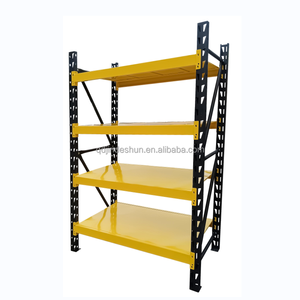
Industrial 4-Layer Adjustable Metal Shelf Racks Medium Duty Warehouse Storage Rack Stacking Shelves For Warehouse
Tear-drop profile uprights with 50mm pitch increment adjusting; optimal for hand-loaded spare parts, fulfillment buffers, and mixed SKU sorting.
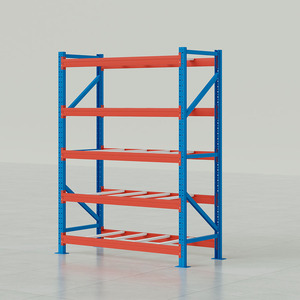
Industrial Warehouse Shelves Storage Rack Industrial Shelving System
Heavy-gauge Q235B steel construction with modular bolted cross-bracing and epoxy thermo-setting coating for distribution hubs and 3PL depots.
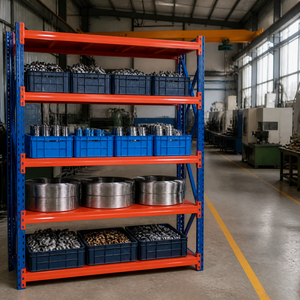
Custom Adjustable Anti-Rust Storage Metal Stacking Racks Pallet Racking System Steel Shelving VNA Racking Narrow Aisle Rack
Very Narrow Aisle (VNA) architecture maximizing cubic floor footprint up to 90% space utilization, integrated with guidance guide-rails for turret trucks.
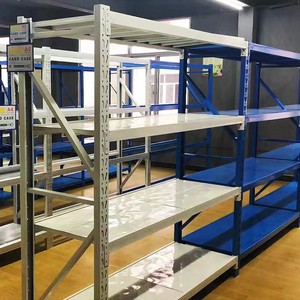
Warehouse Rack Stacking Rack Pallet Racking Garage Metal Storage Rack
Portable demountable stacking frames for dynamic bulk goods handling, seasonal cold rooms, and flexible footprint operations without slab anchors.
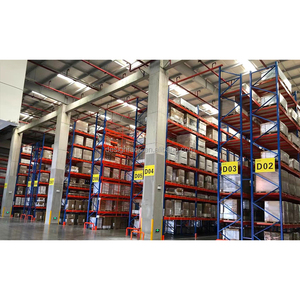
EU Standard Galvanized Steel Warehouse Heavy Duty Selective Racking
Hot-dip zinc coating strictly complying with EN ISO 1461. Exceptional corrosion protection for deep-freeze storage (-30°C) and outdoor shelter racking.
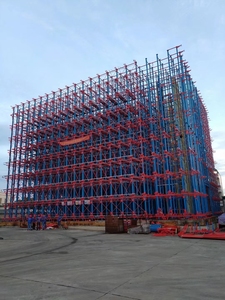
Pallet Shuttle Rack Is a Deep lane Storage and Retrieval System Which Helps You to Optimise the Storage Capacity
High-density LIFO/FIFO motorized runner platform; eliminates forklift travel into lanes, multiplying operating speed and minimizing impact hazards.
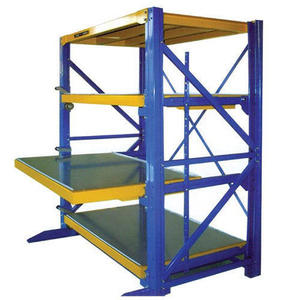
Customized Heavy Duty Steel Mold Storage Rack Q235B Corrosion Protected Warehouse Shelving
Slide-out drawer engineering engineered for injection tooling, engine blocks, and heavy metal dies up to 3,000 kg per level with crane hoist integration.
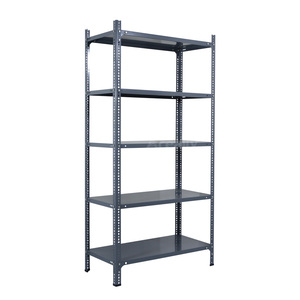
Cheap Price Factory Direct Shelf Light Duty Metal Storage Slotted Iron Angle Shelving With Adjustable Rack
Universal corner-plate bolt assembly shelving system designed for archives, retail backrooms, manual pick lines, and light-hardware inventory.
Structural Integrity Standards: Cold-Formed vs. Hot-Rolled Heavy Channel Profiles
Navigating structural compliance under Eurocode 3 (EN 1993-1-3), EN 15512:2020 limit-state calculations, and ASTM structural integrity specifications for demanding distribution infrastructures.
High-Yield Certified Steel Substrates
Manufactured utilizing mill-certified high-tensile hot-rolled coil (Q235B, Q355B, and structural grade S355JR). Yield strength testing ensures resilient elastic deformation limits without micro-fracturing under full rated pallet loading conditions.
Every export heat batch is tagged with 3.1 Mill Test Certificates (MTC) ensuring total metallurgical traceability, chemical composition balance, and cold-bend toughness.
CE Declaration & European Standards
Our installations are designed and certified in strict conformance with EN 15512:2020 (Steel Static Storage Systems: Adjustable Pallet Racking Principles for Structural Design), accompanied by EN 15620 for precise operating clearances with automated handling equipment.
CE marking and declarations of performance guarantee cross-border customs conformity throughout the European Economic Area and UKCA compatibility.
Dynamic Seismic Dissipation
Engineered for extreme seismic risk zones under Eurocode 8 (EN 1998-1) and FEM 10.2.08. Utilizing finite element response spectrum analyses, base plates and heavy anchor dowels are sized to withstand transverse and longitudinal ground accelerations.
Structural upright columns feature reinforced Omega or C-channel cross-sections with cold-stamped stiffeners that resist torsional buckling under harmonic wave shock.
| Structural Parameter | Selective Pallet Racks | Pallet Shuttle (AS/RS Lane) | VNA (Very Narrow Aisle) | Heavy Mold / Die Racking |
|---|---|---|---|---|
| Primary Steel Grades | Q235B / S275JR Cold-Rolled | Q355B / S355JR Structural Steel | Q355B High-Yield Alloy | Q235B / Welded Channel Beams |
| Standard Payload Range | 1,000 kg – 4,500 kg / level | 500 kg – 1,500 kg / pallet | 1,000 kg – 2,500 kg / level | 1,000 kg – 3,500 kg / tier |
| Deflection Limit Criteria | 1/200 (Classified L/200) | 1/300 (High-Precision Shuttle) | 1/250 (Turret Truck Tolerance) | 1/250 (Heavy Mechanical Tooling) |
| Aisle Width Requirement | 3,000 mm – 3,800 mm | Non-Aisle / Transfer Only | 1,650 mm – 1,900 mm | 2,400 mm – 3,000 mm |
| CE / Standard Compliance | EN 15512:2020 | EN 15620 / FEM 10.2.02 | EN 15512 / DIN 18800 | Machinery Directive EN 12100 |
Future Procurement & Technological Trends in Warehouse Racking Systems
Procurement executives are shifting from localized spot purchasing to life-cycle value analysis. Here is how intralogistics modernization is reshaping capital expenditure requirements worldwide.
The modern supply chain ecosystem faces triple constraints: rapidly escalating land acquisition costs, volatile energy tariffs, and acute shortage of experienced material handling labor. Over the 2025–2035 planning horizon, the procurement of heavy-duty structural pallet racking is decoupling from static storage towards highly dynamic, automated-interoperable frameworks. Decision-makers must evaluate five technological macro-shifts when issuing RFIs and tender specifications:
1. Automation-Ready Rigidity (AS/RS & Shuttle Synergies)
Traditional manual selective racking permitted generous deflection tolerances ($L/200$). As facilities introduce autonomous mobile robots (AMRs), automated guided vehicles (AGVs), and high-speed parent-child shuttles, manufacturing tolerances are tightened under FEM 9.831 / EN 15620 Class 100/200 specifications.
Uprights must deliver absolute verticality up to 35-meter top heights, eliminating sway and mast-oscillation during high-speed retrieval cycles.
2. Duplex Anti-Corrosion Technologies for Cold Chain
Cold storage facilities operating between -25°C and -35°C face severe thermal contraction and condensation-induced corrosion. Standard electro-galvanized finishes exhibit zinc depletion within short operational spans.
Future-proof procurement prioritizes continuous coil pre-galvanization or thermal hot-dip galvanization conforming to EN ISO 1461, achieving coating weights exceeding 450 g/m² for lifelong rust immunity in blast-chilling environments.
3. Scope 3 Decarbonization & Low-Carbon Steel Supply
Global enterprise tenders now explicitly score structural steel manufacturers on their Environmental Product Declarations (EPD). Utilizing Electric Arc Furnace (EAF) production with recycled scrap reduces embodied carbon footprints by up to 60% compared to traditional Blast Furnace (BOF) routes.
Exporting to European borders requires verifiable documentation aligning with CBAM (Carbon Border Adjustment Mechanism) tariffs.
4. Digital Twin & Continuous Structural Health Monitoring (SHM)
Emerging safety directives demand moving beyond once-per-annum manual physical racking inspections (EN 15635). Modern installations integrate wireless IoT vibration sensors, base-plate strain gauges, and optical laser scanners along main transit aisles.
Subtle forklift impact deviations or overloaded beam sags are reported in real-time to the facility's Warehouse Execution System (WES), isolating unsafe upright bays before structural fatigue failure occurs.
5. Clad-Rack Warehouse Engineering (Rack-Supported Buildings)
Where civil construction timelines and costs are prohibitive, the racking superstructure itself forms the structural core supporting exterior insulated wall cladding, roof trusses, and photovoltaic arrays.
This unified architectural approach removes the need for dedicated building support pillars, driving volumetric utilization past 95% while drastically cutting civil construction lead-times.
6. Modular Disassembly & Circular Supply Contracts
Agility has become a paramount survival metric. Racking infrastructure must adapt to shifting SKU dimensions, retail seasonal surges, and dynamic lease agreements without scrap waste.
Cold-formed bolted trusses, interchangeable interlocking beam connectors, and universal punching geometries permit quick reconfiguration and high terminal liquidation value.
Over 60 Years of Intralogistics Engineering Excellence
As a trusted manufacturer and international exporter of industrial storage racking, automated warehouses, and intralogistics systems, our industrial footprint spans across 70+ countries worldwide.
Frequently Asked Questions by Industrial Warehouse Specifiers
Addressing primary technical, structural, and regulatory queries encountered during the procurement, calculation, and global delivery of heavy-duty structural racking.
What are the key technical differences between structural steel and roll-formed pallet racking?
Roll-formed pallet racking is cold-manufactured from high-strength coil steel into profiles featuring open C- or Omega-shaped channels. It relies on locking clip pins and adjustable connector tabs, making it cost-efficient, highly versatile, and fast to adjust. Conversely, structural pallet racking is hot-rolled using structural C-channels or I-beams with bolted beam-to-frame connections. Structural racking provides superior impact resistance against heavy forklift collisions, making it standard for rugged operations, drive-in systems, beverage distribution, and severe cold-storage environments where steel brittleness is a hazard.
Which international structural certifications must be verified before purchasing for export?
For installations exported to the European Union and associated markets, compliance with EN 15512:2020 (Calculation of Steel Static Storage Systems) and CE marking under the Construction Products Regulation (EU CPR 305/2011) or EN 1090-1 execution classes is mandatory. For North American exports, validation against ANSI MH16.1 (RMI Specification for the Design, Testing and Utilization of Industrial Steel Storage Racks) is essential. Buyers must demand documented weld certifications (ISO 3834 / AWS D1.1) and Mill Test Certificates confirming chemical composition and mechanical elongation properties.
How is warehouse floor slab bearing capacity calculated relative to upright frame footings?
Each upright frame concentrates total vertical dead and live loads into two base plates, creating localized point loads (punching shear stresses) often exceeding 80–120 kN per post. Our structural engineers review core geotechnical data—specifically concrete slab thickness, compressive strength (e.g., C25/30 or C30/37), subgrade modulus ($k$), and rebar reinforcement layout. Base plate dimensions are engineered to ensure contact pressures do not exceed allowable slab bearing limits ($f_{cd}$), distributing stress safely across the floor matrix.
What parameters determine whether Selective, Shuttle, or VNA racking is optimal?
The optimal system is derived from four operational metrics: SKU diversity count, pallets-per-SKU density, required accessibility (100% immediate selectivity vs. bulk batch throughput), and building clear height. Selective racking delivers 100% pallet access for diverse, high-SKU distribution hubs. Very Narrow Aisle (VNA) racking compresses aisle widths down to 1.7 meters for tall warehouses requiring high cubic capacity with individual pallet access. Deep-lane Pallet Shuttle systems maximize volume when handling homogeneous pallet groups under LIFO or strict FIFO batch rotation.
How do you protect pallet racking against severe rust in freezing or outdoor facilities?
For sub-zero cold stores (-30°C) and exposed environments, standard electrostatic powder coating may experience micro-delamination from underlying condensation cycles. We provide thermal hot-dip galvanization under EN ISO 1461, achieving a minimum zinc alloy coating thickness of 65–85 microns. For indoor dry environments, our 9-stage phosphate pre-wash followed by automated high-bake epoxy-polyester electrostatic coating provides resilient resistance against chemical spillage and forklift scuffs.
What technical data must an engineering team provide to receive a full turnkey quotation?
To produce an exact structural engineering calculation and CAD layout, prepare: (1) Architectural DWG plan indicating clear height to bottom chord of trusses, column grids, and dock doors; (2) Pallet unit specifications: Width x Depth x Height inclusive of cargo overhang, and gross pallet weight; (3) Handling equipment data: Forklift model, mast collapsed/extended height, and aisle turning radius; (4) Environmental factors: Seismic classification zone and building thermal conditions.
Plan Your Structural Warehouse Racking Infrastructure
Connect directly with certified intralogistics structural engineers. We provide static calculation studies, customized CAD facility layouts, and global ocean freight estimates tailored to your operational specifications.
Inquire Now