High-Capacity Industrial Racking & Material Handling Inventory
Direct manufacturer-engineered racking platforms configured to maximize floor area utilization, load safety margins, and narrow aisle forklift operational throughput.
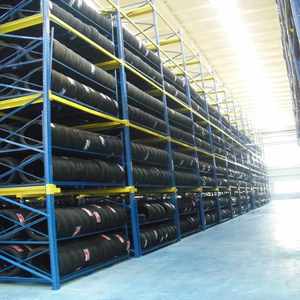
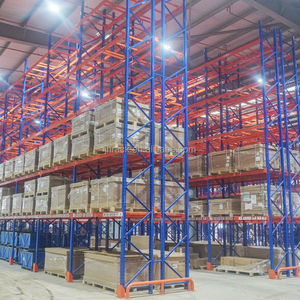
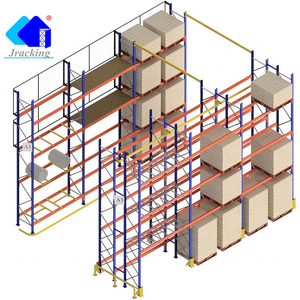
Engineering Excellence in Heavy Duty Very Narrow Aisle (VNA) Racking Systems
Modern distribution hubs and manufacturing facilities face severe real estate pressures, soaring land procurement costs, and increasing SKU diversity. To achieve optimal volumetric efficiency without sacrificing total selectivity, enterprise logistics managers turn to CE Certified Very Narrow Aisle (VNA) Pallet Racking. By consolidating aisle widths down to a strict 1,600 mm – 1,800 mm margin—compared to traditional wide aisles requiring 3,200 mm or more—VNA systems recapture up to 45% of redundant floor space while providing instantaneous, 100% direct access to every stored unit.
Manufactured according to European standard EN 15512:2020 (Cold-formed steel storage systems) and the Machinery Directive / Construction Products Regulation (CPR 305/2011), our heavy-duty VNA racking profiles undergo finite element analysis (FEA) testing under multi-directional dynamic loading. Each upright section, rolled from premium certified micro-alloy high-tensile steel (yielding up to S355 and S420 structural grades), delivers maximum vertical rigidity and torsional resistance up to heights exceeding 18 meters.
When selecting a reliable Tier-1 supplier, European and North American industrial buyers require rigorous verification of raw material batch certifications, robotic seam welding consistency, load warning decals, and epoxy-powder or hot-dip galvanized anti-corrosive finishes. Our multi-stage automated production lines enforce strict quality gate controls, assuring dimensional tolerances down to 0.1 mm to prevent structural eccentricity in super-high vertical bay environments.
High Yield Structural Steel
Formed using certified S355 high-tensile structural coil steel, delivering high load-bearing capacity per pair of beams and extended upright buckling thresholds.
Full CE & ISO Compliance
Audited strictly under EN 15512, EN 15620, EN 15629, and EN 15635 quality protocols to secure complete occupational safety and zero structural deflections.
Precision Floor Guide Integration
Fully compatible with mechanical rail guidance channels or in-floor inductive wire tracking to ensure safe, ultra-fast turret truck and AGV maneuvering.
Future Sourcing Trends for Very Narrow Aisle Racking (2025–2030)
Procurement teams navigating volatile raw material markets and tightening regional building codes must stay informed of shifting global sourcing priorities. Over the coming half-decade, the specification and procurement of VNA racking will undergo structural shifts:
1. Strict Floor Slab Flatness Standards (DIN 18202 & TR34 FM2): Because turret trucks and automated order pickers operate at mast heights above 15 meters, millimeter deviations in floor slab planarity multiply across mast elevation, risking bay contact. Buyers increasingly procure VNA racking and automated optical guidance systems bundled with subfloor survey validation and precision adjustable shim packs.
2. Convergence of Manual VNA with Autonomous Mobile Robots (AMRs): Warehouses are moving away from purely manual turret forklift operations toward hybrid, automated guided narrow-aisle pickers. Future-proof procurement requires racking uprights and base-plates engineered to accept bottom-mounted laser reflectors, LiDAR navigation targets, and rack-mounted barcoding arrays without field drilling or welding that compromises protective galvanization.
3. Decarbonization and Life Cycle Assessment (LCA) Transparency: Enterprise procurement RFPs increasingly require Environmental Product Declarations (EPDs). Green warehousing demands low-carbon scrap steel manufacturing processes and powder coatings free from volatile organic compounds (VOCs). Selecting verified manufacturers with ISO 14001 certification provides quantifiable carbon credit compliance for logistics parks.
The Technological Evolution of High-Density Storage Engineering
VNA racking is no longer a static steel lattice; it represents a finely calibrated mechanical interface between material handling machines and logistics software. Modern systems integrate three distinct technological advancements:
Finite Element Optimization for Seismic Zones: Dynamic earthquake design standards (Eurocode 8 / RMI ANSI MH16.1) mandate exact calculation of rack-pallet interaction during ground acceleration. Advanced slotted upright profiles with non-linear spring beam connectors maximize energy dissipation, preventing catastrophic rack collapse during seismic disturbances.
IoT Structural Health Monitoring (SHM): Real-time wireless strain sensors mounted directly to critical bottom uprights and crash guards detect structural impacts from VNA trucks immediately. These alerts transmit through the industrial internet of things (IIoT) directly to the Warehouse Management System (WMS), highlighting safety concerns before structural failure occurs.
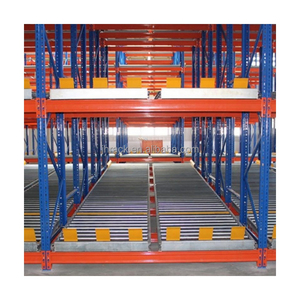
Adaptive Slotting and Dynamic Pick-Tunnel Architecture: High-density VNA configurations often integrate lower-level picking bays equipped with gravity flow roller channels or wire mesh dividers, while reserving the vertical bays for reserve pallet replenishment. This dual-purpose dynamic slotting reduces travel distance by up to 60%.
Enterprise Manufacturing & Global Supply Chain Advantages
As an intralogistics manufacturer with 60 years of engineering heritage, our industrial infrastructure spans 12 state-of-the-art production centers and 7 dedicated research and development facilities worldwide. We engineer customized storage systems matching your building's clear height, pallet dimensions, seismic classification, and material handling workflows:
Frequently Asked Questions: Industrial VNA Racking Procurement
Clear, direct technical answers to assist procurement directors, plant engineers, and project leads.