Engineered Industrial Tire Storage Racking Systems
Discover our precision-manufactured, Q235B heavy-gauge steel tire racking inventory. Designed specifically for passenger car radial (PCR), truck and bus radial (TBR), and heavy off-the-road (OTR) warehousing.
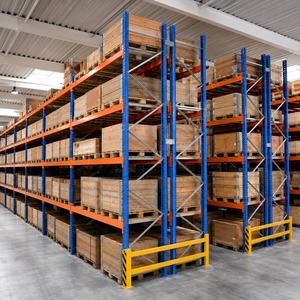
Pallet Storage Steel Pallet Rack Industrial Heavy Duty Q235B Steel Tyre Rack
- Load Rating: 1,000 kg – 2,500 kg / level
- Material: Certified Q235B Cold-Rolled Steel
- Config: Selective Pallet & Drive-In Integration
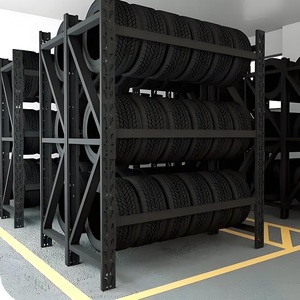
Industrial Heavy-Duty Steel Tire Storage Rack for Bulk Pallet Stacking
- Stacking Limit: Up to 5 Units High (Loaded)
- Tire Capacity: 24 - 32 Passenger Radial Units
- Finish: Corrosion-Resistant Powder Coating
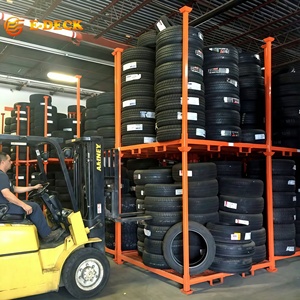
Powder Coated Logistics Heavy Duty Metal Stackable Steel Tire Rack
- Capacity: 1,200 kg Certified Dynamic Capacity
- Accessibility: 4-Way Forklift Entry Pockets
- Coating: Electrostatic Thermoset Polymer
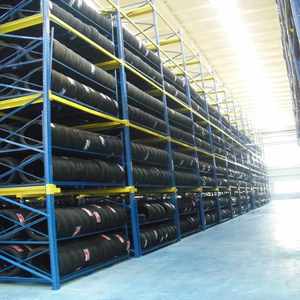
High Capacity Multi-Layer Customized Tire Stacking Racks & Drive-In
- Storage Architecture: High-Cube High Bay
- Customization: Beam Spans up to 3,600 mm
- Safety Factor: 1.67 Structural Reserve Ratio
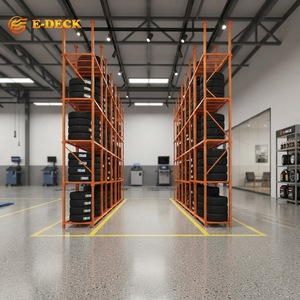
Storage Welded Stackable Durable Heavy Duty Steel Truck Tyre Rack
- Target Units: Commercial Truck, Bus & Agricultural
- Load Capacity: 1,500 kg per Stillage Unit
- Weld Integrity: Robotic CO2 Shielded Arc Welding
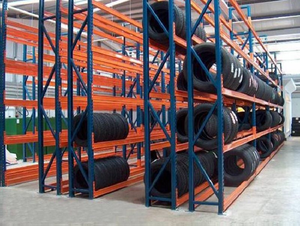
Warehouse Tyre Racking System Engineered for Dedicated Vertical Storage
- Orientation: Vertical Tread Placement (FIFO)
- Beam Geometry: Angled Bevel Step Profile
- Ergonomics: High-Pick Manual & Order-Picker
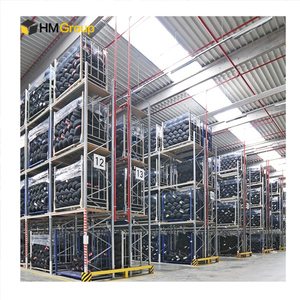
Customized Transport Warehouse Steel Stacking Folding Tire Storage Rack
- Fold Ratio: 4:1 Collapsed Space Reduction
- Intermodal Use: Sea Freight Container Shipping
- Locking: Anti-Dislodgement Spring Hinges
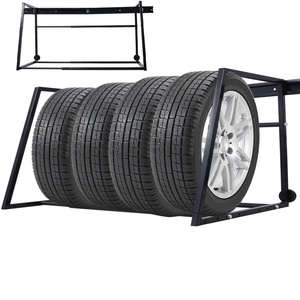
Heavy Duty Adjustable Multi-Tire Rack Wall Storage for Garage & Service Bay
- Anchorage: High-Tensile Masonry Anchors
- Adjustment: Telescopic Width Spans 800 - 1500 mm
- Application: OEM Showroom, Workshop & Dealership
Engineering Excellence: Structural Metallurgy and Mechanical Integrity in Heavy-Duty Tire Racking
Modern warehouse logistics for automotive tires require far more than generic industrial shelving. Due to the high volumetric elasticity, circular contact geometry, and non-rigid shifting characteristics of vulcanized elastomer treads, engineered tire racks must resist point-load concentrations, lateral torsional buckling, and cyclical dynamic impacts caused by material handling operations. As premier China manufacturers and global exporters, our systems are fabricated from certified structural grade Q235B and Q355B cold-rolled carbon steel, delivering a yield strength (σy) ranging from 235 to 355 MPa and a tensile strength of up to 510 MPa.
Standard pallet rack profiles often fail prematurely under continuous tire storage due to edge deformation along unsupported beam steps. To address this engineering vulnerability, our heavy-duty tire storage systems utilize proprietary angled cross-beams and contoured saddle supports. When passenger car radial (PCR) or heavy commercial truck (TBR) tires are stowed upright, the wheel contact points distribute gravitational weight evenly along a tangential bevel. This mechanical configuration eliminates flat-spotting, sidewall indentations, and bead bundle deformation—preserving the structural warranty and aerodynamic balance of stored tires even during multi-year storage cycles.
Certified Q235B / Q355B Steel
Sourced exclusively from premium state-owned mills, guaranteeing certified chemical compositions with minimal phosphorus and sulfur trace elements for ductile seismic resilience.
Robotic MIG Welding & Precision Roll-Forming
Continuous robotic shielded-arc welds minimize heat-affected zone (HAZ) embrittlement, ensuring 100% penetration on heavy-duty base cup joints and column gussets.
Nanotechnology Powder Coating
7-stage pre-treatment immersion phosphating paired with electrostatic architectural-grade thermoset powder creates a 90μm dry film thickness resistant to sulfur gas evaporation.
Technical Information Gain: Stored tires continuously off-gas volatile plasticizers, aromatic processing oils, and reactive sulfur compounds. Unfinished or substandard paint finishes degrade rapidly, resulting in premature intergranular rust. Our proprietary thermoset cross-linked polymer coating delivers over 1,000 hours of continuous ASTM B117 salt spray endurance and complete chemical resistance to vulcanized rubber outgassing.
Structural Comparison: Tire Storage Configuration Architectures
Selecting the optimal tire warehousing geometry requires balancing volumetric density against picking cycle frequency. The technical matrix below contrasts the three primary engineering methods employed in modern tire distribution centers:
| Storage Methodology | Volumetric Space Efficiency | SKU Selectivity & Access | Carcass Deformation Risk | Recommended Applications |
|---|---|---|---|---|
| Vertical Tread Standing (On-Tread) | Medium (60% - 70%) | 100% Direct Selective Access | Zero (Bevel-beam supported) | Automotive Tier-1 Distribution, Retail Hubs, Rapid FIFO Delivery |
| Horizontal Barrel Stacking (Flat Stacking) | High (75% - 82%) | Batch / Unit Stillage Level | Moderate on lower sidewalls | Bulk Raw Tire Manufacturing Buffers, Intermodal Ocean Transit |
| Interlaced / Herringbone (Fishboning) | Maximum (85% - 92%) | LIFO Palletized Stacking | High if stored > 6 months | High-Density Off-Season Tire Staging, Port Transshipment Depots |
Future Procurement Trends in Industrial Tire Storage Racking (2026–2030)
The global intralogistics landscape is experiencing a paradigm shift driven by e-commerce velocity, expanding electric vehicle (EV) wheel diameters, and the rapid deployment of Autonomous Mobile Robots (AMRs) and Automated Storage and Retrieval Systems (AS/RS). Procurement directors and warehouse operations executives must anticipate these industry-wide transformations when specifying long-term capital equipment:
1. Accommodation of Heavier Electric Vehicle (EV) Tires and High-Rim Diameters
Electric vehicle passenger tires are on average 20% to 30% heavier than conventional internal combustion engine (ICE) equivalents due to reinforced carcass plies, thicker sidewalls to withstand instantaneous electric torque, and integrated acoustic sound-absorbing foam rings. Consequently, legacy racking calculated for 15-inch to 17-inch tires at 8–10 kg per unit faces catastrophic beam deflection under modern 20-inch to 24-inch EV setups weighing 14–18 kg each. Forward-looking procurement teams are revising deflection thresholds from standard European FEM 10.2.02 limits of L/200 down to conservative L/300 deflection tolerances, specifying 1.8 mm to 2.5 mm steel wall thicknesses to ensure structural rigidity.
2. Transition to Modular Demountable & Collapsible Transport Stillages
Freight rates and cross-border transport expenses require packaging that functions equally well inside distribution hubs and inside international 40ft High-Cube shipping containers. Rigid welded tire racks are being phased out in favor of 4:1 folding tire post pallets. In inbound and inter-facility supply chains, loaded stillages stack up to 5 units high; upon unloading, four collapsed frames fold flat into the footprint of a single assembled unit. This structural innovation quadruples return-freight density, slashing Scope 3 transport carbon emissions and dry container return costs by upwards of 68%.
3. Seamless Integration with Automated Shuttles and Autonomous Mobile Robots (AMRs)
Labor shortages and 24/7 operating mandates in logistics hubs have spurred the direct integration of tire stacking stillages with high-payload automated guided vehicles (AGVs) and AMRs. Our next-generation stacking racks incorporate precision laser-cut centering cones, optical sensor alignment holes, and reinforced bottom guide rails. This enables robotic forklifts to pick, transport, and stack 1.5-ton tire racks with sub-millimeter repeatable precision without human intervention.
Why Partner with Us: China’s Premier Tier-1 Heavy Duty Racking Exporter
Drawing on six decades of engineering legacy and backed by twelve advanced manufacturing centers, our production facilities stand at the apex of the global intralogistics supply chain. Here is how our manufacturing capability translates directly to measurable operational advantages for our international clientele:
Finite Element Analysis (FEA) Verification
Every customized tire rack profile undergoes computerized stress distribution simulation under dynamic seismic acceleration and uneven live loads prior to cold forming.
Automated Continuous Roll-Forming Lines
Our computer-controlled lines punch, roll, and calibrate upright columns and beam profiles with +/-0.25mm geometric precision, ensuring frictionless on-site erection.
Worldwide EPC Project Delivery
With satisfied global installations across more than 70 nations, our multi-lingual logistics and engineering teams support structural sign-offs, container packing, and turn-key deployment.
Whether you require selective vertical tire storage for 200 automotive service workshops, high-cube drive-in systems for national distribution centers, or customized stackable container stillages for trans-Pacific shipping, our factory-direct pricing removes unnecessary intermediaries. We provide comprehensive mill test certificates (MTC), non-destructive weld testing, and independent load deflection reports with every shipment.
Comprehensive Procurement FAQ: Heavy Duty Tire Storage Systems
Here are detailed, engineering-backed answers to the most critical technical and logistical questions asked by global supply chain executives before issuing a tire rack RFQ:
What are the key structural steel specifications required for commercial TBR truck tire racks?
How does vertical on-tread storage prevent irreversible tire bead and crown deformation?
What international racking codes and safety standards do your storage systems comply with?
How many collapsible tire stillages fit into a standard 40ft High-Cube (40HC) container?
Can existing tire racking systems be upgraded or retrofitted for automated AS/RS or AMR operations?
What parameters and site data are required to generate an accurate layout design and quotation?
Ready to Modernize Your Tire Storage Infrastructure?
Connect directly with our senior intralogistics structural engineers. We will analyze your warehouse footprint, recommend cost-effective configurations, and deliver custom CAD layout drawings with competitive factory-direct pricing.