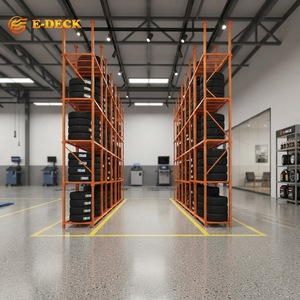
China Wholesale Heavy Duty Stack Racking Manufacturers & Suppliers
Direct Industrial-Grade Storage Engineering, High-Density Modularity & Automated Intralogistics Solutions
Catalog Matrix
Featured Heavy-Duty Industrial Racking & Stacking Systems
Engineered from certified Q235B/Q355B cold-formed structural steel, tailored for rigorous supply chain workloads, severe loading factors, and smart automation.
60+
Years of Combined Intralogistics Heritage
70+
Export Countries & Commercial Networks
12
Global Direct Production Centres
7
Advanced R&D Testing Centres
Engineering Dynamics of Heavy-Duty Stack Racking & Modular Pallet Storage
Modern global logistics facilities face an unprecedented convergence of rising commercial real estate square-meter costs, high throughput velocities, and strict structural safety mandates. Selecting an industrial stack racking manufacturer requires evaluating structural yield strengths, finite element load analysis (FEA), connection moment resistance, and surface chemistry that withstands hostile industrial environments.
1. Material Science: Metallurgical Integrity and Cold-Formed Steel Grades
The foundation of reliable heavy-duty stack racking lies in raw carbon steel selection. Certified manufacturers source structural steel grades complying with GB/T 700 (Q235B, Q355B), ASTM A1011, or European EN 10025 (S235JR, S355JR). The structural yield strength (up to 355 MPa) ensures high elasticity limits without permanent deformation under rated dynamic loads. When engineered into stackable post pallets, tire stillages, or high-bay teardrop systems, upright profiles are roll-formed through progressive multi-station tooling. This preserves cold-worked tensile yield strengths across complex bends, minimizing buckling stress under combined axial and eccentric loading.
Finite Element Stress Optimization
Upright punching pitches (e.g., 50mm, 75mm, or 76.2mm US Teardrop) are structurally verified through 3D FEA simulations, ensuring localized notch stresses do not induce stress-corrosion cracking over decade-long duty cycles.
Seismic Resistance & Ductility
Designed to comply with FEM 10.2.02, RMI (MH16.1), and AS4084-2012 codes, incorporating heavy-duty structural baseplates, welded boxed column stiffeners, and anchor bolt pull-out certifications in active seismic zones.
Surface Chemistry & Passivation
State-of-the-art automated pre-treatment includes 7-stage iron/zinc phosphate degreasing followed by thermo-hardened TGIC polyester powder coating (60–90µm) or Hot-Dip Galvanizing (ISO 1461) for sub-zero cold chains.
2. Load Bearing Dynamics: Static, Dynamic, and Stacking Safety Margins
Industrial stacking racks and tire pallet stillages operate under different force vectors compared to floor-anchored selective racking. In stacking configurations (commonly 1+3 or 1+4 free-standing tiers), the lowest rack absorbs combined static payloads exceeding 6,000 kg. Structural failure in such configurations often originates from racking sway, forklift dynamic impact, or cup-foot nesting misalignments. High-spec China OEM manufacturers engineer targeted nestable guide cones, heavy-duty cup feet, and cross-braced post receivers that maintain lateral stability, keeping deflection values strictly beneath L/250 under full load.
| System Type | Typical Payload / Level | Stacking Limit | Material Specification | Surface Treatment | Optimal Logistics Use-Case |
|---|---|---|---|---|---|
| Stackable Tire Racks | 1,000 – 1,500 kg | 1+4 tiers | Q235B Tubular / Angle | Electrostatically Powder Coated | Automotive tire depots, freight hubs, seasonal distribution |
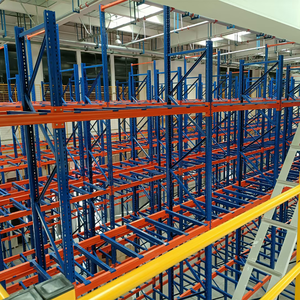
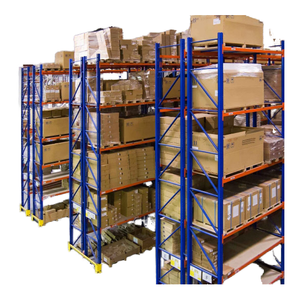
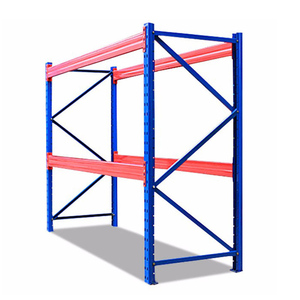
| Selective Pallet Racking | 1,000 – 4,500 kg/pair | Up to 12m height | Q355B Roll-formed Upright | Epoxy-Polyester Hybrid | High SKU variety, 100% immediate pallet accessibility |
| 4-Way Radio Shuttle | 500 – 2,000 kg | Up to 24m height | High-Precision Cold Profile | Pre-galvanized / Zinc Plated | Cold storage, food & beverage buffers, ultra-dense LIFO/FIFO |
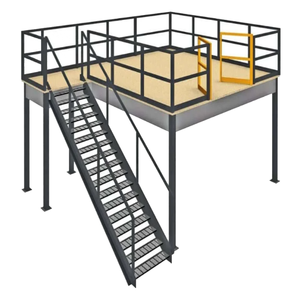
| Structural Mezzanine Loft | 300 – 1,000 kg/m² | Multi-tier (2–4 tiers) | H-Beam / C-Channel Rolled | Industrial Polyurethane Coat | E-commerce manual picking, e-fulfillment, parts lofts |
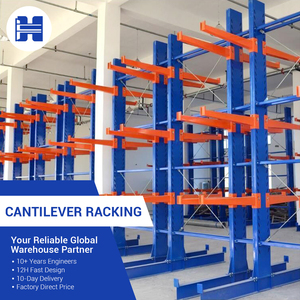
| Industrial Cantilever | 500 – 3,000 kg/arm | Free-standing to 9m | Heavy I-Profile / Steel Plate | Hot-Dip Galvanized / Painted | Steel pipes, lumber, extrusions, structural building panels |
Enterprise Advantage
End-to-End Intralogistics Engineering: From Smelting to Software
Leveraging 60 years of structural intralogistics heritage, our direct manufacturing facilities bridge precision heavy metal fabrication with cutting-edge automated warehouse integration. We do not just weld steel frames; we engineer comprehensive warehouse lifecycles.
In-House Structural FEA
Calculation according to RMI, FEM & AS4084
12 Production Facilities
Direct steel roll-forming, robotic welding & automated coating
Certified Global Export
CE, ISO 9001, ISO 14001, and EN 1090 compliant
Lifecycle Traceability
Steel mill heat tracking & batch ultrasonic weld inspection
Market Intelligence
Future Procurement & Technological Trends in Stack Racking
How international supply chains, sustainability standards, and autonomous robotics are reshaping steel storage procurement through 2026–2030.
Trend 01
Robotics & AMR Compatibility
Traditional static stack racks are evolving into AMR (Autonomous Mobile Robot)-compatible staging bases. Modern bases feature precise under-chassis clearances, target reflective positioning markers, and ultra-flat floor-contact geometry for smooth robotic lifts.
Trend 02
Near-Zero Carbon Metallurgy
Global ESG mandates require lower embodied carbon. Procurement teams increasingly demand EPD (Environmental Product Declarations) and scrap-recycled electric arc furnace (EAF) structural steel profiles with lower lifecycle emissions.
Trend 03
Smart Sensor Telemetry
Integrating wireless IoT load-deflection pins, RFID tracking tags, and tilt monitoring chips within high-bay stack frames allows WMS software to assess real-time weight distributions and flag unseated nesting cups before structural accidents occur.
Trend 04
Modular "Demountable" Logistics
Flexible manufacturing and third-party logistics (3PL) demand stack racking systems with detachable or foldable post configurations. Foldable units achieve an 80% volume reduction during deadhead return transit, cutting regional freight costs.
Procurement Support
Frequently Asked Questions by Industrial Buyers
Direct answers on international load safety certifications, custom tooling, ocean shipping packaging, and warehouse layout optimization.
What international design standards and structural certifications do your racking systems comply with?
Our systems are calculated and engineered to comply with major regional structural codes: the European FEM 10.2.02 and EN 15512 for steel static storage systems, the American Rack Manufacturers Institute (RMI MH16.1) specification, and the Australian AS 4084-2012 code. Structural mill sheets (MTRs) for Q235B and Q355B steel are provided with every batch, confirming chemical composition and mechanical yield performance.
How do you calculate stacking capacity for non-standard tire or industrial post pallets?
Stacking calculation is project-specific. It considers the static weight per unit (e.g., PCR, TBR, or OTR tire payloads), maximum tier stacking height (typically 1+3 or 1+4), material thickness of corner posts (usually 2.5mm to 4.0mm RHS tubing), and dynamic impact factors from forklift handling. Finite Element Analysis (FEA) ensures safety factors between 1.5 and 2.0 against yield stress.
What surface finish options are recommended for outdoor or sub-zero cold room environments?
For standard climate-controlled indoor warehouses, our 7-stage chemical pretreatment and electrostatically applied thermo-cured epoxy-polyester powder coat (60-80 microns) provides long-lasting scratch and corrosion resistance. For sub-zero cold storage facilities (-30°C) or outdoor staging areas, we supply Hot-Dip Galvanization according to ISO 1461 / ASTM A123, delivering a metallurgical zinc-iron alloy barrier that prevents oxidation for over 25 years.
How do you maximize ocean container cube utilization to reduce freight costs on bulk orders?
Heavy-duty stack racks and tire pallets are designed with detachable upright posts or fully folding frames. The base pallet units nest securely into bundles, while posts are cradled in dedicated internal racking pockets. This approach allows between 140 and 220 fully functional heavy-duty units to fit into a standard 40ft High Cube (40'HQ) shipping container, helping lower per-unit international freight costs.
Can your stack racking and shuttle systems integrate with existing WMS or ERP architectures?
Yes. Our high-density automated shuttle systems and smart warehouse configurations interface directly with Tier 1 and Tier 2 WMS platforms (including SAP, Oracle, and Easy WMS). We provide integrated PLC communications, optical sensors, and network-ready control panels (WCS/WES) that coordinate task execution between automated storage equipment and your host management system.
Plan Your High-Density Storage Architecture Today
Consult with our structural engineering team for free CAD layouts, finite element load reviews, and competitive direct-factory pricing for your facility.
Get a Quote