Industrial Storage & Heavy-Duty Stacking Product Directory
Explore our certified portfolio of heavy-duty pallet stacking frameworks, structural platforms, and material handling systems tailored for extreme loading cycles and harsh industrial warehouse operations.
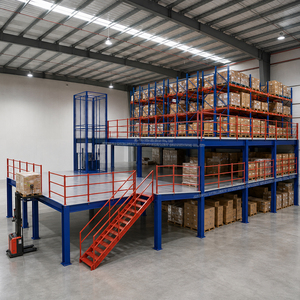
Second Floor System Mezzanine Platform with Steel Structure 300-2000KG Per SQM Industrial Loft Storage
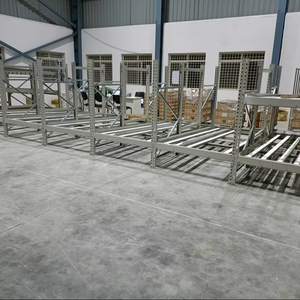
Heavy Duty Steel Powder Coated FIFO Rack Pallet Flow Racking System Gravity Flow Modular Storage
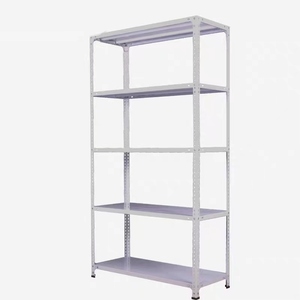
Light Duty Storage Steel Angle Shelf Rack Metal Shelves Holders for Versatile Industrial Facilities
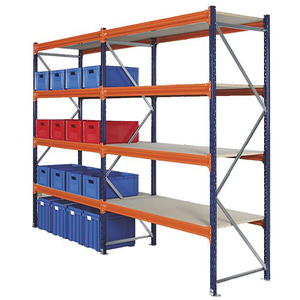
Peterack Steel 5-Layer Medium Duty Warehouse Storage Shelf Easy Assembled Selective Iron Rack Shelving
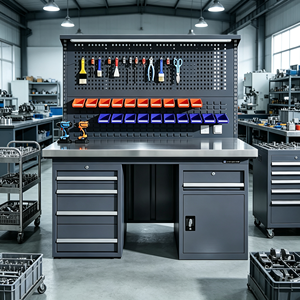
Multifunctional Stahlwerkbank Schwerlast Heavy Duty Modular Workstation for Workshop & Garage
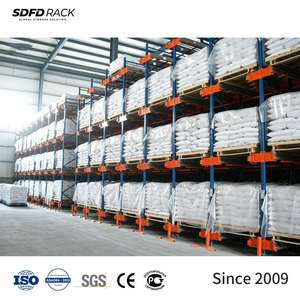
Durable Heavy Duty High Density Industrial Radio Shuttle Car Racks Movable Storage Shelving
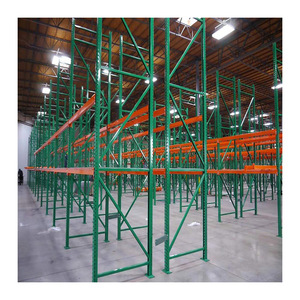
Mracking Heavy Duty Teardrop Pallet Racking High Load Engineered Selective Systems Customized for Sale
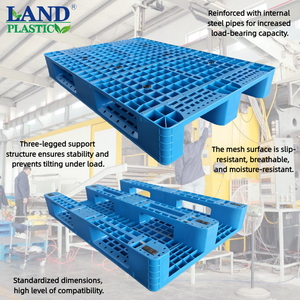
Standard 1200x800mm 4-Way HDPE Heavy Duty Plastic Pallet for Global Racking & Automated Logistics
Engineering Structural Integrity into Custom Pallet Stacking Racks
A rigorous metallurgical and mechanical evaluation framework for supply chain directors, warehouse design consultants, and industrial procurement authorities.
In high-velocity distribution centers, cold-storage vaults, and dynamic multi-tiered manufacturing facilities, traditional stationary selective racks often introduce rigid layout constraints. Custom OEM heavy-duty pallet stacking racks (frequently designated as post-and-cradle frames, portable stack racks, or modular tier bins) solve structural bottlenecks by unifying high-density storage with total operational agility. However, procuring non-standard industrial stacking equipment demands exhaustive scrutiny of raw steel chemistry, cold-forming processes, seismic dampening characteristics, and weld fatigue thresholds.
Unlike static rack frameworks that anchor permanently into concrete slabs via chemical expansion anchors, modular stacking racks rely on precision-machined interlocking target cups, flared leg guides, and corner column alignment sockets. The total compressive force of a 3-to-6 tier stack travels directly down vertical structural tubular members. Therefore, failure to account for eccentric loads, forklift dynamic impact shock, and secondary bending moments (governed by ANSI MH16.1, EN 15512, and FEM 10.2.02 codes) can lead to catastrophic progressive collapse.
Certified Structural Metallurgy
Fabricated exclusively with premium-grade Q235B, Q355B, and ASTM A500 Grade B/C structural steel tubing. Each batch includes 3.1 mill test certificates documenting yield strengths up to 355 MPa, carbon equivalents under 0.45% for superior ductility, and ultrasonic weld boundary testing.
Finite Element Stress Simulation
Every OEM geometry undergoes non-linear Finite Element Analysis (FEA) to map dynamic harmonic vibrations, vertical deflection ratios (kept below 1/200th of unsupported span), and maximum Von Mises stress points at corner junctions under full seismic lateral loads.
Extreme Environment Coating
Options encompass heavy thermosetting polyester electrostatic powder coatings (80–120μm dry film thickness) and ISO 1461 hot-dip galvanizing with >65μm zinc thickness, engineered for corrosive blast freezers down to -30°C and saline coastal environments.
From a functional intralogistics perspective, the return on investment of custom stacking frames lies in their nestability and modular collapse ratios. When production volumes drop seasonally or distribution lanes shift, dismountable post racks can be dismantled or nested at a 4:1 to 7:1 ratio. This collapses idle storage footprint across valuable staging areas and lowers empty backhaul freight costs by over 75% compared to rigid, non-collapsible steel bins.
| Engineering Parameter | Light-to-Medium Class | Heavy-Duty Industrial Tier | Extreme Heavy OEM Specification |
|---|---|---|---|
| Load Rating Per Module (SWL) | 500 kg – 1,000 kg | 1,000 kg – 2,500 kg | 2,500 kg – 5,000 kg (Engineered Solid Cast) |
| Maximum Tier Stacking Height | 3 Tiers (1 + 2 Elevated) | 4 to 5 Tiers Loaded | 6 Tiers Dynamic / Stabilizer Guided |
| Corner Post Profile (mm) | 50 x 50 x 2.5 Hollow Section | 60 x 60 x 3.0 / 70 x 70 x 3.5 Tube | 80 x 80 x 4.0+ Welded Heavy Seamless Tube |
| Base Deck Options | Expanded Mesh / Steel Slats | Formed Sheet Steel / Corrugated Deck | Heavy Channel Substructure + Robot Fork Pockets |
| Stacking Alignment Target | Pressed Cone Socket (50mm flare) | Heavy Cast Steel Target Cup | Reinforced 360-Degree Self-Locating Cast Sockets |
| Corrosion Resistance Compliance | Industrial Enamel Paint | Architectural TGIC Powder Coat | ISO 1461 Hot-Dip Galvanized / Marine Epoxy |
Emerging Procurement Trends in Pallet Stacking Systems (2025–2035)
How automation compatibility, automated guided vehicle (AGV) integration, and sustainability frameworks are shaping modern material handling investments.
AGV & AMR Autonomous Interfacing
Global procurement teams are shifting away from manual-only fork handling. Next-generation OEM stack racks integrate precision-guided laser retro-reflective targets, chamfered bottom runners, and standardized pick-up clearances that enable Autonomous Mobile Robots (AMRs) and automated counterbalanced forklifts to handle unanchored stacks with millimeter accuracy.
Supply Chain Decarbonization & Circularity
Corporate ESG directives are reshaping tender criteria. Industrial purchasers now demand scrap-minimized cold-roll forming, closed-loop thermosetting powder lines with zero VOC emission, and low-embodied-carbon steel certified under international environmental product declarations (EPD), replacing short-lifecycle wooden shipping skids.
Sensorized IoT Fleet Telemetry
Large-scale 3PL cold storage operators are piloting battery-free passive RFID transponders and industrial Bluetooth Low Energy (BLE) sensors integrated into hollow rack uprights. This enables automated, real-time inventory tier tracking and tilt-monitoring to prevent improper stacking heights inside high-bay staging sectors.
Why Tier-1 Global Enterprises Rely on Our Direct Manufacturing
Combining 60 years of structural intralogistics mastery with vertically integrated engineering control across 12 high-capacity manufacturing centers.
Full OEM Customization Engine
Every warehouse blueprint presents unique clear heights, column grids, and SKU geometries. Our engineering department executes tailor-made CAD and 3D SolidWorks mockups within 48 hours, customizing tier heights, heavy fork stirrups, side retention bars, drop-down gates, and specialized cradle profiles for cylindrical coils or raw textiles.
Automated Robotic Seam Welding
Human welding variability introduces structural failure risks in heavy-duty multi-tier stacks. Our production floors use multi-axis OTC robotic welding cells, continuous shielded metal arc processes, and automated submerged arc stations, ensuring penetration depth consistency across every corner post connection socket.
Strict ISO & Destructive Testing Protocol
Before batch dispatch, production samples undergo destructive vertical crush testing up to 2.5x safe working load (SWL) on hydraulic test rigs, ASTM B117 salt spray testing exceeding 1,000 continuous hours, and dye-penetrant surface weld inspections, backed by ISO 9001, ISO 14001, and EN 1090-2 execution class certifications.
Frequently Asked Questions: Industrial Pallet Stacking Procurement
Detailed technical, commercial, and operational clarifications designed to streamline capital expenditure evaluations for operations and supply chain executives.
What structural factors differentiate custom OEM stacking racks from standard selective pallet racks?
How do you calculate dynamic stability and safety margins for 4-to-6 tier stacking configurations?
Which surface finish should be specified: TGIC Powder Coating or Hot-Dip Galvanization?
What are the typical nesting and collapsibility ratios for shipping efficiency?
Can custom stacking racks integrate with automated mobile robots (AMRs) and automated forklifts?
What specific project data is required to generate custom OEM engineering drawings and quotations?
Ready to Engineer Custom Heavy-Duty Stacking Racks?
Consult directly with our intralogistics structural engineering team. We deliver custom CAD layouts, Finite Element structural analysis, and competitive factory-direct pricing for enterprise deployments worldwide.