Precision-Engineered Heavy Duty Industrial Storage Series
Manufactured across our global production centers to handle intensive load profiles, automated stacker interfaces, and harsh industrial environments with verified structural calculations.
Structural Design Principles of Heavy-Duty Single-Sided Cantilever Racks
Navigating static cantilever physics, moment-resisting upright foundations, and precision OEM fabrication for non-palletized long load storage.
1. Structural Mechanics and The Cantilever Principle
Single-sided cantilever racking systems represent one of the most mechanically demanding structural topologies in modern materials handling. Unlike conventional dual-post pallet rack upright frames that resolve gravity loads through symmetrical portal action, a single-sided cantilever column acts as a vertical cantilever beam subject to high combined bending and axial compression.
Because the load center of gravity sits outboard of the vertical upright profile, every kilogram placed on the cantilever arms induces a tremendous overturning moment at the base connection. Engineering high-capacity installations requires calculating the interaction of axial forces ($N$), shear stresses ($V$), and eccentric bending moments ($M$) under full asymmetric loading. At our heavy manufacturing centers, uprights are fabricated using either high-modulus roll-formed omega profiles with targeted gauge thickening or heavy hot-rolled structural steel sections (such as IPE, HEA, or custom wide-flange beams) compliant with European standard FEM 10.2.09 and American standard ANSI MH16.3.
The deflection limits of the horizontal cantilever arms are vital to operational safety. Under full working safe working load (SWL), standard engineering specifications limit vertical tip deflection to $L/200$ or $L/300$ depending on whether automated stacker cranes or operator-guided sideloading forklifts service the bays. Furthermore, cantilever arms are engineered with an integrated nominal 1.5° to 2.5° upward pitch to compensate for inherent elastic deformation under full load, preventing material from rolling off or tipping forward into the operating aisle.
| Structural Component | Roll-Formed Design (Q235B / Q355B) | Hot-Rolled Structural Steel (IPE / HEA) | Engineering Design Thresholds |
|---|---|---|---|
| Central Column Upright | Continuous slotted multi-fold profiles; 3.0mm–5.0mm gauge | Hot-rolled solid I-beams; heights up to 12 meters single-weld | Yield strength $f_y \ge 355\,\text{MPa}$; Euler column buckling safety factor $\ge 1.95$ |
| Cantilever Support Arms | Tapered tubular box sections; 600mm–1800mm reach | Hot-rolled channel/beam with welded heavy hinge connector | Deflection limited to $L/250$; safety factor against arm tip shear $\ge 2.0$ |
| Moment Base Assembly | Welded base shoe secured by twin anchor pins to structural slab | Full-penetration submerged arc welded heavy structural channel | Resists overturning moment $M_k = \sum (P_i \cdot e_i)$; Grade 8.8 expansion/chemical anchors |
| Longitudinal Bracing System | Cross-bracing tension rods & horizontal structural struts | Heavy structural angle or channel cross-bracing bays | Absorbs dynamic horizontal impact and longitudinal building seismic forces |
Single-sided systems are uniquely tailored for placement flush against exterior building walls, perimeter fences, or boundary partitions where rear access is structurally restricted. By eliminating front vertical columns, single-sided cantilever arrays deliver unbroken horizontal runs, enabling unrestricted longitudinal storage for extruded aluminum profiles, structural steel beams, PVC conduits, timber lumber packs, laminated panels, and industrial copper tubing.
2. Custom OEM Engineering Options: Precision Sizing to Your Product Profile
Industrial procurement teams routinely encounter off-the-shelf racking that fails to optimize warehouse volumetric space or falls short of structural safety margins under concentrated mechanical loads. Our custom OEM single-sided cantilever manufacturing provides a bespoke engineering pathway that aligns column heights, arm spacing, load distribution shoe geometry, and mechanical accessories with your material characteristics.
Our OEM structural engineering workflow starts with a finite element modeling (FEM) review of your load parameters:
- Individual Unit Weights and Package Densities: Ranging from 250 kg light-medium pick arms up to 3,500 kg per arm for heavy forged bar bundles.
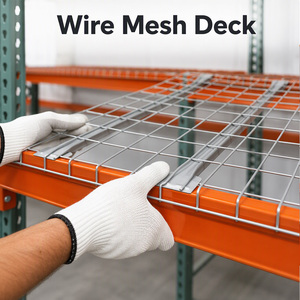
- Deflection Sensitivities: Non-rigid loads, such as flexible PVC pipes or thin-wall copper tubing, require continuous longitudinal beam connections or wire mesh decking between arms to eliminate package sagging.
- Handling Machinery Kinematics: Clearances are designed around reach trucks, 4-way multi-directional sideloaders, articulating forklifts, or overhead gantry bridge cranes.
Through our comprehensive OEM custom fabrication capabilities, we supply arms with integrated mechanical retention stops (removable or fixed drop-in pins), guide rail systems for high-density very narrow aisle (VNA) sideloader routing, polyurethane protective liners to avoid galvanic corrosion or surface scratching on stainless/aerospace alloys, and canopy roof brackets for outdoor wall installations featuring calculated snow and wind resistance loads.
Future Procurement Trends in Heavy-Duty Cantilever Infrastructure
Key procurement vectors reshaping global warehouse capital expenditure, ESG compliance, and long-load material supply chains over the next decade.
1. Transition to High-Strength Low-Alloy (HSLA) Steels
Global steel procurement is pivoting rapidly from generic carbon grades toward micro-alloyed HSLA steels such as Q355B and S355JR. These formulations increase yield strength while reducing total structural tare weight by 14% to 18%. This shift directly mitigates freight shipping costs and cuts embedded carbon metrics on international cross-border deliveries.
2. Outdoor Corrosion Protection Upgrades
With warehouse industrial land rents rising in North America, Europe, and Australasia, companies are moving raw metal and timber storage outdoors along plant perimeter walls. Procurement contracts increasingly demand hot-dip galvanizing per ISO 1461 (minimum 70-85 µm zinc thickness) or marine-grade duplex coatings resistant to 1,500+ hours in ASTM B117 salt spray tests.
3. Stringent Seismic and Dynamic Slab Testing
Tier-1 industrial EPCs and institutional REIT owners mandate verifiable dynamic simulations. Racking tenders now require site-specific anchor pullout verification, non-linear pushover seismic modeling, and slab stress FEA to ensure heavy single-sided cantilevers withstand lateral earthquake ground accelerations without column-base detachment.
Intralogistics Innovation: Cantilever Automation & Smart Sensing
How automation, IoT strain monitoring, and robotic handling machinery are modernizing traditionally static heavy cantilever yards.
Integration with AS/RS Stacker Cranes
Single-sided cantilever racks are no longer confined to manual forklift handling. Automated cantilever stacker cranes equipped with rotating telescopic forks or multi-prong extraction mechanisms now travel up to 30 meters high along continuous cantilever walls, executing high-velocity, software-orchestrated pick operations without human aisle entry.
Real-Time Load & Deflection Telemetry
Next-generation installations feature smart optical sensors and bonded strain gauges at critical column-base moment welds. These industrial IoT monitors track real-time arm deflection, overload alerts, and mechanical impact shocks, interfacing directly with Enterprise WMS/WCS platforms to flag maintenance needs before structural yield thresholds are breached.
Hybrid Cantilever-Supported Mezzanine Platforms
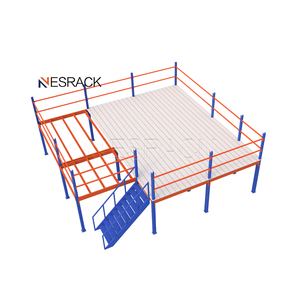
To maximize facility vertical space, heavy single-sided cantilever columns are increasingly engineered with integrated upper-tier connection spigots. This allows the heavy vertical steel columns to simultaneously carry cantilever storage arms below and support an elevated heavy-duty structural steel mezzanine walkway or automated sorting level above.
Why Global Buyers Partner with Our Manufacturing Network
Combining 60 years of structural storage heritage, comprehensive in-house manufacturing, and a worldwide technical service footprint across 70+ countries.
In-House Finite Element Structural Design
Every cantilever project is calculated by certified structural engineers using specialized FEA modeling. We verify column base shear, beam deflection curves, dynamic seismic forces, and anchor slab interactions to supply full engineering stamps and load-rating certificates.
12 Direct Production Facilities
Our distributed manufacturing ecosystem houses automated roll-forming lines, robotic continuous welding stations, shot blasting plants, and computerized electrostatic powder coating lines. We maintain total control over dimensional tolerances and delivery schedules.
7 Dedicated R&D Research Centers
We continuously advance intralogistics engineering, testing full-scale column assemblies, arm-to-column locking mechanisms, and dynamic sideloader rail interfaces. Our R&D ensures every design adheres strictly to the latest EN, FEM, ANSI, and RMI standards.
Commercial Network Across 70+ Countries
With local offices in 23 countries and certified engineering representatives worldwide, we provide smooth on-site project coordination, language support, site surveys, and regional regulatory compliance for turn-key execution.
Certified Steel Traceability & Quality QA
We work exclusively with certified prime steel mills, documenting chemical composition and tensile elongation test certificates (EN 10204 3.1) for every heat batch of plate, hot-rolled beam, and tube processed through our plants.
End-to-End Lifecycle Services
Our commitment extends well beyond component manufacturing. We deliver complete site installation supervision, annual safety rack audits, non-destructive weld testing, rapid replacement parts, and capacity reconfiguration consulting as warehouse requirements evolve.
Frequently Asked Questions on Heavy-Duty Cantilever Racking
Practical engineering answers to simplify specifications, resolve structural load calculations, and expedite OEM contract negotiations.
Q1: How does single-sided cantilever racking differ from double-sided configurations?
A single-sided cantilever rack features arms extending from only one side of the vertical upright column, making it ideal for placement against building walls, perimeters, or boundary structures. Mechanically, the single-sided column must resist 100% of the induced overturning bending moment through its welded base assembly and heavy slab floor anchors. In contrast, double-sided racks feature arms on both sides of a central spine, which naturally balances static gravity loads across the column when loaded uniformly on both faces.
Q2: What are the critical differences between roll-formed and hot-rolled cantilever arms?
Roll-formed arms are cold-formed from steel coils into C or box shapes, providing a cost-effective, adaptable solution for light-to-medium uniform loads (typically up to 800 kg per arm). Hot-rolled arms are manufactured from solid structural IPE, HEA, or structural channel sections. Hot-rolled profiles provide superior structural ductility, high impact resistance against forklift collisions, and safe working capacities exceeding 2,500 to 3,500 kg per arm for heavy industrial steel stockyards.
Q3: How is safe working load (SWL) calculated along the length of an arm?
Cantilever load capacity ratings assume a Uniformly Distributed Load (UDL). If a 1,200mm arm is rated for 1,000 kg, that weight must be spread evenly along its entire length. If the load is applied as a concentrated point load at the arm's outer tip, the induced bending moment on the arm hinge weld is doubled, reducing the effective safe working capacity by roughly 50%. Our structural engineering calculations detail both UDL and localized point-load limits on every system plate.
Q4: What floor slab thickness and concrete specifications are required?
Because single-sided columns exert high uplift tensile forces on rear anchors and concentrated compressive loads on the front base foot, industrial concrete slabs generally require a minimum compressive strength of 25 to 30 MPa (C20/25 or C25/30) and a minimum slab thickness of 150mm to 250mm, reinforced with welded rebar mesh. For tall systems (over 6 meters) with high arm loads, our engineers evaluate dynamic moment reactions to verify slab thickness and determine whether custom base plates or chemical resin capsule anchors are needed.
Q5: What surface finishing should be selected for outdoor cantilever yards?
For indoor warehousing in temperature-controlled spaces, high-adhesion electrostatic polyester powder coating (60–80 µm) provides excellent wear and scratch resistance. For exterior outdoor yard storage exposed to rain, snow, UV rays, or coastal marine air, hot-dip galvanizing according to ISO 1461 / ASTM A123 is mandatory. The molten zinc bath creates a metallurgical alloy bond with the steel substrate, delivering 25+ years of zero-maintenance corrosion protection.
Q6: How is arm elevation and spacing adjusted over time?
Our OEM columns are fabricated with laser-punched or heavy stamped connection holes spaced at standard 100mm, 75mm, or 50mm vertical increments along the entire face. Arms utilize high-shear steel connection pins, dual locking lugs, or heavy grade 8.8 bolts. This modular design allows plant warehouse managers to adjust vertical shelf opening levels quickly with standard tools as their product inventory dimensions evolve.
Q7: Can cantilever arms store pallets alongside long materials?
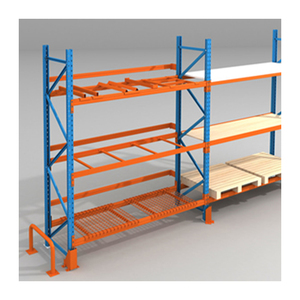
Yes. By mounting heavy steel wire mesh decking, hot-rolled structural steel tube cross-supports, or perforated galvanized deck plates between adjacent cantilever arms, the bay can serve as a continuous shelf. This hybrid design allows facilities to store standard Euro or ISO pallets, plastic bulk crates, and irregular equipment alongside long pipe and timber stock within the same storage bay.
Q8: What international safety and engineering standards govern manufacturing?
Our manufacturing and engineering design strictly follow FEM 10.2.09 (Design of Cantilever Racking in Europe), EN 15512 / EN 15620 (Steel Static Storage Systems tolerances and clearances), and ANSI MH16.3 / RMI (Specification for the Design, Testing and Utilization of Industrial Steel Cantilever Racks in North America). Material test reports (MTR) and CE/ISO certifications are provided with all project documentation.
Connect with a Heavy-Duty Storage Structural Engineer
Submit your site layout, target material profiles, and load specifications. Our OEM intralogistics engineering team will deliver a comprehensive 3D layout simulation, complete moment-deflection calculations, and a transparent direct factory quotation—with no obligation.