Precision Storage & Industrial Racking Lineup
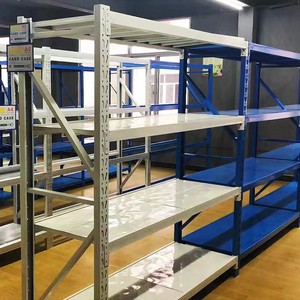
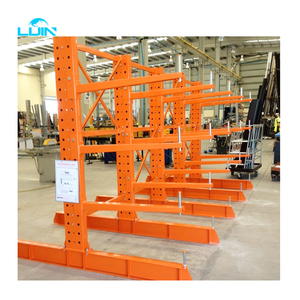
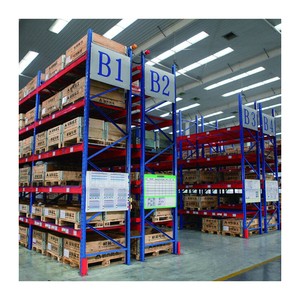
Direct from our certified fabrication centers: factory-calibrated structural steel frames, high-capacity cantilever wings, gravity flow tracks, and welded industrial storage platforms built to global safety certifications.
Intralogistics Engineering Prowess
Global Direct Export Destinations
Integrated Manufacturing Facilities
R&D Centers for Mechanical Design
Push Back Pallet Racking: Engineering Architecture & Kinematics
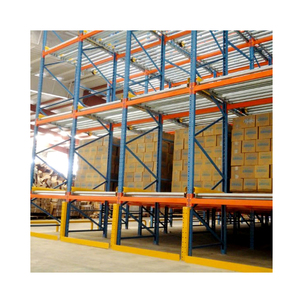
Push back pallet racking is a dynamic high-density storage strategy engineered for Last-In, First-Out (LIFO) inventory management, maximizing footprint efficiency while eliminating the internal collision hazards common in drive-in racking.
| Evaluation Parameter | Push Back Racking (Cart/Roller) | Drive-In Pallet Racking | Selective Racking (Standard) | Automated Pallet Shuttle |
|---|---|---|---|---|
| Storage Volume Density | High (Up to 75% Floor Use) | Very High (Up to 80%) | Moderate (35-40%) | Extreme (85%+) |
| Selectivity / Access Speed | Fast (Dedicated Lane per SKU) | Slow (Deep Maneuvering) | 100% Immediate | Automated Dispatch |
| Forklift Mast Exposure | Zero (Loads at Aisle Face) | High (Operates Inside Racks) | Minimal Aisle Clearance | Aisle Face Handover |
| Pallet Integrity Sensitivity | Tolerant (Cart Supports Deflection) | High (Risk of Skid Dropping) | Standard Beam Support | Requires Strict Pallet QA |
| Cold Storage Feasibility | Optimal (-30°C Lubricants) | Good, but Slow Operation | High Cubic Chilling Loss | Requires LiFePO4 Preheating |
Next-Generation Push Back Racking: Technological Trajectory
Dynamic push back storage is evolving beyond passive steel structures. Warehouses must integrate mechanical modularity with automated material handling equipment and real-time tracking.
Why Partner With Us: Industrial OEM Engineering Capabilities
Combining heavy structural steel fabrication with end-to-end global project management, we help system integrators and supply chain operators scale their intralogistics infrastructure reliably.
Frequently Asked Questions: Industrial Push Back Pallet Racking
Key technical, structural, and commercial questions to consider before procuring push back storage systems.
Q: How deep can a push back pallet racking system be engineered?
Push back racking systems are commonly manufactured from 2-deep up to 6-deep per lane. A 2-to-4-deep profile is standard for balanced handling, while 5-to-6-deep configurations are typically engineered with heavy-duty structural steel channel tracks and reinforced nested carts to support total push-back forces safely.
Q: What is the operational difference between nested cart systems and roller push-back designs?
Nested cart systems use low-profile steel trolleys that telescope along inclined tracks. They are durable, require virtually no bearing maintenance, and accommodate standard pallets well. Roller push-back systems use full-width roller beds with speed governors, making them ideal for varied or damaged pallet bottoms, extra-deep lanes, and heavy loads.
Q: How is push-back force managed to avoid forklift overload?
Track inclination is precisely calculated between 2.5% and 3.5% (roughly 1:30 or 1:40 pitch). This ensures pallets slide forward smoothly under gravity during retrieval, while requiring only about 4% to 5% of total pallet train weight in pushing force during loading—well within the standard push-pull limits of common forklifts.
Q: Can push back racking be adapted to seismic zones and uneven floors?
Yes. Our design process includes site-specific seismic calculations (in accordance with RMI and Eurocode 8). Uprights are engineered with oversized anchor footplates, high-grade concrete expansion bolts, and heavy-duty portal ties, using shim plates to compensate for floor unevenness and ensure level track rails.
Q: How does push back compare to drive-in racking for operational throughput?
Push back racking offers 2.5 to 3 times the retrieval throughput of drive-in racking. Because forklift drivers never enter the rack structure, loading and picking take place entirely at the aisle face, reducing truck cycle times and virtually eliminating rack column collisions.
Q: What documentation is required for custom OEM fabrication quotes?
To produce an accurate engineering study and pricing, please provide: warehouse architectural layout (with clear height limits), pallet dimensions (length, width, height including overhang), maximum and average pallet weights, pallet type/bottom board layout, target lane depth, and local seismic zone data.
Accelerate Your Storage Capacity with Engineered Precision
Consult with our OEM structural racking engineers today. Receive custom lane layouts, FEA stress simulations, seismic engineering verifications, and competitive direct-factory export pricing.