60+
Years Intralogistics Legacy
12
Direct Production Centers
70+
Export Export Destination Markets
40M+
Max Height Engineering Capability
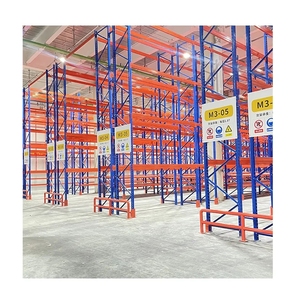
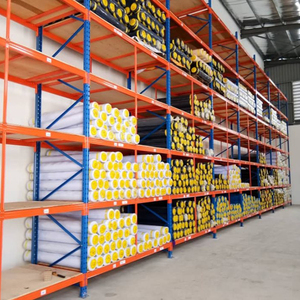
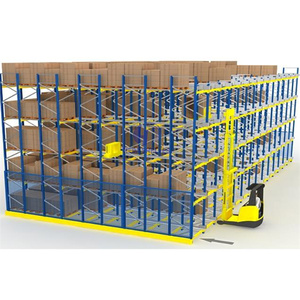
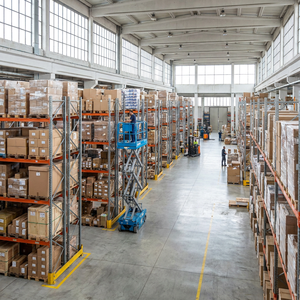
Recommended Heavy-Duty ASRS & Industrial Storage Assemblies
Precision-fabricated cold-rolled profiles, dynamic load configurations, and high-density material handling setups built for severe industrial duty cycles.
Engineering Whitepaper: Structural Mechanics in High-Bay Automated Systems
Why procurement teams and engineering leads must consider dynamic stress, deflection tolerances, and seismic factors in automated high-bay architecture.
The Paradigm Shift: From Static Racking to Active Robotic Substrates
Modern Automated Storage and Retrieval Systems (ASRS) have completely redefined the structural mandate of the warehouse skeleton. In a traditional selective racking layout, the steel structure is treated as an essentially static buffer meant to bear localized dead weight, accommodating the broad operating tolerances of manual counterbalanced forklifts. In stark contrast, an ASRS racking infrastructure operates as a high-precision kinematic machine. The tolerance stack-up across a 35-meter-high automated upright frame cannot exceed fractions of a millimeter per vertical bay without causing optical guidance mismatch, sensor misalignment, or catastrophic interference with high-speed stacker crane extractors and 4-way robotic shuttles running at accelerations upwards of 1.5 m/s².
When engineering OEM/ODM ASRS systems, intralogistics engineers must account for compound dynamic fatigue. Stacker cranes impose horizontal braking and acceleration forces directly onto the top guide rails and base floor interfaces. If the structural rack uprights exhibit excessive deflection (typically bounded strictly within 1/200th to 1/500th of the span, governed by FEM 9.831 and EN 15620 class 100-400 criteria), automated optical positioning sensors trip emergency stop sequences, causing systemic operational bottlenecks. Therefore, custom profile cold-rolling utilizing high-tensile certified steel (such as Q355B or certified structural S355MC grades) with uniform wall thickness and automated continuous seam robotic welding is not a luxury—it is an absolute mechanical prerequisite for lifecycle uptime.
Future Procurement Trends in Heavy-Duty ASRS Infrastructure
Critical market shifts defining intralogistics capital allocation through 2026 and beyond.
Turnkey Clad-Rack Engineering
Industrial land inflation is driving enterprise buyers away from conventional brick-and-mortar shells toward clad-rack (rack-supported) buildings. In this configuration, the high-density ASRS uprights form the structural skeleton supporting the building's roof and sidewalls, reducing civil engineering timelines by up to 35% and slashing structural building capital expenses.
Modular 4-Way Multi-Shuttle Migration
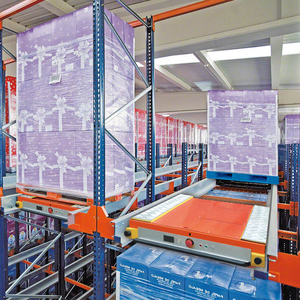
While massive single-mast stacker cranes dominated previous decades, modern intralogistics favors 4-way radio shuttle systems. These modular vehicles move seamlessly across longitudinal storage channels and transverse transfer aisles. Scalable fleets eliminate single-point-of-failure liabilities and optimize throughput in energy-intensive cold chain environments.
Seismic Resiliency & FEA Modeling
Global supply chain robustness mandates stringent compliance with Eurocode 8, RMI MH16.1, and seismic zone 4 parameters. Procurement teams require comprehensive Finite Element Analysis (FEA) verifying node stiffness, dynamic base-plate stress distribution, and non-linear harmonic resonance under full operational load before raw coil slitting begins.
Technological & Material Development Trajectories
How metallurgy, sensory IoT integration, and environmental engineering are transforming automated steel racks.
Ultra-Resilient Surface Passivation
Demanding industrial applications—ranging from sub-zero refrigerated distribution centers (-30°C) to chemical and fertilizer warehousing—require advanced finishing. Trends highlight high-durability continuous hot-dip continuous galvanization (HDG) and zinc-aluminum-magnesium alloy coatings that prevent micro-corrosion and micro-flaking along guide channel flanges.
IoT-Enabled Structural Health Monitoring
The integration of micro-strain gauges, acoustic impact sensors, and optical alignment monitors embedded directly into critical structural upright anchors allows real-time structural health monitoring. This sensory data connects via API into Warehouse Management Systems (WMS) to warn managers of sub-visual impact damage or foundation shifting.
Automated Micro-Fulfillment Adaptation
Rapid urban fulfillment requires decentralized, compact ASRS units capable of handling plastic totes and variable-sized bins alongside heavy industrial pallets. Lightweight, high-rigidity aluminum-alloy hybrid racking profiles are engineered to pair seamlessly with Autonomous Mobile Robots (AMRs) and automated miniload cranes in urban micro-fulfillment centers.
Engineering Matrix: Automated Systems vs Conventional Racks
Benchmarked mechanical thresholds critical for equipment integration and procurement sign-off.
| Structural & Operational Parameter | Conventional Pallet Racking | Semi-Automated Shuttle Racking | High-Bay Unit-Load ASRS Racks |
|---|---|---|---|
| Maximum Vertical Height Capacity | Up to 12.0 Meters (Equipment Constrained) | Up to 18.0 Meters | Exceeding 40.0 Meters (Clad-Rack) |
| Upright Deflection Tolerance (EN/FEM) | 1 / 200 of Clear Height | 1 / 350 of Clear Height | 1 / 500+ Strict Tolerance (EN 15620) |
| Footprint Space Utilization Efficiency | 35% - 45% (Aisle Intensive) | 65% - 75% (Deep-Lane Compact) | 85% - 92% (High-Bay Volume Density) |
| Unit Handling Productivity (Cycles/Hour) | 20 - 30 Pallets / Operator Shift | 40 - 60 Pallets / Shuttle System | 100 - 300+ Automated Continuous Cycles |
| Safety Margin & Structural Fatigue Life | Variable (Prone to Forklift Collision) | High (Protected Channel Tracks) | Extreme (Zero Human Touch, Kinematic Safety) |
Enterprise OEM/ODM Manufacturing Capabilities & Authority
Backed by 60 years of intralogistics mastery, robust engineering teams, and world-class structural manufacturing facilities.
12 Advanced Production Centers
Complete control over cold-forming, continuous punching, laser cutting, and automated powder-coating lines. Direct manufacturing ensures structural traceability from primary steel mill coils to final field anchoring, with zero third-party fabrication compromises.
7 Dedicated Intralogistics R&D Hubs
Pioneering the intersection of mechanical load calculation, robotic kinematics, and digital inventory orchestration. Recognized in the Gartner® Magic Quadrant™ for WMS, ensuring seamless end-to-end integration between steel racks and automation software.
Global Tier-1 Engineering Footprint
With operational offices spanning 23 countries and projects commissioned across more than 70 nations, our multi-lingual structural engineers guarantee that local building codes, seismic parameters, and CE/RMI standards are rigorously met on every project.
Frequently Asked Procurement & Engineering Questions
Detailed technical answers addressing the concerns of logistics planners, industrial architects, and purchasing directors.
What are the critical engineering inputs required for a custom OEM/ODM ASRS racking quote?
To achieve an accurate structural calculation and optimized bay configuration, our design team requires: (1) Unit load parameters including nominal pallet dimensions (length, width, overhang), load height, and maximum dynamic gross weight; (2) Facility layout schematics showing clear ceiling height under beam, column grid locations, slab thickness, and compressive strength rating (e.g., C25/30 or C30/37); (3) Dynamic handling performance metrics, such as required throughput cycles per hour, preferred automation architecture (stacker crane vs. 4-way multi-shuttle), and fire suppression (sprinkler/in-rack deluge) piping clearance; and (4) Site-specific seismic acceleration factors (ag) and wind load factors for clad-rack systems.
How does our structural design mitigate cumulative beam deflection in high-speed stacker crane aisles?
ASRS uprights and load beams are engineered to significantly exceed the rigidity standards of standard manual racking. We manufacture custom closed-box beam profiles with multi-claw reinforced connector brackets, secured with high-grade tensile safety pins to eliminate rotational deflection under point loading. Guide rail mounting profiles are directly integrated into the upright structural web using high-precision CNC punch patterns. This guarantees that stacker crane horizontal guide rollers experience zero track divergence or dynamic chatter across the entire acceleration profile.
Can existing conventional warehouses be retrofitted with automated ASRS or shuttle systems?
Yes. A substantial portion of global intralogistics capital is allocated to brownfield warehouse modernizations. Prior to recommending an automated retrofitting pathway, our structural engineering team conducts slab core testing, ground-penetrating radar floor flatness surveys (validating VDMA / DIN 18202 tolerances), and clear height analysis. For facilities where clear height is restricted below 15 meters, radio shuttle platforms or AMR goods-to-person floor grids provide an ideal high-density solution that integrates seamlessly into existing floor plans without demanding costly roof-raising civil modifications.
What surface treatments are applied to protect ASRS structures in cold chain or corrosive environments?
We offer dual surface protection methodologies tailored to operating environments. For ambient dry warehouses, steel components receive an automated multi-stage degreasing, zinc phosphate pre-treatment, and electrostatic thermo-hardened epoxy-polyester powder coating cured at 200°C for exceptional scratch and impact resilience. For sub-zero blast freezers (-30°C) or chemically active manufacturing facilities, structural components are processed via hot-dip galvanization conforming to ISO 1461, providing a durable zinc barrier that eliminates corrosion and prevents surface coating flaking inside robotic channels.
How are software layers (WMS/WCS) aligned with the mechanical rack layout?
Unlike standalone rack fabricators who treat the physical steel as an isolated product, our end-to-end integration unifies the structural coordinate map with the Warehouse Management System (WMS) and Warehouse Control System (WCS). Every pallet bay, dynamic buffer level, and shuttle transition station is digitally mapped into the system's software twin. This eliminates commissioning discrepancies, simplifies fire prevention interlocks, and ensures that robotic load-handling extractors operate at peak operational efficiency from day one.
Architect Your High-Performance Automated Facility Today
Collaborate directly with our senior intralogistics structural engineers to develop custom OEM/ODM ASRS racking solutions tailored to your load profiles, facility constraints, and global operating benchmarks.