Featured Industrial & Mobile Pallet Storage Configurations
Direct-from-factory high-density engineering, structural cold-rolled steel profiling, and bespoke load-bearing setups for international procurement teams.
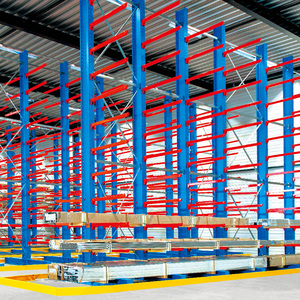
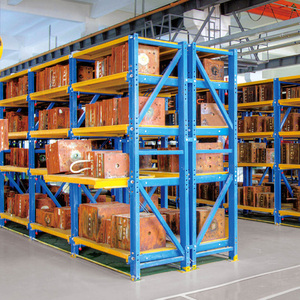
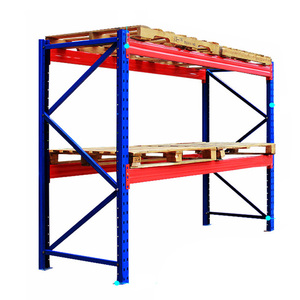
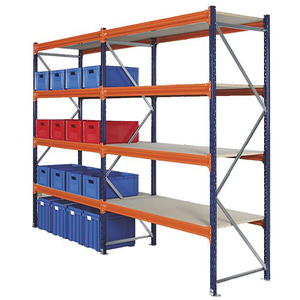
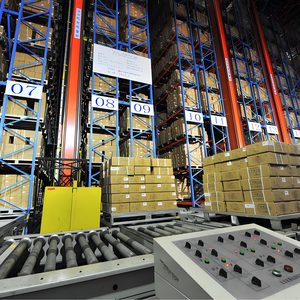
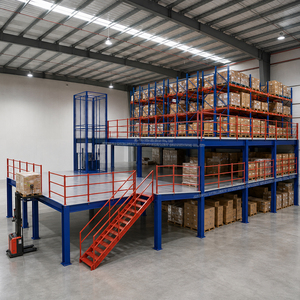
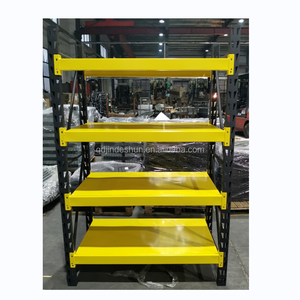
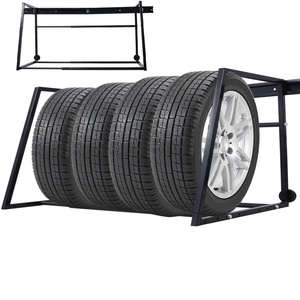
Structural Architecture of OEM/ODM Heavy Duty Mobile Pallet Racking
In modern warehousing, surface footprint represents one of the most critical balance-sheet liabilities. Traditional static selective pallet racking typically dedicates up to 60% of total floor surface strictly to forklift operation aisles. As an engineering manufacturer and global exporter, our OEM/ODM heavy-duty mobile pallet racking systems mount conventional superstructure racks on motorized structural bases that roll along high-precision embedded floor tracks. By converting multiple dedicated corridors into a single dynamically automated access aisle, floor area footprint utilization surges by 80% to 120%, effectively doubling total SKU capacity within the existing building envelope without requiring real estate expansion.
Motorized Mechanical Bases
Fabricated using heavy-gauge structural box beams with high structural rigidity. Built-in synchronized multi-wheel drives eliminate racking torsion and track binding during heavy start-stop cycles.
Integrated Safety Curtains
Dual-circuit optical infrared light barriers continuously monitor aisle clearances. Full emergency mechanical bumper stops, sonic beacons, and anti-pinch safety edges protect operators and lift equipment.
WMS/PLC Orchestration
Onboard Programmable Logic Controllers (PLCs) integrate seamlessly with enterprise Warehouse Management Systems (WMS). Radio Frequency (RF) and automated aisle pre-opening optimize vehicle routing.
Seismic Engineering & Certified Floor Loading Verification
Every OEM/ODM mobile base project undergoes finite element analysis (FEA) based on EN 15512, RMI, and FEM 10.2.07 standards. Calculations account for slab deflection, base shear forces, overturning moments, and seismic ground accelerations, guaranteeing structurally safe operations in any seismic zone globally.
Engineering Matrix: Mobile Bases vs. Static Conventional Configurations
| Performance Metrics | Static Selective Pallet Racks | Drive-In / Drive-Through | OEM/ODM Heavy Duty Mobile Racking |
|---|---|---|---|
| Volumetric Space Utilization | 35% - 40% (Low) | 60% - 65% (Medium) | 85% - 90% (Maximum Density) |
| Direct SKU Selectivity | 100% (Instant Direct Access) | <15% (LIFO Bottlenecks) | 100% (Every Pallet Accessible) |
| Thermal Footprint in Cold Storage | Baseline (High Loss) | Moderate Optimization | Reduces Refrigeration Volume by 40% |
| Typical Aisle Requirement | One aisle per rack face | One aisle per storage run | Single dynamic opening for entire block |
| Structural Fatigue Life | Standard Static Loading | Forklift collision risk elevated | Monitored Motorized Motion, Extended Life |
Global Procurement & Technological Trends in Heavy Duty Mobile Storage
Procurement directors and intralogistics planners face escalating industrial electricity costs, rising industrial land values, and stricter environmental mandates. As tier-one factories and exporters, our manufacturing roadmap reflects four pivotal market evolutions shaping capital allocations:
Cold Chain Cold-Storage Optimization
Energy consumption represents up to 70% of cold warehouse operational budgets. Consolidating air volumes with mobile racking drops chilled cubic requirements significantly, paying back capital expenditure within 24 to 36 months.
Hybridization with AMRs & AGVs
Rather than relying entirely on manual forklifts, mobile base controllers now broadcast position telemetry to Autonomous Mobile Robots (AMRs), opening designated corridors automatically before robotic units arrive.
Predictive Vibration Telemetry
Modern mobile carriages are manufactured with multi-axis accelerometers and motor thermal sensors. Edge computing modules detect rail anomalies and wheel degradation long before unscheduled downtime occurs.
Why Global Supply Chains Source from Our Manufacturing Facilities
Combining 60 years of engineering pedigree with global project delivery across 70+ nations.
12 Modern Production Plants
We maintain full vertical control over raw steel roll-forming, laser profiling, robotic welding, and automated thermoset powder coating lines, ensuring rigorous dimensional consistency and metallurgical integrity.
Full In-House Engineering & R&D
Our 7 research centers continuously simulate dynamic live-load behavior, structural fatigue, and seismic responses. Tailored OEM/ODM engineering turns complex warehouse blueprints into optimized, high-density layouts.
Turnkey Lifecycle & Export Support
From seaworthy rust-inhibitive packaging and worldwide containerized logistics to on-site assembly supervision, load testing, and comprehensive lifetime parts availability across our global dealer network.
Frequently Asked Questions by Industrial Sourcing Teams
Authoritative guidance addressing the primary engineering and cost parameters for heavy-duty mobile racking projects.
What slab floor specifications and rail tolerances are required for heavy-duty mobile racking?
How does the system ensure operator safety inside an open aisle during picking operations?
Can an existing standard selective pallet racking setup be converted into a mobile system?
What are typical cycle times for opening an aisle, and how does this affect throughput?
How are OEM/ODM international orders packaged and protected for maritime ocean shipping?
Plan Your High-Density Intralogistics Facility
Consult with our direct factory application engineers. We provide comprehensive AutoCAD layouts, FEA structural calculations, and detailed OEM/ODM volume pricing tailored to your exact warehouse footprint.
Get Catalog