Engineered Heavy-Duty Double Deep Systems
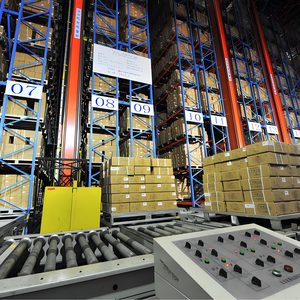
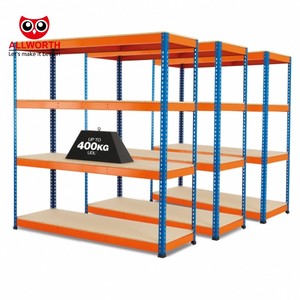
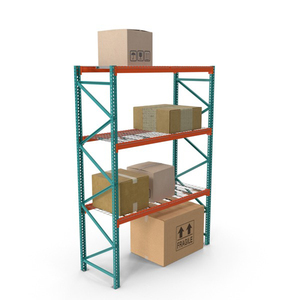
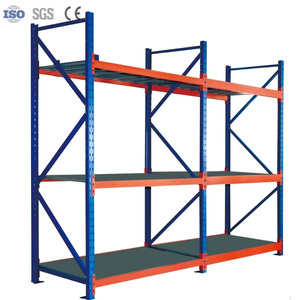
Select from our precision-rolled, structural grade pallet storage configurations engineered for dynamic reach-truck handling, deep-bay selectivity, and seismic durability.
1. Executive Summary & Volumetric Engineering Principles of Double Deep Racking
In modern high-throughput supply chains, warehouse real estate expenditures constitute one of the fastest escalating operating overheads. Industrial distribution centres, cold-storage logistics complexes, and fast-moving consumer goods (FMCG) buffer hubs consistently face the physical contradiction of balancing floor space volumetric utilization against immediate pallet accessibility. While standard single-selective pallet racking ensures 100% immediate selectivity, it limits storage footprint efficiency by dedicating up to 60% of total facility floor area to operating forklift aisles.
Heavy-duty double deep pallet racking addresses this fundamental architectural challenge by storing pallets two-deep in back-to-back configurations. By eliminating one working aisle out of every two, double deep layouts consolidate the aisle-to-rack ratio, achieving an immediate 30% to 50% density surge over standard selective systems, and reaching storage densities approaching drive-in and push-back systems without sacrificing the dynamic inventory velocity demanded by modern enterprise WMS suites.
From an applied structural perspective, double deep pallet racking is not simply two rows of selective racking welded together. Because reaching the secondary deep position requires specialized handling mechanics—either pantograph reach trucks, reach mast trucks equipped with hydraulic fork positioners, or automated stacker cranes with dual-depth telescopic forks—the racking framework must withstand compounded dynamic eccentric forces, higher deflection moments, and rigorous torsional stress concentrations.
2. Benchmark Evaluation Framework: What Distinguishes Tier-1 Heavy Duty Racking Factories
When engineering and supply chain procurement executives evaluate global manufacturing facilities for double deep pallet racking, relying strictly on price-per-ton metrics introduces extreme operational risk. The operational safety factor, cyclic fatigue life, and beam deflection characteristics under dynamic mast extension dictate the total cost of ownership (TCO). Below are the 10 structural manufacturing pillars that define the world's leading heavy-duty double deep pallet racking production plants:
1. Certified Metallurgy
Direct sourcing of prime certified structural micro-alloy steel (Q235B, Q355B, S355JR, or SS Grade 50) verified by chemical spectrographic analysis and Charpy impact tests.
2. Progressive Roll-Forming
Continuous multi-station cold roll-forming lines (24–32 forming passes) preventing residual internal stresses and profile distortion across 14-meter continuous uprights.
3. Punching Tolerances
Automated CNC high-speed perforating lines ensuring pitch repeatability under ±0.1mm tolerance across standard 50mm and 75mm beam adjustment intervals.
4. Surface Pretreatment
Automated 5-stage chemical pre-treatment and degreasing followed by shot blasting to Sa 2.5 cleanliness, eliminating mill scale prior to epoxy-polyester coating.
5. Robotic Beam Welding
Twin-wire robotic MIG/MAG welding stations ensuring full penetration welds on interlocking beam end connectors to resist maximum torsional cyclic loads.
6. Structural Compliance
System testing certified in accordance with EN 15512:2020 (European Standard), RMI MH16.1 (US Specification), and AS 4084:2023 (Australian Standard).
7. Full-Scale In-House Lab
Dedicated full-scale stub-column compression test beds, beam connector shear tests, and dynamic looseness cyclic testing facilities.
8. Seismic Engineering (FEA)
Finite element analysis (FEA) dynamic simulation models tailored for high-seismic zones (IBC, Eurocode 8, NZS 1170.5) calculating frame drift and baseplate shear.
9. Automation Compatibility
Dimensional tolerances calibrated for automated warehouse systems, autonomous mobile robots (AMRs), and stacker crane telescopic fork interfaces.
10. Annual Tonnage Scale
Large-scale fabrication output capacity (>100,000 metric tons per annum) guaranteeing raw material coil price stability and strict on-schedule multi-phase delivery.
3. Comparative Matrix: Double Deep vs. Alternative High-Density Systems
Selecting an intralogistics storage layout requires balancing SKU profile distribution, pallet turnover velocity, floor slab load limits, and capital expenditure (CAPEX). Below is an engineering comparison matrix analyzing Double Deep racking against primary market alternatives:
| Storage System | Storage Density | Immediate Selectivity | Stock Rotation | Aisle Width Req. | Relative CAPEX / Pallet | Ideal Inventory Profile |
|---|---|---|---|---|---|---|
| Standard Selective | Baseline (100%) | 100% of Pallets | FIFO or LIFO | 3.0m – 3.8m | Low (1.0x) | High SKU diversity, 1–2 pallets per SKU |
| Double Deep Pallet Rack | High (+35% to +50%) | 50% Direct (2 Pallets/Lane) | LIFO (by lane) | 3.0m – 3.4m | Low-Medium (1.2x) | Medium SKU diversity, 2–10 pallets per SKU |
| Drive-In / Drive-Through | Very High (+60% to +75%) | Low (Lane-dependent) | Strict LIFO (FIFO if 2-sided) | Dedicated Lane Entry | Medium (1.4x) | Bulk homogeneous batches, cold stores |
| 4-Way Pallet Shuttle | Ultra High (+80% to +100%) | Semi-automatic (Software) | FIFO or LIFO | Shuttle Track Channel | High (2.5x – 3.5x) | Deep cold storage, automated buffers |
| Mobile Pallet Racking | Maximum (+85% to +100%) | 100% (Single aisle shift) | FIFO or LIFO | 1 Single Dynamic Aisle | High (3.0x) | Extremely expensive floor space, low turnover |
4. Future Procurement Trends: The Next Decade of Double Deep Storage (2025–2035)
The manufacturing landscape for heavy-duty storage racks is transitioning through a massive technological convergence. Supply chain directors specifying warehouse equipment across North America, Europe, Asia, and Latin America must design infrastructure prepared for the technological advancements of the coming decade:
Low-Carbon "Green Steel" Procurement
Mandated Scope 3 carbon accounting has accelerated demand for structural steel manufactured using Electric Arc Furnaces (EAF) powered by renewable energy. Leading OEMs now provide environmental product declarations (EPDs) showing up to a 65% reduction in embodied carbon per upright frame.
Digital Twin & IoT Deflection Telemetry
The integration of micro-strain dynamic gauges embedded directly within heavy-duty double deep beam connectors. These strain sensors transmit live deflection data into facility WMS/WES dashboards, warning managers instantly if an overloaded pantograph reach causes localized deflection exceeding L/250.
Autonomous Dual-Depth Reach Robotics
Manual pantograph reach trucks are rapidly being augmented or replaced by autonomous reach mobile robots (AMRs) and laser-guided automated guided vehicles (LGVs). Double deep factory production lines now integrate specialized optical alignment targets and bottom pallet guidance rails to support autonomous optical positioning.
5. Engineering Heritage & In-House Manufacturing Superiority
Drawing on over 60 years of intralogistics pioneering, our production centers represent the pinnacle of automated steel forming and warehouse engineering. Operating across 12 state-of-the-art production plants and backed by 7 dedicated research and development centers, our manufacturing footprint delivers turnkey structural racking and automated software integrations across more than 70 countries worldwide.
Unlike commodity fabricators who outsource engineering verification, our in-house structural departments conduct project-specific FEA modeling, structural seismic validation under EN 16681, and tailored slab interaction calculations. Every upright frame profile is precision cold-formed from high-tensile structural coil, utilizing our proprietary omega-section geometry with continuous stiffening ribs that resist buckling under severe lateral and torsional stresses.
Furthermore, our systems integrate seamlessly with advanced warehouse management and automation suites, such as Easy WMS (repeatedly recognized in the Gartner® Magic Quadrant™ for Warehouse Management Systems), Warehouse Execution Systems (WES), and Warehouse Control Systems (WCS). This end-to-end integration ensures that pallet placement algorithms in double deep channels automatically prioritize high-velocity loads in front slots, eliminating unnecessary honeycombing and dead cycles.
6. Frequently Asked Questions: Heavy Duty Double Deep Procurement
Expert engineering answers to critical architectural, financial, and operational questions asked by warehouse project managers and procurement executives:
What material handling equipment is required to operate a double deep racking system?
How does forklift capacity derating affect beam and upright engineering?
How is the "honeycombing" effect mitigated in double deep inventory management?
What concrete floor slab specifications are necessary for heavy-duty double deep installations?
What fire protection and in-rack sprinkler guidelines apply to double deep structures?
Can double deep pallet racking be adapted to cold storage environments?
Consult with Our Warehouse Structural Engineering Team
Whether you are designing a greenfield distribution center or converting existing single-selective space into high-density double deep storage, our senior intralogistics engineers will run a customized layout simulation, floor slab capacity analysis, and budget calculation tailored to your operational data.