Engineering Whitepaper & Global Sourcing Index

Top 10 Heavy Duty Stacking Racks Exporter & Exporters

The authoritative B2B procurement manual on industrial load capacities, structural FEA certifications, international supply chain dynamics, and automated stacking logistics.

Strategic Procurement Overview

Evaluating High-Capacity Structural Steel Racking Manufacturers

In modern high-throughput distribution hubs, heavy-duty stacking racks serve as the structural backbone for cold chain logistics, bulk automotive part warehousing, and high-density industrial storage.

Selecting a premier heavy duty stacking racks exporter demands far more than reviewing superficial price-per-ton quotations. Global logistics directors, civil engineers, and supply chain procurement heads must navigate complex structural variables: cold-rolled structural steel grades (specifically certified Q235B vs. Q355B or European S235JR vs. S355JR), compliance with international structural codes such as ANSI MH16.1 (RMI standard), FEM 10.2.02, and AS4084-2023, and seismic shear resistance. Stacking racks, often deployed 3-to-6 units high with payload ratings exceeding 1,500 kg (3,300 lbs) per cradle, present dynamic operational hazards if weld penetration, upright post verticality, and interlocking nesting plug tolerances deviate by even 0.5 millimeters.

This industry whitepaper evaluates the engineering frameworks, metallurgical benchmarks, automation compatibility, and lifecycle resilience of the global leaders in industrial stacking systems. Through empirical load-deflection metrics, production lifecycle traceability, and integration potential with 4-way radio shuttles and Autonomous Mobile Robots (AMRs), this study establishes the technical baseline required for enterprise-grade warehouse infrastructure investments.

Core Engineering Portfolio

Engineered Heavy-Duty Stacking & Pallet Storage Systems

Engineered to absorb severe dynamic impacts, minimize deflections under rated capacity, and seamlessly interface with manual, radio-shuttle, and ASRS intralogistics.
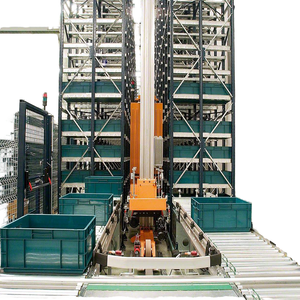
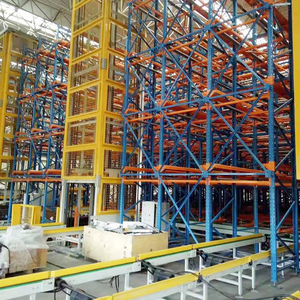
Automatic Picking System Heavy Duty Pallet Rack Automated Storage Asrs Labor Saving Retrieval Racking System ASRS
ASRS Integrated
  • Automated crane & shuttle rail ready
  • Tolerance deflection: < L/300 under full load
  • Upright profile: 100mm–140mm cold-formed
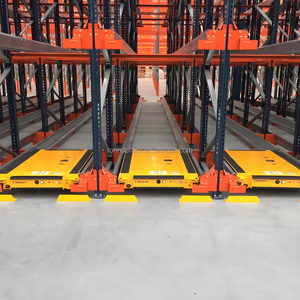
Factory Customizable Heavy-Duty 4-Way Automated Shuttle Rack Metal Radio Shuttle Racking Storage System
Radio Shuttle Tech
  • Ultra-dense compact lane utilization
  • Galvanized bi-directional running track
  • Payload: 1,500 kg per pallet position
Factory Custom Heavy Duty Steel Four-Way Shuttle Racking System High-Density Warehouse Rack With Large Load Capacity
4-Way Intelligent
  • Full 3D coordinate vehicle navigation
  • Modular expansion for seasonal peak buffers
  • Q355B high-tensile structural base
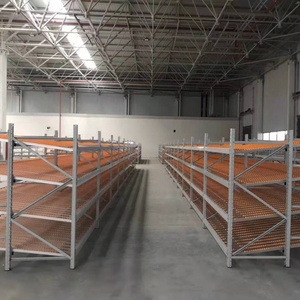
High Strength Carton Flow Rack with Smooth Rolling System Designed for High Volume Warehouse Picking Carton Flow Rack
Dynamic Picking
  • First-In, First-Out (FIFO) gravity tracks
  • High-durability polyurethane roller beds
  • Ergonomic pick-face angle adjustments
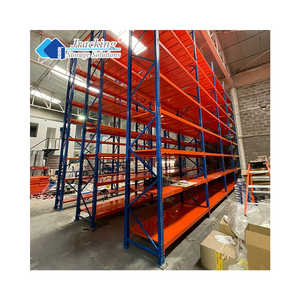
Jracking Dexion Style Warehouse Shelving Heavy Duty Pallet Rack
Universal Dexion Spec
  • Universal teardrop / keyhole compatibility
  • Beam capacities up to 4,500 kg per pair
  • Thermosetting epoxy powder finish
Professional Industrial Racking System Steel Warehouse Storage Equipment Supplier
Engineered Heavy Rack
  • Certified structural steel calculation
  • Seismic resistance seismic zone 4 rated
  • Fully customizable beam levels & spans
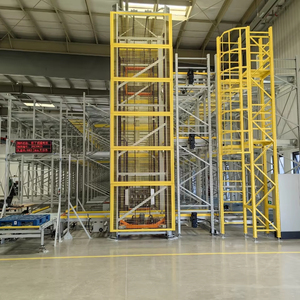
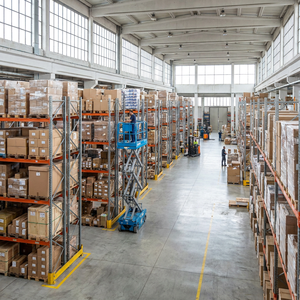
Advanced Intelligent Library Selective Pallet Rack With Efficient Conveying System High Efficiency Stacking Racks & Shelves
Selective Stack Staging
  • 100% immediate selectivity access
  • Integrated roller conveyors for sortation
  • Heavy structural footplates & floor anchors
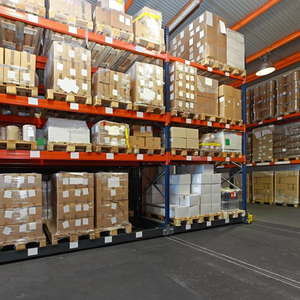
Certificate Heavy Duty Metal Storage Rack Mobile Racking Adjustable Pallet Racking System 1300KG 1400KG 1500KG Pounds Tons
Mobile Stacking Power
  • Heavy capacity: 1,300–1,500 kg per tier
  • Floor rail guided mobile base chassis
  • Eliminates idle aisles; doubles capacity
60+
Years Industry Engineering
70+
Countries Direct Distribution
12
Advanced Production Centers
7
Dedicated Intralogistics R&D Hubs
Engineering Evaluation Benchmark

How to Vet the Top 10 Heavy Duty Stacking Racks Exporters

A rigorous structural framework to differentiate reliable Tier-1 manufacturers from commodity brokers in international procurement.

1. Raw Material Metallurgy & Cold-Formed Yield Limits

High-tier exporters exclusively specify high-yield structural hot-rolled and cold-rolled coils conforming to ASTM A1011 or EN 10025. Evaluating mill test certificates (MTC) ensures that steel for post columns exhibits minimum yield strengths (≥ 355 MPa for Q355B / S355JR). Uncertified mills frequently blend commercial-grade low-carbon steel (under 215 MPa), resulting in progressive localized buckling under permanent static loads.

2. Robotic Welding & Nesting Cup Tolerances

Stacking racks depend entirely on precision male-to-female nesting cups or cone feet for structural stability when tiered 4 to 6 units high. Leading exporters employ robotic multi-axis welding stations to maintain nesting alignment tolerances within ±0.5mm. Manual welding introduces angular deviations that multiply as stack height increases, creating severe eccentric loading and tipping risks.

3. Surface Finishing: Hot-Dip Galvanizing vs. Powder Coat

Surface integrity determines total lifecycle cost. For sub-zero cold-storage (-30°C) and outdoor maritime staging yards, ISO 1461 hot-dip galvanizing with a minimum zinc coating thickness of 70–85 μm is mandatory to prevent blistering and substrate oxidation. For indoor dry operations, a 9-stage pre-treatment wash coupled with thermosetting electrostatic powder coating (≥ 60 μm) ensures superior impact resistance against forklift tine shear.
Technical Comparison

Engineering Benchmark: Industrial Stacking Systems

Direct structural and performance comparison of primary heavy-duty stacking and high-density warehouse storage topologies.

System Architecture Typical Payload / Tier Maximum Stacking Tier Structural Deflection Limit Footprint Space Efficiency Optimal Logistics Environment
Post-Type Demountable Stacking Rack 1,000 – 2,000 kg 4 – 6 Tiers High L / 250 High (Foldable when empty) Seasonal inventory, tire distribution, bulk manufacturing buffers
Radio Shuttle High-Density Racking 1,500 kg per pallet Up to 18 Meters (Building bound) L / 350 Ultra-High (Zero idle aisles) Cold storage, food & beverage staging, large-batch SKU fulfillment
Heavy-Duty Mobile Pallet Racking 1,300 – 1,500 kg per pallet Up to 12 Meters L / 300 Very High (Single dynamic aisle) Pharmaceutical vaults, expensive urban refrigerated warehouses
Standard Selective Heavy Pallet Rack 1,000 – 4,500 kg per level Up to 15 Meters L / 200 (ANSI MH16.1) Medium (Aisle intensive) High SKU variety, fast-moving retail, general distribution centers
Carton Flow & Gravity Live Storage 200 – 600 kg per roller bed Floor + 3 Pick Levels L / 250 Medium-High (Optimized pick face) E-commerce split-case picking, assembly line kitting operations
Strategic Sourcing Insights

Future Procurement Trends in Heavy Duty Stacking Logistics

Global supply chain disruptions, rising industrial land valuations, and ESG mandates are actively reshaping international racking procurement.

A. Modular Demountable Systems vs. Fixed Structural Footprints

Procurement teams are shifting away from permanently anchored static racking in leased warehousing facilities. Demountable stacking racks allow operations to scale up storage density during quarterly production surges and break down the frames into dense 1:5 nesting ratios when empty. This dynamic footprint allocation reduces dead floor leasing expenditure by up to 35% annually.

B. Total Cost of Ownership (TCO) & Shipping Freight Optimization

With international ocean freight volatility, enterprise buyers now factor shipping cube efficiency directly into RFQ models. Forward-thinking exporters engineer stacking racks with detachable corner posts, nested base frames, and fold-down target plates. Maximizing container cubic capacity (yielding up to 140 demountable bases per 40ft High Cube container) reduces landed shipping cost per pallet position by 28%.

C. Green Steel & Decarbonization Mandates (Scope 3 Disclosures)

Multinational manufacturing brands subject to EU CBAM (Carbon Border Adjustment Mechanism) and SEC ESG reporting standards are establishing carbon-intensity limits for racking suppliers. Exporters leveraging Electric Arc Furnace (EAF) production fed by recycled scrap steel demonstrate a 60% lower embedded carbon footprint compared to traditional blast furnace basic oxygen systems (BF-BOF).

D. Factory-Direct Engineering vs. Intermediary Re-Sellers

Direct collaboration with integrated manufacturers eliminates third-party trading markups and establishes uncompromised structural liability. Direct exporter engineering teams provide certified Finite Element Analysis (FEA) calculation dossiers, stamping project structural blueprints to satisfy local building control authorities and seismic safety codes before production run commencement.
Technology Evolution

Technological Horizons: Smart Stacking & Autonomous Logistics

How IoT telemetry, robotics, and warehouse management systems are converging with traditional heavy-duty steel fabrication.

1. Embedded RFID & IoT Asset Telemetry

Next-generation stacking units integrate passive UHF RFID chips and BLE (Bluetooth Low Energy) transponders into protective structural pockets. This provides real-time digital twins of yard inventories, automated staging zone tracking, and immediate alert logging when stacking cradles exceed authorized load cycles or experience severe forklift collisions.

2. AMR & Autonomous Tugger Interfacing

As autonomous mobile robots (AMRs) replace manual counterbalanced forklifts in floor transport, stacking base geometries are evolving. Precision laser-cut target locators and rounded fork-entry guide chamfers enable SLAM-guided robotic forklifts to pick and stack demountable metal racks with millimeter-perfect repeatability without manual intervention.

3. Advanced FEA Structural Simulation Under Dynamic Loads

Modern exporters deploy ANSYS non-linear Finite Element Analysis to simulate buckling behavior, harmonic seismic response, and cyclic dynamic fatigue. Rather than relying on simple static yield equations, multi-tier stacking frames are engineered to withstand horizontal ground accelerations up to 0.4g while maintaining structural elasticity and fail-safe nesting engagement.
Enterprise Core Competence

Why Global Enterprises Partner With Us

Over six decades of specialized structural intralogistics, vertical manufacturing control, and comprehensive global engineering support.

60 Years Intralogistics Heritage

Six decades of engineering evolution from manual pallet racks to high-bay automated warehouse ecosystems. Our structural installations reliably support global supply chain operations across every climate zone.

Direct Footprint in 70+ Countries

Local commercial and technical operations across 23 countries, backed by a comprehensive project network covering more than 70 nations. We coordinate structural approvals, customs clearance, and on-site engineering supervision globally.

12 World-Class Production Centers

Direct manufacturing control over cold-roll forming lines, automated laser profiling, robotic welding stations, and high-capacity continuous powder coating lines ensure rigorous batch quality and delivery predictability.

7 Dedicated R&D Centers

Continuous metallurgical testing, load-deflection test rigs, and automated warehouse control software development. Consistently ranked at the forefront of international warehouse storage innovation.

Gartner Magic Quadrant Recognition

Recognized for five consecutive terms in the Gartner Magic Quadrant for Warehouse Management Systems (WMS). Our software architecture seamlessly unifies structural stacking logistics with digital supply chain execution.

Full Lifecycle Engineering Support

From structural FEA calculations, seismic certification, and layout drafting to site commissioning, yearly safety inspections, load rating signage, and certified replacement components.

Procurement Knowledge Base

Frequently Asked Engineering & Sourcing Questions

Essential technical, structural, and contractual answers for enterprise logistics and procurement managers.

What structural safety factor is mandatory for heavy-duty metal stacking racks?
International structural standards, including ANSI MH16.1 (RMI) and FEM 10.2.02, mandate a minimum safety factor of 1.65 to 1.95 on structural yield limit under static rated capacity. In heavy-duty stacking frames rated for 1,500 kg per position, individual posts and weld joints must withstand a proof load of at least 2,475 kg without permanent plastic deformation. Certified exporters provide full strain-gauge test reports and FEA simulations documenting the elastic-plastic limits of the assembly.
How do demountable stacking racks compare to drive-in and selective pallet racking?
Selective racking offers 100% immediate pallet selectivity but consumes large floor areas for forklift aisles (3.0–3.5m wide). Drive-in racking increases density but creates slow, collision-prone loading cycles and structural maintenance costs. Stacking racks provide block-stacking density without requiring floor anchors, allow bulk seasonal staging, and can be dismantled to reclaim valuable open floor space when inventory rotates out.
What steel grade is required to guarantee seismic and cold-storage compliance?
For seismic zones (PGA ≥ 0.2g) and sub-zero cold storage facilities down to -30°C, commercial Q235A steel is strictly prohibited due to ductile-to-brittle transition risks. Sourcing specifications must demand Q355D or Q355E (impact tested at -20°C or -40°C) or European grade S355J2/K2. Charpy V-notch impact energy ratings must achieve a minimum of 27 Joules at operating temperatures to eliminate brittle weld or upright fracture hazards.
How do leading exporters protect stacking racks against ocean shipping corrosion?
Maritime shipping exposure during transpacific or transatlantic voyages introduces salt-mist humidity and condensation ("container rain"). Reputable exporters bundle components using heavy vapor corrosion inhibitor (VCI) protective stretch films, desiccants in sealed seaworthy packaging, and specialized steel stacking dunnage. Powder-coated surfaces undergo minimum 500-hour ASTM B117 salt spray testing to verify adhesion before dispatch.
What information must be prepared when requesting an export structural proposal?
To generate an accurate structural and pricing proposal, engineers require: (1) Unit load dimensions (Width × Depth × Height including pallet overhang); (2) Maximum gross pallet weight; (3) Desired stacking height (e.g., 1+3 or 1+4); (4) Facility floor slab capacity (concrete compressive strength and slab thickness); (5) Handling equipment model and mast lift height; and (6) Local site seismic and environmental parameters.
Can automated radio shuttles and AMRs interface with heavy-duty stacking racks?
Yes. Modern intralogistics configurations frequently utilize customized heavy-duty stacking frames as modular input/output buffer stations for autonomous mobile robots (AMRs) and 4-way radio shuttles. These systems incorporate precision-guided bottom channels, optical retro-reflective positioning markers, and strict nesting tolerances (±0.5mm) to ensure automated load transfer without sensor misalignment or docking faults.

Request an Engineered Stacking Rack Proposal

Connect directly with our structural engineering and export solutions team. We provide tailored layout studies, Finite Element Analysis (FEA) certifications, and competitive volume pricing for your international projects.