Featured Industrial & Dynamic Live Storage Racking Systems
Direct-from-factory fabrication backed by heavy-gauge certified steel (Q235B & Q355B), finite element analysis (FEA), and continuous quality auditing for high-density modern distribution centers.
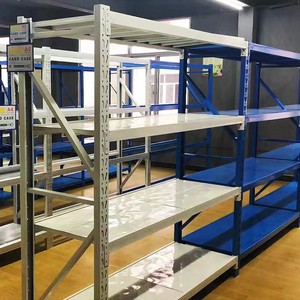
Warehouse Rack Stacking Rack Pallet Racking Garage Metal Storage Rack
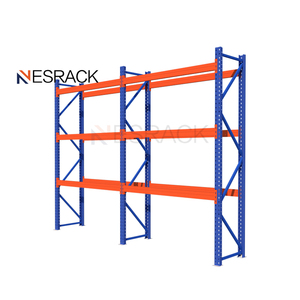
Industrial Steel Heavy Duty Corrosion Protection Stacking Shelving System Pallet Rack
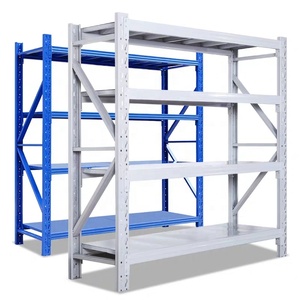
Mracking Adjustable Boltless Industrial Warehouse Storage Rack
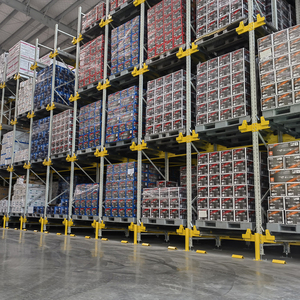
Customized High-Density Steel Powder Coated Automatic Storage Retrieval System ASRS
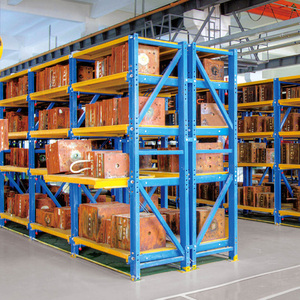
Drawer Type 5 Layer Mold Storage Racking Heavy Duty Cold Rolled Steel
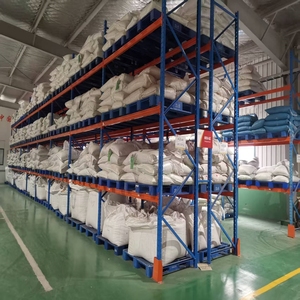
Industrial Storage Racks Custom 5 Layer US Teardrop Pallet Rack
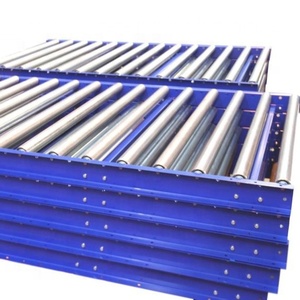
Gravity Pallet Racking Industrial Shelves Flow Stainless Roller Racks
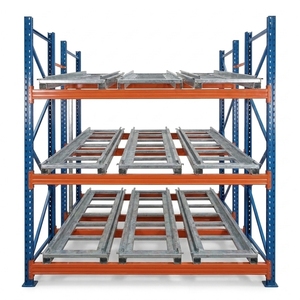
Heavy Duty Push Back Racking Main Rack 2.0mm Customizable FILO
Engineering Integrity of Heavy Duty Live Storage (Pallet Flow) Systems
Heavy duty live storage racking—widely recognized across international intralogistics as gravity pallet flow racking—represents the pinnacle of high-density dynamic storage. Operating under a strict First-In, First-Out (FIFO) stock rotation principle, pallet flow lanes leverage precisely engineered gravitational declination gradients (typically between 3.2% and 4.0%) to propel pallets autonomously along roller channels from the loading face to the picking face.
Unlike static drive-in or conventional selective racking, live storage demands deep engineering acumen regarding kinetic energy management, dynamic friction coefficients, and mechanical deceleration. Without high-precision centrifugal brake rollers and load separating mechanisms, continuous pallet momentum creates hazardous runaway acceleration and excessive impact pressures against front stops, leading to structural fatigue and goods compromise.
As a premier China OEM manufacturer, our production engineering utilizes certified Q235B and Q355B high-tensile cold-rolled steel profiles, calculated under European EN 15512, British SEMA, and American RMI (MH16.1) standards. Every flow lane is configured based on real-world pallet bottom conditions, pallet deflections under maximum payload (up to 1,500 kg per pallet position), and temperature factors in ambient or deep-freeze (-30°C) environments.
Centrifugal Speed Control Rollers
Integrated mechanical brake drums regulate pallet travel velocity to a controlled 0.1 to 0.3 m/s, dissipating gravitational kinetic energy proportionally regardless of load mass variations across mixed warehouse stock.
Automatic Pallet Separation Locks
Pneumatic or mechanical uncoupling stops disengage the hydrostatic line pressure between the lead pallet and trailing pallets, enabling forklift operators to extract picking loads with zero backpressure resistance.
Full-Width vs. Twin Roller Track
Fabricated from heavy-gauge galvanized steel or industrial polymers. Triple-track split rollers accommodate Euro (1200x800mm), Industrial (1200x1000mm), or perimeter-base US pallets without runner sagging or tracking misalignment.
Impact-Absorbing Entry Guides
Funneled, reinforced loading entries correct forklift entry angle deviations up to 25mm off-center, protecting upright frames from collision shocks while guiding pallets smoothly onto the roller bed center axis.
Dual-Bearing Solid Steel Rollers
Equipped with low-temperature synthetic grease, labyrinth dust seals, and precision micro-ground axles. Roller payload ratings exceed 150 kg per individual cylinder, delivering a maintenance-free service lifespan surpassing 15 years.
High-Density Warehouse System Comparison
Objective engineering evaluation between Live Storage Racking, Push-Back Systems, Drive-In Racks, and Automated Shuttle AS/RS.
| Racking Architecture | Rotation Principle | Volumetric Density | Forklift Travel In-Lane | Throughput Capacity | Capital Investment (CAPEX) |
|---|---|---|---|---|---|
| Gravity Live Storage (Pallet Flow) | Strict FIFO | Very High (Up to 80%) | None (Loading / Picking Aisles) | Ultra-High (Simultaneous I/O) | Medium - High |
| Push-Back Cart / Roller Racking | Strict LIFO | High (Up to 70%) | None (Single Aisle Operation) | Moderate to High | Medium |
| Drive-In / Drive-Through Racks | LIFO / Pseudo-FIFO | High (Up to 65%) | High (Forklift Enters Rack Channel) | Low (Bottleneck Risk) | Low - Medium |
| Radio Shuttle Compact Racking | FIFO or LIFO | Exceptional (Up to 85%) | None (Shuttle Robot In-Lane) | High (Semi-Automated) | High |
| Automated Pallet Stacker AS/RS | Algorithmic FIFO | Maximum (Up to 90%+) | Zero (Fully Automated Crane) | Extreme (24/7 Unmanned) | Very High |
Future Procurement Trends in Industrial Live Storage (2025–2030)
Supply chain disruptions, soaring commercial real-estate costs, and rapid warehouse automation are fundamentally reshaping procurement strategies for heavy-duty storage racking.
1. Direct-from-Factory OEM Engineering Synergy
Global engineering procurement heads are moving away from intermediaries and engaging directly with Chinese manufacturing facilities. By integrating CAD/BIM models directly into automated continuous cold-roll forming lines, logistics operators eliminate distribution markups (saving 22% to 35% on total project CAPEX) while tailoring steel profile thicknesses (1.5mm to 3.0mm) to exact project seismic zones and local floor slab capacities.
2. Hybrid AMR & Autonomous Forklift Coupling
Live storage systems are no longer isolated manual racks. The modern loading face is increasingly fed by heavy-payload Autonomous Mobile Robots (AMRs) and laser-guided counterbalanced AGVs. This requires millimeter-precise roller bed positioning tolerances, automated optical load sensors at the separation trigger, and magnetic induction alignment fixtures fabricated into the rack floor level.
3. Cold-Chain Resilient Materials & Anti-Freeze Rollers
With the rapid boom in perishable food, pharmaceutical, and biologics fulfillment, live racking must maintain consistent downhill velocity in deep-freeze blast freezers down to -30°C. Modern procurement mandates zinc-flake anti-corrosive coatings, stainless steel roller bearings sealed with synthetic ester lubricants, and thermal-expansion contraction joints that eliminate roller binding.
Why Global Supply Chains Trust Our Production Hub
Leveraging decades of state-of-the-art intralogistics development, our facility integrates heavy steel cold-rolling, robotic laser processing, and global project commissioning.
Certified Metallurgy & Structural FEA
Every batch of raw coil steel undergoes tensile and yield strength verification (Q235B / Q355B). Structural designs are mathematically proven via ANSYS FEA simulation under FEM 10.2.02 and RMI specifications.
Automated CNC Roll-Forming Lines
Continuous robotic rolling lines equipped with in-line punch presses guarantee pitch accuracy within ±0.15mm across uprights up to 14 meters in length without welded joints or material stress micro-fractures.
Eco Electrostatic Powder Coating
Automated 9-stage pre-treatment, shot-blasting, and Swiss Gema robotic electrostatic powder spray systems deliver 80–120μm uniform dry film thickness (DFT) with 500-hour salt spray resistance.
Complete Overseas Turnkey Support
From custom export bundling on seaworthy steel skids to detailed 3D installation blueprints and on-site engineering supervision, we service clients across Europe, the Americas, the Middle East, and Asia-Pacific.
Frequently Asked Questions by Industrial Warehouse Buyers
Technical clarification on load physics, maintenance, incline calculations, and safety standards directly from our structural engineering division.
1. How do you calculate the optimal slope gradient for heavy-duty pallet flow lanes?
2. How do centrifugal brake rollers prevent load collisions over lanes longer than 15 meters?
3. Why is an automatic pallet separator mandatory at the picking face?
4. Can live storage racking function reliably in -30°C cold room environments?
5. What technical documentation and load calculations are required for custom project quotes?
6. How does your factory manage export packaging to prevent transit damage?
Accelerate Warehouse Density with Factory-Direct Engineering
Consult with our senior intralogistics engineers today for comprehensive structural calculations, customized CAD warehouse layouts, and complete factory price quotations with zero obligation.