Engineered Industrial Storage Systems & Wire Deck Pallet Racking
Custom-engineered racking assemblies manufactured under strict ISO and ANSI MH26.2 standards to ensure optimal structural integrity, fire prevention compliance, and seismic resilience.
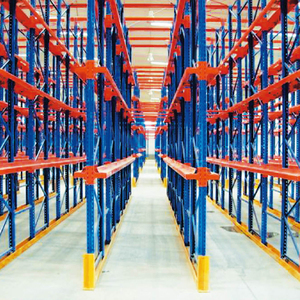
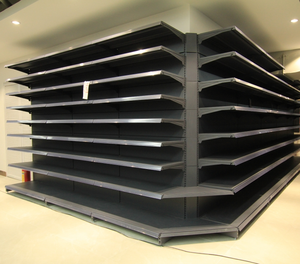
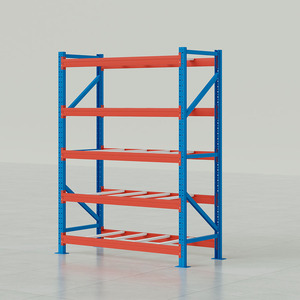
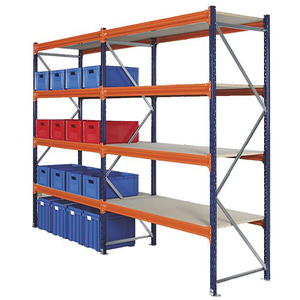
Engineering Structural Integrity: Wire Deck Pallet Racking in Modern Intralogistics
A technical evaluation of cold-rolled Q235B profiling, dynamic channel wire reinforcement, NFPA fire compliance, and the structural dynamics of modern high-bay facilities.
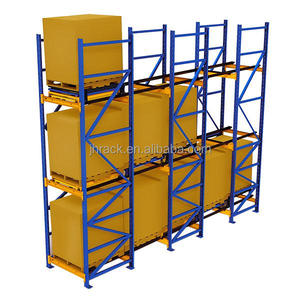
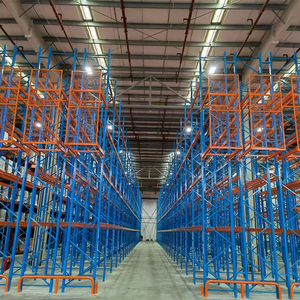
In modern industrial warehousing, selecting the appropriate heavy-duty wire deck pallet racking is a fundamental safety and structural decision rather than a mere procurement formality. Industrial wire decking acts as an indispensable secondary support mechanism placed across rack beam levels, preventing pallet deflection, mitigating bottom-board breakage, and catching dislodged loads before structural collapse can occur. As international logistics transitions toward higher density and automated vertical clearance, manufacturing compliance across cold-rolled sheet steel fabrication and electro-welded wire mesh determines structural resilience under load.
Originating from premium-grade Q235B and Q355B structural carbon steel, standard upright configurations undergo multi-stage roll-forming to achieve high sectional modulus with minimal deadweight. The wire decking itself features cold-drawn steel wire (typically 4.5mm to 6.0mm in diameter) electro-fusion welded in 50x100mm, 50x50mm, or 25x100mm grid apertures. The essential load transfer takes place via roll-formed support channels—flanged, step, or inverted—which rest securely across standard step beams or structural box beams. This architecture channels point loads directly into the main beam profile, mitigating sag and ensuring static load ratings exceeding 1,000 kg to 1,500 kg per pallet position.
Channel Architecture & Flange Types
Fabricated with outside waterfall, inside waterfall, or flush flat designs. Inverted channels eliminate dust and debris accumulation in sensitive food, pharmaceutical, and electronic fulfillment environments.
NFPA 13 Fire Sprinkler Compliance
Unlike solid timber or steel plate decking, open wire mesh allows 70%+ water penetration from overhead ESFR sprinklers straight down through rack tiers, drastically reducing insurance premiums and fire safety clearance hurdles.
Surface Treatments & Environment Sizing
Epoxy thermosetting powder coatings baked at 200°C for indoor non-condensing facilities, complemented by hot-dip galvanization (HDG) exceeding 65µm zinc thickness for sub-zero cold rooms (-30°C) and outdoor operations.
Load Bearing Dynamics and Safety Margins: In accordance with RMI (Rack Manufacturers Institute) and ANSI MH26.2 specifications, wire decking is engineered for Uniformly Distributed Loads (UDL). Crucially, industrial purchasers must recognize that point-loading—such as small foot-pads on containers or split single-skids—demands reinforcing support channels beneath the primary contact zones. Upright columns and heavy-duty horizontal braces ensure horizontal displacement stays well within elastic limits during seismic events.
| Decking Material / Type | Uniform Load Capacity | Fire Sprinkler Permeability | Sanitary Maintenance | Operational Lifecycle |
|---|---|---|---|---|
| Heavy-Duty Welded Wire Deck | 500 - 1,500 kg / level (UDL) | > 70% (Meets NFPA & FM Global) | Self-cleaning, dust-free mesh | 15 - 25 Years (Corrosion-free) |
| Standard Plywood / Wood Timber | 300 - 800 kg / level (Variable) | 0% (Waterproof barrier hazard) | High splinter & mold risk | 3 - 5 Years (Fast deterioration) |
| Solid Steel Sheet Panels | 1,000 - 2,500 kg / level | 0% (Requires in-rack piping) | Dust collection, heavy weight | 10 - 20 Years (Prone to scratching) |
| Perforated Steel Shelving | 600 - 1,200 kg / level | 30 - 45% (Partial penetration) | Moderate maintenance needed | 10 - 15 Years |
Future Procurement & Technology Trends in Industrial Racking
How automation, ESG benchmarks, and automated robotics (AMRs/ASRS) are fundamentally reshaping warehouse rack procurement through 2030.
The global warehousing landscape is undergoing an aggressive transition toward autonomous internal logistics. As automated storage and retrieval systems (AS/RS), 4-way pallet shuttles, and Autonomous Mobile Robots (AMRs) become standard operating equipment, procurement officers can no longer evaluate pallet racking simply on a per-ton steel basis. Modern specifications must incorporate tighter manufacturing tolerances, dimensional repeatability, and dynamic impact mitigation.
1. Compatibility with Robotic Interfaces: Racking deflection allowances are tightening from 1/180 to 1/240 or tighter to prevent sensor misalignments when stacker cranes and AGVs approach pick-and-deposit stations. Wire deck designs now integrate specialized front-lip cutouts and barcode scanner windows, enabling automated underside optical sensors to verify pallet integrity without manual human scanning.
2. Decarbonization and Green Steel Traceability: Tier-1 international buyers increasingly mandate verifiable ESG compliance. Chinese mills and manufacturing facilities are actively transitioning toward electric arc furnace (EAF) steelmaking routes and adopting low-VOC, heavy-metal-free electrostatic powder coatings. Life-cycle assessments (LCA) verifying lower embodied carbon are rapidly shifting from optional marketing statements to mandatory tender requirements across North American and European supply chains.
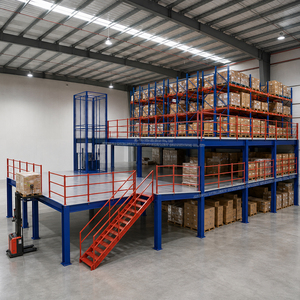
3. High-Density Micro-Fulfillment & Hybrid Storage: Urban real estate costs are driving the convergence of retail picking and bulk storage. Warehouses require modular rack frames that can be reconfigured from selective pallet racking to carton flow or multi-tier mezzanine picking levels in days, accommodating volatile SKU assortments driven by omnichannel e-commerce.
Why Global Supply Chains Rely on Our Industrial Factory
Decades of intralogistics manufacturing heritage, verified structural testing, and turnkey global engineering capabilities.
In-House Structural Calculation
Every bay profile, upright gauge, and beam connection undergoes finite element analysis (FEA) calibrated to local seismic zones and floor slab load limits.
Fully Automated Mesh Welding
CNC multi-head automatic wire welding lines deliver clean, high-shear weld spots with zero wire burn-through, ensuring dependable structural load ratings.
Export Scale to 70+ Countries
End-to-end container pack optimization, steel strap bundle preservation, moisture-barrier wrapping, and direct logistics coordination to all major global ports.
Comprehensive Raw Material Control
Direct procurement from primary domestic steel mills with mill test certificates (MTC) accompanying every batch, verifying tensile strength and chemical composition.
Frequently Asked Questions on Pallet Racking & Wire Decking
Key technical, safety, and logistical details reviewed by our structural engineering division to assist your procurement vetting process.