Specialized Heavy-Duty & Logistics Rack Systems
From high-moment cantilever columns and cold-rolled upright profiles to automated shuttle integration, explore heavy-capacity systems built for structural longevity and seismic compliance.
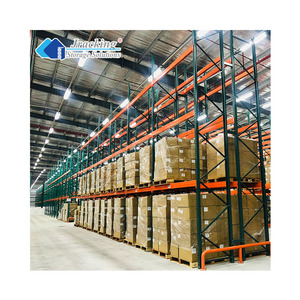
- Universal boltless teardrop connectivity
- High-strength tensile structural steel
- Custom logistics warehouse footprints
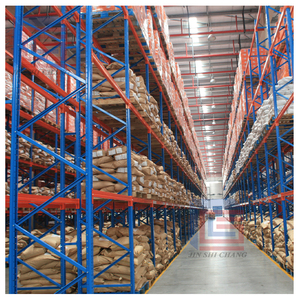
- 100% immediate selectivity to pallet inventory
- Custom beam heights & safety locks
- Optimized for conventional counterbalanced trucks
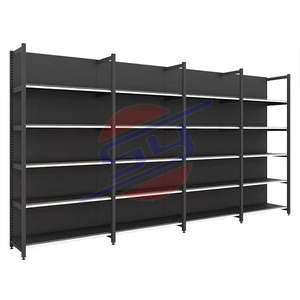
- Modular 4-post rigid chassis integration
- High visual aesthetic and powder coat finish
- Includes complimentary 3D layout design
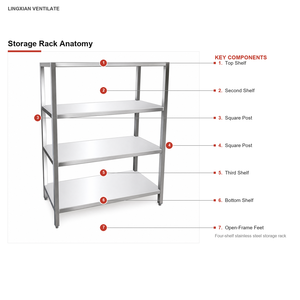
- Food-grade & cleanroom hygienic design
- Extreme resistance against chemical oxidizers
- Tool-free rapid modular vertical assembly
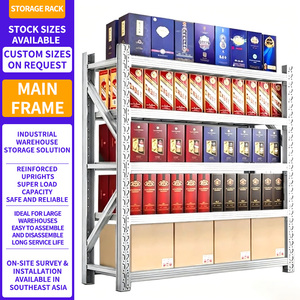
- Rated at 500kg - 4000kg load tier tolerance
- Thermo-hardened epoxy electrostatic coating
- Precision punched multi-pitch hole configurations
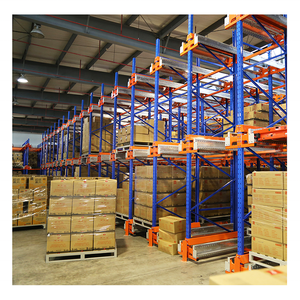
- High-density automated channel storage
- Semi-automated carrier vehicle synchronization
- Dramatically reduces forklift travel channels
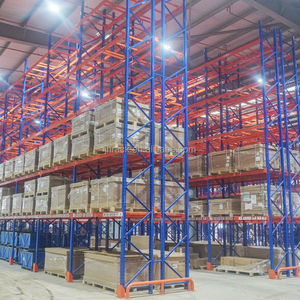
- Hot-dip galvanized (HDG) structural protection
- Engineered for external yard & cold-chain humidity
- Impact resistance against heavy material handling
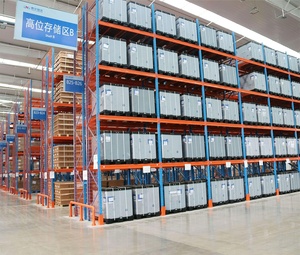
- Cost-effective high bay multi-level configurations
- Direct structural tie-in to warehouse building pads
- Certified EN15512 and FEM standard compliance
Structural Engineering Architecture for Heavy Duty Cantilever Racks
Decoupling storage mechanics for non-standard, long-span, and variable-deflection industrial profiles.
Cantilever racking constitutes one of the most mechanically demanding segments of industrial warehousing. Unlike conventional pallet frames that transfer load downward through dual front-and-rear upright columns linked by cross-bracing, a cantilever system relies entirely on a free-standing column anchoring cantilevered horizontal arms. This architecture subjects the primary vertical column to massive eccentric bending moments, shear forces, and rotational stress. When sourcing from heavy-duty cantilever racking factories, evaluating structural steel calculations under extreme asymmetric loading is the definitive baseline for facility safety.
Roll-Formed vs. Structural I-Beam
Roll-formed steel profiles offer cost-effective modularity for medium-duty lumber or PVC tubing. However, high-tonnage bar stock, sheet metal coils, and structural steel piping require heavy-duty hot-rolled structural steel (HEA, IPE, or wide-flange beams) that maintain superior yield points (Q355B/S355JR) under high shock impact.
Dynamic Deflection Ratios
Structural cantilever engineering requires stringent compliance with deflection parameters (typically L/200 to L/300 under static uniform loads). Arms are pre-cambered with an engineered upward pitch (typically 1° to 2°) to counteract natural downward deflection under full load, preventing product slip.
Seismic Anchor Base Dynamics
Base-to-floor junctions dictate system equilibrium. Heavy-duty cantilever columns connect to extended structural bases that dissipate overturning moments directly into the reinforced warehouse slab through high-tensile chemical or mechanical anchors tested under FEM 10.2.09 guidelines.
Technical Specification Notice: In structural cantilever systems, single-sided columns experience asymmetric loading when only one arm tier is loaded, creating maximum cantilever moment on the foundation bolts. Double-sided installations, while mechanically balanced under symmetrical loading, must be verified for worst-case single-sided full capacity conditions.
📊 Industrial Cantilever & Pallet Storage Performance Baseline
Comparing structural configurations allows supply chain directors to align mechanical capability with handling equipment parameters:
| Rack Architecture | Yield Strength Profile | Standard Arm Capacity | Handling Clearance | Optimal Industrial SKU Application |
|---|---|---|---|---|
| Hot-Rolled Structural Cantilever | Q355B / S355JR Heavy I-Beam | 800 kg – 3,500+ kg per arm | Continuous horizontal face (Zero front columns) | Structural steel beams, billets, heavy alloy tubes, stone slabs |
| Roll-Formed Heavy Duty Cantilever | Cold-Rolled High-Tensile Strip | 300 kg – 900 kg per arm | Continuous unobstructed horizontal front | Lumber packs, extruded aluminum, plastic conduit, panel sheets |
| Heavy Duty Selective Pallet Rack | Cold-Formed Open C-Omega Profile | 1,000 kg – 4,500 kg per level | Framed bays (Beam width limited: 2.3m - 3.9m) | Standardized Euro/GMA pallets, bounded machinery crates |
| Pallet Shuttle Dense Storage | Structural Cold-Rolled Galvanized Track | 500 kg – 1,500 kg per pallet | Deep lane enclosed channel | High-throughput cold storage, beverage buffer, bulk batch lots |
📈 Global Procurement Trends: Future-Proofing Heavy Racking Assets
Strategic procurement in intralogistics has shifted from simple cost-per-ton evaluations to Total Lifecycle Performance (TLP). Supply chain planners and warehouse directors now incorporate three critical criteria when selecting international cantilever suppliers:
1. Outdoor Corrosion Mitigation (Duplex Coatings): Long goods such as heavy rebar, timber bundles, and irrigation piping are increasingly relocated to external yards to reserve high-bay internal space for automated dry storage. Procurement demand has spiked for Hot-Dip Galvanizing (ISO 1461) combined with thermo-set epoxy finishes, guaranteeing resistance against cyclic UV degradation, salty coastal humidity, and freeze-thaw cycles.
2. Semi-Automated Sideloader & Guided Aisle Integration: The operational bottleneck of cantilever storage is aisle width. To minimize floor footprint, modern procurement integrates narrow-aisle (VNA) multi-directional forklifts and 4-way articulated reach trucks. Suppliers must deliver continuous floor guide rails, inductive wire-guidance clearances, and laser-aligned impact crash barriers integrated directly into the cantilever column bases.
3. Traceable Structural Metallurgy & Digital Twins: Enterprise buyers subject to rigorous health, safety, and ESG compliance require full mill certification (EN 10204 3.1) of all steel heats. Modern contracts mandate that tier-1 suppliers provide BIM-compatible Revit models and parametric load-calculation reports to simulate slab settlement, dynamic seismic oscillations, and automated pick-reach tolerances.
🚀 Technological Evolution: Smart Racking & Sensor-Driven Monitoring
Heavy duty racking is evolving beyond static steel frameworks. The integration of Industrial IoT (IIoT) stress-sensing arrays now allows real-time telemetry of structural frame integrity. High-accuracy strain gauges placed on cantilever root welds monitor deflection micro-shifts, alerting facility management to cumulative metal fatigue, accidental forklift collisions, or arm overloading.
Furthermore, the crossover between cantilever frames and automated storage is yielding Automated Cantilever AS/RS. Utilizing automated stacker cranes equipped with multi-arm telescoping grippers, these advanced facilities store heavy bar profiles up to 30 meters vertically, orchestrated by Warehouse Execution Systems (WES) without manual forklift intervention inside storage aisles.
🏢 Built on Decades of Global Engineering Excellence
Our industrial engineering footprint relies on over 60 years of intralogistics manufacturing heritage. Operating 12 state-of-the-art production centers and 7 dedicated R&D facilities across Europe and the Americas, our commercial and engineering network spans more than 70 countries. We do not simply fabricate metal; our structural engineering teams perform finite element analysis (FEA), simulate site-specific seismic accelerations, and customize manufacturing directly around your operational throughput metrics.
Trusted by industry leaders including Würth, Renault, PepsiCo, Schneider Electric, and Michelin, our facilities guarantee end-to-end quality assurance—from initial chemical analysis of high-tensile steel slabs to precision robotic welding and turnkey field installation.
Heavy Duty Cantilever Racking Technical Inquiries
Authoritative technical guidance addressing critical engineering and layout considerations.
How is arm deflection calculated, and what margin is safe for cantilever loads?
What warehouse slab specifications are necessary for high-load cantilever racking?
When should a facility specify structural hot-rolled steel over roll-formed profiles?
Can standard cantilever systems be modified to store short or variable-length pallets?
What data is required by engineering to deliver a certified cantilever layout and quote?
Request an Engineered Layout & Complete Product Catalog
Connect with our technical design engineers for structural calculations, customized CAD warehouse configurations, and comprehensive factory direct procurement pricing.