Certified Industrial Shelving & High-Density Pallet Systems
Every industrial logistics footprint demands custom structural verification. Explore our primary manufactured heavy-duty product portfolio, delivering high dynamic stability, cold-rolled tensile strength, and seamless intralogistics connectivity for global distribution hubs.
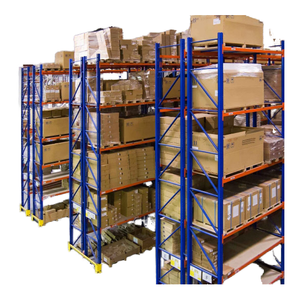 High Density
Auto Shuttle Pallet Racking System Heavy Duty Adjustable Steel Shelving for High-Density Warehouse Storage
Engineered for dynamic deep-lane loading with automated radio carriers, maximizing volumetric cube utilization up to 85% while minimizing direct forklift lane travel.
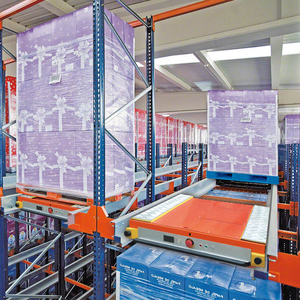 Reinforced
Factory Direct Radio Shuttle Rack System Reinforced High Load Bearing Cold Rolled Steel Powder Coated Heavy Duty Warehouse Racks
Heavy structural upright frames paired with laser-guided rails and anti-corrosive electro-statically applied epoxy powder finishes for sub-zero and humid warehouse storage.
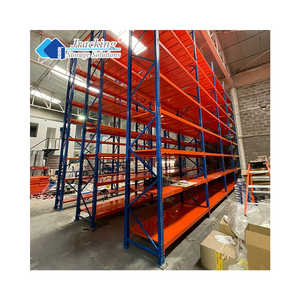 Global Standard
Jracking Dexion Style Warehouse Shelving Heavy Duty Pallet Rack
World-renowned tear-drop and 76.2mm pitch adjustable geometry compatible with Dexion standards, offering 100% immediate selectivity for high-turnover FMCG operations.
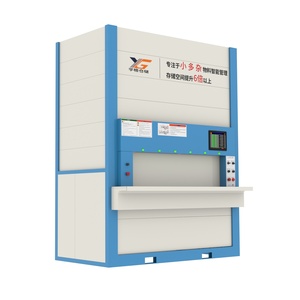 AS/RS Automated
New Automatic Storage Retrieval System Warehouse Vertical Carousel Storage System Intelligent Warehouse Storage Rack
Precision vertical lift module (VLM) and automated storage/retrieval architecture for rapid order picking, continuous inventory auditing, and strict zero-error bin sorting.
 Galvanized
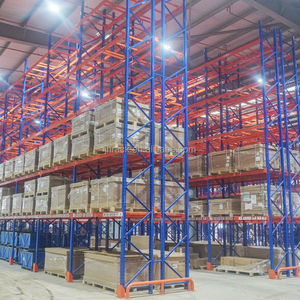
Heavy-Duty Corrosion Protected Pallet Racking Systems For Warehouse And Factory Storage By Jinhui Warehousing Suppliers
Hot-dip galvanized and special zinc-alloy treated structural uprights formulated specifically for maritime exposure, chemical environments, and extreme -30°C cold chain lockers.
 Double Deep
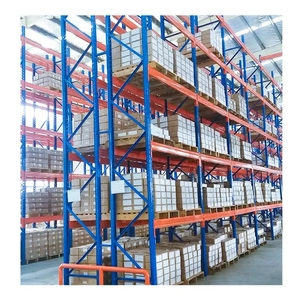
Heavy Duty Industrial Double Deep Stacking Selective Shelving Pallet Racking Warehouse Storage Racks For Sale
Compact dual-depth beam geometry balancing 50% accessibility with reduced aisle requirements, ideal for medium-velocity batch SKUs and optimized reach-truck handling.
 Eco Automation
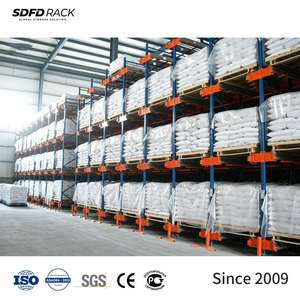
Durable Heavy Duty High Density Industrial Radio Shuttle Car Racks Movable Pallets Shelving Eco-Friendly Warehouse Storage
High-cycling LiFePO4 battery-powered cart platform engineered with intelligent obstacle deceleration, remote RF command, and zero tailpipe emissions inside cleanroom environments.
 Modular Stillage
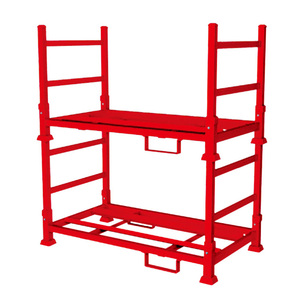
Premium Cold Rolled Steel Heavy Duty Durable Collapsible Stack Rack Foldable Powder Coated Adjustable Customized Color Stillage
Heavy-gauge stackable post palletrons engineered for seasonal surge capacity, dynamic bulk storage, and reverse logistics folding reduction down to 1:4 collapsed volume ratio.
Comprehensive Structural Analysis of Heavy Duty Industrial Shelving
Evaluating yield point stress, seismic engineering, and steel metallurgical characteristics for large-scale enterprise warehousing installations.
1. Mechanical Integrity and Material Metallurgy: Cold-Rolled vs Hot-Rolled
Industrial storage systems are mission-critical civil engineering structures operating continuously under severe deadweight loads and dynamic loading impacts. High-integrity rack manufacturing relies predominantly on high-grade cold-formed structural steel coils—primarily conforming to EN 10025 (S235JR, S355JR) and ASTM A1011 / A1008 structural grades.
Through modern continuous roll-forming lines featuring 18 to 26 forming passes, upright profiles are shaped without introducing micro-fractures along bend radiuses. This gradual deformation preserves material ductile toughness while elevating yield points across work-hardened profile corners. In high-bay installations exceeding 12 meters, profile stability depends not solely on profile gauge (typically ranging from 1.8mm to 3.5mm), but upon the section modulus, torsional warping resistance, and the stiffness modulus of the slotted perforations.
Structural Compliance Mandatory Notice
Every industrial installation deployed across seismic zones must be analyzed through Finite Element Analysis (FEA) under EN 15512:2020 European Standards or RMI (ANSI MH16.1) American Specifications to verify elastic buckling limits, second-order (P-Delta) sway moments, and baseplate anchorage shear safety factors.
2. Connection Rigidity: Beam-to-Column Semi-Rigid Moment Behavior
A primary failure mode in under-engineered warehouse racking stems from beam end connector disengagement or moment connection shear under localized pallet impact. Modern engineering deploys multi-claw (3 to 5 tooth) drop-forged connector brackets stamped with integral safety locking pins requiring a minimum of 5.0 kN upward shear resistance to prevent accidental unseating by lift masts.
The rotational stiffness (elastic spring constant) of the beam-to-column joint directly governs the effective buckling length factor (β) of the uprights. Premium manufacturers perform regular physical portal frame testing and double-cantilever destructive tests to calculate experimental joint rigidity values (ks), ensuring load charts reflect validated laboratory parameters rather than purely theoretical calculations.
| System Architecture | Floor Space Utilization | Direct Selectivity | Stock Rotation Strategy | Operational Throughput | Recommended Pallet Profile |
|---|---|---|---|---|---|
| Selective Pallet Racking | 35% - 40% | 100% Immediate | FIFO or LIFO | Moderate to Fast | High SKU Variance, Low Units/SKU |
| Double Deep Storage | 50% - 60% | 50% Direct Access | Batch LIFO | Medium Handled | Medium SKU, 2-4 Pallets per Batch |
| Drive-In / Drive-Through | 70% - 75% | Lane Dependent | LIFO (Drive-In) / FIFO | Slower Forklift Entry | Homogeneous Raw Materials, Cold Room |
| Radio Shuttle Automation | 80% - 88% | Channel Dependent | Configurable FIFO/LIFO | High Dynamic Velocity | High Volume, Deep Lane Buffer Warehouses |
| Stacker Crane AS/RS | 90% - 95% | 100% Automated | Strict WMS Algorithmic | Maximum 24/7 Continuous | High-Bay (Up to 45m), Zero Operator Sites |
Future Procurement Trends in Heavy Duty Industrial Shelving
Strategic structural shifts reshaping global intralogistics supply chains, multi-modal containerization, and enterprise warehouse equipment procurement.
1. Clad-Rack Automated Mega-Structures
Escalating land procurement costs and urban zoning limitations are shifting new infrastructure toward rack-supported buildings (clad-rack facilities). By treating the heavy-duty upright columns as primary structural pillars that support both perimeter walls and industrial roofing, buyers save 20-30% on combined civil construction timelines and concrete footprint costs.
2. Decarbonized Steel & Eco-Certified Coatings
Global ESG directives are transforming supply chain auditing. Enterprise tenders increasingly require verifiable carbon footprint documentation (EPDs) for hot-dipped and cold-rolled steel coils, alongside volatile organic compound (VOC)-free thermosetting powder coatings applied in zero-effluent automated production plants.
3. Dynamic Modularity for AGV & AMR Integration
Manual lift truck fleets are being systematically augmented by Autonomous Mobile Robots (AMRs). Modern heavy-duty shelving frameworks now demand ultra-precise floor anchor tolerances, flush guided bottom track lines, and optical reflector mounting points integrated directly during roll-forming production.
Evolutionary Trends: The Transition to Intelligent Warehouse Infrastructure
How digital twins, structural IoT strain monitors, and autonomous pallet shuttles are converting static steel frames into proactive data-generating assets.
Historically viewed as passive physical equipment, industrial steel shelving is currently undergoing an unprecedented digital convergence. As fulfillment velocities accelerate, physical rack infrastructure must communicate directly with Warehouse Execution Systems (WES) and Warehouse Management Software (WMS).
Embedded IoT Structural Health Telemetry
Micro-deflections caused by repeated dynamic loading, improper forklift handling impacts, or foundation soil subsidence create invisible stresses that can trigger progressive structural failure. Next-generation installations are deploying wireless piezoelectric strain gauges and 3-axis accelerometer sensor pods mounted directly to lower upright column bases. These IoT sensor pods provide real-time mechanical stress telematics over low-power wide-area networks (LoRaWAN), triggering automatic WMS maintenance tickets prior to micro-crack propagation.
Software-Racking Synchronization: The 4-Way Autonomous Shuttle
The industry is transitioning rapidly from unidirectional 2-way radio shuttles to agile 4-way multidirectional automated shuttles. These low-profile robotic carriers switch tracks autonomously via mechanical lift switches, transferring between storage channels and cross-aisles without requiring dedicated lift transfer equipment at every tier. Driven by sophisticated algorithmic routing engines, 4-way systems dynamically redistribute high-frequency inventory closer to dispatch buffer faces during warehouse idle hours, boosting morning order picking throughput by up to 45%.
Why Tier-1 Global Supply Chains Partner With Our Manufacturing Network
A vertically integrated production model combining six decades of structural engineering expertise with global manufacturing scale.
100% In-House Structural Engineering
Every industrial storage solution is calculated, simulated, and structurally verified by our internal department of 100+ civil and mechanical engineers. We utilize proprietary FEA software tailored to cold-formed thin-walled structures, verifying elastic stability under regional wind, snow, and seismic coefficients.
12 Advanced Manufacturing Centers
Operating a network of modern manufacturing centers across Europe, North America, and South America gives us full metallurgical quality control over incoming raw steel, high-precision automated roll forming, robotic welding, and continuous electrostatic powder coating lines.
Commercial Reach in 70+ Countries
With engineering offices in 23 countries and full lifecycle deployment teams worldwide, we support EPC contractors, logistics operators, and global brands from initial project conception through to on-site assembly, load certification, and periodic structural safety audits.
Enterprise Buyer FAQ: Procurement, Safety, & Engineering
Essential technical clarifications addressing load verification, building slab tolerances, surface corrosion, and global logistics lead times.
How do we calculate permissible load capacities per beam level?
Permissible load is calculated according to EN 15512 or ANSI MH16.1 specifications based on uniformly distributed loads (UDL). It evaluates beam profile section modulus, upright gauge, distance between shelf tiers, and connection connector claws. Load deflection limits are strictly enforced at L/200 (or L/300 for sensitive automated systems).
What warehouse concrete floor slab specifications are required?
Heavy-duty industrial shelving imposes intense concentrated point loads through baseplates onto the concrete slab. Standard requirements demand a reinforced floor slab with concrete compressive strength of C20/25 or C28/35 (minimum 20 to 28 N/mm²), flatness conforming to DIN 18202 or ASTM E1155 (F-min specifications), and an uncracked condition for chemical resin anchoring.
When should hot-dip galvanized (HDG) steel be specified over powder coating?
While multi-stage degreased electrostatic epoxy-polyester powder coating (70-90 microns) provides superior impact protection in dry ambient indoor facilities, hot-dip galvanizing (HDG conforming to ISO 1461) or continuous Sendzimir pre-galvanized coils are essential for sub-zero freezer cold rooms, outdoor rack structures, and high-humidity or chemical processing zones.
What data must buyers provide to receive an engineered warehouse proposal?
To produce an optimized CAD proposal, our engineers require: (1) Architectural building layout with clear height under roof trusses, column grids, and dock doors; (2) Pallet unit load data (Width × Depth × Height inclusive of overhang, and gross pallet weight); (3) Total SKU count and throughput velocity; (4) Handling equipment specifications (lift mast reach, turning radius, aisle clearance).
Design Your Custom Industrial Storage Infrastructure
Connect directly with our global engineering team for comprehensive static calculations, custom CAD warehouse layouts, and factory-direct project estimates.