Engineered Industrial Storage & Material Handling Lines
Certified high-load structural frameworks configured for maximum cubic space utilisation, streamlined picking flows, and advanced material handling automation.
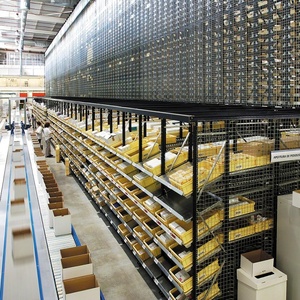
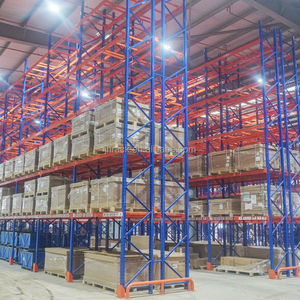
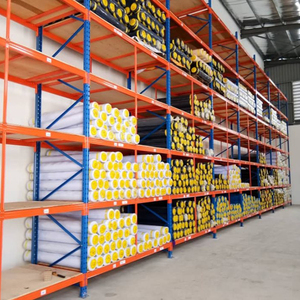
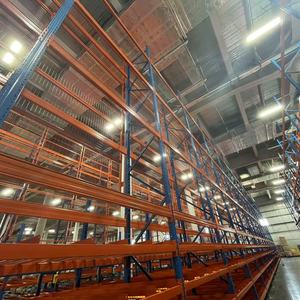
Engineering Architecture of Heavy Duty Narrow Aisle (VNA) Systems
Comprehensive technical breakdown of upright structural calculations, guide rail dynamics, and cubic volumetric efficiency gains.
In contemporary supply chain logistics, facilities face unprecedented land acquisition costs and escalating urban storage overheads. Very Narrow Aisle (VNA) Heavy Duty Racking resolves the fundamental compromise between high-density compact storage and 100% immediate selectivity. By reducing working aisle clearances from standard selective widths of 3.5–4.0 metres down to a stringent 1.5–1.8 metres, narrow aisle layouts unlock up to 45% to 50% additional storage capacity within an identical building footprint. This structural methodology eliminates dead spatial volume while maintaining uncompromised operational velocity for high-throughput distribution environments.
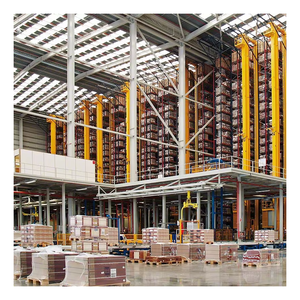
Heavy-duty narrow aisle configurations demand rigorous structural tolerance engineering. Unlike standard ground-supported selective systems, VNA infrastructure often extends up to 15 to 20 metres in vertical clear height. Our engineered designs account for variable torsional stresses, dynamic breaking forces imparted by high-lift turret trucks or articulated swing-reach vehicles, and seismic loading factors defined under international standard EN 15512 and RMI (Rack Manufacturers Institute) guidelines. Upright profiles are cold-formed from high-yield structural steel coils, coupled with bolted diagonal bracing systems and heavy-gauge baseplates that evenly distribute multi-ton point loads onto the industrial floor slab.
High Density & Direct Selectivity
Maximises cubic volume utilization up to 85% without sacrificing instant accessibility to individual palletized SKUs, preventing bottlenecking in high-turnover hubs.
Low-Tolerance Guide Rails
Mechanically secured steel floor profiles or inductive wire-guided tracking systems eliminate operational collisions, ensuring safe high-speed handling along aisle lengths.
Seismic & Fatigue Resistant
Custom structural calculations for upright gauges, connection beam hooks, and seismic anchorage calibrated specifically to the geotechnical profile of your regional site.
Comparative Engineering Matrix: VNA vs. Alternative High-Density Systems
Quantitative technical evaluation to aid multi-facility operations and corporate procurement committees in selecting optimal racking topologies.
| Racking System Type | Working Aisle Width | Floor Space Efficiency | Direct SKU Accessibility | Inventory Rotation | Handling Equipment Type |
|---|---|---|---|---|---|
| Heavy Duty Narrow Aisle (VNA) | 1.5 m – 1.9 m | 85% – 90% (Maximum) | 100% Direct Access | FIFO / LIFO Agile | Man-up / Man-down Turret Trucks; Inductive Wire |
| Standard Selective Racking | 3.2 m – 4.0 m | 50% – 60% (Moderate) | 100% Direct Access | Any (Flexible) | Standard Counterbalance / Reach Trucks |
| Drive-In / Drive-Through | Lane specific | 75% – 85% (High) | Low (Per Lane Only) | Strict LIFO (Drive-in) / FIFO | Standard Reach / Counterbalance |
| Pallet Shuttle / Automated AS/RS | Dedicated Channel / Rail | 90% – 95% (Extreme) | Channel Selective / Robotic | Software Regulated FIFO/LIFO | Stacker Cranes / 4-Way Autonomous Shuttles |
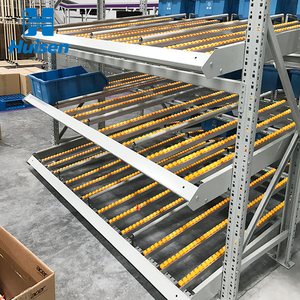
| Gravity Pallet Flow | Lane specific | 70% – 80% (High) | End-of-lane only | Strict FIFO | Brake Roller In-feed / Pick Face Mast Trucks |
Future Procurement Trends & Intralogistics Innovations (2026–2030)
Strategic analysis of hybrid automation convergence, circular steel sustainability, and building-integrated rack architecture.
Hybrid Autonomous Guided Vehicles (AGVs)
The transition toward driverless VNA trucks operating on sub-millimetre visual and LiDAR navigation. Racking uprights now incorporate precision-milled target reflectors and inductive track foundations.
Low-Carbon Recycled Structural Steel
Cross-border procurement audits increasingly enforce Scope 3 carbon reduction criteria. Advanced continuous roll-forming lines leverage electric arc furnace (EAF) steel, reducing embodied carbon by 35%.
IoT-Enabled Structural Health Monitoring
Embedded strain gauges and wireless telemetry pods integrated inside critical load-bearing uprights alert facility supervisors to structural deformation or forklift impacts in real time via cloud WCS links.
Clad-Rack Structural Integration
The ultimate procurement progression bypasses traditional standalone warehouse construction entirely. Narrow aisle rack frames are engineered to serve as the structural framework supporting the facility roof and exterior wall sandwich panels, drastically cutting capital investment expenditures (CapEx) and shortening development timelines by up to 25%.
Enterprise Strengths & Global Export Capabilities
Unrivalled manufacturing agility, in-house finite element calculation, and turnkey execution in over 70 territories.
Selecting a structural intralogistics partner involves mitigating operational, regulatory, and mechanical risk over a multi-decade operational horizon. Backed by over 60 years of engineering heritage, our manufacturing footprint encompasses 12 state-of-the-art production facilities and 7 dedicated research and development centres globally. Every narrow aisle beam profile, column upright, and run spacer is fabricated under strict ISO 9001 and CE execution compliance, guaranteeing continuous metallurgical consistency, exact punch-hole tolerances, and resilient thermoset epoxy powder-coated finishes that withstand the abrasions of industrial material handling equipment.
Our technical capability extends beyond metal fabrication. As evidenced by our recognition in the Gartner® Magic Quadrant™ for Warehouse Management Systems, we orchestrate the complete intralogistics ecosystem. From mechanical guide rail calibration to automated high-bay turret integration and software orchestration through Easy WMS, we empower world-class enterprises—such as PepsiCo, Würth, and Renault—to operate high-density narrow aisle installations with zero operational downtime and maximum structural safety.
Full In-House Engineering
Custom structural calculations, seismic simulations, and finite element analyses (FEA) performed by certified in-house structural engineers to match unique geographical site loads.
Turnkey Project Delivery
From initial topological layout and floor slab survey to rapid overseas container shipping, professional on-site erection, and local structural sign-off.
Lifetime Structural Auditing
Dedicated post-installation maintenance, rapid spare component availability, and annual rack safety inspections conducted in accordance with EN 15635 standards.
Frequently Asked Questions: Heavy Duty Narrow Aisle Racking
Detailed technical, compliance, and procurement clarifications directly from our senior project engineering directors.
How does Narrow Aisle (VNA) racking achieve 45% higher storage density than standard selective racking?
Standard selective pallet racking requires working aisle clearances between 3.2 and 4.0 metres to accommodate conventional counterbalance or reach forklifts. VNA systems utilize specialized man-up or man-down turret trucks that operate in aisles as narrow as 1.5 to 1.8 metres. By capturing this recovered aisle space and extending vertical storage heights up to 15–20 metres, VNA designs virtually double storage capacity within the same square footage while maintaining 100% immediate pallet selectivity.
What specific floor slab tolerances are required for high-bay narrow aisle operations?
Due to the extreme mast heights (often exceeding 12 to 18 metres), slight floor irregularities can amplify mast sway and cause severe rack impacts. Narrow aisle installations require compliance with strict floor flatness specifications, such as DIN 18202 or the VDMA / Concrete Society TR34 (superflat or Category 1 classification). Prior to installation, our engineering team assists clients with laser level floor slab surveys and recommends grinding or leveling measures if required.
What is the difference between mechanical guide rails and inductive wire guidance in VNA aisles?
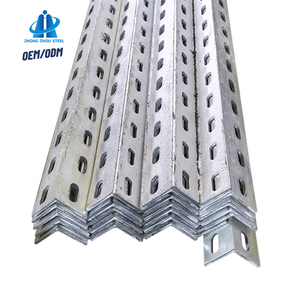
Mechanical guidance involves installing low-profile structural steel angle rails along the base of the racking aisles; guide rollers mounted on the turret truck make physical contact to steer the vehicle down the aisle safely. Inductive wire guidance involves cutting a thin slot in the concrete floor slab and embedding an electric frequency wire that communicates with sensors on the truck. Wire guidance facilitates cleaner floor sweeping, easier pallet entry, and eliminates trip hazards, though mechanical steel rails provide an additional physical barrier protecting rack upright bases.
What parameters are needed to generate an exact engineering layout and budget proposal?
To provide an accurate design study and quotation, we require: (1) An architectural CAD plan showing building dimensions, columns, clear ceiling height, and floor slab load limits; (2) Pallet unit load details including length, width, height, overhang, and maximum gross weight; (3) Operational SKU metrics including inventory turnover speed and FIFO/LIFO preferences; (4) Fire suppression specifications (in-rack sprinkler requirements); and (5) Intended handling equipment (turret truck make/model or vehicle specifications).
Can heavy-duty narrow aisle racks be retrofitted for automated stacker cranes or mobile robotics (AMRs)?
Yes. Our narrow aisle frames are engineered modularly. Standard upright and beam profiles can be modified or reinforced to integrate top crane guide rails, automated shuttle channels, or transfer stations for Autonomous Mobile Robots (AMRs). Many global clients initially deploy narrow aisle systems using manual turret trucks and subsequently transition to fully automated AS/RS stacker cranes as order volumes expand.
Transform Your Warehouse Volumetric Efficiency Today
Speak directly with our senior intralogistics engineers to schedule a comprehensive structural review, receive 3D CAD layout configurations, and obtain a tailored project proposal.
Inquire Now