High-Performance Selective Pallet Racking Series
Manufactured from premium certified Q235B and Q355B structural steel, our selective racking configurations offer 100% immediate SKU selectivity, modular beam adjustability, and custom load profiles up to 5,000 kg per level.
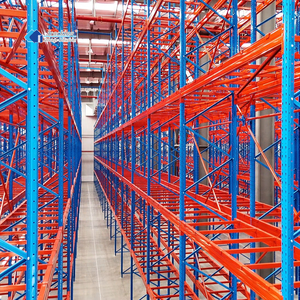
High Density Steel Storage Racks EU Standard Heavy Duty Adjustable Pallet Racking System
- Standard: EN 15512 / FEM 10.2.02
- Capacity: 1,000–4,500 kg / level
- Adjustability: 50mm / 75mm Pitch
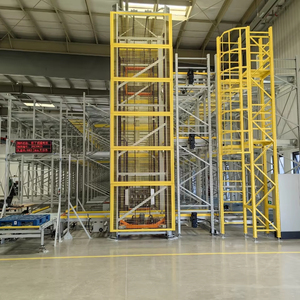
Advanced Intelligent Library Selective Pallet Rack With Efficient Conveying System
- Interface: Conveyors & AMRs
- Efficiency: High-Cycle Stacking
- Control: WMS/WCS Compatible
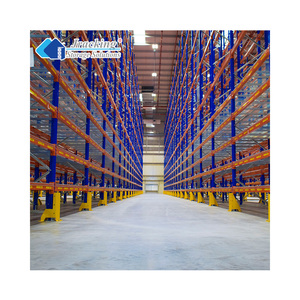
Jracking Metal Q355B 50mm Pitch EURO Pallet Rack Common Usage In Various Industry Warehouses
- Steel Grade: Hot-rolled Q355B high-tensile
- Compatibility: EUR 1, 2, 3 & EPAL
- Upright: 50mm Pitch Delta Hole
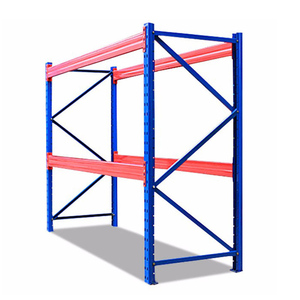
Heavy Duty Steel Multi-Level Warehouse Pallet Metal Rack System with Corrosion Protection
- Surface: Thermo-hardened epoxy coating
- Levels: Multi-tier up to 14 meters
- Safety: 5-claw beam connector locks
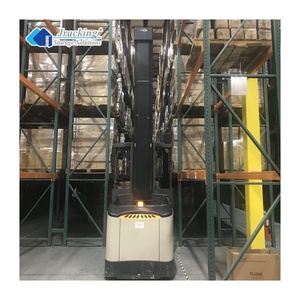
Industrial Heavy Duty Steel Selective Pallet Rack System US Pallet Racking
- Hole Pattern: Universal Teardrop 2"
- Compliance: RMI MH16.1 Certified
- Application: North American standard 40x48"
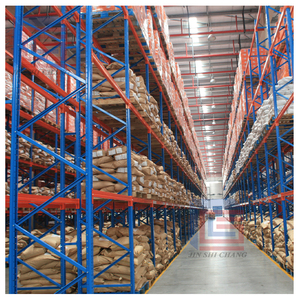
Manufacturer Steel Selective Pallet Rack for Warehouse Storage Solutions
- Profiles: Box Beams & Step Beams
- Finish: Galvanized or Powder-Coated
- Customization: Sized per layout study
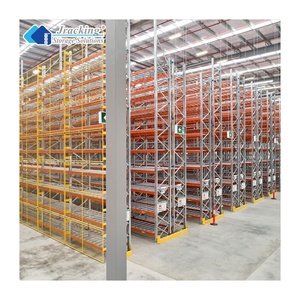
Jracking AU Standard Warehouse Rack Heavy Duty Steel Pallet Racking System For Cold Storage
- Standard: AS 4084-2023 Compliant
- Operating Range: Ambient down to -30°C
- Steel Impact: High Charpy V-notch steel
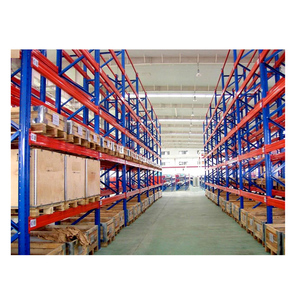
HEDA Guangzhou Steel Pallet Racking System Warehouse Rack Storage Shelves Heavy Duty
- Assembly: Bolted upright frames with locking pins
- Accessories: Column guards, wire mesh decks
- Application: General manufacturing & FMCG
Years of Intralogistics Engineering
Countries in Commercial Network
Dedicated Production Centers Worldwide
Advanced R&D Testing Facilities
Structural Integrity, Finite Element Analysis & Load Mechanics
Why Tier-1 industrial enterprises choose structural selective pallet racking over generic steel shelving: an engineering breakdown of deflection limits, steel metallurgical grades, and seismic resilience.
Industrial selective pallet racking represents the architectural backbone of modern logistics hubs, distribution centers, and high-throughput cold-chain storage facilities. Unlike standard commercial storage, industrial selective racks are engineered structural frameworks subjected to extreme static gravity loads, continuous cyclic dynamic fatigue from material handling equipment (MHE), and severe horizontal shear forces induced by seismic vibrations or accidental truck collisions.
As a global leader with over 60 years of dedicated intralogistics manufacturing and project execution across more than 70 countries, our approach treats every racking configuration not merely as cold steel, but as an engineered system. Sizing upright frames, beam profiles, and floor anchorage requires exact load calculation using advanced Finite Element Analysis (FEA) software. Structural calculations are governed by internationally recognized regulatory bodies, ensuring that deflection limits never exceed the stringent L/200 threshold under full design load condition while upholding safety factors strictly defined by European EN 15512, North American RMI MH16.1, and Australian AS 4084-2023 specifications.
Metallurgical Quality: Q355B vs Conventional Steel Formulations
The structural reliability of an industrial storage rack depends directly upon the yield strength ($\sigma_y$) and tensile strength ($\sigma_u$) of the raw coil steel. Generic manufacturers often cut procurement costs by utilizing uncertified scrap-recycled mild steel with significant chemical inclusions, leading to premature metal fatigue and catastrophic fracture under localized impact. In contrast, our state-of-the-art roll-forming mills exclusively utilize certified prime structural coils—primarily Q235B and high-yield alloy Q355B (equivalent to European S355JR and ASTM A572 Grade 50).
Q355B low-alloy manganese steel offers a minimum yield strength of 355 MPa, delivering a 51% enhancement in load-bearing structural efficiency compared to standard Q235 steel without adding redundant dead weight to the warehouse slab. This superior strength-to-weight ratio allows for taller column heights (reaching 14 to 30 meters in high-bay setups), slimmer upright profiles that maximize net aisle clearance, and exceptional Charpy V-notch impact toughness down to -30°C in deep-freeze cold storage environments.
Certified Seismic Engineering
Every selective racking system is dynamically simulated using site-specific spectral acceleration coefficients ($S_s, S_1$), soil classification data, and building drift limits to prevent frame collapse during major seismic events.
High-Precision Omega Uprights
Continuous continuous cold roll-forming with up to 26 forming rolling passes produces an optimized Omega cross-section profile with internal return flanges, delivering maximum torsional stiffness and buckling resistance.
Multi-Claw Interlocking Connectors
Our heavy-duty box and step beams feature 3, 4, or 5-claw high-strength connection brackets stamped from 4.0mm solid steel, complete with auto-engaging safety spring pins to eliminate forklift dislodgement risks.
Engineering Selection Matrix: Selective Pallet Racking
Comprehensive sizing, load limits, and dimensional parameters for project procurement managers and warehouse design engineers.
| System Component | Standard Dimension Range | Material Grade | Standard Load Rating | Safety Certification |
|---|---|---|---|---|
| Omega Upright Frames (Column) | 80×60, 90×70, 100×70, 120×95, 140×95 mm; Thickness: 1.8–3.0 mm | Q235B / Q355B High Tensile | 6,000 kg – 28,000 kg total frame capacity | EN 15512 / RMI |
| Twin-C Interlocking Box Beams | 80×50, 100×50, 120×50, 140×50, 160×50 mm; Length: 1,350–3,900 mm | Q235B Cold-Rolled Welded | 1,000 kg – 5,000 kg per beam level (UDL) | ISO 9001 / CE |
| Step Beams (for Wire Mesh Decks) | Step height: 20mm, 25mm, 38mm; Width: 50–65mm | Pre-galvanized / Coated Steel | 800 kg – 3,500 kg per beam level | RMI MH16.1 |
| Drop-In Wire Mesh Decking | Wire gauge: 4.0–6.0 mm; Grid: 50×50, 50×100 mm with reinforcing channels | Cold-Drawn Carbon Steel Wire | 300 kg – 1,500 kg uniformly distributed | NFPA 13 Fire Safe |
| Baseplates & Heavy Floor Anchors | Baseplate thickness: 6–12 mm; Anchor studs: M12×100 to M16×150 mm | Hot-Dip Galvanized S235/S355 | Tensile pullout resistance > 35 kN per anchor | ETA Approved |
| Column Protectors & Aisle Guards | U-shape, L-shape, Wrap-around; Height: 300mm, 400mm, 500mm | Heavy Cast Steel / 5mm Plate | Impact absorption rating > 400 J energy dissipation | FEM 10.2.02 |
Unrivaled 100% SKU Selectivity & Direct Accessibility
Selective pallet racking is the universally acknowledged gold standard for distribution operations handling a high number of Stock Keeping Units (SKUs) with moderate pallet counts per product line. Unlike high-density systems (such as drive-in or push-back racking) that enforce strict LIFO (Last-In, First-Out) queuing, selective systems allow material handling equipment direct, unhindered access to every individual pallet at all times.
This layout configuration eliminates time-consuming "pallet shuffling" maneuvers, dramatically reducing forklift cycle times and safeguarding valuable stock against handling-related product damage. With adjustable horizontal beam spacing on 50mm or 75mm increments, operators can seamlessly adapt vertical clearances to accommodate varying pallet heights, Euro pallets, US 48"×40" GMA pallets, or custom IBC chemical containers.
Why Tier-1 Global Supply Chains Partner With Us
Combining 60 years of structural engineering heritage with global production muscle, localized project management, and world-class quality assurance.
In modern industrial procurement, selecting a pallet racking supplier extends far beyond quoting the lowest steel price per kilogram. A structural failure inside a multi-tier distribution center causes catastrophic product loss, prolonged business disruption, severe legal liabilities, and potential loss of human life. Global brand enterprises require a manufacturing partner possessing exhaustive engineering pedigree, uncompromised raw material traceability, expansive production scalability, and dependable on-site installation governance.
End-to-End In-House Engineering
Our dedicated engineering department calculates static, dynamic, and seismic structural loads customized to your local building codes, soil subgrade modulus, and specific material handling equipment specifications.
12 Global Production Facilities
With 12 wholly-owned manufacturing hubs strategically distributed across key continental corridors, we guarantee rapid production cycles, controlled steel sourcing, and on-time international project delivery.
7 Advanced R&D Testing Centers
Continuous mechanical testing—including full-scale stub column compression, portal frame cyclic shear testing, and beam-end connector moment tests—verifies theoretical models against physical reality.
Automated Powder Coating Line
Pre-treatment nano-ceramic degreasing combined with high-voltage electrostatic robotic spray lines produces a dense, ultra-durable 70–90µm thermo-hardened epoxy finish resistant to chemical corrosion and abrasion.
Local Presence in 70+ Countries
Our localized engineering and field teams provide bilingual technical consultation, local permitting assistance, certified installation teams, and annual rack safety inspections anywhere in the world.
Turnkey Lifecycle Governance
From structural concept design, load plaque certification, and professional erection to lifetime replacement parts availability, we ensure your investment maintains peak asset value for decades.
Future Procurement Trends in Industrial Storage Racking
Strategic insights for supply chain directors preparing warehouse infrastructure for next-generation automated material handling and environmental mandates.
1. Seamless Hybridization with AMR (Autonomous Mobile Robot) Fleets
The traditional warehouse boundary between manual forklift aisles and automated storage is dissolving rapidly. Procurement executives are increasingly specifying selective pallet racking systems engineered from day one for hybrid operation. In these environments, counterbalanced reach trucks handle high-level vertical storage (levels 3 through 8), while autonomous mobile robots (AMRs) or Automated Guided Vehicles (AGVs) navigate ground-level and second-level pick tunnels.
This operational shift demands rack engineering adaptations: enlarged aisle clear tolerances, laser-reflective upright target markers, high-clearance bottom beam elevations, and recessed column anchors that eliminate floor-level obstruction for sensitive robotic optical navigation sensors.
2. Transition to Micro-Alloyed High-Yield Steels
Global decarbonization initiatives and volatile ocean freight tariffs have transformed structural steel procurement. Supply chain directors are moving away from heavy, low-grade hot-rolled structural channels in favor of ultra-high-yield, cold-formed micro-alloy steels (such as Q355B and S420MC). By leveraging optimized roll-formed geometry with multi-stage longitudinal ribs, structural frames achieve equivalent compressive and moment-resisting capacities with up to 18% less steel mass. This weight reduction directly translates into lower ocean freight logistics costs, reduced carbon footprint per pallet position, and minimized dead load stress on warehouse concrete foundations.
3. Real-Time Structural Health Monitoring & IoT Sensing
The days of relying solely on annual manual visual rack inspections are coming to an end. Next-generation smart warehouses are implementing continuous structural health monitoring networks. Miniature, low-power triaxial accelerometer sensors and strain gauges are embedded within lower upright columns and heavy aisle end-guards. These IoT devices continuously log impact energy, detecting accidental forklift collision shocks that exceed structural thresholds and broadcasting automated alerts to the warehouse management system (WMS) before invisible metal fatigue can trigger column failure.
4. Sustainable Finishing & Green Building Compliance
Environmental, Social, and Governance (ESG) criteria have become central to enterprise capital expenditure decisions. Modern distribution center construction targeting LEED Gold or BREEAM Outstanding certifications requires warehouse racking manufactured through zero-VOC (Volatile Organic Compound) processes. Our state-of-the-art coating facilities incorporate closed-loop zirconium nanotech wash stages that replace toxic heavy-metal phosphates, paired with 99.4% powder paint reclamation systems and energy-efficient infrared curing ovens to slash carbon intensity across the entire product lifecycle.
Evaluating Total Cost of Ownership (TCO) in Pallet Racking
A structured financial and technical framework for logistics directors, plant managers, and procurement professionals.
When conducting a procurement tender for large-scale selective pallet racking, comparing bottom-line initial CapEx without auditing underlying engineering specifications is a dangerous mistake. Structural pallet racking must be evaluated through a Total Cost of Ownership (TCO) model spanning a 15-to-25-year operational lifecycle.
Key Variables Governing Long-Term System Economics:
1. Foundation Slab Compatibility & Concrete Punching Shear: High-bay selective racking focuses immense point loads through column baseplates onto the building floor slab. Inadequate baseplate dimensions or cheap anchor bolts can induce localized slab cracking, subgrade void collapse, or catastrophic differential settlement. We engineer custom enlarged, laser-cut heavy baseplates designed to distribute concentrated compressive stresses within the concrete slab's allowable bearing limit (typically 20–35 MPa).
2. Standardized Modular Pitch for SKU Evolution: Businesses evolve rapidly. A racking system with an inflexible 100mm punch hole pitch limits vertical adjustment, forcing warehouses to waste valuable cubic air space above pallet loads. Our precision 50mm and 75mm incremental upright punches allow operators to fine-tune beam elevations to the exact millimeter, recovering up to 12–15% more usable storage volume within the identical building footprint.
3. Impact Protection & Replaceable Sacrificial Elements: Over 90% of industrial racking damage occurs within the first 400mm above the finished warehouse floor due to forklift wheel turns and outrigger strikes. Investing in heavy-gauge wrap-around column protectors, poly-steel shock absorbers, and continuous aisle end barriers prevents structural upright crimping, reducing maintenance downtime and expensive frame replacement costs by up to 75% over a 10-year operating horizon.
Frequently Asked Questions by Industrial Buyers
In-depth technical answers addressing engineering standards, seismic loads, aisle sizing, and installation requirements.
What are the exact dimensional differences between standard Counterbalance, Reach Truck, and VNA aisles?
How do EN 15512, RMI MH16.1, and AS 4084 design codes differ in calculating load capacity?
What surface treatment is best suited for ambient warehouses versus cold storage or coastal facilities?
Can selective pallet racking be modified or relocated if warehouse layout needs change?
What information must be provided to receive an engineered layout and price quotation?
Ready to Optimize Your Industrial Storage Infrastructure?
Connect directly with our senior structural intralogistics engineers. Whether you need a high-density regional distribution facility, custom heavy-duty cold storage racking, or standard selective pallet racks engineered to global standards, we deliver certified turnkey solutions from manufacturing to handover.