Industrial Pallet Racking & High-Density Storage Solutions
Directly manufactured to international structural design standards (EN 15512, FEM 10.2.02, RMI). Certified for dynamic warehouse operations, cold distribution facilities, and bonded Mercosur fulfillment centers.
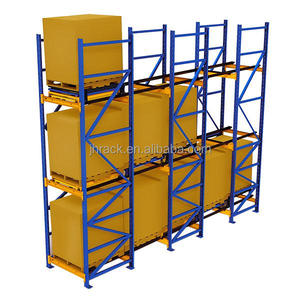
Heavy-Duty Push Back Pallet Racking System
Deep-lane dynamic push back carts designed for LIFO inventory profiles, maximizing cube storage in high-value cold rooms and buffer staging areas.
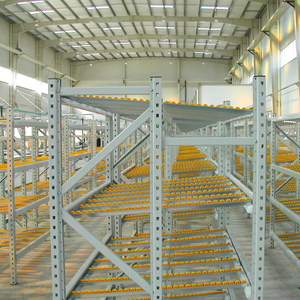
Picking Flow Racking & Carton Live Storage
Gravity roller beds engineered for fast-moving split-case picking, split order dispatching, and ergonomic assembly staging lines in fulfillment centers.
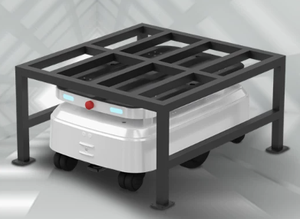
Automatic AGV & Radio Shuttle High-Density Storage
Next-generation intralogistics system pairing automated radio shuttles and AGVs to maximize pallet throughput in multi-deep refrigerated facilities.
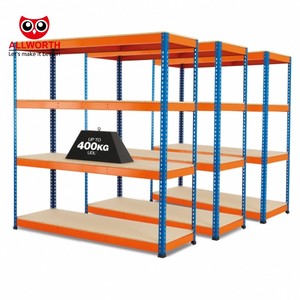
Heavy Duty Back-to-Back Pallet Style Metal Rack
Selective double-row structural steel framing offering direct 100% selectivity to every unit load. Fully configured for Arlog and Mercosur wood pallets.
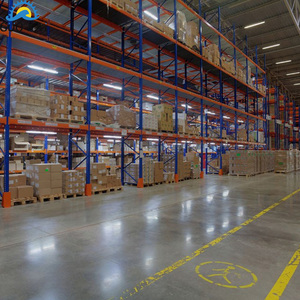
Heavy Duty Boltless Industrial Storage Shelves
Interlocking beam-and-upright steel shelves for manual hand-loading, spare components, and intermediate archive facilities requiring zero hardware tools.
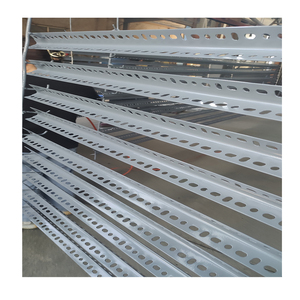
Adjustable Slotted Angle Metal Shelving Units
Cost-efficient, multi-tier angle uprights engineered for modular workshop shelving, retail back-of-store organization, and pharmaceutical picking.
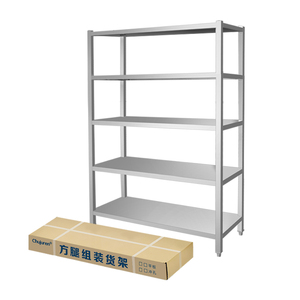
Customized Stainless Steel Hygienic Storage Rack
AISI 304 food-grade and pharmaceutical-grade sanitary shelving designed for high-humidity cold storage, fish/beef processing, and cleanrooms.
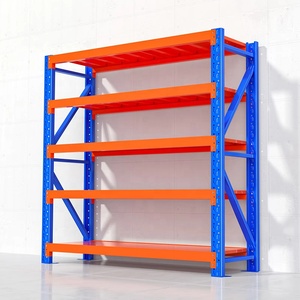
Medium-Duty Adjustable Longspan Racking Shelf
Wide-span racking solution accommodating bulky carton goods and awkward components, bridging the gap between light shelving and pallet racking.
Back-to-Back Pallet Racking Architecture & Structural Mechanics
Back-to-back selective pallet racking represents the foundational intralogistics standard across contemporary supply chain facilities. By placing two single runs of racking back-to-back, connected by calibrated structural row spacers, operations eliminate redundant forklift transit aisles while safeguarding independent 100% selectivity across every SKU position.
In conventional single-run selective systems, rack stability across the cross-aisle direction relies strictly on upright frame lacing and baseplate-to-floor anchoring. In a true Back-to-Back racking configuration, rigid steel row spacers mechanically bind adjacent upright frames at specific node heights. This structural cross-tie transforms two independent slender uprights into a unified, high-inertia spatial truss system. This geometry significantly counteracts dynamic forklift impacts, minimizes harmonic resonance during high-bay vertical lifting, and distributes lateral seismic overturning moments evenly across multiple floor slab foundation anchors.
| System Component | Technical Parameters | Material Grade & Standard | Operational Function |
|---|---|---|---|
| Upright Frames | Widths: 80mm - 140mm; Thickness: 1.8mm - 3.0mm; Heights up to 30m | High-yield Q355B / S355JR Cold-rolled steel | Transfers combined dead and live axial loads down to the civil concrete foundation slab. |
| Box Step Beams | Profiles: 80mm - 160mm dual-C interlocking seams; 50mm / 75mm adjustability | Certified structural carbon steel with high torsional resistance | Supports pallet pairs; welded 3-claw or 4-claw connectors lock into uprights with safety pins. |
| Row Spacers | Spans: 200mm, 250mm, 300mm to 450mm tailored to building columns & flue spaces | Structural hollow section (SHS) or heavy folded steel channel | Maintains strict back-to-back flue spaces for NFPA/EN fire sprinkler penetration and tied stability. |
| Corrosion Treatment | Epoxy-polyester thermosetting powder coat (70-90μm) or Hot-Dip Galvanizing | ISO 12944 C3 to C5 Industrial / Marine environmental ratings | Provides long-term resistance against salt-laden coastal humidity and sub-zero condensation. |
| Frame Protectors | Heavy-gauge omega/column guards, wrap-around corner shields, dual-end barrier rails | Q235 steel or high-density engineered polyethylene polymers | Shields critical upright nodes from dynamic impact forces generated by reach trucks and VNA units. |
Localized Operational Scenarios Across Uruguay
Uruguay is strategically positioned as South America's prime Atlantic logistics gateway. The nationwide implementation of modern storage infrastructure demands distinct localized adaptations across regional distribution nodes, free trade zones, and industrial processing zones.
Puerto Libre de Montevideo (Bonded Transit Hub)
Operating under Uruguay's Port Free Act (Ley de Puerto Libre N° 16.246), terminal transit facilities handle deep container dwell times with duty-free movement of goods. Back-to-back selective racks provide the immediate 100% SKU access necessary for high-velocity cargo cross-docking and container stuffing/unstuffing destined for Argentina, Brazil, and Paraguay via the Paraguay-Paraná waterway.
Free Trade Zones: Zonamerica & Parque de las Ciencias
Global life science, technological, and luxury consumer goods centers operating under Free Trade Zone Law (Ley N° 15.921) rely on calibrated back-to-back selective and carton-flow systems. Clean-room environments require electrostatic discharge (ESD) safe coatings, high vertical clear-height utilization (up to 12-14 meters), and strict lot-number traceability for pharmaceutical distribution across South America.
Cold Chain Agrifood & Meat Packing (Frigoríficos)
Uruguay is a global benchmark exporter of premium beef, dairy (Conaprole ecosystem), and citrus. In sub-zero cold stores operating at -20°C to -28°C, power consumption per cubic meter is critical. Our back-to-back racking and high-density Push Back or Shuttle racking utilize structural hot-rolled sections and certified low-temperature impact steel to eliminate brittle steel fractures in cryogenic warehouse atmospheres.
Canelones Logistics Belt & National Highway Corridors
The strategic logistics axis connecting Ruta 101, Ruta 5, and the Perimetral 102 highway serves as Uruguay's central domestic consumer goods fulfillment corridor. High-throughput 3PL fulfillment platforms utilize multi-tier back-to-back installations integrated with Narrow Aisle (VNA) turret trucks, enabling rapid replenishment cycles for supermarket chains, hardware franchises, and omnichannel retail networks.
Pulp, Paper, & Heavy Forestry Staging (UPM & Montes del Plata)
Supporting Uruguay's colossal forestry and cellulose sector, auxiliary chemical suppliers and engineering parts warehouses require heavy-load pallet racks designed for concentrated point loads exceeding 1,500 kg to 2,000 kg per pallet position, featuring oversized base plates and reinforced channel profile beams.
Intralogistics Trends Driving Racking Modernization in Uruguay
A comprehensive review of regulatory, civil, and commercial shifts that determine procurement specifications for Uruguayan logistics developers, multinational 3PLs, and local manufacturing facilities.
Consolidation as the Mercosur Southern Cone Hub
With geopolitical and financial stability, Uruguay continues to absorb regional distribution center (RDC) setups that serve Southern Brazil, Argentina, Chile, and Bolivia. Multinational operators demand standardized, internationally certifiable racking hardware that integrates seamlessly with enterprise Warehouse Management Systems (WMS) and automated material handling equipment.
Adoption of Strict Fire & Environmental Codes (DNB & DINAMA)
Industrial builds now operate under rigorous oversight by the Dirección Nacional de Bomberos (DNB). Back-to-back rack design must incorporate precision longitudinal and transverse flue clearances (75mm - 150mm) to allow unobstructed early-suppression fast-response (ESFR) ceiling and in-rack sprinkler discharge, compliant with NFPA 13 standards.
Vertical Escalation & Slab Optimization
Due to rising land costs in Canelones and Montevideo industrial parks, logistics buildings are expanding vertically from standard 8-meter limits to 12-16-meter clear operating heights. This requires high-rigidity upright column profiles, precise baseplate leveling under DIN 18202 tolerances, and structural analysis factoring in Rio de la Plata coastal wind suction forces on building envelopes.
Frequently Asked Questions by Uruguayan Procurement Teams
Direct answers to the most common engineering, commercial, and customs inquiries raised when specifying, importing, and installing industrial pallet racking in Uruguay.
Shipments destined for recognized Zonas Francas (e.g., Zonamerica, Parque de las Ciencias, Zona Franca Colonia) or under the Puerto Libre regime enter completely exempt from Uruguayan import tariffs (AEC/Arancel Externo Común) and domestic VAT (IVA, 22%). For domestic deliveries across Montevideo or inland departments, equipment is cleared through certified Despachantes de Aduana under proper Mercosur tariff classifications (NCM 7308.90.10) with full technical documentation supplied by our export desk.
Yes. Unlike standard European installations that exclusively use EUR-pallets (800mm x 1200mm), warehouse facilities across Uruguay predominantly handle Arlog / Mercosur pallets (1000mm x 1200mm) alongside international ISO containers. Our back-to-back beam lengths are engineered (typically 2300mm for two pallets or 3300mm for three pallets) with clear upright depths (usually 1000mm to 1100mm) to ensure standard 50mm front and rear pallet overhangs for optimum stability.
Each project is accompanied by a certified structural engineering dossier executed under European standard EN 15512 or American ANSI/RMI MH16.1 protocols. This documentation includes detailed permissible uniformly distributed load (UDL) ratings per pair of beams, frame vertical load curves, minimum slab concrete thickness requirements (typically C25/30, 200mm), and high-visibility aluminum or PVC load identification plates (Placas de Carga) to mount on every rack aisle end.
Montevideo's bay and maritime boundary expose waterfront distribution hubs to persistent atmospheric salinity and high relative humidity (frequently exceeding 80%). For outdoor, semi-covered, or non-climate-controlled storage near the port, we specify continuous hot-dip galvanizing according to ISO 1461. For indoor dry facilities, automated electro-static polyester-epoxy powder curing at 200°C provides superior scratch resistance, mechanical durability, and passivated corrosion protection.
Manufacturing execution typically ranges from 3 to 5 weeks depending on project tonnage and customized paint/galvanizing requirements. Direct ocean freight container transit to the Port of Montevideo takes approximately 28 to 35 days. We coordinate full 40' HQ container consolidation, seaworthy moisture-barrier packaging, and provide complete customs documentation (Bill of Lading, Certificate of Origin, Packing List, Structural Warranty Certificates) to ensure expedited customs clearance.
Yes. We deliver comprehensive structural assembly schematics, torque specifications for floor wedge anchors, and 3D step-by-step assembly models. Clients can deploy local Uruguayan mechanical assembly contractors under our remote engineering supervision, or request on-site technical supervisors who conduct plumb-line verification, laser-assisted alignment, and issue final formal commissioning compliance reports.
Industrial Manufacturing Might & Global Engineering Pedigree
Backed by 60 years of intralogistics leadership, our direct-manufacturing operational model combines robotic roll-forming precision with global engineering compliance across Latin America.
12 Automated Production Centers
Operating 12 state-of-the-art production plants across Europe and the Americas ensures end-to-end quality control, from certified prime structural steel coil sourcing to continuous automated roll-forming and robotic welding cells, minimizing delivery lead times for large-scale export orders.
7 Specialized R&D Centers
Our dedicated engineering facilities drive continuous testing and digital simulation using finite element analysis (FEA). We analyze structural fatigue, cyclic seismic ground acceleration, and connection node displacement, ensuring that every beam-connector and upright profile exceeds international factor-of-safety margins.
Regional Support Across Uruguay & Mercosur
With commercial and field engineering presence in the Southern Cone—including direct representation serving Canelones, Montevideo, and regional logistic hubs—our clients receive timely technical site evaluations, layout design optimizations, and uninterrupted spare parts accessibility throughout their installation lifecycle.
Optimize Your Uruguayan Warehouse Footprint Today
Connect directly with our senior intralogistics structural engineers. Share your building layout drawings (CAD/PDF), pallet load dimensions, and storage targets for a complimentary structural assessment and layout proposal.
Get a Quote