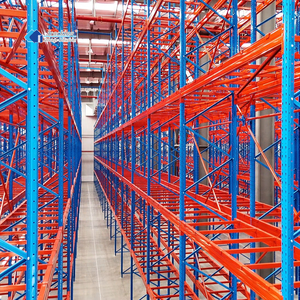
EU Standard Heavy Duty Adjustable Pallet Racking System
- EN 15512 & CE Certified structural profiles
- Custom upright pitch for high-bay optimization
- Direct compatibility with pantograph reach trucks
Every system complies with stringent EN 15512, FEM 10.2.02, and Saudi Building Code (SBC 301/306) standards, guaranteeing optimal pallet density, reach-truck clearance, and structural durability under Middle Eastern industrial conditions.
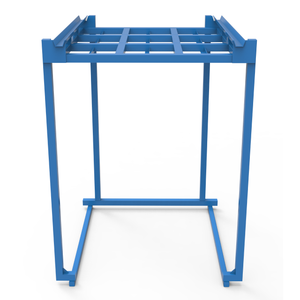
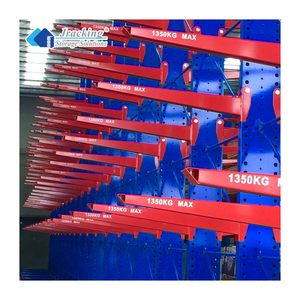
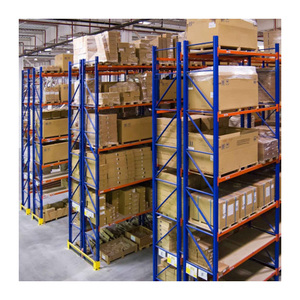
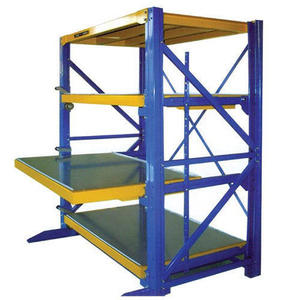
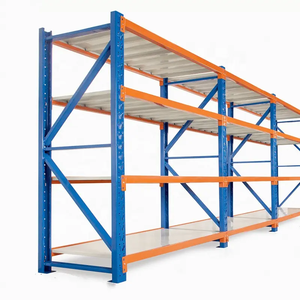
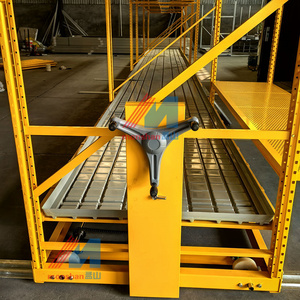
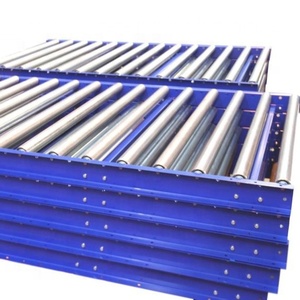
A comprehensive structural, operational, and supply chain analysis for plant managers, industrial project consultants, and 3PL operators expanding across the GCC logistics corridor.
The logistics infrastructure in the Kingdom of Saudi Arabia (KSA) is undergoing unprecedented expansion driven by the National Transport and Logistics Strategy under Saudi Vision 2030. As Riyadh solidifies its role as a regional commercial capital, and logistics hubs expand in King Abdullah Port (KAEC), Jeddah Islamic Port, and the King Salman Energy Park (SPARK), supply chain directors are confronted with escalating per-square-meter facility costs and ambient temperature challenges. In modern dry warehousing and high-capex temperature-controlled cold facilities, selective racking often wastes excessive floor area on operational aisles. Double Deep Pallet Racking bridges the gap between single-selective selectivity and high-density, multi-lane block storage.
By placing two pallet positions back-to-back along every aisle side—serviced by specialized pantograph reach trucks or articulated dual-depth material handling units—Double Deep racking eliminates 50% of the aisles required in standard selective configurations. This delivers an immediate space utilization gain of 30% to 35% while maintaining direct access to 50% of all stored inventory. When exported and erected within Saudi Arabia, these structures must adhere not only to European Normative EN 15512 standards but also to strict SASO/SABER structural conformity rules and local seismic factors outlined in the Saudi Building Code (SBC 301 and 306).
Utilizing certified high-yield structural steel grades Q235B and Q355B (equivalent to European S235JR and S355JR). Upright sections feature continuous roll-formed Omega profiles with multi-bend ribs to resist axial buckling under multi-ton dynamic loads.
Tailored finite-element engineering calculations adhering to local soil spectrum data and seismic zones (Zone 2B along the Red Sea Rift near Jeddah/Yanbu vs. Zone 1 interior stable platforms around Riyadh and the Eastern Province).
State-of-the-art multi-stage degreasing, nano-zirconium conversion coating, and electrostatic high-durability epoxy-polyester powder baking (60–80 µm dry film thickness). Resists saline humidity in coastal Dammam and extreme thermal cycles in desert interiors.
Selecting the optimal intralogistics system requires balancing capital investment against volumetric space efficiency, accessibility, and pallet turnover frequency. The table below delineates critical structural and operational metrics comparing standard selective systems, double deep racking, and high-density drive-in systems for standard GMA / Euro Pallet (1200 x 1000 mm / 1200 x 800 mm) footprints.
| Storage System | Floor Area Utilization | Direct Pallet Selectivity | MHE Forklift Requirement | Stock Rotation Discipline | Primary Use Cases in KSA |
|---|---|---|---|---|---|
| Single Selective Racking | 35% – 40% (Aisle Intensive) | 100% Immediate Access | Standard Counterbalance / Reach Truck | FIFO / LIFO Any Order | Retail eCommerce, Low Pallet / High SKU counts |
| Double Deep Pallet Racking | 55% – 65% (Optimal Density) | 50% Direct (1 pallet behind) | Pantograph / Telescopic Fork Reach | LIFO (per dual bay) or Batch FIFO | FMCG, Cold Rooms, Petrochemical Buffers |
| Drive-In / Drive-Through | 65% – 75% (Maximum Static) | 10% – 15% (Lane Entry Only) | Narrow Protruding Mast Forklifts | LIFO (Drive-In) / FIFO (Drive-Through) | Raw Agricultural Produce, Single-SKU Staging |
| Pallet Shuttle / AS/RS | 75% – 85% (Automated Vertical) | Automated WMS Directed | Mother-Child Carts / Stacker Cranes | Programmed WCS/WMS Matrix | Mega-Fulfillment Sites, Pharmaceutical Central Hubs |
Double Deep configurations provide maximum efficiency in three core Saudi logistical sectors:
1. Temperature-Controlled Cold Storage: Refrigeration operational costs in Gulf climates are among the highest in the world due to ambient temperatures frequently exceeding 45°C. Constructing larger refrigerated volumes dramatically escalates HVAC cooling loads. By deploying CE-certified Double Deep racking inside freezing (-25°C) and chill (0°C to 4°C) facilities across Jeddah and Dammam, 3PL and food-distribution operators store up to 35% more palletized frozen poultry, dairy, and pharmaceuticals within the exact same insulated thermal envelope.
2. Petrochemical and Chemical Distribution (Jubail & Yanbu): The Kingdom's downstream polymer processing industries generate predictable, medium-to-large production runs of uniform resin and pellet grades. Storing homogeneous resins on heavy-duty wooden and plastic skids two-deep eliminates unnecessary aisle widths, preserving warehouse space for high-volume dispatch operations.
3. Fast-Moving Consumer Goods (FMCG) Distribution: Consumer centers across Riyadh and Medina operate on continuous replenishment models. Double Deep racking allows logistics operators to assign paired lots (inward pallet behind, outward pallet front) of identical expiration runs, maintaining strict lot tracking via modern Warehouse Management Systems (WMS).
The rapid digital transformation of the Saudi industrial landscape has triggered major procurement shifts:
Decades of continuous manufacturing, proprietary roll-forming lines, and direct export capabilities ensure rapid turnkey project delivery into Saudi ports.
With 12 dedicated manufacturing centers and advanced automated cold-forming lines, we maintain complete control over raw material procurement, structural tolerances, welding certifications, and delivery timelines.
Our export compliance team coordinates all test reports, mill certificates, and SASO-accredited third-party inspection audits, guaranteeing customs clearance without demurrage at Jeddah, Dammam, and Riyadh Dry Port.
Our structural engineering division uses finite element analysis to calculate deflection ratios (1/200th standard beam deflection under full static payload) customized to your floor slab strength and anchor bolt shear limits.
Critical structural, operational, and customs queries addressed directly by our senior intralogistics engineering team.
Connect directly with our intralogistics project engineering team. Provide your building CAD layout, pallet dimensions, and SKU throughput velocity for a comprehensive racking proposal and seismic calculation report.
Contact Us