Featured Industrial Heavy-Duty Storage Systems
Fully validated against EN 15512, ISO 9001, and CE structural directives, supporting heavy coil, uncoiled metal, tooling, and palletized materials.
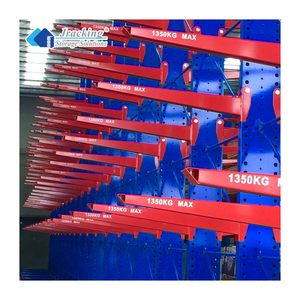
Industrial Coil Racking: Structural Mechanics & Point Load Calculation
Unlike uniformly distributed loads (UDL) common in standard pallet storage, steel, aluminum, and wire rod coils exert severe concentrated dynamic point loads that induce aggressive shear stress and torsional deflection.
Concentrated Line-Load Dissipation
Cylindrical items produce a tangential line contact against support cradles. Our bespoke coil saddles integrate cold-formed structural saddles and heavy polyurethane buffers, spreading dynamic shear loads across reinforced multi-box structural beams without localized yielding.
Dynamic Punching Shear Mitigations
Oman facilities often operate high-capacity overhead cranes (EOT) or heavy-duty counterbalanced forklifts. Downward deceleration spikes are buffered using oversized baseplates (up to 30mm thickness) anchored with chemical masonry studs to preserve floor slab integrity.
CE & EN 15512 Certifications
Every frame assembly is validated via Finite Element Analysis (FEA) compliant with European Standard EN 15512 (Steel static storage systems) and European Machinery Directives, providing verified safety factors exceeding 1.65 under peak dynamic storage cycles.
| System Parameter | Light-to-Medium Slit Coils | Standard Master Coil Racks | Ultra-Heavy Primary Smelter Cradles |
|---|---|---|---|
| Load Capacity Per Position | 1,000 kg – 3,500 kg | 5,000 kg – 15,000 kg | 15,000 kg – 35,000 kg (Engineered per tier) |
| Beam Profile Architecture | Double-C interlocking welded box | High-yield structural I-beam / Twin-box | Custom fabricated rolled structural HEA/HEB |
| Cradle Interface Type | Bolted V-cradle with nylon pads | Adjustable welded steel saddle with polymer liner | Continuous curved contour cradle with oil drainers |
| Corrosion Barrier Treatment | Electrostatic powder coat (60-80μm) | Epoxy thermosetting powder (100-120μm) | Hot-Dip Galvanized (BS EN ISO 1461) ≥ 85μm |
| Handling Compatibility | Narrow Aisle Forklifts, C-Hook cranes | Heavy Forklifts with ram attachments, EOT Crane | High-tonnage Overhead Cranes, Automated Transfer Cars |
Localized Industrial Integration: Supporting Oman Vision 2040
Oman is transforming into an international trade nexus through aggressive investments in infrastructure, metals fabrication, and logistics corridors across Sohar, Duqm, and Salalah.
Sohar Freezone: High-Throughput Metal Processing
Situated near the Sohar Port shipping channels and primary steel rolling facilities, our heavy coil racks are deployed to buffer galvanized, cold-rolled, and slit carbon steel coils. High storage density frees expansive floor space for downstream profiling and pipe extrusion lines.
Special Economic Zone at Duqm (SEZAD)
Duqm’s heavy industrial cluster operates within challenging coastal marine environments. Here, our CE-certified systems with marine-grade protective hot-dip galvanization withstand high salinity and sand abrasive cycles, securing raw coil supplies for rig fabrication and shipbuilding ventures.
Rusayl & Salalah Industrial Estates (Madayn)
Supporting Oman's cable manufacturers, sheet metal stamping, and packaging plants. The modular coil rack architectures allow swift reallocation of vertical bay spacing to adapt to diverse coil diameters and sudden supply chain shifts.
Market Trends: The Evolution of Coil Handling in the Sultanate
Omani manufacturing operations are transitioning rapidly from hazardous floor stacking to precision-engineered vertical storage infrastructure.
Abolishing Pyramid Floor Stacking
Traditional floor wedge storage risks rolling accidents, destroys expensive lower coils due to gravitational weight, and wastes over 65% of warehouse cubic headroom. Modern Omani facilities now require multi-level racking to maximize clear roof heights.
Harsh Coastal Climate Protection
Oman’s coastal regions combine temperatures reaching 48°C with high relative humidity and airborne salt deposits. Procurement requires dual-action corrosion management: zinc-rich primers, thermoset polyester coatings, and ASTM-compliant hot-dip galvanizing.
Strict Ministry HSE Compliance
Stringent audits by the Ministry of Labour and Civil Defence prioritize human operator safety. Racks with certified deflection tolerances (≤ L/200 under EN 15512), locking pins, anti-drop coil saddles, and side roll restrictors have become mandatory criteria.
ERP/WMS Digital Integration
Oman’s expanding export supply chains demand trace accuracy for melt-heats and thickness gauges. Racking bays are configured for automated guided vehicles (AGVs), overhead crane barcoding scanners, and precision batch indexing.
Engineering Benchmark: Direct Manufacturing & Global Trust
Backed by 60 years of intralogistics expertise and certified European quality management, we deliver resilient storage systems directly to major EPCs and fabricators worldwide.
12 Direct Production Facilities
Unlike trading intermediaries, our integrated fabrication ecosystem controls the entire supply loop—from high-grade cold-rolled coils (Q235B, Q355B / S235, S355JR steel) to robotic precision roll-forming, punching, welding, and automated surface treatment.
7 Dedicated R&D Centers
Continual investment into finite element modeling, static dynamic analysis, and seismic simulations under Eurocode 8 ensures structures withstand regional earth tremors and rigorous crane impacts typical of heavy metal operations.
End-to-End Oman Logistics Support
Experienced shipping direct to Port of Sohar, Port of Salalah, and Sultan Qaboos Port. We provide comprehensive mill test certificates (MTC), CE declaration documents, engineering stamping, and full container load (FCL) packing protection.
Frequently Asked Questions for Oman Buyers
Clear, technical insights to help project engineers, plant managers, and procurement officers make informed storage investments.
How do you prevent surface damage to cold-rolled and copper coils?
Our custom coil saddles are engineered with dense, non-marking polyurethane or virgin ultra-high-molecular-weight polyethylene (UHMW-PE) liners. These isolate bare metal coils from steel rack components, eliminating scratching, coil flattening, and galvanic reaction between dissimilar metals.
Can our existing warehouse concrete slab handle high coil point loads?
We perform structural slab calculations based on your concrete compressive strength (e.g., C25/30 or C30/37) and slab thickness. We dissipate excessive concentrated punching loads by increasing baseplate surface areas and incorporating structural spreader beams across frame bases.
What surface protection is recommended for coastal facilities in Sohar or Duqm?
For inland dry environments like Rusayl, a 70–90μm electrostatic epoxy-polyester powder coating is sufficient. For coastal zones with high salt-air exposure such as Duqm or Salalah, we recommend either hot-dip galvanization to BS EN ISO 1461 (≥85μm zinc thickness) or a zinc-rich epoxy primer combined with thermosetting resin.
Are your industrial coil rack systems certified for seismic safety?
Yes. Although Oman is situated on the Arabian Plate, seismic requirements apply across northern and southern zones bordering active tectonic boundaries. Our structures are custom-calculated under EN 16681 / Eurocode 8 seismic parameters to guarantee complete stability under sudden ground acceleration.
What is the typical shipping lead time to Omani commercial ports?
Standard production cycles range from 20 to 35 days depending on project tonnage. Ocean freight delivery to Sohar Port or Salalah Port typically requires 15 to 22 transit days. All elements are banded, timber-cradled, and export-wrapped to prevent transit damage from moisture and shifting.
Can coil racks be adapted if our raw coil dimensions change in future operations?
Yes. The support saddles feature a bolt-adjustable locating mechanism along upright columns and multi-tier beams. If your processing changes from 1,200mm diameter coils to 2,000mm master coils, the cradle positioning can be adjusted without requiring hot work or structural welding.
Need an Engineered Coil Storage Layout for Your Facility?
Contact our structural engineering team today. Share your coil dimensions, weights, clear height, and building drawings to receive a complimentary static design, 3D CAD layout, and an export proposal tailored to the Sultanate of Oman.