China Best Shelf Pallet Rack Exporter & Exporters in Argentina
Engineered Industrial Heavy-Duty Storage Systems: Connecting Advanced Chinese Cold-Rolled Roll-Forming Precision with Argentine Warehousing, Agro-Logistics, and Cold Chain Infrastructure.
60+
Years Design Legacy
Q235B/Q355
Structural Certified Steel
4,500kg
Max Unit Beam Capacity
100%
ARLOG & IRAM Compatible
Global Export Inventory
High-Performance Pallet Racking Systems Engineered for Export
Pre-engineered, multi-standard compliant rack modules configured for severe seismic loading, high volumetric efficiency, and rapid assembly in South American distribution facilities.
Engineering Bilateral Storage Infrastructure: Connecting Chinese Direct Manufacturing with the Argentine Industrial Landscape
Navigating the complex dynamics of transatlantic heavy industry demands more than simple transactional procurement. As enterprise supply chains expand across Latin America, the synergy between China's state-of-the-art cold-rolled steel manufacturing and Argentina’s expanding industrial logistics hubs has emerged as a cornerstone of cost-efficient operational scalability. Whether outfitting expansive distribution centers in the Greater Buenos Aires industrial belt (Zona Norte, Zona Oeste, Zona Sur) or installing high-load structures in the agricultural epicenters of Rosario, Santa Fe, and Córdoba, specifying the proper pallet rack structure dictates life-cycle efficiency, facility safety, and long-term return on capital investment.
1. Comprehensive Racking Systems Technical Architecture
Storage rack engineering must rigorously account for the mechanical stresses of high-density operations, forklift deflection risks, and dynamic static loads. As a premier direct Chinese exporter collaborating with leading intralogistics frameworks (including engineering standards established by entities like Mecalux and global rack manufacturers), we design racking structures compliant with strict FEM 10.2.02, RMI (Rack Manufacturers Institute), and local Argentine INPRES-CIRSOC seismic regulations.
Racking Architecture
Direct Pallet Accessibility
Pallet Footprint Compatibility
Volumetric Floor Density
Operational Rotation Strategy
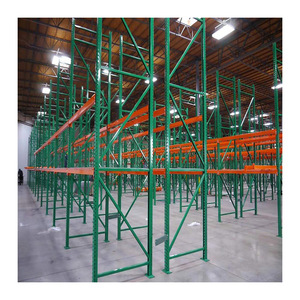
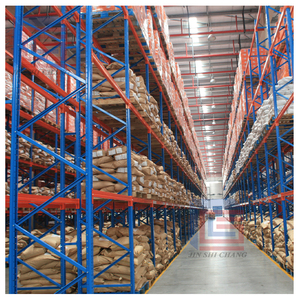
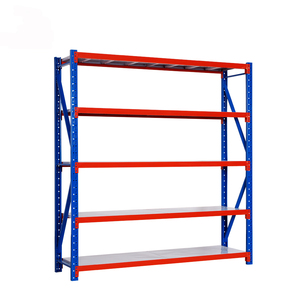
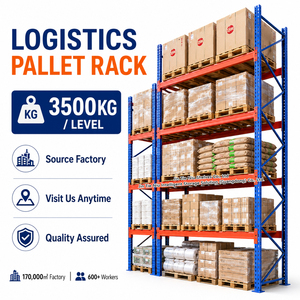
Selective Pallet Racking
100% Immediate Access
ARLOG 1000x1200 / EUR 800x1200
Baseline (35% - 40% building cube)
Universal FIFO / LIFO
Drive-In / Drive-Through
Lane Dependent (Last in lane)
Standardized Unit Loads Only
High Density (65% - 75% building cube)
LIFO (Drive-In) / FIFO (Drive-Through)
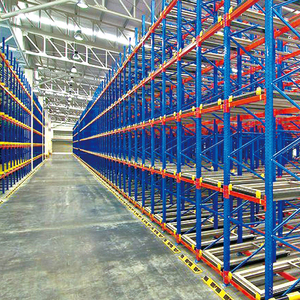
Push-Back Cart Systems
Face-Pallet Access per Level
Nested Carts (2 to 6 deep)
High Density (60% - 70% building cube)
Strict LIFO Per Lane
Semi-Automated Pallet Shuttle
Automatic Cart Retrieval
Multi-depth continuous channels
Ultra-High (Up to 85% building cube)
Programmable FIFO / LIFO via WMS/WCS
Each upright column is profiled from continuous, automated cold-rolling production lines using structural-grade certified steel coils (Q235B and high-yield Q355). By optimizing the moment of inertia along both the strong and weak structural axes, our upright posts maintain superior compressive strength while significantly curtailing structural tare weight—a factor that drastically slashes transatlantic shipping expenditure per metric ton.
Specifying storage racking in Argentina necessitates acute localization to regional industrial requirements, operational constraints, and geologic realities:
A. Greater Buenos Aires Distribution Hubs (AMBA): The high concentration of FMCG, retail, and pharmaceutical central warehouses along Pan-American Highway Corridors (Pilar, Zárate, Tigre) demands high-bay selective pallet racking exceeding 12 to 14 meters in clear height. The primary objective is maximizing vertical clearance to counteract soaring industrial land lease costs.
B. The Agro-Industrial & Port Belt (Rosario, San Lorenzo, Bahía Blanca): Storage facilities catering to agrochemicals, fertilizers, seeds, and bulk processing require heavy-duty box-beam selective or drive-in systems designed to hold dense pallet loads of 1,500kg to 2,000kg each. To prevent structural deterioration caused by airborne nitrates and ambient agrochemical moisture, racks undergo multi-stage shot blasting followed by high-adhesion thermosetting epoxy-polyester electrostatic powder coating (standard dry film thickness ≥ 70-90 microns).
C. Cold Chain & Export Refrigeration (Mar del Plata & Patagonia): Argentina’s robust meat packing, seafood, and fruit export logistics utilize extreme low-temperature cold rooms (-25°C to -30°C). Space efficiency in refrigerated zones is paramount due to exorbitant thermal energy operational costs. Here, Push-Back systems and Mobile Base Pallet Racks minimize footprint waste by eliminating permanent access aisles, drastically reducing the electrical refrigeration load per cubic meter of goods stored.
D. Cuyo Region Seismic Compliance (Mendoza & San Juan): Unlike the low-seismic plains of Buenos Aires, western Argentina falls into severe INPRES-CIRSOC Seismic Zones 3 and 4. Racks installed in these wine-producing and mineral-extraction zones must integrate heavy-duty K-bracing, enlarged base plates anchored with Hilti/chemical anchoring studs, and specialized ductile beam end connectors to absorb dynamic ground accelerations without catastrophic structural buckling.
3. Future Trends in Argentine Warehouse Logistics & Intralogistics
The Argentine intralogistics sector is undergoing a profound structural evolution. Historically reliant on conventional manual forklift handling, leading Argentine logistics operators (such as Andreani, Celsur, and Cruz del Sur) and multinational corporations are aggressively adopting automation and hybrid intralogistics strategies to mitigate domestic inflationary labor pressures and operational inaccuracies.
Convergence with Warehouse Software: Modern Chinese rack design for the Argentine market is strictly engineered to integrate with advanced Warehouse Management Systems (WMS), Warehouse Execution Systems (WES), and Warehouse Control Systems (WCS). Uprights are pre-punched with laser-precision accuracy to accept barcode/RFID integration brackets, sensor arrays for pick-to-light systems, and automated guided vehicle (AGV) navigational reflectors.
Transition toward Automated Storage and Retrieval Systems (AS/RS): As e-commerce penetration expands and SKU variety multiplies across South America, self-supporting clad-rack buildings (where the racking framework itself constitutes the structural skeleton supporting walls and roof) and radio-shuttle high-density systems are replacing low-bay conventional sheds. This transition enables Argentine operations to scale vertical density up to 30 meters, doubling or tripling storage capacity without purchasing additional square meters of land.
Combining industrial manufacturing capacity, structural engineering, and end-to-end global export management.
In-House Finite Element Analysis (FEA)
Every project undergoes computer-aided structural simulation and seismic stress verification under FEM, RMI, and CIRSOC load criteria prior to coil slitting.
Certified Baosteel Cold-Rolled Steel
Zero recycled or sub-gauge steel. We utilize verified Q235B and Q355 structural steel with full material test certificates (MTC) accompanying every shipment.
Advanced Continuous Roll-Forming Lines
Fully automated multi-station cold-rolling mills ensure pitch tolerances within ±0.5mm over 12-meter single-piece vertical upright sections.
Automated Surface Treatment & Powder Coating
Automated pre-treatment, phosphating, and electrostatic powder coating baking lines guarantee corrosion resistance, even in coastal humid marine environments.
Optimized 40HQ Ocean Freight Packaging
Proprietary nesting and packing methods maximize container cube loading, preventing maritime transit abrasion and minimizing landed freight cost per pallet location.
Complete Lifecycle Technical Backup
From CAD layout design and clear installation schematics to modular replacement components, we ensure seamless field erection and lifetime structural safety.
Procurement Clarity
Frequently Asked Questions by Argentine Importers & Engineers
Direct technical answers addressing customs, pallets, seismic certification, and logistical variables for Argentina.
Are your pallet racks compatible with local Argentine ARLOG pallet standards?
Yes. While international trade often references EUR-pallets (800 x 1200 mm) or US pallets (40 x 48 inches), Argentina extensively utilizes the ARLOG/Mercosur pallet specification measuring 1000 mm x 1200 mm with heavy load ratings (often up to 1,200kg - 1,500kg). Our beam clear spans (typically 2300mm for 2 pallets or 3300mm for 3 pallets) and rack upright depths (1000mm to 1100mm) are specifically tailored to ensure optimal 50mm overhang margins, complete pallet under-support, and seamless clearance for local material handling trucks.
How do you address seismic design requirements in western Argentina (Mendoza / San Juan)?
Western Argentina sits in an active seismic belt governed by INPRES-CIRSOC regulations. For projects bound for these provinces, our structural engineering team runs modal and spectral analyses under dynamic earthquake loads. We incorporate reinforced, thick-gauge footplates, enlarged anchor stud configurations, heavier column section profiles, and dedicated horizontal/vertical seismic bracings that dissipate ground acceleration energy without progressive collapse.
What documentation is provided to satisfy Argentine Customs (Aduana / AFIP / SIRA regulations)?
Importing capital steel goods into Argentina requires meticulous documentation to prevent clearance bottlenecks. We provide fully compliant commercial invoices, detailed packing lists categorized by bundle weight and piece count, original Bills of Lading (B/L), Mill Test Certificates (MTC) proving steel chemical and mechanical properties, Certificate of Origin (Form A or non-preferential), and certified CAD assembly layouts to facilitate classification under the corresponding Mercosur Common Nomenclature (NCM) tariff codes.
Can you integrate push-back or pallet shuttle systems into existing cold storage facilities in Argentina?
Absolutely. Retrofitting existing cold storage facilities in Buenos Aires or Mar del Plata is a frequent request. Our engineers study clear ceiling heights, column grids, refrigeration evaporator placement, and concrete slab specifications. Push-back cart systems or semi-automated shuttle systems can be installed directly into existing refrigerated rooms without structural building modification, immediately expanding capacity by 40% to 75% while maintaining strict thermal circulation.
How is freight optimization handled for shipping 40HQ containers from China to Buenos Aires?
Ocean shipping rates represent a substantial percentage of total landed cost. We employ standardized nesting procedures where upright frames and step/box beams are bundled with steel strappings, timber separators, and protective moisture wraps. Uprights and beams are manufactured to lengths that maximize the cubic capacity of standard 40-foot High Cube (40HQ) containers, consistently achieving maximum container weight quotas (typically 26-28 metric tons) without dead freight space.
What corrosion protection do you recommend for agricultural or coastal warehouse installations?
For standard interior ambient warehousing, our multi-stage electrostatic thermosetting epoxy-polyester powder coating (70-90 microns) provides long-lasting abrasion and chemical resistance. However, for fertilizer distribution hubs near the Paraná River or seafood processing facilities along the Atlantic coast, we offer enhanced zinc-rich primer pre-coatings or full hot-dip galvanizing (HDG) for critical components to eliminate oxidation and rust pitting over decades of operational exposure.
Accelerate Your Warehouse Capacity: Connect with Our Structural Engineering Desk
Planning a new logistics park in Buenos Aires, upgrading an agrochemical distribution facility in Rosario, or retrofitting a frozen cold-room in Patagonia? Request our structural engineering layout proposal, load-deflection calculation sheets, and comprehensive manufacturing catalog today.