Seoul Logistics Infrastructure Trends: Gravity Flow Racking Integration (2025–2030)
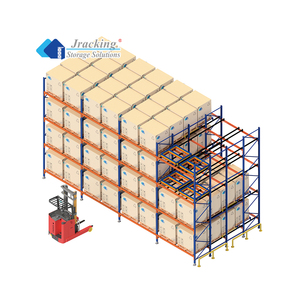
The Seoul Metropolitan Area is experiencing unprecedented warehouse land scarcity. Industrial rent increases along the Yeongdong Expressway, Gyeongbu Expressway, and Incheon Port Logistics Zone have forced 3PLs, pharmaceutical leaders, and cross-border e-commerce operators to transition from standard selective racking to high-density dynamic systems. Flow rail and pallet flow systems represent the optimal engineering intersection of physical density and throughput velocity.
1. KBC (Korean Building Code) & KDS Seismic Performance Standard Verification: Structural integrity in South Korea requires certified seismic engineering calculations under KDS 41 17 00 (Seismic Design Standards for Buildings). Because racking is categorized as non-structural building components with substantial dynamic mass, our engineering department performs full 3D finite-element dynamic response simulations (FEA), calculating base shear and inter-story drift to protect human life and inventory during minor to moderate seismic events.
2. Compatibility with Korean Standard Pallets (KFI T11 & T12 Standard Units): Standard logistics operations across the Seoul capital circle rely primarily on T11 (1,100 × 1,100 mm) and T12 (1,200 × 1,000 mm) wood and plastic pallets. Our manufacturing facilities configure roller lane centers, triple-track wheel guides, and brake drum spacings specifically around these structural footprint variables to ensure reliable gravity-assisted gliding at a consistent 3% to 3.5% incline without drift or jamming.
3. Severe Cold-Chain Optimization (-30°C Environments): Unheated logistics hubs and blast freezers in Incheon and Hwaseong experience grease crystallization and metallurgical embrittlement. We equip our flow rails with deep-groove sealed stainless steel bearings, specialized low-temperature synthetic lubricants rated down to -40°C, and high-impact polymers that prevent wheel cracking under round-the-clock cycling.