High-Capacity Industrial Racking Solutions
Engineered to international FEM and ANSI/RMI specifications, each system is calibrated for superior deflection resistance, rapid assembly, and long-term durability in high-throughput warehouse environments.
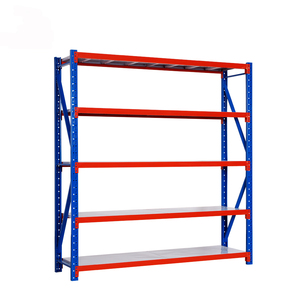
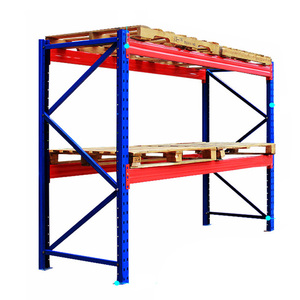
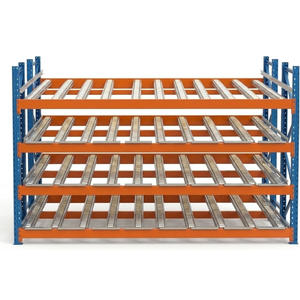
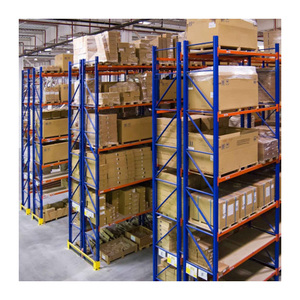

Optimizing Tire Logistics Along Pakistan's Industrial Backbone & CPEC Corridors
The warehousing landscape in Pakistan is undergoing a generational shift. Spurred by the expansion of the China-Pakistan Economic Corridor (CPEC), the modernization of the National Highway N-5, and the surge in multimodal dry ports across Lahore, Faisalabad, and Multan, the automotive logistics sector requires significantly higher vertical storage densities. Historically, tire distribution hubs across Karachi's SITE Area, Port Qasim logistics clusters, and circular road markets in Lahore relied on rudimentary floor-stacking (lacing) or uncertified angle-iron framework. These legacy methodologies yield severe spatial bottlenecks, low picking efficiency, and critical tire bead deformation caused by localized compression under prolonged weight and high ambient humidity.
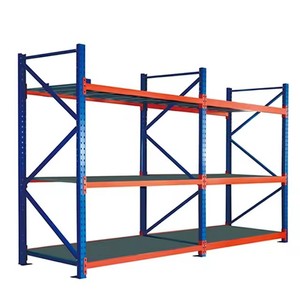
Modern tire distributors, OEM assembly plants (ranging from commercial truck assembly along Hub River Road to passenger car plants in Port Qasim), and third-party logistics providers (3PLs) are standardizing on certified heavy-duty tire storage racks. As one of China's primary manufacturing exporters, our factory provides precision-engineered tire pallet racks, modular stacking stillages, and dynamic FIFO flow lanes specifically calculated for the Pakistani supply chain matrix. By transitioning from unstructured floor storage to vertical multi-tier tire racking, enterprise distribution hubs in Pakistan consistently achieve up to 280% increase in cubic capacity utilization while eliminating tire tread flattening and maximizing throughput speed.
Karachi Port & Coastal Durability
Facilities adjacent to Kemari and Port Qasim face extreme maritime salinization and ambient humidity averaging above 75%. Our systems feature high-performance electrostatic polyester powder coatings and hot-dip galvanized uprights, guaranteeing over 1,000 hours of salt spray resistance and lifelong structural resilience without delamination or oxidation.
TBR & Commercial Fleet Depots
Designed for the heavy demands of Truck, Bus, and Radial (TBR) fleet hubs along the M-2 and M-5 motorways. Our heavy-duty roll-formed beams support dynamic load profiles up to 3,500 kg per beam pair, configured with dual-support round tube cradles that preserve casing integrity for high-turnover regional haulers.
OEM Tier-1 Sequence Stillage
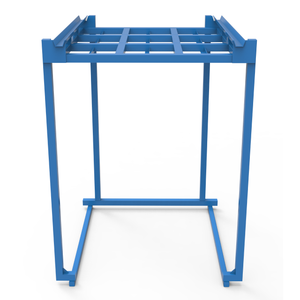
Serving automotive manufacturing lines across Sindh and Punjab with modular, stackable 4-way entry steel stillages. Built for seamless handling via counterbalance forklifts and reach trucks, enabling fold-down transport reversibility that slashes return logistics freight costs across domestic transit corridors.
Structural Engineering Excellence: Q235B/Q355B Steel & Seismic Integrity
A critical engineering failure in low-cost, uncertified tire racking is structural twisting caused by uneven asymmetrical loading. Because tires represent non-uniform point loads across cylindrical geometries rather than distributed flat pallet weights, standard pallet rack box beams often suffer torsional buckling under peak capacity. Our engineering team addresses this by utilizing cold-rolled high-tensile Q235B and Q355B grade structural carbon steel sourced exclusively from premier state mills. Every upright column is formed through continuous CNC multi-stage cold roll-forming with up to 24 roll stations, creating optimal work-hardening at every radius bend.
Furthermore, Pakistan spans complex seismic classifications, from Zone 2B in Lahore to Zone 3 and 4 across Quetta, Islamabad, and northern logistic nodes. In compliance with European standard EN 15512:2020 and American ANSI MH16.1, our structural engineering department performs finite element seismic analysis for every installation. We custom-calculate footplate base anchor shear values, upright post punch patterns, beam-to-frame locking connector wedges, and diagonal cross-bracing profiles to guarantee complete stability under maximum service loads and lateral ground motion events.
Bead-Friendly Contoured Saddles
Dual-angle tubular steel saddle profiles cradle tires evenly across the tread shoulder, preventing rim distortion and sidewall stress during extended inventory periods.
Deflection Limit Standard (1/200)
Our beams are strictly engineered to exceed standard deflection criteria, sustaining continuous operational loads with deflection ratios better than L/250.
Automated Robotic Mig Welding
Continuous robotic weld seams on all connector lugs and base flanges eliminate structural voids, providing exceptional fatigue strength under dynamic forklift operations.
Multi-Stage Pre-Treatment Process
Components pass through a 7-stage chemical degreasing, phosphating, and deionized water rinsing bath before thermosetting polyester powder electrostatic application.
Technical Parameters & Load Capacities by Vehicle Category
Select the optimal rack configuration based on tire diameter, width, weight, and desired rotation methodology (FIFO vs. LIFO):
| Racking Classification | Target Tire Segment | Bay Width / Span | Load Rating / Level | Steel Grade & Upright Section | Handling Machinery |
|---|---|---|---|---|---|
| Light Commercial / PCR | Passenger Car (13" to 20") | 1,800 mm – 2,400 mm | 500 kg – 800 kg | Q235B (80×60×1.8 mm) | Manual Picking / Order Pickers |
| Heavy Commercial / TBR | Truck & Bus Radials (22.5" - 24") | 2,300 mm – 2,700 mm | 1,200 kg – 2,200 kg | Q235B / Q355B (90×70×2.0 mm) | Counterbalance / Reach Trucks |
| OTR & Heavy Agricultural | Earthmover, Mining & Tractor | 2,500 mm – 3,200 mm | 2,500 kg – 4,500 kg | Q355B (120×95×2.5-3.0 mm) | Heavy Forklifts with Tire Clamps |
| Modular Stacking Stillage | Multi-SKU Mixed Transit | 1,500 mm × 1,500 mm | 1,000 kg (Stacked 4-5 high) | Structural Square Tube (50×50×2.5) | Standard 2.5T-3T Forklifts |
| Gravity Flow Tire System | High-Velocity Fast Fit Hubs | 1,200 mm – 2,000 mm | 600 kg – 1,200 kg / lane | Q235B with Heavy Duty Rollers | Hand-Loaded Infeed / Ergonomic Outfeed |
60 Years of Engineering Pedigree: Direct Factory Supply from China to Pakistan
Operating across 12 state-of-the-art production centers equipped with fully automated CNC roll-forming lines, 3D laser tube cutting cells, and automated robotic welding gantries, our enterprise represents the gold standard of global intralogistics manufacturing. Backed by 60 years of structural engineering expertise and a commercial presence spanning over 70 countries, we eliminate middlemen markups and broker delays for Pakistani industrial buyers. Every rack component is designed, tested, and fabricated in-house under strict ISO 9001, ISO 14001, and CE certification protocols.
For Pakistani importers, procurement via our direct export division ensures complete supply chain transparency. We provide complete bilateral trade documentation including China-Pakistan Free Trade Agreement (CPFTA) Certificate of Origin (Form FTA), enabling significant customs tariff concessions at Karachi Port and Port Qasim. Furthermore, our dedicated packaging engineering team optimizes 40ft High Cube container nesting schemes, utilizing custom steel cradles and high-strength strapping to prevent transit abrasions while maximizing container weight and volume efficiency—reducing ocean freight overhead by up to 22% per cubic meter.
Phase 1: CAD & Structural Simulation
Our engineering bureau provides comprehensive 2D CAD layouts and 3D Building Information Modeling (BIM) within 48 hours of receiving facility blueprints, integrating building column gridlines, fire sprinkler clearances, and reach truck turn radii.
Phase 2: Precision CNC Roll-Forming
Production is executed on computer-calibrated rolling mills with continuous punch alignment. All raw steel coils undergo chemical spectroscopy and tensile coupon testing before passing through automated finishing lines.
Phase 3: Logistics & Installation Guidance
Direct ocean booking from Shanghai/Ningbo to Karachi with rapid transit times (14-18 days). Shipments include detailed bilingual 3D installation manuals, step-by-step video guides, and dedicated remote structural engineering supervision.
Frequently Asked Questions for Industrial Procurement in Pakistan
Practical answers covering commercial banking, import tariffs, concrete slab criteria, and structural customization for facility directors and procurement managers.
What trade terms and payment mechanisms are standard for shipments to Pakistan?
How does the China-Pakistan Free Trade Agreement (CPFTA) affect import duties?
What floor slab thickness and concrete specifications are required?
Can the racks accommodate both passenger car tires (PCR) and commercial truck tires (TBR)?
How do you protect racks against high humidity and coastal corrosion in Sindh?
What is the standard production and shipping lead time to Karachi Port?
Accelerate Your Warehouse Efficiency with Custom Tire Racking
Submit your facility dimensions, ceiling clearance, and tire SKU specifications. Our structural intralogistics engineers will provide a comprehensive 2D/3D layout proposal, load capacity calculation sheet, and direct factory pricing within 24 hours.