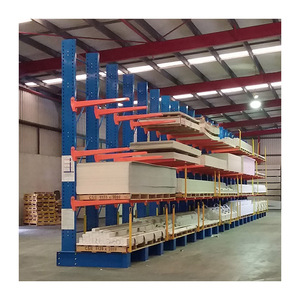
Factory-Direct Heavy Storage Inventory
Advanced Industrial Racking Systems for Modern Logistics
Direct wholesale export lines optimized for container freight, high-density warehousing, and seamless automation retrofits across Osaka, Kobe, and Sakai industrial ports.
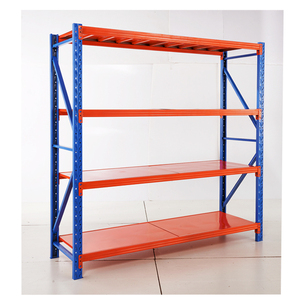
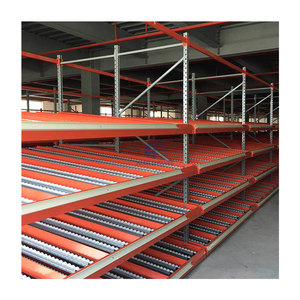
Strategic Whitepaper & Technical Review
Engineering High-Density Semi-Automated Intralogistics in the Osaka-Kobe Economic Zone
The Greater Osaka logistics corridor, spanning strategic coastal sub-markets from Nanko and Sakishima to Amagasaki and Sakai Port, is confronting unprecedented structural pressure. Industrial land scarcity, high municipal acquisition rents per tsubo, and Japan's stringent Building Standard Act (Kenchiku Kijun-hō) demand structural storage density that conventional selective pallet racking can no longer economically deliver. Operating at the heart of this regional pivot, our manufacturing facilities in China supply Tier-1 logistics integrators, 3PL distributors, and cold-chain operators with high-capacity Radio Shuttle Pallet Racking Systems engineered precisely to Japanese intralogistics standards.
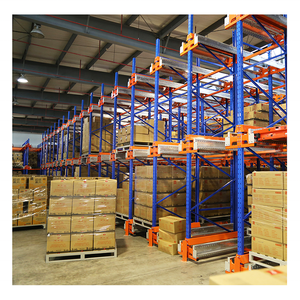
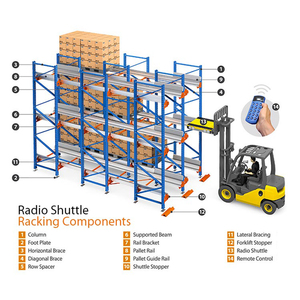
Pallet shuttle racking represents the definitive technological middle ground between capital-heavy fully automated stacker-crane warehouses (AS/RS) and low-efficiency manual drive-in racking. Utilizing an autonomous, bi-directional or 4-way battery-powered cart navigating precision-formed galvanized guide rails, the radio shuttle eliminates the need for lift trucks to enter deep storage lanes. This design reduces forklift cycle times by over 45%, eradicates frame collision hazards, and unlocks up to 85% cubic space utilization.
The 2024 Transportation Problem Constraint in Kansai Distribution:
Following the enforcement of statutory overtime caps for commercial freight operators in Japan, line-haul transfer speeds across the Hanshin Expressway and Meishin Corridor require drastically accelerated loading dock turnaround. Shuttle racking systems serve as dynamic buffering hubs, discharging pallets sequentially at the pick-face without operational delay.
Our direct export model bridges the gap between high-tensile Q235B and Q355B raw structural steel rolling capabilities and custom overseas fabrication. We provide certified seismic baseplate anchoring, automated welding conformance, and specialized anti-corrosion galvanized finishes tailored to high-salinity maritime zones along Osaka Bay.
60+
Years Combined Experience
85%
Max Space Utilization
1.5T
Payload Capacity Per Pallet
JIS / EN
Seismic Standards Compliant
Localized Application Scenarios
Optimized Racking Deployments Across Osaka's Key Sectors
Each industrial district around Osaka Bay possesses distinct floor slab loadings, climate profiles, and inventory velocity profiles. Here is how our shuttle engineering deploys locally.
Bay-Area Cold Storage Facilities
Operating in coastal cold storage facilities in Osaka Nanko, Yumeshima, and Port Island Kobe. Operating temperatures drop to -25°C or -30°C where space cooling represents massive recurring utility expenditures. Our cold-store rated lithium iron phosphate (LiFePO4) shuttle carriers with internal heating elements eliminate aisle wastage, compressing refrigeration cubes by 40%.
High-Velocity FMCG & E-Commerce
Serving major fulfillment parks situated near the Minoh-Green Road and Kadoma hubs. Multi-SKU grocery and retail distribution requires rapid switching between First-In, First-Out (FIFO) batch shipping and Last-In, First-Out (LIFO) high-density replenishment, driven by radio-controlled multi-shuttle synchronization and warehouse execution integration.
Automotive & Industrial Components
Concentrated within the manufacturing clusters of Higashiosaka, Yao, and Sakai. Heavy tooling fixtures, stamped metal dies, and raw sub-assembly components demand structural upright engineering certified for loads up to 1,500 kg per pallet position, equipped with anti-drop sensor interlocks and reinforced flanged guide rails.
Engineering Architecture Analysis
Pallet Storage Structural Typology Comparison
Assess density, selectivity, structural resistance, and CAPEX metrics when specifying rack architecture for Kansai-based industrial footprints.
| Racking Methodology | Cubic Efficiency | Pallet Access Rate | Forklift Lane Penetration | Seismic Adaptation Ease | Ideal Inventory Turnover |
|---|---|---|---|---|---|
| Radio Shuttle System | 80% – 88% | Lane Selectivity (Semi-Auto) | Zero (Shuttle Automated) | High (Integrated Bracing) | High / Fast Batching |
| Standard Selective Rack | 40% – 50% | 100% Immediate | Total Lane Access | Moderate (Column Dependent) | Continuous / Mixed SKU |
| Drive-In Racking | 65% – 75% | Poor (Last Pallet First) | High Risk Entry | Low (Prone to Buckling) | Low / Homogeneous |
| AS/RS High-Bay Crane | 85% – 92% | 100% Automated | None (Automated Crane) | Custom Engineering Required | Continuous High Throughput |
Factory Expertise & Quality Control
Why Leading Japanese Importers Source Our High-Density Systems
Drawing on over six decades of intralogistics manufacturing heritage, our automated roll-forming facilities, in-house structural engineers, and global quality control frameworks assure compliance from design to port delivery.
In-House Structural Simulation
Our engineering division models dynamic finite element analysis (FEA) simulating the Nankai Trough earthquake spectrum, ensuring that beam profiles, anchor diameters, and brace triangulations meet the Building Standard Act of Japan.
Automated Continuous Roll-Forming
Operating high-precision continuous roll-forming lines with automatic hole punching tolerance within ±0.1mm. High-strength Q355 cold-rolled coils guarantee unyielding upright columns across spans exceeding 12 meters.
Certified Anti-Corrosion Finishes
Automated Swiss GEMA electrostatic powder-coating lines paired with heavy pre-treatment phosphate baths offer long-lasting salt spray resistance, critical for coastal operations in Sakai, Nanko, and surrounding bays.
Lithium Control & Sensoring
Shuttle carriers are fitted with industrial-grade Siemens or Omron PLCs, high-accuracy obstacle-avoidance laser sensors, and rapid-swapping LiFePO4 batteries offering 8 to 10 hours of uninterrupted multi-shift operation.
Standardized Pallet Support
Every system is built to standard Japanese T11 pallets (1,100mm × 1,100mm) as well as Euro (1,200mm × 800mm) and export sizes (1,200mm × 1,000mm) with custom entry-guide funnels to eliminate misalignment.
Direct Container Consolidation
Factory-direct bundle packaging prevents freight abrasion during transport from Shanghai/Ningbo to the Port of Osaka, with clearly numbered steel components matching BIM structural erection blueprints.
Procurement & Technical Queries
Frequently Asked Questions by Japanese Racking Buyers
Direct, unembellished answers addressing technical compliance, seismic criteria, customs procedures, and system maintenance in Kansai warehouses.
How do China-engineered shuttle racking systems comply with Japanese seismic regulations?
Warehouses in Osaka must adhere to strict structural regulations under the Building Standard Act. We supply verified finite element engineering calculations specifying floor slab anchoring torque, steel yield ratings (Q355 equivalent to SS400/SM490), expanded heavy-duty baseplates, and horizontal/vertical bracing layouts that accommodate peak ground acceleration (PGA) scenarios common to the Nankai Trough fault lines.
Can our facility deploy standard Japanese T11 pallets (1100mm x 1100mm) with this system?
Yes. Our shuttle car chassis and rail profiles are explicitly configured for standard Japanese T11 plastic and wooden pallets. Guide rails feature tapered zinc-plated guide funnels at each channel entrance to accommodate off-center forklift placements up to ±50mm without jamming the shuttle cart.
What is the typical shipping lead time and customs process for Osaka Port delivery?
Standard fabrication cycles range between 25 and 35 working days depending on tonnage. Sea freight transit from Ningbo or Shanghai Port to Osaka or Kobe Port requires only 3 to 5 days. We provide comprehensive export documentation, including preferential Certificates of Origin (under RCEP for reduced tariffs), mill test certificates, and itemized container packing lists.
How are radio shuttle batteries managed in sub-zero refrigerated warehouses?
For cold-storage operations down to -30°C, we supply temperature-adapted LiFePO4 battery modules equipped with integrated heating circuits that maintain optimum cell temperatures during charge and discharge. Systems also feature low-temperature hydraulic fluid lubricants and moisture-sealed IP65 electrical junction boxes to prevent condensation freeze-ups.
Who conducts on-site assembly, commissioning, and periodic safety inspections in Kansai?
Buyers can deploy their licensed local Japanese mechanical contractors using our step-by-step 3D erection drawings and bolt-torque protocols, or contract our factory installation supervisors who oversee alignment, leveling, anchor setting, and shuttle PLC sensor commissioning on site.
What fail-safe mechanisms prevent shuttle vehicle derailment or dropped pallet incidents?
Our radio shuttles feature dual optical pallet-detection sensors, mechanical end-of-rail physical travel stops, anti-tilt polyurethane running wheels, and emergency deceleration obstacle laser scanners. If an irregular or broken pallet base is detected, the carrier stops travel and sends an alert to the tablet controller.
Accelerate Your Osaka Warehouse Transformation
Consult with our intralogistics engineering specialists to obtain comprehensive layout drawings, seismic loading validations, and wholesale factory pricing tailored to your floor capacity.
Contact Us