Industrial Product Portfolio
High-Efficiency Warehouse Racking & Storage Systems
Direct manufacturer wholesale pricing, precision cold-formed engineering, and strict compliance with RMI and Seattle Department of Construction & Inspections (SDCI) seismic standards.
Manufacturer Direct Advantages
Why Tier-1 Operations Choose Our Racking Solutions
Combining OEM cost efficiency with aerospace-grade steel processing, certified seismic design calculation packages, and end-to-end intralogistics system integration.
Structural High-Yield Steel
Fabricated using certified Q235B and Q355B structural carbon steel. Roll-formed upright profiles provide higher section modulus and torsional rigidity under heavy seismic and cyclical loading.
Full Seismic Engineering
Every Seattle installation includes tailored PE-stamped calculation packages validated for ASCE 7-22 and IBC 2021 seismic categories D, E, and F, ensuring fast-track municipal permit approval.
Direct OEM/ODM Precision
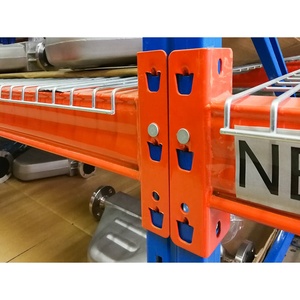
Custom beam hole pitching (50mm/75mm/76.2mm), tailored upright depth, specialized cold-room epoxy coatings, and automated robot welded connector plates direct from factory lines.
Automated ASRS Integration
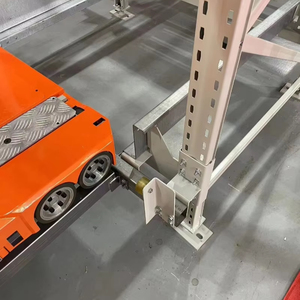
Ready for high-density 4-way radio shuttles, stacker cranes, and AMR routing. Engineered to interface directly with top-tier WMS and WCS automation architectures without retrofits.
Pacific Northwest Industry Whitepaper
Localized Applications Across Seattle's Supply Chain Corridors
Analyzing intralogistics operational parameters across Kent Valley, the Port of Seattle-Tacoma container terminals, Everett aerospace logistics, and temperature-controlled seafood chains.
The Greater Puget Sound logistics infrastructure is defined by specific geographical and economic factors: limited industrial zoned land, proximity to major maritime container ports (NWSA), high seismic risk zones along the Cascadia Subduction Zone, and elevated warehouse lease rates. Warehouse operators located along Interstate 5, Highway 167, and the Kent Valley cannot afford unoptimized square footage or structurally vulnerable rack frameworks.
Aerospace & Heavy Fabrication
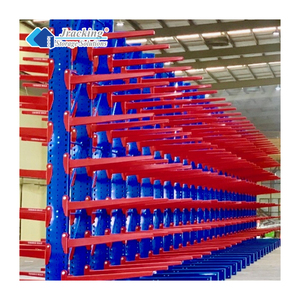
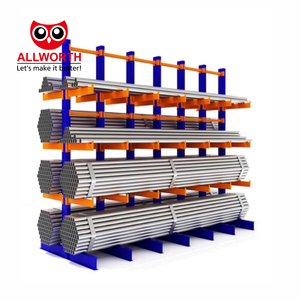
Serving aircraft parts consolidation, raw aluminum extrusion handling, and tooling assembly plants in Everett and Renton. Our heavy-duty cantilever racks provide unobstructed longitudinal storage with column load capacities exceeding 30,000 lbs.
Maritime Import Deconsolidation
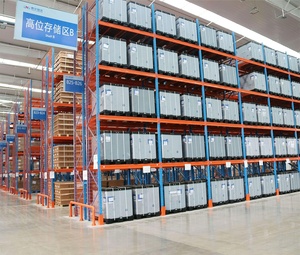
Rapid cross-docking facilities near the Port of Seattle and Tacoma handle heavy container transload volumes. Selective pallet racking configured with heavy-duty structural steel footplates withstands constant high-cycle forklift impacts.
Cold Storage & Seafood Logistics
Puget Sound commercial fishing and Alaskan seafood distribution require -20°F cold-chain optimization. Our 4-way radio shuttle systems and drive-in racks maximize thermal cube density, slashing per-pallet refrigeration energy costs by up to 35%.
| System Architecture | Storage Density | Direct SKU Accessibility | Seismic Baseline (PNW Zone D-F) | Best Suited Application |
|---|---|---|---|---|
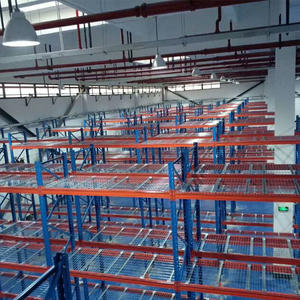
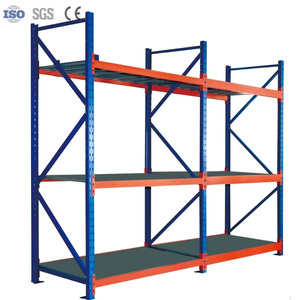
| Selective Pallet Racking | Standard (100% aisles) | 100% Direct Access (Pure FIFO) | Enlarged footplates; heavy bracing | High SKU variety, retail e-commerce, 3PL transloading |
| Heavy-Duty Cantilever | High for Long Items | 100% Unobstructed Face | Heavy box-column structural uprights | Aerospace tubing, timber lumber, structural steel pipes |
| Four-Way Radio Shuttle (ASRS) | Maximum Compact Density | Lane Dependent (FIFO / LIFO) | Integrated shuttle rails; anti-displacement pins | Cold storage, frozen seafood, beverage buffer warehousing |
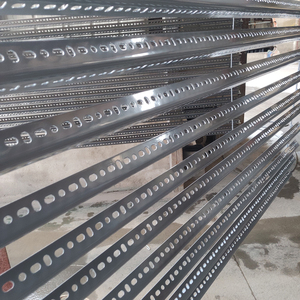
| Industrial Slotted Angle | Manual Picking Tier | 100% Manual Hand Access | Wall-tie anchoring, floor bolt patterns | Small part distribution, maintenance workshops, hardware |
Future Logistics Outlook
Emerging Warehouse Trends Reshaping Seattle Storage
How rising urban industrial rents, strict municipal energy codes, and labor shifts are driving Seattle distribution managers toward vertical density and modular automation.
Automation-Ready Upright Engineering
Traditional warehouses are transitioning away from wide forklift aisles. Facilities in Kent and Sumner are procuring rack frames pre-drilled and structurally rated for autonomous mobile robots (AMRs) and automated guided vehicles (AGVs), enabling progressive warehouse automation.
Vertical Cube Maximization
With industrial land rates at historic highs across King and Pierce counties, new warehouse builds emphasize 36-foot to 42-foot clear heights. High-bay rack-supported structures and heavy structural roll-formed uprights allow operations to capture double the pallet volume on identical footprints.
Rapid Digital Permitting Readiness
Seattle Department of Construction & Inspections (SDCI) enforces rigorous seismic validation. Racking buyers now demand pre-calculated digital engineering models and verified steel metallurgy test certificates to slash local permit cycle times from months to weeks.
Procurement Knowledge Base
Frequently Asked Questions by Local Seattle Buyers
In-depth structural, logistical, and compliance guidance addressed by our senior warehouse engineering team.
What seismic certification is required for industrial storage racks in Seattle?
Because Seattle, Tacoma, and the Kent Valley reside within high-risk seismic design categories (SDC D to F), storage racks exceeding 8 feet in height require a municipal building permit approved by the Seattle Department of Construction and Inspections (SDCI) or local jurisdiction. Engineering must comply with ANSI/RMI MH16.1, IBC 2021, and ASCE 7-22. We supply stamped calculations by a registered Washington State Professional Engineer (PE), including baseplate thickness, anchor bolt embedment depths, and beam locking pin ratings.
How does direct container delivery from China to the Port of Seattle work?
We handle complete FOB, CIF, or DDP ocean logistics directly to the Northwest Seaport Alliance (NWSA) container terminals in Seattle or Tacoma. Beams and uprights are densely bundle-packed with steel protective banding and moisture-barrier shrink wrap to prevent salt-fog oxidation during transpacific transit. Full container loads (40ft HQ) are dispatched straight to your warehouse dock, eliminating domestic intermediary warehousing markups.
Can your racking systems be installed on existing warehouse concrete slabs?
Yes. During the engineering feasibility review, we calculate upright point loads against your slab specifications (typically 6-inch to 8-inch reinforced concrete with 3,000 to 4,000 PSI). For heavy-capacity selective racks or dense shuttle setups, we engineer enlarged baseplates and custom wedge anchor patterns to distribute downward and overturning moments safely without risking concrete punch-through or micro-fracturing.
What are the lead times for custom-engineered wholesale storage racks?
Standard OEM production spans 15 to 25 working days depending on tonnage and powder-coat color specifications. Direct transpacific ocean freight from our manufacturing base to the Port of Seattle generally takes 14 to 18 days. We synchronize PE stamp engineering submittals during the production cycle, allowing local permitting reviews to proceed concurrently with fabrication to minimize project turnaround.
What surface treatments are recommended for cold storage or wet environments?
For cold rooms (-20°F) or coastal facilities exposed to moisture, we offer hot-dip galvanized (HDG) steel components complying with ASTM A123, or multi-stage thermoset epoxy-polyester electrostatic powder coating. This prevents surface degradation, peeling, and corrosion caused by condensation cycles, maintaining structural thickness and clean-room hygienic compliance.
Can I reconfigure beam levels or expand my storage layout later?
All selective and workshop systems are engineered with modular teardrop or keyed slot connections on 50mm, 75mm, or 76.2mm pitch adjustments. Beams can be unclipped and repositioned vertically as SKU dimensions fluctuate. However, changing the height of the lowest beam level alters upright unbraced length, which our structural engineering team can quickly re-verify for load rating compliance.