Engineered Warehouse Shelving & Pallet Racks for the Norwegian Market
From structural selective racking for standard EUR-pallets (800x1200 mm) to ultra-dense radio shuttle carts and automated stacker cranes, our export systems are cold-roll formed using premium high-tensile Q235B and Q355B structural steel.
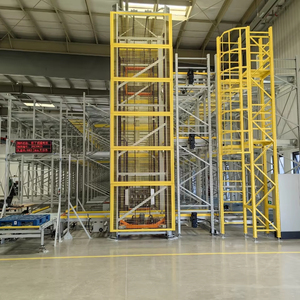
Advanced Intelligent Selective Pallet Rack Conveyor System
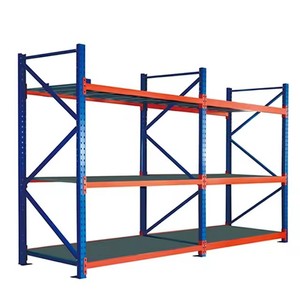
Heavy-Duty Industrial Stacking Racks & Tiered Storage Shelf
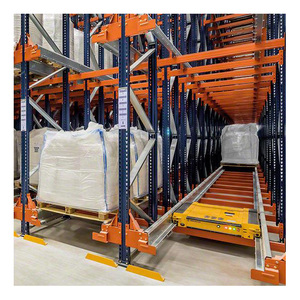
Automated Radio Shuttle Racking System with Remote Carrier
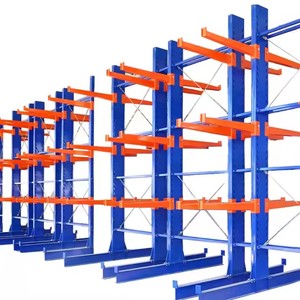
Heavy-Duty Cantilever Racks for Timber, Pipes & Steel Beams
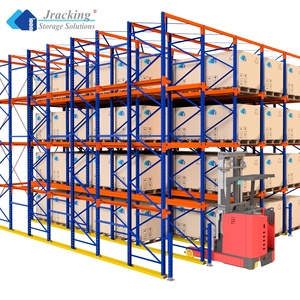
EU Blue & Orange Selective Pallet Racking (CE Certified)
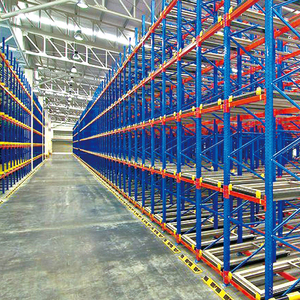
Reinforced 2-6 Deep Push-Back Nested Trolley Pallet Racking
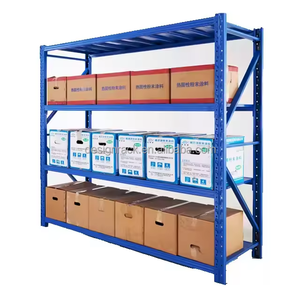
Heavy-Duty Long-Span Boltless Multi-Tier Steel Shelving
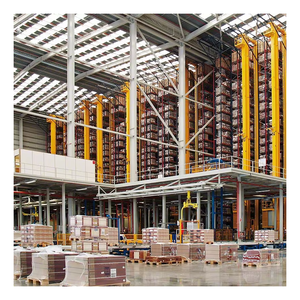
High-Bay Clad-Rack Automated Storage Retrieval System (AS/RS)
Navigating Industrial Racking Sourcing: Chinese Manufacturing Meets Nordic Engineering Rigor
Norwegian logistics operators face a unique combination of high commercial land lease costs, stringent building fire-prevention codes (TEK17), and strict labor safety laws under the Working Environment Act (Arbeidsmiljøloven). Direct-factory sourcing from China bridges structural precision with unmatched capital efficiency.
1. Structural Integrity in Sub-Zero Arctic & Coastal Climates (Charpy V-Notch Toughness)
In regions such as Tromsø, Bodø, and inland hubs around Innlandet, cold-storage warehouses operate between -25°C and -30°C. Standard commercial hot-rolled steels exhibit a phenomenon known as ductile-to-brittle transition temperature (DBTT). When ambient temperatures plunge below -15°C, micro-cracks can initiate rapidly under dynamic forklift impact loads, leading to catastrophic brittle upright failures.
Our heavy-duty steel manufacturing protocols utilize certified cold-rolled micro-alloyed steel (equivalent to EN 10025 S355JR / J2) with verified Charpy V-notch impact toughness tested down to -40°C. In addition, our automated continuous roll-forming lines guarantee a consistent section modulus and dimensional tolerance along upright columns (up to 120mm web profile and 2.5mm to 3.0mm nominal steel wall thickness), ensuring that high-density shuttle corridors and seismic sway bracing satisfy Norwegian Standard NS-EN 15512 and FEM 10.2.02 codes without deviation.
2. Engineering for Standard European Unit Loads (EUR 1, EUR 2, EUR 3, and FIN Pallets)
Logistics corridors linking Oslo, Drammen, Moss, and Bergen handle a mixed matrix of unit loads. While the standard Euro-pallet (800 x 1200 mm) dominates dry grocery distribution, the Norwegian timber and seafood sectors utilize oversized industrial pallets (1000 x 1200 mm FIN pallets and custom 1200 x 1200 mm dairy crates). Calculating racking spans must avoid beam deflection exceeding 1/200th of the clear span (L/200 limit) under maximum rated capacity.
Our engineering bureau develops finite element analysis (FEA) models tailored to your pallet center-of-gravity (CoG) and forklift mast dynamics. From welded 3-claw or 4-claw connectors with high-precision connector pins to integrated front-to-back pallet support crossbars and galvanised wire decking, every rack assembly is certified to bear sustained static loads of up to 4,500 kg per beam tier.
Localized Application Scenarios Across Norway's Strategic Corridors
Every Norwegian province presents distinct operational and environmental challenges. Discover how our export storage architectures integrate with local facilities.
Pelagic & Salmon Seafood Cold Chains (Vestland & Troms)
Processing facilities in Bergen, Ålesund, and northern salmon processing terminals require continuous sub-zero (-28°C) operations. Automated radio shuttle racking and high-density mobile racking maximize cubic volume while reducing refrigeration cubic losses, sealed with anti-corrosive powder finishes and stainless steel hardware.
Offshore Energy & Marine Supply Bases (Stavanger & Haugesund)
Heavy oilfield drilling components, subsea spool sprockets, and marine mooring gear require specialized cantilever systems and heavy mold storage racks. Our structural I-beam cantilever configurations provide arm load ratings exceeding 2,500 kg each, treated with hot-dip galvanization to withstand humid, salt-laden North Sea coastal air.
E-Commerce & 3PL Super-Hubs (Greater Oslo & Vestby)
The high land value along the E6 corridor demands vertical optimization up to 15-30 meters. Multi-tier mezzanine catwalk systems, narrow-aisle (VNA) selective racking, and AS/RS automated miniload setups dramatically accelerate high-frequency order picking while reducing floor footprint by up to 60%.
Technical Comparison: Storage Solutions for Nordic Warehouses
Analyze structural density, pallet rotation speed, and operational fit for your warehouse facility before issuing your procurement tender.
| Racking Architecture | Space Utilization | Pallet Selectivity | Operating Temperature | Recommended Industrial Sector |
|---|---|---|---|---|
| Standard Selective Racking | Baseline (40% - 50% footprint) | 100% Direct Access | -10°C to +40°C | Fast-moving consumer goods, retail buffer hubs, mixed SKU 3PLs |
| Automated Radio Shuttle | High (Up to 85% footprint) | Channel Sequential (FIFO/LIFO) | -30°C to +35°C (Heated battery) | Seafood processing, cold-chain distribution, beverage bottlers |
| Heavy-Duty Cantilever | Specialized Linear Density | 100% Unobstructed Access | Outdoor Galvanized / Indoor | Norwegian timber yards, structural steel tubing, pipe distribution |
| Multi-Tier Mezzanine Shelving | Vertical Multiplication (2x-4x) | 100% Hand-Picking Access | Ambient / Controlled | Spare automotive parts, industrial hardware, apparel e-fulfillment |
| Automated AS/RS Stacker Crane | Maximum (Up to 90% footprint) | Automated Computerized | -30°C to +45°C | Large-scale pharmaceutical distribution, high-throughput food plants |
Key Logistics & Intralogistics Trends Reshaping Norway
The Norwegian logistics landscape is evolving rapidly under green regulatory pressures, strict ESG goals, and workforce demographics. Sourcing modern warehouse equipment requires alignment with these key trends.
Electrification & Zero-Emission Warehouse Fleets
Norway leads Europe in electric vehicle adoption, extending to warehouse intralogistics. Racking arrangements must incorporate wide aisle battery charging zones, seismic floor anchoring designed for heavier lithium-ion counterbalanced electric reach trucks, and impact-resistant column guards that protect structural integrity from heavy electric vehicle collisions.
Skyrocketing Labor Costs Driving Automation
With warehouse operational wages in Norway among the highest in Europe (often exceeding NOK 280-350 per hour loaded rate), manual pallet handling creates severe margin erosion. Logistics directors are pivoting rapidly toward semi-automated radio shuttles, AGV-compatible racking, and high-bay AS/RS systems that pay for themselves within 24 to 36 months.
Net-Zero Building Regulations (TEK17 & BREEAM-NOR)
Warehouses built under BREEAM-NOR certification mandates low embodied carbon in construction materials. By importing from Chinese manufacturers utilizing electric arc furnace (EAF) steel and non-toxic, solvent-free epoxy powder coatings, Norwegian warehouse builders achieve rigorous environmental compliance while optimizing overall structural weight.
Why Nordic Logistics Leaders Partner with Our Chinese Manufacturing Centers
We combine European engineering heritage and global project delivery with advanced automated Chinese production infrastructure to provide unmatched value, certified safety, and turnkey reliability.
60 Years Racking DNA
Six decades of intralogistics mastery guarantees structural calculation precision, advanced beam profile optimization, and proven product longevity under arduous industrial conditions.
12 Mega Production Hubs
Our centralized manufacturing ecosystem ensures rigorous control over certified raw coil steel, high-precision automated punching, robotic laser welding, and automated surface coating lines.
7 Global R&D Centers
Continuously innovating in autonomous robotic shuttle vehicles, dynamic WMS/WCS software interfaces, automated AS/RS cranes, and anti-seismic bracing simulations for high-risk zones.
Full DDP Norway Shipping
Complete customs clearance, VOEC compliance, sea freight via Gothenburg/Rotterdam directly into Oslo Havn, Larvik, or Brevik, complete with local installation supervision.
Frequently Asked Questions for Norwegian B2B Shelving Procurement
Critical answers regarding Norwegian customs duty, technical certification standards, container freight logistics, and cold-room engineering specifications.
Are Chinese manufactured industrial racks fully compliant with Norwegian NS-EN 15635 and NS-EN 15512 safety codes?
Yes. All pallet racking and structural shelving exported to Norway are engineered in strict compliance with European Norms EN 15512 (Steel static storage systems - Racking design code) and EN 15620 (Tolerances, deformations and clearances), which form the direct technical basis of Norwegian standards NS-EN 15512 and NS-EN 15635. Each delivery is accompanied by mill test certificates (MTC) according to EN 10204 3.1, CE certification documentation, and structural load plaques detailing permissible uniformly distributed loads (UDL) per shelf level to pass local Arbeidstilsynet (Norwegian Labour Inspection Authority) site audits.
How are Norwegian import duties and MVA (25% VAT) managed when importing from China?
Under Norwegian customs tariff regulations (Tolletaten), structural steel storage racks categorized under HS Code 7308.9000 generally enter Norway duty-free. Norwegian standard Value Added Tax (MVA) of 25% applies to the imported value including freight and insurance. We offer comprehensive Incoterms from FOB and CIF up to DDP (Delivered Duty Paid), working through Norwegian customs broker partners to ensure smooth electronic toll declaration via TVINN so your local company can recover input MVA directly through standard Skatteetaten tax filings.
What are typical maritime shipping transit times from China to Norwegian sea ports?
Direct ocean freight shipments originate from major deep-water ports in Ningbo, Shanghai, or Qingdao. Containers typically route via Northern European transshipment hubs (such as Rotterdam, Hamburg, or Bremerhaven) before feeder vessels transport them directly into Norwegian ports including Oslo Port (Sjursøya), Drammen, Larvik, Kristiansand, or Bergen. Typical port-to-port ocean transit takes approximately 35 to 45 days. Production lead times range between 15 and 25 calendar days depending on project tonnage, bringing total door-to-door delivery to approximately 7 to 9 weeks.
What protective surface treatment is recommended for cold storage and humid coastal facilities?
For standard temperature-controlled warehouses, our multi-stage pre-treatment (iron-phosphate wash) followed by automated electrostatic epoxy-polyester powder coating (cured at 180°C-200°C with 60-80 microns dry film thickness) offers high resistance against flaking and scratch corrosion. For deep-freeze seafood storage facilities (-20°C to -30°C) and exposed coastal marine depots along Norway's western fjords, we recommend pre-galvanized or hot-dip galvanized steel (EN ISO 1461 with 55-85 microns zinc coating thickness) to prevent oxidation caused by condensation and saline sea breezes.
Can your engineering team support custom warehouse design and floor slab load validation?
Yes. Prior to manufacturing, our structural engineering team generates complete 2D CAD layouts and 3D BIM models based on your architectural drawings. We calculate the exact concentrated baseplate foot loads (kN per upright foot) to verify your concrete floor slab capacity according to NS-EN 1991-1-1 and ensure safe anchor bolt embedment depths (Hilti / Fischer heavy-duty expansion or chemical anchors) compliant with local seismic and building requirements.
Plan Your Norwegian Warehouse Racking Project with Factory Engineers
Obtain a complimentary structural layout calculation, technical proposal, and direct-factory quotation for your warehouse in Norway. Speak directly with our international intralogistics project directors.
Contact Us