Engineered Warehouse Racking Systems for High-Throughput Facilities
Explore our structural pallet racking and high-density industrial storage lines manufactured under strict international tolerances, certified structural steel grades, and customizable load specs.
The Intralogistics Challenge in Greater Mexico City: Land Scarcity & Seismic Demands
Navigating warehouse footprint constraints along the CTP Corridor (Cuautitlán, Tultitlán, Tepotzotlán) and Toluca requires dense cubic volume utilization engineered against dynamic subsoil amplification.
The CTP Logistics Bottleneck
With the ongoing nearshoring surge, Class-A logistics space in Mexico City's northern corridor—stretching through Cuautitlán Izcalli, Tultitlán, and Tepotzotlán—faces record low vacancy. Industrial land rental rates in Vallejo and San Martín Obispo exceed historic highs, forcing 3PLs and automotive manufacturers to replace conventional wide-aisle selective racking with high-density Drive-In systems that eliminate up to 75% of forklift travel aisles.
Lacustrine Soft-Soil Engineering
The Valley of Mexico sits atop ancient lakebed deposits (Zona de Lago), notorious for high seismic period amplification during subduction earthquakes originating along the Pacific Cocos-North American plate boundary. Industrial racking structures cannot rely on generic load tables. Racks erected in CDMX must be calculated according to the Normas Técnicas Complementarias (NTC-RCDF) and ANSI MH16.1, incorporating ductile moment frames and seismic base isolation anchors.
Drive-In Architectural Advantage
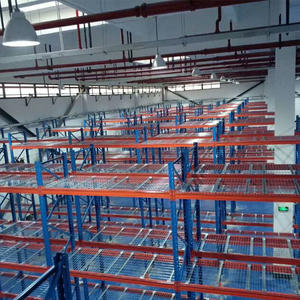
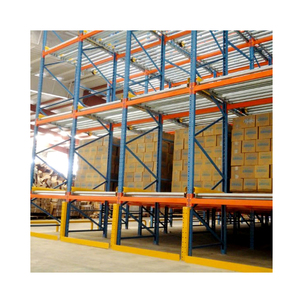
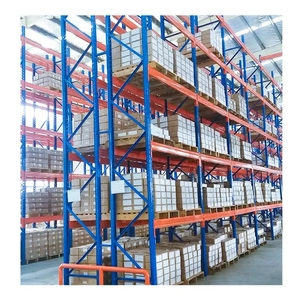
Drive-In racking is a continuous block of vertical upright frames and cantilevered support arms forming longitudinal loading lanes. By operating on a Last-In, First-Out (LIFO) or First-In, First-Out (Drive-Through / FIFO) stock rotation, warehouse operators store homogeneous SKUs up to 10 to 12 pallets deep per lane. This eliminates unnecessary access corridors, reducing building footprint requirements while lowering refrigeration energy costs in temperature-controlled spaces.
Engineering Specifications: Cold-Formed Steel & Dynamic Load Distribution
Drive-In systems lack traditional horizontal load beams across the aisle opening. The absence of these rigid cross-ties requires specialized structural components to withstand vertical pallet weights, forklift contact forces, and longitudinal sway.
Cold-Formed Upright Profiles
Manufactured from high-tensile certified structural steel (grades Q235B, Q355B, and ASTM A1011 equivalent), our upright posts feature multi-bend Omega (Ω) profiles that optimize sectional inertia. Pitch punching allows vertical adjustment at 50mm or 75mm intervals for diverse load dimensions.
Continuous Pallet Rails & Arms
Single and double-sided cantilever brackets hook directly into upright slots, bolted securely with safety pins. Heavy-gauge galvanized rails support standard 1000×1200mm GMA/Mexican pallets, with integrated flared entry guides to assist lift truck positioning.
Top & Back Seismic Bracing
Because transverse load beams are omitted to allow forklift entry, horizontal stability is maintained by overhead portal frames and horizontal top bracing grids. Longitudinal back-bracing towers anchor the system to resist seismic overturning moments.
Ground-Level Guide Rails
Floor-mounted structural angle rails or heavy-wall tubular steel guides (C-channel or rolled angle) protect upright bases from forklift mast deflection, guiding operator movement through the lane and preventing upright collisions.
| Parameter / Component | Technical Standard / Specification | Operational Function in CDMX Facilities |
|---|---|---|
| Structural Steel Material | Q235B / Q355B (Yield Strength 235–355 MPa; ASTM A572 Equiv.) | Certified ductility to absorb cyclic seismic energy without brittle fracture. |
| Seismic Design Criteria | NTC-CDMX (RCDF) 2023 Revision / RMI ANSI MH16.1 / FEM 10.2.02 | Dynamic spectral acceleration analysis tailored to Zone I, II, or III soils. |
| Pallet Load Capacity | 500 kg to 1,500 kg per pallet position (custom configurations available) | Accommodates bulk food processing, chemical drums, and automotive pallets. |
| System Height & Lane Depth | Up to 12 meters clear height; 2 to 12 pallets deep per lane | Engineered to standard reach truck and counterbalanced forklift mast limits. |
| Surface Treatment & Finish | Epoxy-Polyester Electrostatic Powder Coating or Hot-Dip Galvanized | Corrosion resistance across refrigerated (-28°C) and ambient warehousing. |
| Floor Anchor Connection | High-shear mechanical expansion anchors or chemical anchor studs | Heavy baseplates distribute point loads across slab-on-grade concrete foundations. |
Localized Application Scenarios Across the Metropolitan Area
From refrigerated grocery fulfillment in Azcapotzalco to automotive JIT buffers in Toluca, Drive-In systems solve distinct operational bottlenecks across Mexico City's industrial clusters.
Tlalnepantla & Azcapotzalco Cold Hubs
Electricity and thermal maintenance costs in cold rooms (-20°C to -28°C) represent up to 60% of operating expenses. For meat processors, dairy distributors, and frozen produce suppliers serving Central de Abasto, Drive-In racking maximizes pallet storage density within refrigerated cubes. By eliminating empty aisles, less air volume requires refrigeration, significantly reducing compressor load and per-pallet operational expenses.
Toluca-Lerma & Cuautitlán Corridors
Automotive stamping, powertrain, and wiring assembly operations require large buffer inventories of identical stamped parts, raw coil steel, and containerized components. Drive-In racking lanes house single-part-number production batches awaiting assembly line delivery. By buffering components in high-density lanes, plants balance production surges without occupying valuable manufacturing assembly floor space.
Tepotzotlán Macro-Distribution Parks
Fast-Moving Consumer Goods (FMCG) suppliers, soft drink bottlers, and packaging manufacturers in Tepotzotlán manage uniform pallet footprints with rapid turnover. A Drive-Through configuration provides FIFO inventory control: loading from the rear and discharging from the front aisle. This maintains batch tracking, lot control, and expiration discipline without forfeiting storage density.
System Architecture Evaluation: Choosing the Optimal System
Evaluating Drive-In racking against alternative high-density configurations provides plant managers and procurement leads with clear trade-offs between capital expenditure, selectivity, and throughput speed.
| Racking Technology | Storage Density | Pallet Selectivity | Rotation Logic | Best Suited CDMX Operational Profile |
|---|---|---|---|---|
| Drive-In Racking | Very High (up to 85%) | Low (Lane-dependent) | LIFO | High volume, few SKUs, bulk cold storage, packaging materials. |
| Drive-Through Racking | Very High (up to 80%) | Low (Lane-dependent) | FIFO | Perishable food, pharmaceuticals with batch-run expiry discipline. |
| Selective Pallet Racking | Moderate (35–45%) | 100% Immediate | Any (FIFO/LIFO) | E-commerce fulfillment centers, omnichannel retail, diverse SKU catalogs. |
| Pallet Flow (Gravity) | High (70–80%) | Moderate per lane | Strict FIFO | Continuous production discharge, perishable buffers, high throughput. |
| Semi-Automated Pallet Shuttle | Maximum (85–90%) | Moderate per lane | FIFO or LIFO | High-throughput deep-lane storage with reduced forklift entry risk. |
Why Industrial Operators Partner With Our Manufacturing Network
Combining global manufacturing control across 12 production facilities with localized engineering offices across Mexico, our solutions meet rigorous structural safety, code compliance, and delivery timelines.
Direct Mill Manufacturing & Quality Control
With 12 dedicated manufacturing plants, we manage cold-roll forming, automated robotic welding, and powder coating in-house. Mill test certificates (MTC) accompany every batch, certifying carbon content, tensile limits, and yield properties to verify load integrity before shipment to your job site.
Finite Element Analysis (FEA) Simulation
Our 7 intralogistics R&D centers use advanced FEA modeling to simulate seismic shaking, forklift mast impact, and asymmetric load patterns under specific Mexican accelerograms. We balance frame stiffness with ductile performance, preventing localized buckling and structural collapse.
Nationwide Installation & Lifecycle Auditing
Supported by regional project teams across Mexico City, Guadalajara, Monterrey, Tijuana, and Puebla, we manage initial floor anchoring, certified erection crews, and annual load inspections under NOM-006-STPS (Mexican workplace safety standard for material handling).
Frequently Asked Questions for Warehouse Operations in Mexico City
Key technical, regulatory, and architectural considerations when specifying and purchasing Drive-In racking systems in Central Mexico.
What seismic approvals and engineering calculations are mandatory for CDMX racking?
+
How does floor slab thickness and flatness impact Drive-In installation?
+
Can Drive-In racking be adapted to standard Mexican GMA pallets?
+
What are the forklift clearance and operator safety requirements?
+
When should a facility choose a Pallet Shuttle system instead of Drive-In?
+
What is the typical production and delivery lead time for CDMX projects?
+
Optimize Your Warehouse Cubic Volume in Mexico City
Connect with our structural engineers to receive a complimentary seismic feasibility study, custom CAD layout, and localized quotation tailored to your warehouse height, subsoil zone, and pallet throughput.
Send an Inquiry