High-Density Storage & FIFO Systems Ready for Factory Direct Dispatch
Explore our core industrial heavy-duty racking modules, boltless storage platforms, and cantilever units engineered for full compliance with European warehouse safety regulations and seismic structural norms.
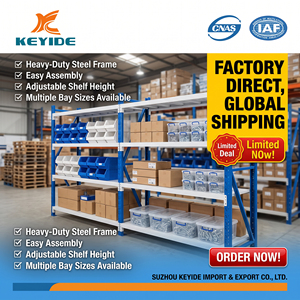
Medium Heavy Duty Adjustable Steel Storage Rack Boltless Metal Shelving
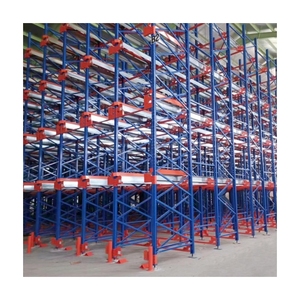
4 Layer Garage Shelves Heavy Duty Shelving Selective Pallet Rack Shuttle Storage
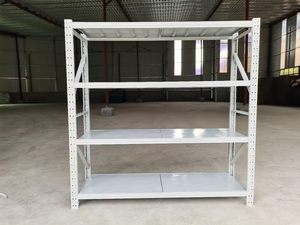
500kg Adjustable Foldable Anti-Rust Boltless 5-Layer Steel Warehouse Rack
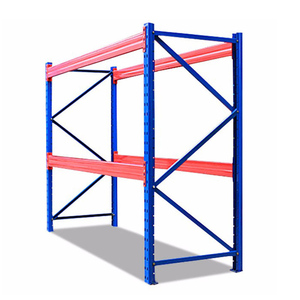
Heavy Duty Multi-Level Warehouse Pallet Rack System with Corrosion Shield
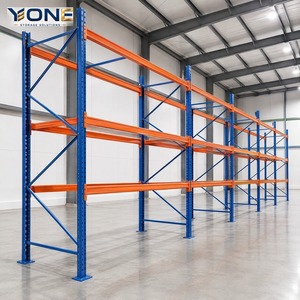
Heavy Duty Warehouse Storage Rack Q235B Steel for High-Volume Logistics Hubs
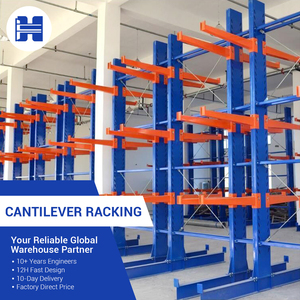
Customized Cantilever Heavy Duty Long Material Storage Solution
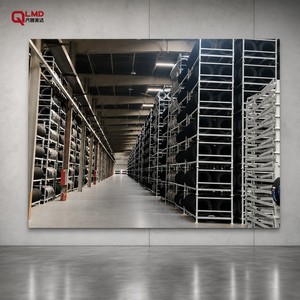
Industrial Vertical 5-Layer Folding Tire Stillage Rack with Epoxy Finish
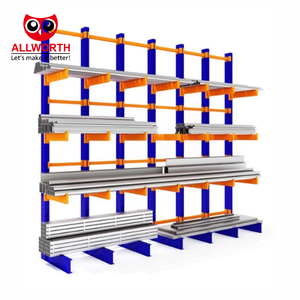
Adjustable Easy-Implementation Cantilever Industrial Warehouse Racking
Engineering Principles of First-In, First-Out (FIFO) Storage Architectures
A rigorous structural and mechanical overview of gravity pallet flow, dynamic brake rollers, and automated shuttle configurations designed to eliminate batch expiration losses and compress handling cycles.
The Physics of Gravity Pallet Flow: Gradient Calibration & Kinetic Regulation
In contemporary intralogistics, First In First Out (FIFO) storage is not merely a material handling philosophy; it is a mechanical discipline governed by gravity, rolling friction, and structural rigidity. At its engineering core, our Pallet Flow Racking system utilizes slightly inclined roller beds (typically calculated between 3.5% and 4.0% inclination depending on pallet runner profile and unit weight). Pallets entered at the higher loading end travel by force of gravity toward the unloading face. This physical separation of loading and picking aisles fundamentally isolates warehouse traffic, eliminating forklift bottlenecks and elevating operational floor safety.
However, uncontrolled gravity flow presents severe occupational and inventory hazards. To mitigate kinetic runaway, our heavy-duty FIFO beds incorporate calibrated centrifugal brake rollers directly meshed with the track. The internal centrifugal governor engages automatically as pallet velocity exceeds 0.25 to 0.30 meters per second, enforcing a uniform, controlled descent regardless of whether the pallet weighs 250 kg or 1,200 kg. At the discharge terminal, mechanical load separators relieve accumulated backpressure from the trailing pallet column, allowing the retrieval forklift operator to lift the lead pallet cleanly without dynamic friction or wedging.
Pallet Flow Racking
Engineered for full-pallet FIFO turnover using gravity lane roller beds, dynamic brake regulators, and automatic entry guides. Cuts travel times by 65% across food and cold chain distribution centers.
Radio Pallet Shuttle FIFO
Utilizes bidirectional automated shuttles executing deep-lane storage up to 40 meters deep. Programmed via WMS/PLC to load from the rear face and retrieve from the front face for high-density FIFO logic without lane slope.
Carton Live Storage
Designed for split-case order picking and assembly kitting. Features multi-track thermoplastic roller lanes mounted on adjustable pitch beams to guarantee zero-error batch tracking for e-commerce and automotive small parts.
| System Architecture | Rotation Logic | Space Utilization | Forklift Cycle Times | Typical Investment Factor |
|---|---|---|---|---|
| FIFO Pallet Flow (Gravity) | Strict FIFO (100% Guaranteed) | Up to 80% footprint density | Lowest (Independent load/pick aisles) | Medium - High (Mechanical rollers) |
| FIFO Pallet Shuttle | Software / Lane Configured FIFO | Up to 85% footprint density | Very Low (Automated internal travel) | High (Robotic shuttles + racking) |
| Standard Selective Racking | Manual FIFO (Requires WMS discipline) | 40% - 50% footprint density | High (Aisle travel required for all picks) | Baseline (Standard beam/upright) |
| Drive-In / Drive-Through | LIFO (Drive-In) / Compromised FIFO (Through) | 65% - 75% footprint density | High (Slow entry into rack depth) | Low - Medium |
FIFO Storage Deployment Across Romania's Core Industrial Corridors
How Romania’s strategic position as Southeastern Europe's primary logistics platform drives specific structural and operational demands for First-In, First-Out intralogistics.
Romania represents one of the fastest-growing logistics and manufacturing markets in the European Union, with modern Class-A industrial stock surpassing 7 million square meters. The nation’s strategic geographical position along the Pan-European Transport Corridors IV and IX, coupled with maritime access through the Port of Constanța, has transformed Bucharest, Timișoara, Cluj-Napoca, and Brașov into hyper-critical storage and distribution hubs. For manufacturing procurement managers and third-party logistics (3PL) providers operating in Romania, selecting the appropriate First In First Out racking system is a direct competitive lever that determines throughput speed, inventory holding costs, and compliance with EU traceability standards.
Bucharest-Ilfov Logistics Belt (A1 & A3 Junctions)
Centers like Chiajna, Dragomirești-Vale, and Ștefăneștii de Jos anchor national distribution for hypermarkets (Carrefour, Mega Image, Profi, Kaufland). High inventory turnover of dairy, fresh produce, and FMCG mandates gravity FIFO live storage with separation barriers to enforce strict expiration date rotation.
Western Automotive Corridor (Timișoara, Arad, Oradea)
Integrated directly with Central European automotive value chains (Continental, Hella, Aptiv). Manufacturing operations rely on Carton Live Storage and heavy-duty FIFO staging buffers to feed assembly lines under precise Just-In-Sequence (JIS) and Kanban parameters without downtime.
Southern Automotive Hubs (Pitești & Craiova)
Supporting the vehicle assembly ecosystems of Dacia Renault and Ford Otosan. High-tonnage FIFO racking handles stamped components, transmissions, and tier-1 subassemblies, demanding heavy-duty upright frames capable of bearing 1,200kg to 1,500kg unit loads with zero frame deflection.
Transylvania Pharma Cluster (Cluj-Napoca & Târgu Mureș)
Distribution centers serving pharmaceutical manufacturing under Good Distribution Practice (GDP) standards. Temperature-regulated cold rooms (-25°C to +4°C) deploy high-density FIFO pallet flow to optimize energy efficiency while guaranteeing pristine batch-lot retrieval.
Constanța Black Sea Maritime Gateway
Facilitating agricultural trade, grain logistics, and fast-moving international containerized cargo. High-capacity pallet shuttle and flow systems accommodate seasonal spikes and rapid cross-dock turnaround at the border crossing terminal.
Seismic Design Optimization for Romanian Standards: P100-1 and SR EN 15512
Addressing the specific structural demands of the Vrancea Intermediate-Depth Seismogenic Zone in storage rack engineering.
A critical consideration often overlooked by generic racking suppliers entering the Romanian market is the seismic profile dictated by the Vrancea tectonic zone. Intermediate-depth earthquakes generated in Vrancea produce long ground-motion periods ($T_c$ up to 1.6 seconds) that affect Southern and Eastern Romania, including the Bucharest metropolitan warehouse clusters where peak ground acceleration values ($a_g$) reach 0.30g under Romanian Technical Code P100-1/2013. When tall, loaded pallet racking systems interact with these long-period seismic waves, resonance phenomena can dramatically amplify lateral displacements and shear forces.
Our engineering design department performs comprehensive dynamic finite element analyses (FEA) compliant with both European Standard SR EN 15512:2020 (Steel static storage systems – Adjustable pallet racking systems – Principles for structural design) and SR EN 1998-1 (Eurocode 8) as modified by the Romanian National Annex. To ensure structural survivability without collapse during a design-basis earthquake, our FIFO systems incorporate:
High-Ductility S355MC Micro-Alloy Steel
Uprights and horizontal braces are cold-formed from high-yield structural steel providing superior elongation before fracture, dissipating cyclic seismic energy through controlled plastic deformation.
Reinforced Baseplate Anchor Calculation
Engineered baseplates with dual or quad anchor bolting distribute moment loads directly into the warehouse concrete slab (C25/30 or C30/37), preventing base-uplift or shearing during ground acceleration.
Safety Secondary Latches & Roll Stop Hooks
Every gravity flow lane is equipped with mechanical anti-bounce retention clips and heavy-gauge pallet stops engineered to resist dynamic impact forces if pallets shift forward during seismic shaking.
Macro-Economic Drivers Fueling FIFO Racking Modernization in Romania
Nearshoring realignment, cold chain energy economics, and industrial infrastructure upgrades across Eastern Europe.
Three primary macro factors are currently accelerating capital investment in automated and dynamic FIFO racking systems across Romania:
1. Nearshoring and Re-Shoring of European Supply Chains: In the wake of global geopolitical disruptions, Western European manufacturers are increasingly shifting tier-1 and tier-2 production facilities to Central and Eastern Europe. Romania has emerged as an ideal beneficiary due to competitive industrial energy access, technical labor capacity, and integration into the European Single Market. Nearshored facilities operate on lean Just-In-Time schedules, requiring factory-adjacent FIFO storage buffers to manage rapid turnover without material stagnation.
2. Escalating Industrial Cold Storage Operating Costs: High commercial energy tariffs across the EU have placed immense scrutiny on cold storage facilities in Ilfov, Brașov, and Cluj. In a cold room maintained at -25°C, refrigeration represents up to 60% of total operating overhead. Traditional selective racking wastes over 50% of the chilled building cube on forklift access aisles. By converting to high-density FIFO Pallet Flow or Pallet Shuttle systems, refrigerated cubic efficiency jumps from 40% to 85%, reducing the energy consumed per stored pallet by more than 35%.
3. Expansion of Romanian Highway Infrastructure: The phased delivery of the A7 (Moldova Motorway), connecting Bucharest to Bacău and Suceava, alongside advancements on the A3 Transylvania motorway and the Pitești-Sibiu section of the A1, is unifying previously fragmented regional consumer markets. As logistics developers build larger, consolidated distribution complexes along these corridors, operators require high-density FIFO systems to process elevated throughput without expanding land footprints.
Direct-from-Factory Manufacturing Advantages for Romanian Enterprises
Why Tier-1 industrial buyers, logistics operators, and general contractors partner directly with our specialized racking engineering facilities.
Sourcing industrial racking systems directly from our modern production facilities removes intermediary markups, guarantees structural traceability, and ensures uncompromised project execution from initial CAD design to final onsite load testing. When procurement teams in Romania partner with our manufacturing organization, they leverage:
Full In-House Structural Calculation
Our structural engineering teams utilize proprietary structural software validated by FEM and EN guidelines. Every proposal includes verifiable calculation notes showing profile stress ratios, deflections, and connection capacities under seismic scenarios.
Continuous Roll-Forming Technology
Our 12 automated production lines utilize precision multi-station roll-forming lines capable of stamping profile uprights with exact hole pitch tolerances, ensuring seamless beam slot engagement and zero structural binding on site.
Certified Epoxy-Polyester Powder Coating
Components pass through automated 5-stage pre-treatment degreasing and phosphatizing baths before receiving electrostatic powder coating cured at 200°C, providing exceptional impact resistance and anti-corrosion protection in high-humidity facilities.
Frequently Asked Questions: Racking Procurement & Compliance in Romania
Essential technical, regulatory, and logistical answers for Romanian warehouse project directors and procurement managers.
What specific seismic documentation is required for warehouse racking permits in Romania?
How does pallet quality and standardization affect FIFO gravity roller systems?
What are the lead times and transport options for delivery to Romanian industrial sites?
Can FIFO gravity flow racking function reliably inside deep-freeze environments (-25°C)?
What floor slab specifications (tolerances and concrete strength) are mandatory?
Accelerate Your Romanian Logistics Operations with Factory-Direct FIFO Engineering
From preliminary AutoCAD layout drafting and seismic simulation under Romanian Code P100-1 to direct fabrication, on-time road transport, and certified professional assembly—our engineering team delivers turnkey excellence for your supply chain.
Get Catalog