As an international intralogistics engineering pioneer with 60 years of manufacturing mastery, 12 production facilities, and 7 specialized R&D innovation centers, we design, manufacture, and integrate heavy-duty gravity flow racking systems tailored to the rigorous demands of the Greater Hamburg logistics region. Whether your facilities operate within the high-throughput sea-freight corridors of Waltershof, the multi-temperature distribution centers of Altenwerder, or the industrial clusters across Billbrook, our DIN EN-compliant dynamic storage solutions optimize space utilization by up to 65%, reduce operational travel paths, and ensure uncompromised First-In, First-Out (FIFO) stock integrity.
Engineered Heavy-Duty Storage & Pallet Flow Systems
Explore our field-proven warehouse racking product lines, designed for extreme load cycles, corrosive coastal atmospheres, and zero-defect dynamic logistics.
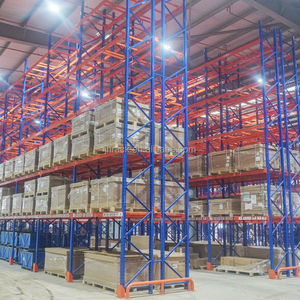
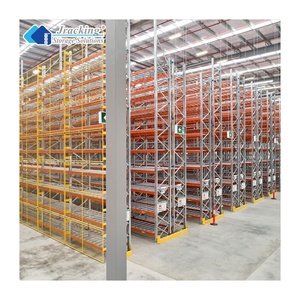
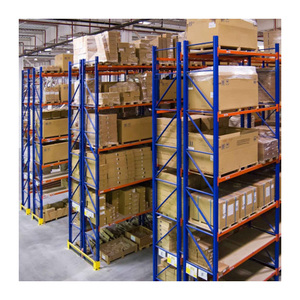
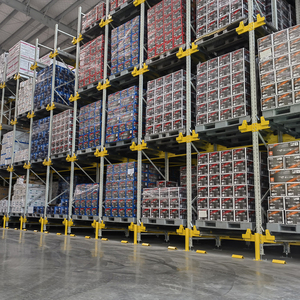
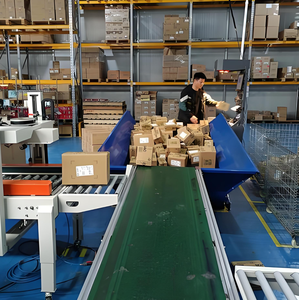
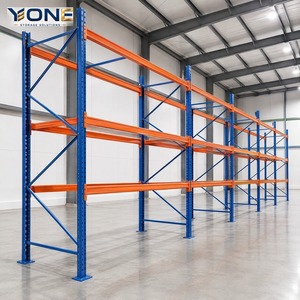
Engineering Architecture of Pallet Flow & Dynamic Live Storage
A dynamic gravity racking system (also designated in Germany as Durchlaufregalsystem or Pallet Live Storage) utilizes inclined wheel or roller conveyors set at a calculated gradient (typically between 3.0% and 4.2%) to move palletized unit loads automatically from the loading (infeed) face to the unloading (picking) face via gravity alone. By transforming static buffer corridors into productive dynamic accumulators, intralogistics managers eliminate intermediate forklift aisles, establishing an unbreachable strict FIFO rotation essential for high-turnover SKUs.
Centrifugal Speed Controllers
Pallet momentum increases with lane depth. Our systems integrate calibrated centrifugal brake rollers (Bremstragrollen) strategically pitched along the roller track to govern descent velocity at a continuous, steady rate of 0.20 m/s to 0.25 m/s, safeguarding fragile cargo whether bearing 250 kg or 1,500 kg.
Safety Load Separators
To eliminate back-pressure hazards when discharging pallets, our high-precision mechanical separators (Vereinzelungsvorrichtungen) isolate the lead pallet from the upstream queue. Operators remove the lead load with zero line pressure, after which the mechanism automatically cycles the subsequent pallet forward.
Structural Rigidity & Cold Rolled Profiles
Fabricated from certified S355 and Q235B structural grade steel, upright frames and horizontal beams comply strictly with European standard DIN EN 15512. Column profiles receive hot-dip galvanization or high-durability epoxy-polyester electrostatic powder finishes resistant to Hamburg's saline maritime air.
Localized Application Scenarios Across the Hamburg Hub
As Germany's foremost maritime gateway and the second-largest container terminal complex in Europe, the Free and Hanseatic City of Hamburg represents an acute intersection of exorbitant commercial real estate costs, tight environmental mandates, and unprecedented throughput velocities. Gravity flow systems provide specialized structural and operational remedies across several primary municipal economic centers:
Port Logistics & Waltershof Container Cross-Docks
At container terminals adjacent to the A7 motorway and Waltershof docklands, transshipment logistics require instant staging buffers between incoming ocean containers and regional trucking fleets. Gravity flow channels serve as deep-lane accumulator buffers, permitting reach-truck operators to load from container un-stuffing bays while dispatch drivers simultaneously clear lanes on the opposite pick aisle without collision risks or traffic bottlenecks.
Deep-Freeze & Temperature-Controlled Hubs in Altenwerder
Operating cold storage facilities down to -28°C incurs massive cubic refrigeration energy costs. Standard selective racking wastes up to 60% of refrigerated volume on forklift aisles. In Altenwerder's specialized cold storage logistics centers, our gravity racking creates ultra-dense product blocks. Gravity rollers configured with low-temperature synthetic lubricants eliminate electrical consumption inside refrigerated zones, reducing cooling energy bills by 35% to 45% per stored pallet unit.
FMCG & Retail Fulfilment in Billbrook & Allermöhe
Billbrook and Allermöhe host massive consumer goods, dairy, confectionery, and grocery distribution complexes supplying metropolitan Hamburg and Schleswig-Holstein. With strict expiration tracking requirements under European food safety directives, our pallet and carton flow lanes enforce chronological product flow automatically, making expired lot wastage mathematically impossible.
Intralogistics System Comparison: Assessing Gravity Racking ROI
When engineering a modern Hamburg distribution terminal, intralogistics designers must evaluate operational throughput, footprint efficiency, and capital expenditure across competing racking methodologies:
| Key Performance Parameter | Conventional Selective Racking | Drive-In / Drive-Through Racking | Gravity Pallet Flow (FIFO Live Storage) | Automated AS/RS (Stacker Cranes) |
|---|---|---|---|---|
| Floor Space Utilization | Low (35% – 45% Net Storage) | High (60% – 70% Net Storage) | Exceptional (70% – 85% Net Storage) | Maximum (80% – 90% Net Storage) |
| Inventory Rotation Logic | Manual FIFO / LIFO | Strictly LIFO (Drive-In) | Automatic FIFO (Gravity Flow) | Dynamic Software-Controlled |
| Forklift Aisle Demand | Aisle per rack face (3.2m - 3.8m width) | Truck enters rack structure | Two aisles total (1 Load + 1 Retrieval) | Zero manual aisles (Crane running aisle) |
| Pallet Travel Risk / Collisions | Moderate (Frequent maneuvering) | High (Trucks drive inside bays) | Low (Trucks never enter rack lanes) | Zero human contact |
| Energy Consumption | Zero (Purely mechanical) | Zero (Purely mechanical) | Zero (100% Gravity Gravitational Power) | High (Continuous 3-phase grid power) |
| System ROI in Hamburg Hubs | Baseline (High footprint overhead) | Fast CapEx, slow handling cycle | 18 – 28 Months (Space & Labor savings) | 48 – 72 Months (High upfront CapEx) |
Local Logistics Development Trends Across Northern Germany
The warehousing landscape in Hamburg, Bremen, and Lower Saxony is experiencing rapid transformation driven by economic and environmental catalysts:
1. Soaring Industrial Ground Rents
Commercial land lease rates in Hamburg's premium logistics zones (e.g., Harburg, Veddel, Wilhelmsburg) continue to rise due to finite municipal zoning boundaries. Warehouses can no longer afford wide, non-productive operating aisles. High-density dynamic gravity storage converts horizontal floor surface into deep 20-pallet flow lanes, tripling pallet capacity inside existing building shells without requiring structural building expansions.
2. Decarbonization & Green Warehouse Directives
Under Hamburg's Climate Plan (Hamburger Klimaplan), warehouse operators face escalating audits on carbon emissions and operational kilowatt-hour usage. Gravity flow systems are intrinsically sustainable: they utilize natural kinetic potential energy to propel 1,200 kg loads down lanes without motors, electrical cables, or battery packs, yielding a virtually zero-emission dynamic logistics channel.
3. Rigorous Safety & DIN EN Standards Enforcement
German commercial storage is strictly governed by DGUV Regel 108-007 (formerly BGR 234) and European standards DIN EN 15512 and DIN EN 15635. Hamburg safety inspectors (Gewerbeaufsichtsamt) mandate stringent annual structural integrity verifications, impact deflection limits, and safety locking devices. Our factory-controlled manufacturing ensures fully certified steel grades with certified dynamic brake-roller load matrices.
Why Hamburg Logistics Leaders Partner With Us
With six decades of manufacturing pedigree and global execution spanning over 70 nations, our organization bridges structural metal fabrication with cutting-edge software and automation technology.
In-House Structural Statics Calculation
Every dynamic racking configuration is calculated specifically for your slab strength, building geometry, seismic coefficients, and pallet specifications. Our certified staticians generate German-language static dossiers (Statische Berechnungen) complying with Eurocode 3 standards ready for local building authority audits.
12 Manufacturing Plants & Premium Steel Control
Direct ownership of twelve manufacturing centers allows absolute command over structural coil tolerance, laser punching precision, automated continuous cold-roll forming, and proprietary protective coatings. No intermediary fabrication margins or third-party quality discrepancies.
Gartner-Recognized Software Integration
Included for five consecutive years in the prestigious Gartner® Magic Quadrant™ for Warehouse Management Systems, our proprietary Easy WMS software seamlessly pairs with physical pallet flow lanes, orchestrating picking routes, load slotting, and conveyor handshakes with effortless accuracy.
Hamburg Procurement & Engineering FAQ: Dynamic Racking Systems
What pallet specifications and dimensions are suitable for gravity flow lanes in German facilities? +
How do brake rollers perform in freezing temperatures down to -28°C? +
What corrosion protection is recommended for warehouses located near the Elbe River or Hamburg Harbor? +
Does the racking comply with German DGUV Regel 108-007 and DIN EN 15635 inspections? +
Can gravity live storage systems integrate with autonomous forklifts (AGVs) or AMRs? +
What data does your engineering team need to produce a customized layout and quote? +
Transform Your Hamburg Logistics Footprint
Consult with our senior intralogistics structural engineers today. We deliver turnkey warehouse optimization studies, full DIN EN-compliant statics calculations, and customized dynamic gravity storage layouts adapted to your facility's operational throughput targets.