Recommended Heavy-Duty & Dynamic Pallet Racking Systems
Engineered to international FEM and EN standards, customized for high-capacity warehouse operations across Greater Cairo, 10th of Ramadan, and Alexandria.
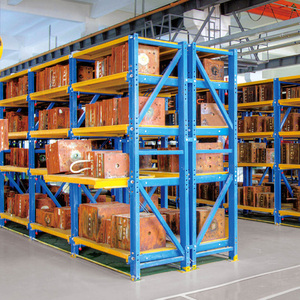
Drawer Type 5 Layer Mold Storage Racking Heavy Duty Cold Rolled Steel Powder Coated
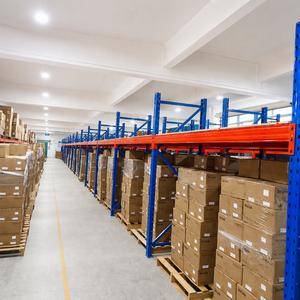
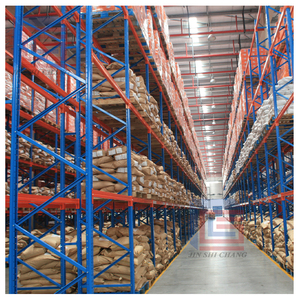
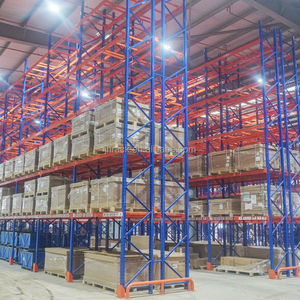
Manufacturer Steel Selective Pallet Rack for Warehouse Storage
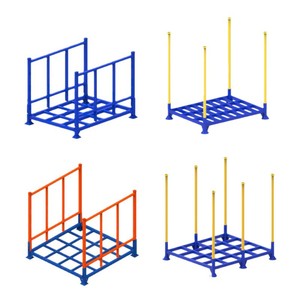
Steel Tube Folding Stacking Rack Modular Flexible Cold Storage Units
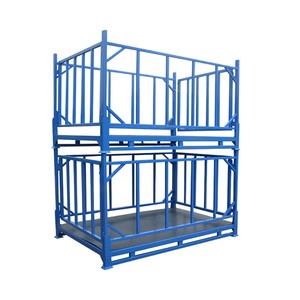
AOCHEN Double-Layer Stackable Collapsible Steel Stillage Industrial Cargo Rack
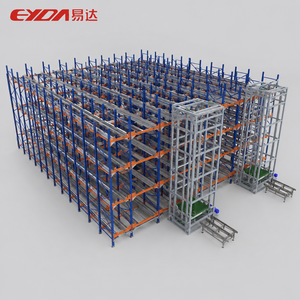
Intelligent Heavy Load Automated Warehouse Pallet Shuttle Racking System
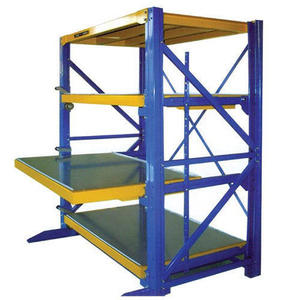
Customized Heavy Duty Steel Mold Storage Rack Q235B Corrosion Protected Shelving
Engineering Principles of Heavy-Duty Gravity Pallet Flow Racking
Heavy-duty gravity flow racking—universally classified in European engineering nomenclature as live pallet storage or dynamic roller racking—represents the pinnacle of mechanical FIFO (First-In, First-Out) intralogistics efficiency. Operating purely on controlled gravitational kinetic energy without continuous electrical power draw, these engineered systems solve one of the most critical structural dilemmas facing industrial facility operators across the Arab Republic of Egypt: achieving maximum cubic volume utilization while enforcing non-negotiable inventory expiration compliance.
At its architectural core, a heavy-duty gravity flow system consists of continuous, inclined structural roller beds mounted on standard structural racking upright frames and load-bearing beams. Pallets are deposited by reach trucks or counterbalance forklifts at the upper loading face (charging aisle) and autonomously glide down an engineered slope—typically calculated between 3.0% and 4.0% inclination—toward the lower extraction face (discharging aisle).
"In dynamic intralogistics engineering, slope calculation is not a nominal approximation. In Egypt's ambient operating environments—where temperature swings between daytime highs of +45°C and refrigerated cold stores at -28°C alter bearing lubricant viscosity—roller friction coefficients must be mathematically balanced using centrifugal speed controllers and mechanical load separators."
Kinematic Velocity Regulation and Braking Physics
Uncontrolled gravity feed of unit loads ranging from 800 kg to over 1,500 kg per pallet presents substantial kinetic hazards. Left unchecked, a metric ton pallet descending a 20-meter deep lane would achieve destructive impact velocity at the discharge stop face. To ensure failsafe operations, our heavy-duty pallet flow beds integrate mechanical centrifugal brake rollers installed at calibrated intervals along the lane.
These brake rollers disengage at slow resting speeds to eliminate startup resistance, but dynamically introduce internal friction resistance proportional to the rotational acceleration of the descending pallet. As velocity approaches the critical threshold of 0.3 meters per second, the centrifugal shoes within the brake roller expand against the steel roller casing, maintaining a steady, governed terminal velocity regardless of individual pallet weight deviations.
Mechanical Pallet Separation Technology at Extraction
A common failure mode in rudimentary gravity racking systems is line pressure: the cumulative mass of queued pallets in a 10-deep lane pushing directly against the frontline pallet waiting to be unloaded. This immense horizontal force locks the extraction pallet against the exit stops, causing forklift mast strain, damaged pallet timber, and severe operator risk.
Our export-grade gravity flow lines feature an automatic mechanical load separator mechanism located directly ahead of the extraction station. As the lead pallet glides into final position, it depresses a trip rocker that elevates a mechanical stop behind it, isolating the lead pallet from the entire hydraulic line pressure behind it. Only after the forklift driver cleanly lifts and removes the lead unit does the rocker release, allowing the subsequent pallet to advance safely under controlled speed.
Mechanical Energy Efficiency
Gravity flow runs with zero ongoing kilowatt consumption. The potential energy of elevated pallet placement is converted into controlled kinetic transit, cutting electrical distribution and battery maintenance costs in high-throughput distribution hubs.
Strict FIFO Compliance
Every lane operates as an autonomous FIFO channel. The first pallet introduced on the replenishment face is guaranteed to be the first extracted on the picking face, eliminating obsolete inventory losses in food, chemical, and pharmaceutical sectors.
Forklift Cycle Compression
By segregating loading traffic to the charging aisle and retrieval traffic to the picking aisle, cross-aisle forklift interference is 100% eliminated, accelerating replenishment cycles by up to 45% compared to standard drive-in racking.
High-Grade Cold-Formed Steel
Manufactured using premium certified Q235B and Q355B structural steel coils. Uprights and roll-formed beams undergo continuous multi-stage roll forming to guarantee precise structural tolerances and exceptional yield strength under sustained seismic loads.
High-Durability Powder Coating
Finished with automated electrostatic epoxy-polyester powder coating cured at 200°C. Provides robust protection against corrosive airborne maritime moisture in coastal Egyptian ports like Alexandria and Suez, passing strict 500-hour salt spray benchmarks.
Certified FEM & EN Compliance
Every gravity flow bay is structurally engineered in strict adherence to European standards EN 15512 (Steel static storage systems) and FEM 10.2.02, incorporating dynamic safety margins that exceed municipal Egyptian engineering inspection criteria.
Application Scenarios in Egypt's Key Industrial Corridors
Targeted intralogistics configurations tailored to the geographic and commercial demands of Egyptian manufacturing epicenters.
FMCG & Dairy Cold Storage Facilities
In Egypt's highest density industrial zone, food and beverage giants (such as dairy, bakery, and meat processors) require extreme volumetric density to mitigate massive refrigeration energy bills.
- Temperature Band: Operating seamlessly between -25°C and +4°C with specialized low-temperature bearing lubricants.
- Pallet Profiling: Sized for standard 1200x1000mm Egyptian perimeter-base pallets and 1200x800mm EUR pallets.
- Throughput Velocity: Immediate FIFO rotation prevents spoilage of short shelf-life dairy and packaged juices.
- Floor Footprint: Condenses storage footprint by up to 60% compared to conventional selective aisle configurations.
Cross-Docking & Global Export Logistics
Strategically positioned along Ain Sokhna and Port Said, SCZone distribution operators handle massive containerized freight flows bridging Asia, Europe, and North Africa.
- Dynamic Buffer: Serves as high-capacity pallet staging lanes between container de-stuffing and shipping dock dispatch.
- Lane Lengths: Engineered for deep storage channels spanning 15 to 25 pallets deep per product run.
- Corrosive Protection: Reinforced zinc-plated rollers and powder finishes resisting marine coastal salinity.
- Zero Downtime: Pure mechanical operation ensures freight moves during regional electrical power disturbances.
Pharmaceutical & Automotive Component Hubs
Pharmaceutical manufacturers regulated by the Egyptian Drug Authority (EDA) and automotive CKD assembly plants demand absolute lot traceability and zero tolerance for picking errors.
- Regulatory Batch Control: Physical separation of batch lots guarantees complete traceability for healthcare audits.
- Pick Tunnel Integration: Multi-level gravity flow banks integrated with lower-level carton flow order-picking tunnels.
- Heavy Industrial Dies: Complementary integration with heavy-duty drawer mold racks for press line tooling.
- WMS Compatibility: Seamless data handshake with pick-to-light, RF scanners, and ERP inventory platforms.
Egypt Logistics Trends: Transition from Static to Dynamic Intralogistics
How the National Logistics Master Plan and private capital expansion are transforming Egyptian warehouse infrastructure.
Surge in Dry Port Infrastructure
The inauguration of the 6th of October Dry Port (DP6O) and rapid construction of 10th of Ramadan logistics centers has decentralized customs handling away from maritime bottlenecks. This shift forces regional distribution centers to adopt high-density dynamic racking capable of clearing customs freight at rapid turnover rates.
Escalating Industrial Real Estate Costs
Industrial land leasing rates in prime Egyptian industrial governorates have appreciated steeply over the past 36 months. Logistics managers can no longer justify single-deep selective racking with 3.5-meter forklift aisles. Gravity pallet flow reclaims 55% to 65% of wasted aisle square footage, transforming floor cost into vertical cubic revenue.
Strict Cold Chain Quality Mandates
With Egypt positioning itself as a dominant exporter of fresh agricultural produce (citrus, strawberries, onions) to the European Union and Gulf states, cold chain integrity is under unprecedented scrutiny. Gravity flow racking eliminates pallet bottlenecks in temperature-controlled pre-cooling docks, maintaining uninterrupted cold chain compliance.
System Comparison Matrix: Gravity Flow vs. Alternative Storage Systems
A rigorous engineering comparison to support procurement teams, project engineers, and supply chain directors in system selection.
| Evaluation Parameter | Heavy-Duty Gravity Pallet Flow | Drive-In Pallet Racking | Radio Shuttle Racking | Standard Selective Pallet Racking |
|---|---|---|---|---|
| Inventory Rotation Mode | Strict FIFO (100% Guaranteed) | LIFO (Last-In, First-Out) | Flexible FIFO or LIFO | Arbitrary (Any order) |
| Storage Density Rating | Extremely High (Up to 80% Space Efficiency) | High (70% Space Efficiency) | Extremely High (85% Space Efficiency) | Low to Medium (40% Space Efficiency) |
| Forklift Aisle Requirements | 2 Dedicated Aisles (Loading & Unloading) | 1 Aisle (Mast drives inside rack lanes) | 1 or 2 Aisles (External handling only) | Multiple Aisles (1 aisle every 2 rack rows) |
| Structural Risk from Collision | Near Zero (Forklifts never enter rack structure) | High (Constant upright collision exposure) | Very Low (External loading only) | Medium (Forklift maneuvering close to frames) |
| Throughput Speed / Productivity | Maximum (Parallel replenishment & picking) | Slow (Maneuvering deep into enclosed lanes) | High (Automated mechanical cart transit) | High (Direct access to single pallets) |
| Operating Power & Electronics | 0 kW (Pure gravity, no batteries or chips) | 0 kW (Manual forklift operation) | Requires battery charging & PLC maintenance | 0 kW (Passive static steel structure) |
| Ideal Sector in Egypt | Cold Storage, Dairy, Perishables, FMCG, SCZone | Seasonal Bulk, Non-perishables, Low SKU Count | Deep Freezers, Large Volume per SKU | High SKU Variance, Low Volume per SKU |
Frequently Asked Questions: Purchasing Racking Systems in Egypt
Addressing the technical, customs, and operational queries of Egyptian factory owners, contractors, and procurement departments.
Why Tier-1 Enterprises Partner with Our Manufacturing Network
Decades of industrial leadership, direct control over steel fabrication, and international quality management delivering guaranteed ROI.
60 Years Intralogistics Heritage
Over six decades dedicated exclusively to warehouse structural racking, picking systems, and automation. We have engineered storage solutions for thousands of supply chains globally, transforming operational logistics into sustainable competitive advantages.
12 Dedicated Production Plants
Operating twelve direct manufacturing centers worldwide gives us total control over cold-rolled steel quality, automated profiling, powder coating thickness, and scheduled container shipping without relying on third-party steel brokers.
7 Global R&D Centers
Continuous mechanical innovation backed by specialized testing laboratories. Our engineers perform destructive stress testing, seismic shake-table simulations, and bearing endurance modeling to ensure every component exceeds operating safety thresholds.
End-to-End Lifecycle Support
From architectural CAD layout design, static slab analysis, and customs container freight to installation commissioning, load signs, and annual safety audits, we stand behind our installations throughout their operational lifespan.
Accelerate Your Warehouse Efficiency in Egypt
Consult with our senior intralogistics structural engineers today. Share your building layout, pallet dimensions, unit weights, and daily throughput requirements to receive a customized CAD floorplan design, static structural calculation report, and competitive CIF container export quotation.