Engineered Racking Deployments
Specialized Stacking & Automated Storage Systems
Tested under rigorous ISO and ASTM engineering standards, our versatile stacking solutions deliver high-density vertical containment, rapid repositioning, and immediate seismic compliance.
60+
Years Intralogistics Engineering
12
Advanced Production Centers
7
Global R&D Hubs
70+
Country Sales & Service Reach
Engineering Excellence for High-Density San Francisco Bay Logistics
Operating a manufacturing or distribution hub within the Greater San Francisco Bay Area presents a unique intersection of extreme real estate valuation, aggressive lease compression, and stringent structural safety regulations. Unlike conventional Midwestern warehousing where footprint expansion is financially viable, facilities spanning the San Francisco Peninsula, South Bay (San Jose), and East Bay corridors (Oakland, Fremont, Hayward) face commercial real estate rates averaging substantial premiums per square foot. In this economic reality, standard fixed pallet rack layouts often result in wasted vertical volume, high capital rigidity, and permanent civil modifications that conflict with multi-tenant lease agreements.
This is where modular heavy-duty stacking racks—engineered directly by our dedicated factory teams—provide unmatched operational elasticity. Designed with structural tubular steel profiles, robotic dual-shield continuous fillet welds, and specialized nesting target cups, our portable stacking units allow industrial operators to assemble multi-tiered high-bay storage without bolting anchors into concrete slabs. This preserves floor structural integrity, prevents costly slab reinstatement penalties, and enables instantaneous seasonal reconfiguration.
Seismic Zone 4 Compliance Note: Every stacking rack system engineered for northern California logistics meets strict California Building Code (CBC 2022 / ASCE 7-16) seismic regulations. Integrated load locks, heavy-gauge corner posts, and fail-safe conical stacking bases are designed to mitigate dynamic resonance, preventing lateral shifting or dislodgement under high spectral acceleration ground motions common along the San Andreas and Hayward fault lines.
Dynamic Flex Footprints
Condense aisle footprints during peak inbound cycles and nest frames compactly when empty to reclaim up to 75% of active floor space across high-cost Silicon Valley assembly and cleanroom staging floors.
Severe Seismic Integrity
Fabricated using high-yield structural steel with specialized finite element analysis (FEA) testing, ensuring post-and-cup interlocking tolerances securely withstand peak lateral ground movements.
Multi-Industry Load Adaptability
Engineered for high-value hardware staging, electric vehicle (EV) battery packs, wine and beverage storage, biotech supply lines, and oversized cold-chain containers across the Bay Area.
San Francisco & Silicon Valley Intralogistics Trends (2025–2030)
The macroeconomic dynamics of California's industrial supply chains are transitioning rapidly toward intelligent micro-fulfillment, nearshore hardware integration, and agile contract manufacturing. Three dominant technological and economic shifts define modern procurement decisions for heavy-duty stacking equipment in northern California:
1. Autonomous Mobile Robot (AMR) & Automated Fleet Synergy: Traditional static selective racks limit floor paths for autonomous ground equipment. Contemporary Bay Area logistics hubs are shifting toward hybrid operations: mobile stacking racks function as mobile buffer zones where heavy pallets or specialized stillages can be staged directly by high-capacity AMRs and AGVs without manual forklift transfer. Our factory produces stacking bases engineered with millimeter-precise bottom clearance channels, supporting both standard counterbalanced forklifts and automated guided vehicles equipped with optical alignment sensors.
2. Cleanroom Staging & Controlled-Environment Corrosion Defense: The concentration of biomedical devices in South San Francisco and precision semiconductor fabs across San Jose demands non-outgassing, rust-free storage. We deploy multi-stage electrostatic thermoset powder coatings alongside hot-dip galvanizing options that exceed ASTM salt-spray standards. These finishes prevent metal flaking, zinc-whisker development, and chemical abrasion under strict sanitization regimes.
3. Circular Sustainability & Zero-Anchor Facility Protection: With commercial lease commitments shortening to 2- to 3-year flexible horizons across the Port of Oakland logistics zones, tenant companies cannot afford permanent anchor penetrations that compromise slab integrity. Portable heavy-duty stacking frames require zero slab drilling, eliminating concrete remediation disputes upon lease exit while maximizing reusable capital equipment equity across secondary site transitions.
Why Enterprise Procurement Teams Partner with Our Direct Factory Hubs
Sourcing your industrial stacking racks directly from our manufacturing infrastructure guarantees uncompromised quality assurance and supply stability. As a premier intralogistics manufacturer with a 60-year engineering heritage, our operations bridge heavy steel fabrication with advanced software orchestration. Operating 12 dedicated manufacturing hubs across 70+ global markets, our direct factory model bypasses intermediate distribution markups, delivering engineered heavy-duty stacking solutions designed precisely to your CAD specifications.
Our internal technical divisions employ dedicated structural engineers who conduct comprehensive finite element analysis (FEA) on every custom batch. We test for buckling resistance, dynamic impact absorption, and load redistribution across individual uprights. Furthermore, our systems seamlessly interface with our award-winning Easy WMS and warehouse control ecosystems—recognized repeatedly in the Gartner® Magic Quadrant™ for Warehouse Management Systems. Whether you manage automotive powertrain subassemblies, aerospace carbon-fiber rolls, or agricultural cold storage across Northern California, our direct factory support provides lifecycle engineering, turnkey installation assistance, and rapid custom fabrication runtimes.
Buyer Due Diligence
Frequently Asked Questions by San Francisco Bay Area Procurement Teams
Critical engineering, regulatory, and logistics answers for warehouse operations, facility managers, and safety compliance directors.
Do portable stacking racks require seismic anchoring permits in San Francisco?
In most California jurisdictions, unanchored, relocatable stacking racks under specified height limits are classified as industrial material handling equipment rather than permanent real-property building additions. However, for high-stack tiers (stacking 4 or 5 units high) exceeding 8 to 12 feet, local building departments (such as SF DBI or Oakland Planning & Building) may evaluate them under ASCE 7 Chapter 13. Our California-licensed structural engineers furnish stamping, dynamic stability calculations, and safe working load documentation to facilitate internal EHS and regulatory clearance.
What is the standard load capacity per tier for heavy-duty stacking racks?
Our factory manufactures standard stacking racks supporting capacities ranging from 2,000 lbs (0.9 metric tons) to 5,500 lbs (2.5 metric tons) per basket or frame. Custom engineered units for steel processing, stone slabs, or heavy industrial machinery can be fabricated to withstand up to 8,800 lbs (4.0 metric tons) per unit tier, safely stackable up to 4-high under rated static configurations.
How do stacking racks compare to selective racking in cost-per-pallet for Bay Area facilities?
While conventional selective racking offers 100% immediate pallet access, it demands static aisle widths of 10 to 12 feet, wasting 50% to 60% of expensive floor area. Stacking racks create dense block-stack storage patterns without requiring permanent aisles, effectively doubling your pallet capacity within the same square footage. When lease overhead exceeds $2.00–$3.50 per sq. ft. monthly, the spatial density gains typically yield full ROI within 7 to 11 months.
What steel alloys, coatings, and welding certifications are standard?
All uprights and base structures are fabricated from certified structural grade Q235B / Q345B steel (equivalent to ASTM A36 / A572 Grade 50). Welds are executed by certified robotic welding systems conforming to AWS D1.1 standards. Surface treatments include heavy anti-corrosion thermoset polyester powder coating or hot-dip galvanization conforming to ASTM A123, ensuring superior longevity in high-salinity coastal Bay environments.
Can customized stacking stillages be tailored for awkward or irregular goods?
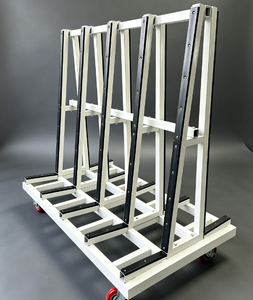
Yes. We regularly fabricate customized base designs including detachable upright corner posts, fold-down side gates, corrugated steel decking, heavy-duty wire mesh floors, forklift guide shoes, and specialized internal dunnage (urethane or rubber cradles) for cylindrical cargo, glass sheets, or delicate EV chassis components.
What is the standard production and shipping lead time to Northern California?
Standard engineered batch runs are produced in 2 to 3 weeks within our high-capacity production facilities. Containerized sea freight to the Port of Oakland typically takes 16 to 22 days, followed by immediate transloading and direct flatbed delivery to your jobsite in San Francisco, Hayward, Silicon Valley, or Stockton.
Ready to Optimize Your San Francisco Warehouse Footprint?
Connect directly with our engineering and technical sales division. We provide full layout drafting, structural calculations, and competitive factory-direct pricing for standard and custom stacking rack fleets.