Engineered Portfolio
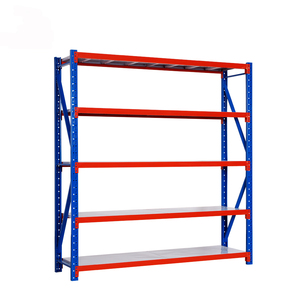
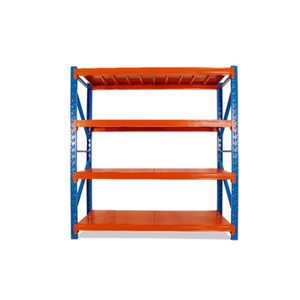
Industrial Medium-Duty & Integrated Storage Solutions
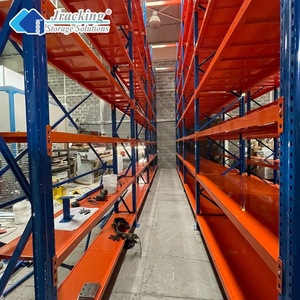
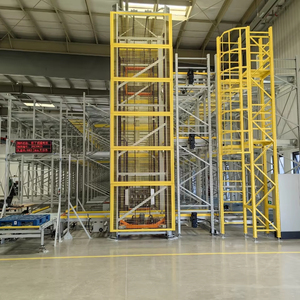
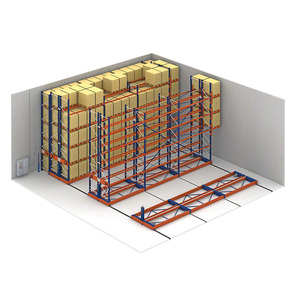
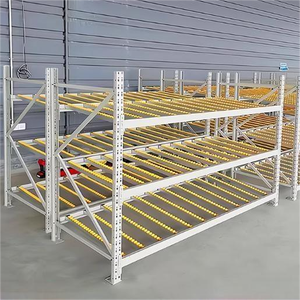
Designed with high-tensile structural steel profiles, adaptable beam spans, and certified load thresholds tailored to high-turnover regional distribution nodes.
60+
Years Intralogistics Heritage
12
Precision Manufacturing Hubs
70+
Export Destinations Global
99.2%
On-Time Project Commissioning
Strategic Industrial Fit
Localized Medium-Duty Applications Across India's Supply Chains
From the bustling automotive belts of Pune and Chennai to e-commerce fulfillment epicenters in Haryana and Bhiwandi, custom-engineered racking is unlocking vital vertical cubic space.
Automotive & Tier-1 Ancillaries
India's automotive hubs in NCR (Gurugram-Manesar), Chennai (Oragadam), and Pune (Chakan) demand precision batching for intermediate assemblies, stamping dies, and spare components. Medium-duty long-span systems bridge the functional gap between bulk pallet racks and small parts binning, tolerating uniform distributed loads (UDL) of 300kg to 800kg per level with integrated dividers for rapid kanban line feeding.
E-Commerce & 3PL Fulfillment
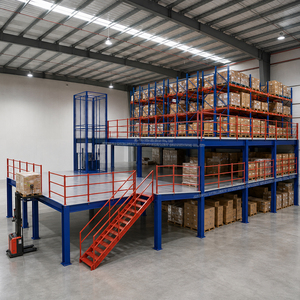
Consolidated Grade-A logistics parks in Bhiwandi (Mumbai), Farrukhnagar (Haryana), and Hoskote (Bengaluru) prioritize multi-tier mezzanine picking operations. Engineered medium-duty frameworks act as primary multi-level floor support structures, maximizing high-ceiling clearances (9 to 12 meters clear height) while maintaining dense SKU face presentation and high-velocity manual carton flow.
Pharma & Cold-Chain Warehouses
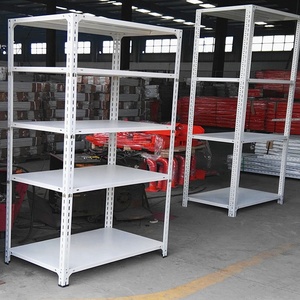
In Gujarat’s pharmaceutical triangle (Ahmedabad-Vadodara) and Hyderabad's Genome Valley, compliance with strict hygiene, temperature uniformity, and corrosion thresholds is paramount. Our powder-coated and hot-dip galvanized medium-duty steel shelving systems feature non-toxic epoxy coatings resistant to continuous industrial chemical disinfection and humidity shifts inside cold storage buffer zones.
Macro Dynamics
Emerging Trends Shaping Storage Architecture in India
Key factors accelerating the transition from legacy low-height godowns to standardized, high-density modular steel racking systems.
National Logistics Policy (NLP)
The implementation of India’s PM GatiShakti National Master Plan and the National Logistics Policy aims to reduce logistics overhead from 14% of GDP down to global benchmarks (~8%). This regulatory impetus is driving warehouse operators to replace unorganized fabrication with structurally certified, seismic-rated steel racking systems built for verifiable safety and fast asset depreciation.
Rise of Grade-A Real Estate
Institutional private equity inflows from global asset managers are converting semi-urban tracts into international-standard distribution parks. These facilities necessitate standardized medium-duty shelves designed with pre-punched 50mm pitch slots, allowing agile seasonal reconfigurations, carton flow retrofits, and overhead sprinkler pipe penetration without field welding.
Hybrid Automation Integration
Tier-1 supply chains are combining manual medium-duty shelving with Autonomous Mobile Robots (AMRs), pick-to-light indicators, and automated sorting spirals. Indian procurement directors now prioritize manufacturers whose mechanical racking tolerances seamlessly integrate with automated guided equipment, eliminating beam deflection variances under load.
Manufacturing Superiority
Why Global Supply Chains Trust Our Engineering Footprint
Leveraging 60 years of structural calculations, continuous R&D, and stringent quality control across 12 manufacturing facilities worldwide.
High-Grade Structural Steel
We strictly utilize certified cold-rolled high-tensile coil steel (IS 2062 / ASTM A1011 standards). Every production heat is traceable via mill test certificates, guaranteeing high yield strength and zero brittle failure in seismic zones.
Advanced Powder Finishing
Multi-stage automated surface pre-treatment (degreasing, phosphating, pure water rinse) combined with thermosetting epoxy-polyester electrostatic powder coating (60–80 microns), delivering exceptional salt-spray and scratch resistance.
Strict Testing & FEM Compliant
Engineered under European Federation of Materials Handling (FEM 10.2.02) and SEMA specifications. In-house finite element stress modeling calculates precise beam deflection under uneven distributed configurations.
Modular Engineering Adaptability
Uprights feature CNC cold-formed teardrop or butterfly perforations pitched at tight 50mm increments. Modify levels swiftly using bolt-free interlocking connectors without specialized tools or structural disruption.
Export Logistics Excellence
Decades of cross-border container packing optimization. Components are packed with protective corner buffers, moisture-barrier polymer wrapping, and steel banding for sea freight discharge across Nhava Sheva, Mundra, and Chennai ports.
Complete Project Lifecycle
From initial AutoCAD/BIM space layout and structural load calculations to installation supervision, third-party rack safety audits, and timely spare component availability across the operational lifespan.
Procurement Clarity
Frequently Asked Questions by Indian Warehouse Developers
Technical, regulatory, and commercial insights to assist industrial procurement managers and project EPCs.
What parameters differentiate medium-duty shelving from heavy-duty pallet racks in Indian warehouses?
Medium-duty racking systems are engineered primarily for non-palletized, manual hand-loaded operations or plastic tote picking, offering load capacities typically between 200kg to 800kg per level. Heavy-duty pallet racking systems, conversely, are engineered for unitized pallet loads (1,000kg to 4,000kg per level) accessed via reach trucks, counterbalanced forklifts, or VNA equipment. Medium-duty systems prioritize rapid manual selectivity, continuous decking panels (steel decking, wire mesh, or particle board), and narrower handling aisles.
How do imported steel racking systems comply with Indian seismic and safety building codes?
Our systems are calculated based on IS 1893 (Criteria for Earthquake Resistant Design of Structures) alongside international standards like EN 15512 and FEM 10.2.02. Depending on whether your facility is located in Zone II (e.g., Bengaluru, Hyderabad) or high-risk Zone IV/V (e.g., Delhi NCR, Kutch), we adapt steel gauge thickness, upright column profile dimensions, baseplate anchorage configurations (using certified anchor bolts into 200mm+ concrete slabs), and cross-bracing patterns to guarantee structural stability under dynamic seismic events.
What surface treatment is best suited for humid regions like Mumbai, Chennai, or Kolkata?
Coastal industrial zones face heightened relative humidity and salt-laden atmospheres. For standard dry ambient warehousing, our 7-tank immersion pre-treatment followed by high-adhesion thermosetting epoxy-polyester powder coating (60–80 microns) offers excellent corrosion resistance. For extreme unconditioned or chemical environments, we provide pre-galvanized sheet shelves and hot-dip galvanized upright frames (HDG with zinc coating >45 microns) complying with ASTM A123 to prevent micro-pitting and rust under high tropical humidity.
How does the containerized import process into Indian ports work, and how are customs duties handled?
We provide full export documentation under Incoterms (CIF, CFR, or FOB) to all major Indian container ports, including JNPT (Nhava Sheva), Mundra, Chennai, and Pipavav, with seamless multimodal transit to inland container depots (ICDs) like Tughlakabad or Whitefield. Racking systems fall under HS Code 730890. We furnish complete commercial invoices, packing lists with piece-count verification, Mill Test Certificates (MTC), and Certificates of Origin (COO) to facilitate smooth customs appraisal under Indian customs regulations.
Can medium-duty racking systems be integrated into multi-tier mezzanines as business scales?
Yes. Our upright column profiles are engineered with pre-calculated vertical axial load capacities to support future vertical expansions. By incorporating splice plates, intermediate catwalk beams, fire-retardant steel grating, handrails, and kick-plates, your initial ground-floor medium-duty layout can be transformed into a 2-tier or 3-tier mezzanine picking tower as inventory volume grows, avoiding the real estate costs of facility relocation.
Ready to Optimize Your Floor Utilization & Picking Velocity?
Connect directly with our senior intralogistics engineers for comprehensive AutoCAD warehouse design layouts, load calculation sheets, and competitive project quotations tailored for the Indian market.
Inquire Now