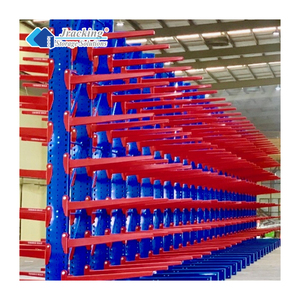
Long Goods & Heavy Tube
Manufactured using certified high-tensile cold-rolled micro-alloyed structural steel, our European-certified storage portfolios offer optimized beam calculations, seismic and dynamic vibration dampening, and seamless warehouse management interoperability.
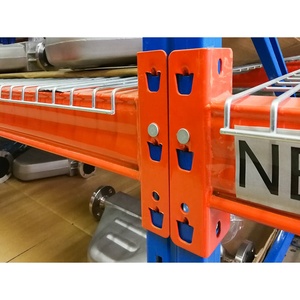
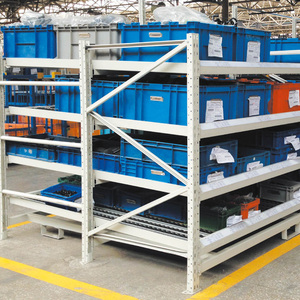
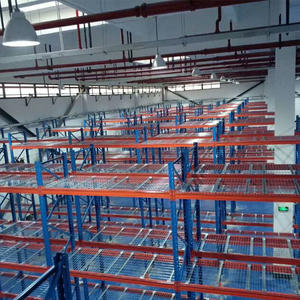
The Netherlands occupies a paramount position as the premier gateway to continental Europe. With the Port of Rotterdam anchoring maritime import cargo and Schiphol Airport driving high-value air cargo, over 40% of all European cross-border freight operations either transit through or originate within Dutch boundaries. However, developing industrial racking installations within the Netherlands presents unique operational, geotechnical, and legislative parameters that conventional racking manufacturers frequently fail to navigate.
Information Gain Insight: Sizing racking superstructures in the Dutch market demands rigorous reconciliation between NEN-EN 15512:2020 (the European standard for adjustable pallet racking steel design), Dutch national annexes (NEN 5051), and the exacting building integrity mandates dictated by the Bouwbesluit (Dutch Building Decree).
A prevalent challenge facing logistics developers in South Holland (Zuid-Holland), North Brabant (Tilburg-Waalwijk), and the Venlo corridor is the underlying soft soil profile composed of Holocene peat and marine clay layers. Industrial concrete slabs across Rotterdam Maasvlakte, Moerdijk, and Schiphol Logistics Park are almost uniformly founded on driven concrete piles. Point loads transmitted by tall racking columns—often exceeding 120 kN per upright baseplate in double-deep or automated configurations—cannot simply rely on standard floor slab friction.
Our structural engineering division carries out finite element analyses (FEA) to verify baseplate dimensioning, punching shear resistance, and dynamic micro-settlement risks. By utilizing oversized S355 grade base spreading plates, anchoring with European Technical Assessment (ETA Option 1) cracked-concrete chemical capsules, and configuring diagonal bracing towers, we ensure full deflection mitigation under full static and live operating stresses.
Storage facilities operating within the Dutch chemical triangle (Rotterdam-Botlek-Moerdijk) or handling hazardous goods are strictly regulated under PGS 15 (Publicatiereeks Gevaarlijke Stoffen 15). PGS 15 mandates precise clearance rules between storage flues, specialized drip trays for pallet spills, and fire compartmentation ceilings. In automated high-bay warehouses exceeding 12 meters in height, our engineers collaborate with insurance underwriters (such as FM Global or NFPA guidelines adopted by Dutch inspectors) to integrate factory-welded in-rack sprinkler pipe brackets, mesh shelf dividers with open cross-sections greater than 70%, and fail-safe seismic-resistant pallet stops that prevent sprinkler head impact ruptures.
Years Engineering Pedigree
Export Target Countries
Advanced Roll-Forming Centers
Structural Reliability Rate
Land values in prime Dutch logistics submarkets—such as Amsterdam Westpoort, Utrecht, and Eindhoven—regularly surpass benchmark European averages. As a consequence, third-party logistics (3PL) providers and omnichannel retailers are transforming standard wide-aisle footprints into Very Narrow Aisle (VNA) and automated shuttle environments reaching 18 to 36 meters in building height.
In narrow-aisle environments where wire-guided turret trucks or Autonomous Mobile Robots (AMRs) operate at vertical speeds of 0.5 m/s while lifting loads 16 meters above finished floor levels, minute slab imperfections can trigger dangerous mast deflection. Our project delivery includes precision optical level surveying conforming to EN 15620 Class 300/400 tolerances, custom laser-leveling shims under every upright footing, and integrated floor-mounted guide rails engineered to withstand repetitive horizontal shearing loads.
From cold-chain distribution centers feeding European supermarket chains to cross-docking platforms in the Rotterdam maritime belt, our racking systems are custom-tailored to sectoral workflows.
Tailored for Westland greenhouses, Aalsmeer flower auctions, and temperature-controlled cross-docks in Breda and Venlo. Features hot-dip galvanized uprights and epoxy-coated beams resistant to condensation and deep freezing down to -30°C.
Engineered for high-turnover multimodal bonded warehouses handling sea container deconsolidation. Built to withstand continuous 24/7 forklift duty cycles and equipped with ultra-heavy structural column protectors.
Designed for rapid pick-and-pack omnichannel hubs in Tilburg, Utrecht, and Almere where vertical cubic capacity is paramount. Incorporates integrated multi-tier mezzanine floors and boltless carton live flow racks.
Navigating labour shortages, strict spatial zoning policies, and carbon neutrality commitments across the Dutch logistics ecosystem.
Rising hourly wages and persistent shortages of certified reach truck drivers across the Randstad have triggered unprecedented adoption of semi-automated 4-way pallet shuttle systems and automated stacker crane warehouses. Modern Dutch racking must feature tighter manufacturing deflection tolerances (≤1/750 of beam span) to interface safely with laser-navigated shuttles.
Institutional Dutch real estate funds (such as Prologis, WDP, and GLP) require new distribution center developments to achieve "BREEAM-NL Excellent" or "Outstanding" certification. Our racking systems prioritize high-efficiency cold-formed designs using recycled electric arc furnace (EAF) steel coils and VOC-free electrostatic powder coating lines.
Because municipal zoning across the Netherlands tightly restricts horizontal land allocation ("verdoozing" debates in provincial governments), logistics operators are going upward. Self-supporting clad-rack buildings—where the pallet racking framework constitutes the structural skeleton of the building envelope—minimize foundation footprints while maximizing pallet storage counts per square meter.
Backed by six decades of intralogistics pioneering, robust global supply chain integration, and rigorous in-house manufacturing oversight.
All products conform fully with EN 15512, EN 15620, EN 15629, and CE/ISO 9001. Project structural calculations are verified by certified European structural engineers.
Fully automated multi-roll cold forming mills, robotic continuous seam welding cells, and eco-friendly automated powder-coating lines guarantee dimensional micro-precision.
7 specialized R&D testing centers. Recognized by leading analysts for our proprietary Easy WMS software suite, orchestrating hardware and software as one turnkey solution.
Dedicated commercial and technical project engineers operating across the Netherlands and Belgium ensure seamless on-site installation, periodic inspections, and fast spare part supply.
Detailed technical, structural, and regulatory answers to assist your operations, health & safety, and procurement teams during project evaluation.
Whether you are outfitting a greenfield logistics center in Venlo, upgrading an omnichannel cross-dock in Brabant, or planning a dense automated shuttle warehouse near Rotterdam, our structural engineering team will deliver a zero-obligation preliminary design, CAD layout, and load calculation study within 48 business hours.