Engineering High-Throughput Storage Across Russia's Expanding Logistic Corridors
From class-A fulfillment centers flanking the Moscow MKAD and Saint Petersburg freight belts to fast-growing multitemperature logistics clusters along Novosibirsk, Yekaterinburg, and the Far-East Primorye transit corridor, warehouse infrastructure is rapidly standardizing. Industrial racking is no longer treated as simple structural ironware; it is an engineered operational asset subjected to extreme temperature differentials, seismic dynamic forces (GOST 30546.1), and intensive high-cycle forklift operations. Sourcing from certified manufacturing plants ensures strict metallurgy compliance, load safety under heavy palletization, and lifecycle support.
Years of Intralogistics R&D
Direct Heavy-Steel Production Bases
Countries Project Network
Structural Reliability Standards
Precision-Engineered Industrial Racking Systems
Tested under rigorous FEM and EN design formulas and calibrated to regional GOST R 55525-2017 load parameters for safe, heavy-duty warehousing.
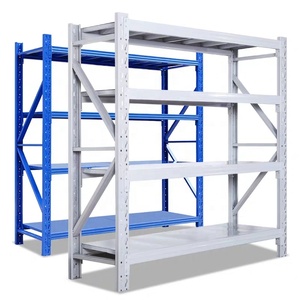
Mracking Adjustable Boltless Industrial Storage Shelf
Engineered for picking modules and manual e-commerce fulfillment hubs requiring agile, tool-free upright reconfiguration.
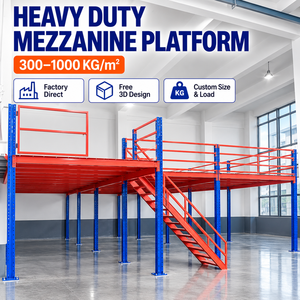
Heavy Duty Steel Mezzanine Multi-Tier Floor System
Maximizes cubic clearance in high-ceiling facilities, creating multi-level picking platforms over active dispatch zones.
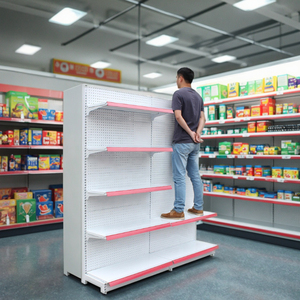
Perforated Metal Gondola Heavy Display System
High-durability powder-coated steel shelving for cash-and-carry hypermarkets and technical hardware distribution stores.
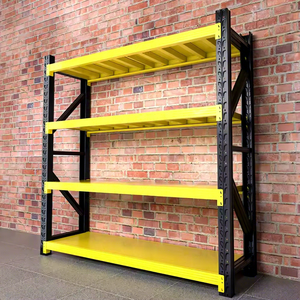
Adjustable 500kg/Layer Heavy Industrial Steel Rack
Optimized for automotive spares, wholesale dry foods, and industrial inventory with reinforced stiffener beam profiles.
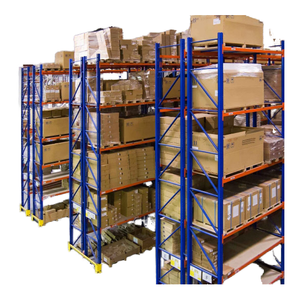
Automated Radio Shuttle Pallet Racking Solution
High-density channel storage run by radio shuttles; prime selection for deep-freeze storage (-30°C) and food processing plants.
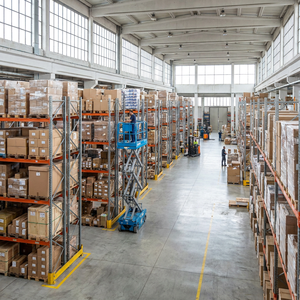
Selective Heavy Duty Pallet Beam Storage Equipment
Universal heavy-bay beam system allowing 100% immediate pallet selectivity for high-SKU distribution operations.
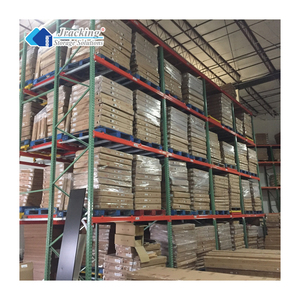
Gravity Push-Back Nested Trolley Racking Structure
Consolidates aisle space by stacking pallets on nested wheeled carts on inclined steel rails; ideal for moderate SKU rotation.
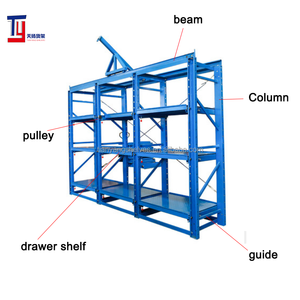
Industrial Die & Tool Mold Heavy Drawer Storage
Equipped with smooth-glide pull-out drawers and overhead crane accessibility for heavy casting tooling and injection molds.
Localized Industrial Racking Deployments Across Russia
Engineering racking configurations to withstand regional operational, structural, and climatic conditions.
E-Commerce Mega-Hubs (Moscow & St. Petersburg)
Marketplaces such as Ozon, Wildberries, and Yandex Market demand high-throughput picking facilities. Utilizing multi-tier mezzanine floorings and high-bay narrow-aisle pallet racking delivers rapid inventory replenishment and fast cart-picking cycles across sprawling floorplates.
Cold Storage & Agro-Industrial Hubs (Central & South)
From meat and dairy facilities in Voronezh and Rostov to seafood distribution centers, cold-chain operations require compact drive-in and automated radio shuttle systems. These designs eliminate unnecessary aisles, cutting energy refrigeration losses across sub-zero storage chambers down to -30°C.
Heavy Industrial, Tooling & Metallurgy (Ural Region)
Manufacturing clusters around Yekaterinburg, Chelyabinsk, and Perm handle bulky casting dies, pipe bundles, and machine spare parts. Heavy-duty die mold drawer racks and heavy cantilever structures provide stable, high-capacity storage for dense metal stock.
Key Factors Shaping Russian Intralogistics
Macroeconomic structural adjustments, import substitution, and cold-region engineering dictate warehouse equipment investments.
Transition Toward Semi-Automated High Density
With warehouse labor supply shifting, operators are moving away from wide-aisle manual forklift designs toward radio shuttle systems and AGV-ready mobile pallet racks, boosting storage density by up to 80% without incurring full AS/RS capital expenditure.
Rigorous Cold-Resilience Metallurgy Compliance
Unheated logistics warehouses in Siberia and the Far East require high-grade structural steels that preserve ductile toughness at -40°C. Structural steel grades must prevent cold brittleness and micro-fissuring along punched upright perforation holes.
Supply Chain Reorientation & Direct Factory Sourcing
Procurement teams have restructured supplier routes, turning to Tier-1 heavy-steel racking factories that provide end-to-end engineering, custom profile rolling, certified load certifications, and clear rail freight support across Eurasian trade lanes.
Why Enterprise Buyers Partner with Us
Combining heavy-gauge manufacturing capacity, certified structural calculations, and end-to-end lifecycle engineering.
12 Modern Production Bases
Our direct manufacturing infrastructure gives full control over steel procurement, continuous cold-roll forming, automated robotic welding, and uniform electrostatic powder coating lines.
Certified Structural Calculations
Every bay, upright section, and load-bearing beam connector undergoes Finite Element Analysis (FEA) testing in line with EN 15512, FEM 10.2.02, and Russian GOST R 55525 structural integrity parameters.
Dedicated Engineering Support
Our experienced intralogistics team provides customized warehouse CAD layouts, seismic anchoring analysis, clearance planning, and integration schemes for material handling equipment.
Complete Project Lifecycle Support
We provide step-by-step assembly blueprints, specialized bolt anchoring torque matrices, on-site supervision capabilities, and readily available component spares for safe operational run-times.
Frequently Asked Questions: Racking Sourcing for Russia
Direct technical answers addressing standards, cold-environment storage, logistics handling, and floor loading criteria.
1. Which design codes and quality standards apply to warehouse racking in Russia?
Industrial pallet racking is governed primarily by GOST R 55525-2017, alongside GOST R 56567-2015 for drive-in systems. International systems designed in accordance with European EN 15512 and FEM 10.2.02 are engineered to equal or exceed these load calculation methods. Racking structures must also provide clear rated-capacity signage boards mounted at visible bay ends.
2. What precautions are required for cold storage down to -30°C?
Low-temperature environments can cause brittle fracture risks in standard structural steels. We supply specialized high-resilience cold-rolled profiles (such as Q355D or low-temperature certified steel alloys) treated with hot-dip galvanization or high-adhesion polyester powder coating to withstand condensation cycles and aggressive defrosting moisture.
3. Can European (800x1200mm) and Russian (1000x1200mm) pallets share the same racking?
Yes. By configuring 2700mm beam spans for two 1000x1200mm pallets or three 800x1200mm Euro pallets, alongside heavy-duty transverse pallet support bars or electro-welded wire mesh decks, warehouses can securely accommodate both EUR and standard regional pallet footprints without deflection risks.
4. How are seismic and dynamic shock forces calculated for rack installations?
In seismically active areas (such as Southern Siberia, Lake Baikal, the Caucasus, and Sakhalin), racking designs are engineered according to GOST 30546.1. Upright footplates are expanded, structural base plates are thickened, and multi-bolt wedge anchoring is applied to absorb horizontal accelerations safely.
5. What floor slab tolerances are needed before installing high-bay racking?
For installations reaching 8 to 14 meters, concrete floor slabs should comply with DIN 18202 Table 3 (or equivalent SP 29.13330 rules). Deviations exceeding 3mm over a 2-meter gauge require leveling shims under upright footplates to maintain structural alignment and avoid secondary beam torques.
6. How are long-distance sea and railway shipments handled safely?
Uprights are bundled with protective steel strapping, corner protectors, and moisture-barrier film. Beams are palletized in fitted steel cradles with moisture-absorbing desiccants inside shipping containers to prevent abrasion damage and corrosion during multimodal rail transits.
Plan Your Next High-Performance Warehouse Racking Project
Work directly with our structural engineering team. Submit your building layout, ceiling clear heights, and pallet parameters to receive a custom CAD layout and detailed technical quote.
Get Catalog