Engineered Heavy-Duty Racking & Industrial Storage Solutions
Constructed from high-tensile Q235B and Q355B structural steel, our modular warehousing platforms are engineered for extreme weight limits, automated handling integration, and localized Tokyo earthquake regulations.
Engineering Tokyo's High-Density Warehousing: VNA Racking Dynamics
Industrial real estate in the Greater Tokyo Area (covering Shinagawa, Ota, Koto, and coastal Kanagawa) commands the highest per-tsubo rental rates across the Asia-Pacific. Learn how Very Narrow Aisle (VNA) architecture addresses severe floor constraints and stringent Japanese anti-seismic building codes.
Tokyo Bay Multi-Tenant Logistics (LPs)
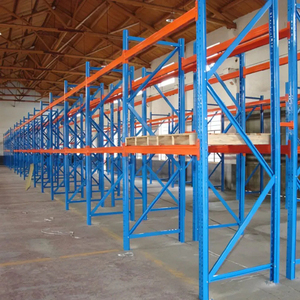
In modern multi-tenant facilities throughout Ariake, Heiwajima, and Yokohama, clear ceiling heights often reach 10 to 15 meters. Standard counterbalanced forklifts demand 3.5-meter aisles, wasting up to 60% of slab footprint. Our VNA racking restricts operating corridors to 1,600mm, reclaiming cubic capacity while maintaining 100% pallet accessibility for high-mix consumer electronics, cosmetic fulfillment, and retail cross-docking operations.
Cold Chain & Sub-Zero Storage Hubs
Refrigerated and blast-freezer facilities near Tokyo's Toyosu and Ota distribution terminals operate at extreme cost per cubic meter. VNA installations combined with stainless steel (SUS304) and high-grade zinc galvanization reduce air volume waste in -25°C cold stores. Maximizing pallet density substantially dampens energy consumption per SKU load while preventing structural thermal expansion degradation.
Automotive & Precision JIT Assembly
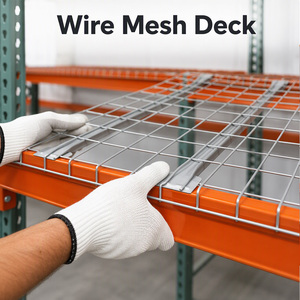
Serving Kanagawa and Tochigi automotive manufacturing corridors, high-density VNA configurations integrate directly with man-up turret trucks and AGVs. Parts buffer hubs utilize wire-guided VNA corridors with anti-drop wire mesh decking to store precision engine and powertrain modules, facilitating cycle-accurate order retrieval for high-throughput kanban lines.
Standard Pallet Racking vs. Engineering-Grade VNA Systems
Tokyo and Kanagawa fall within Japan's High Seismicity Risk Zone (Seismic Level 2 / JMA Class 6+). Racking profiles cannot simply scale vertically; they demand advanced finite element analysis (FEA), high moment-capacity baseplates, and laser-guided rail systems.
| Technical Parameter | Conventional Selective Racking | China Direct Engineered VNA System | Tokyo Intralogistics Impact |
|---|---|---|---|
| Aisle Width Specification | 3,200 mm – 3,800 mm | 1,500 mm – 1,800 mm | Reclaims up to 45% – 52% of usable floor plate |
| Maximum Frame Height | 6.0 m – 8.5 m | Up to 18.5 m | Exploits total clear height in Kanto high-bay logistics centers |
| Seismic Damping Compliance | Basic anchor bolts (100-120mm) | Enlarged Ductile Baseplates + Chemical Anchors | Calculated for JMA seismic ground acceleration >0.4g |
| Floor Flatness Requirement | DIN 18202 (Standard industrial) | VDMA 41416 / EN 15620 (Superflat Fmin 100) | Prevents high-mast sway during high-speed vertical travel |
| Forklift Guidance Mode | Free-steering manual control | Low-profile Floor Steel Rails or Wire Inductive Guide | Safeguards upright frames from mast impacts; speeds transit |
| Steel Metallurgy Specification | Commercial grade hot-rolled mild steel | Certified Q355B Cold-Rolled Structural Steel | Higher yield strength under dynamic horizontal shock loading |
Why Tokyo Logistics Operators Are Sourcing Direct from China
The Kanto logistics market is experiencing tectonic structural changes driven by the 2024 Transportation Overtime Regulations (Worker Overtime Limits) and soaring construction capex.
Mitigating the "2024 Problem" via Throughput
Japan's regulatory caps on truck driver overtime hours mandate rapid turnaround times at loading bays. Warehouses in Koto-ku, Funabashi, and Kawasaki are utilizing VNA systems to consolidate buffer bays right next to dock levelers, minimizing inter-facility transport delays through immediate vertical picking.
Bridging the Capex Gap with Direct OEM Supply
Procuring industrial racking through multi-tiered Japanese trading companies (Sogo Shosha) incurs markups ranging from 35% to 60%. By procuring directly from Tier-1 automated Chinese manufacturing hubs, operators obtain JIS/CE compliant racking manufactured on CNC roll-forming lines at primary mill prices, drastically lowering capital expenditure.
Hybrid Automation Transition (VNA + AMR)
Tokyo operators are rarely implementing all-or-nothing AS/RS due to long commissioning timelines. VNA pallet racking offers the ultimate transition step: manual man-down turret trucks operate on day one, while the mechanical tolerances and guide rails are fully compatible with Autonomous Mobile Robots (AMRs) and automated AGV trucks on year two.
Engineering Prowess, Direct Manufacturing & Global Certifications
Drawing from over six decades of intralogistics leadership, modern engineering heritage, and 12 world-class fabrication plants, we supply complete turn-key structural solutions to global supply chain leaders.
In-House Structural FEA Simulation
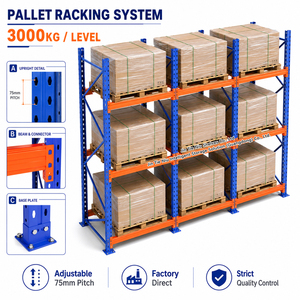
Our dedicated engineering offices perform dynamic seismic response spectrum analyses tailored specifically to your site's Japanese Building Standard Act (Kenchiku Kijun-hō) requirements. From beam deflections under 3,000kg loads to upright buckling coefficients, every structural member is mathematically verified.
Fully Automated Roll-Forming Lines
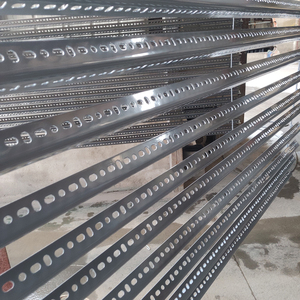
Operating continuous precision roll-forming machines with inline servo punching ensures punch tolerances within ±0.5mm across 12-meter upright lengths. Epoxy-polyester powder electrostatic coating lines ensure complete corrosion resistance even in maritime Tokyo Bay humidity.
Trusted Across 70+ Countries
Trusted by industry leaders including Renault, Würth, PepsiCo, and Schneider Electric, our supply chain and manufacturing ecosystems adhere strictly to ISO9001, ISO14001, and EN 15512 safety protocols, delivering export-ready containerized lots straight to Tokyo and Yokohama ports.
Frequently Asked Questions by Tokyo Warehouse Buyers
Critical answers covering seismic verification, customs clearance, installation, and floor flatness requirements when importing China-manufactured VNA racking into Japan.
How do Chinese VNA pallet racking frames comply with Japan's strict seismic construction codes?
What slab flatness specification (FF/FL) is required for high-mast VNA operations in Tokyo?
What is the standard shipping, customs, and port lead time from China to Tokyo / Yokohama Port?
Can we use our existing standard wooden pallets (1100x1100mm JIS standard) on VNA racking?
How are on-site assembly and professional supervision handled across the Greater Tokyo Area?
Ready to Maximize Your Tokyo Warehouse Cubic Space?
Submit your architectural drawings, ceiling clearance, and pallet specifications. Our intralogistics structural engineers will furnish a zero-obligation 2D/3D CAD layout, seismic verification study, and competitive factory-direct quote within 48 hours.