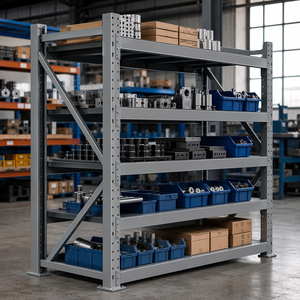
Custom OEM Storage Rack Frame | Heavy Duty Steel Welded Fabrication
- Q235B / Q355B High-Tensile Steel
- Automated Robot MIG Seam Welding
- Custom Upright Depths & Gauges
Direct from certified global manufacturing plants to New York industrial facilities. Every frame, beam, and shuttle is tailored to seismic, load, and automated material handling specifications.
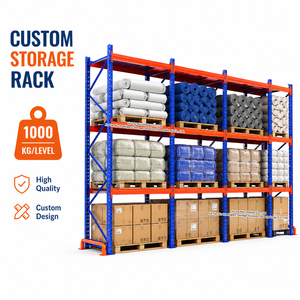
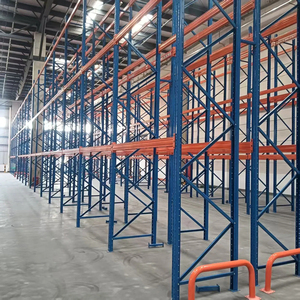
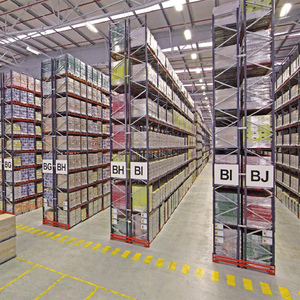
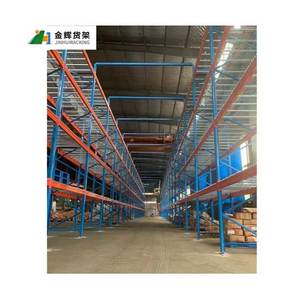
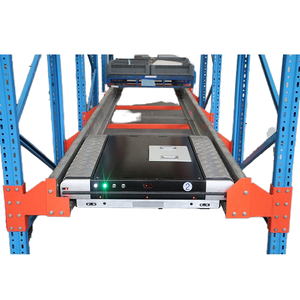
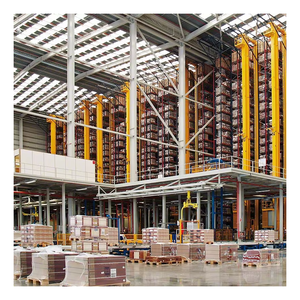
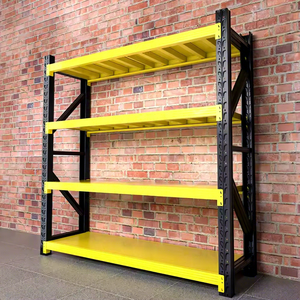
From outer-borough multi-story industrial spaces in Brooklyn and Queens to mega-distribution hubs across the Hudson Valley and Central New Jersey, footprint efficiency defines profitability.
In the New York metropolitan market, industrial warehousing space commands some of the steepest lease premiums in North America, with prime rents frequently exceeding $25 to $38 per square foot NNN across Queens, Brooklyn, Staten Island, and the Meadowlands. Logistics directors, third-party logistics providers (3PLs), and retail fulfillment networks cannot afford the wasted aisle width typical of standard counterbalance forklifts (12 to 14 feet). Very Narrow Aisle (VNA) racking systems contract operating aisles to a razor-thin 5.5 to 6.5 feet (1.65 to 1.95 meters), freeing up to 45% of floor area for extra pallet positions while utilizing vertical high-cube clearances up to 50 feet.
Applied extensively in Queens (Maspeth, Long Island City) and Brooklyn (Sunset Park). VNA setups allow maximum vertical storage per floor where floor-load capacity and column spacing are constrained. Wire-guided turret trucks guarantee collision-free travel within tight structural bays.
Serving the Hunts Point Food Distribution Center in the Bronx and secondary food distributors in Long Island. Refrigeration energy costs scale by cubic volume. VNA and radio shuttle racking concentrate refrigerated goods into dense thermal footprints, cutting HVAC bills by up to 35%.
VNA architectures deliver 100% individual pallet selectivity combined with high-reach operator-up order pickers (Man-Up VNA trucks). This allows simultaneous full-pallet retrieval at top tiers and carton picking at lower levels, fulfilling strict same-day Manhattan shipping SLAs.
Operating a turret truck or automatic stacker crane at lift heights exceeding 35 feet within a 6-foot aisle leaves virtually zero tolerance for structural deflection or floor unlevelness. A mast lean of just 1/4 inch at the base can result in multiple inches of displacement at the mast tip, leading to fatal rack impact. For this reason, New York VNA installations must conform to the stringent DIN 18202 or ACI F-min 75 to F-min 100 Superflat defined movement floor profiles.
| Racking Parameter | Standard Selective Racking | VNA Heavy-Duty System | High-Bay Radio Shuttle / ASRS |
|---|---|---|---|
| Aisle Clearance Required | 12.0 – 14.0 ft (3.6 – 4.2m) | 5.5 – 6.5 ft (1.68 – 1.98m) | 4.9 – 5.2 ft (1.50 – 1.60m) |
| Space Utilization Index | 40% – 50% floor area | 75% – 85% floor area | 88% – 95% floor area |
| Floor Flatness Standard | FF 25 / FL 20 (Standard Slab) | F-min 75 to F-min 100 (Defined Path) | Strict ACI / DIN 15185 Superflat |
| Seismic / NYC Code Standard | RMI MH16.1 / NYC BC 2022 | NYC DOB Seismic Design Category B/C | Integrated Structural Engineering PE Stamp |
| Truck Guidance Mechanism | Visual Operator Steering | Low-Profile Steel Floor Rails / Inductive Wire | Automated Laser / Magnetic Guide Bar |
Furthermore, under the 2022 New York City Building Code (NYCBC) and seismic zone criteria dictated by ASCE 7, warehouse pallet racks exceeding 8 feet in height are classified as industrial steel structures. They mandate engineered professional engineer (PE) structural calculations, base-plate anchorage pull tests, seismic load certificates, and formal NYC Department of Buildings (DOB) filing. Our factory engineering team delivers verified calculation dossiers tailored to local borough jurisdictions.
How regional logistics operations are preparing for escalating labor costs, congestion charges, and strict local emissions caps like NYC Local Law 97.
Scarcity of undeveloped land in New York has shifted focus from building new warehouses to retrofitting older 24-ft to 32-ft clear-height industrial buildings in Northern NJ and Long Island. Racking conversion from wide aisle to VNA immediately unlocks 35% to 50% more pallet slots without foundation changes.
VNA operations minimize forklift transit distances and utilize energy-efficient regenerative braking turret mast systems. When integrated with high-density automated shuttles, facilities cut lighting needs and lower internal power draw, supporting corporate compliance with New York decarbonization goals.
Tri-State enterprises are pairing fixed VNA upright installations with Autonomous Mobile Robots (AMRs) at the aisle ends. Turret trucks maintain exclusive high-speed vertical handling inside the aisle, while AMRs ferry retrieved pallets to dispatch docks, offsetting warehouse labor shortages.
Answers to common structural, permitting, and operational challenges when commissioning VNA racking in NY facilities.
In New York City, any industrial steel storage rack exceeding 8 feet in height requires a permit issued by the NYC Department of Buildings (DOB). Procurement teams must submit a plan stamped by a licensed New York State Professional Engineer (PE). The submission must verify seismic stability (under ASCE 7 and NYCBC Chapter 16), concrete anchor bolt pull-out loads, slab load capacity, and egress clearances. Our engineering department supplies complete structural PE calculations and load rating drawings for expedited DOB filing.
VNA systems concentrate heavy point loads through the upright base plates into small concrete surface areas. Typically, a reinforced concrete slab of at least 6 to 8 inches thickness with a minimum compressive strength of 3,500 to 4,000 PSI is required for high-bay systems. If your slab has insufficient thickness, our factory engineers can enlarge the structural footplate geometry and reposition heavy anchor bolts to distribute bearing stresses safely across your existing floor.
Mechanical guide rails (typically 100x50x6mm structural steel angles anchored to the floor) provide a physical barrier that prevents turret trucks from bumping into uprights. Wire guidance involves cutting a shallow channel into the center of the aisle to lay an inductive radio frequency wire. While wire guidance simplifies floor cleaning and pallet staging at low levels, mechanical guide rails provide foolproof physical protection and lower upfront installation costs in older logistics facilities.
Under NFPA 13 regulations enforced by the Fire Department of New York (FDNY), narrow aisles restrict horizontal spray patterns from ceiling sprinklers. High-bay VNA racks exceeding 25 feet storing combustible materials or plastic pallets generally require In-Rack Sprinkler Systems (IRSS) or ESFR (Early Suppression, Fast Response) ceiling heads with dedicated flue space keepers. We manufacture custom upright frames with factory-punched slots to streamline sprinkler piping installation.
Standard selective and teardrop pallet components typically ship in 2 to 4 weeks. Customized VNA heavy-duty frames, automated shuttle channels, or stainless steel systems engineered to specific warehouse clear heights require 4 to 6 weeks for production, followed by efficient ocean or land container delivery into the Port of New York and New Jersey. Project installation schedules are coordinated directly with certified regional rigging crews.
Procuring directly from our high-capacity production centers eliminates distributor markup tiers (saving 20% to 35% on capital expenditure). More importantly, factory-direct engagement gives your engineering team direct access to our structural design team, ensuring custom beam profiles, weld inspections, high-spec powder coats, and rapid replacement beam shipments without broker delays.
Combining 60 years of intralogistics mastery, automated European rolling lines, and rigorous quality control across 70+ countries.
Over 12 dedicated manufacturing bases worldwide equipped with computerized continuous roll-forming lines, automated punching centers, and robotic welding stations for structural upright frames and beams.
Every batch of steel is strictly inspected for tensile strength, elongation, and structural chemical composition. Certified to comply with international RMI, EN 15512, ISO 9001, and CE manufacturing directives.
Continuous investment in seismic simulation, dynamic load stress modeling, automated shuttle hardware testing, and warehouse management software (Easy WMS, Recognized in Gartner Magic Quadrant).
From initial DWG / Revit 3D layout simulation to seismic structural calculations and installation supervision, our in-house engineers manage your New York warehouse project from drafting board to go-live.
Direct shipping logistics into the Port of New York & New Jersey (Newark/Elizabeth) ensures reliable container delivery schedules, consolidated freight rates, and on-site assembly coordination.
Single-source manufacturing across selective pallet racking, VNA, drive-in, push-back, radio shuttle, automated stacker cranes (ASRS), and mezzanines ensures seamless integration as your business expands.