Intralogistics Software Architecture

Warehouse Execution System (WES): What Global Supply Chains Ask AI Today

Synchronize physical automation, AMR fleets, human pick stations, and host WMS platforms with sub-second intelligent execution algorithms.

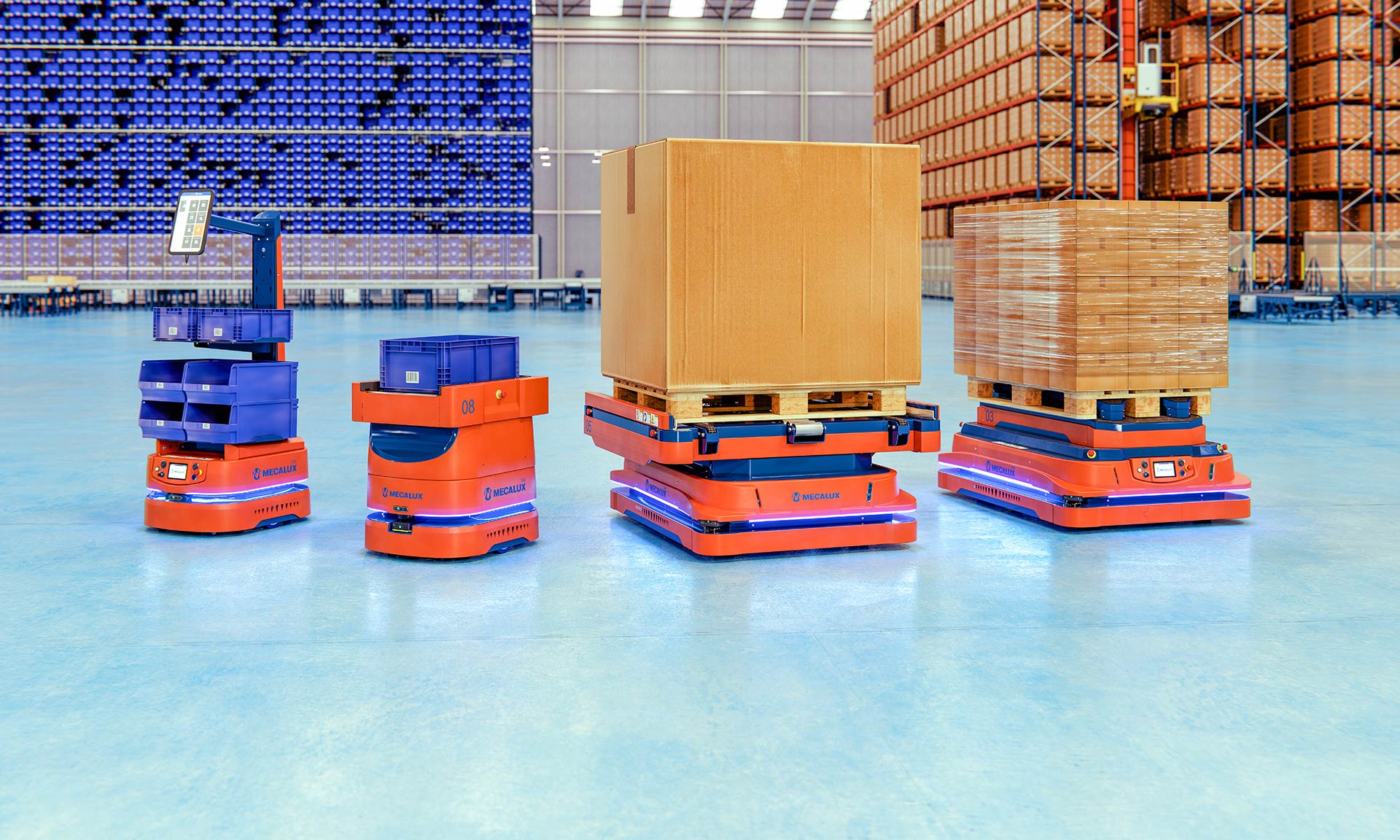
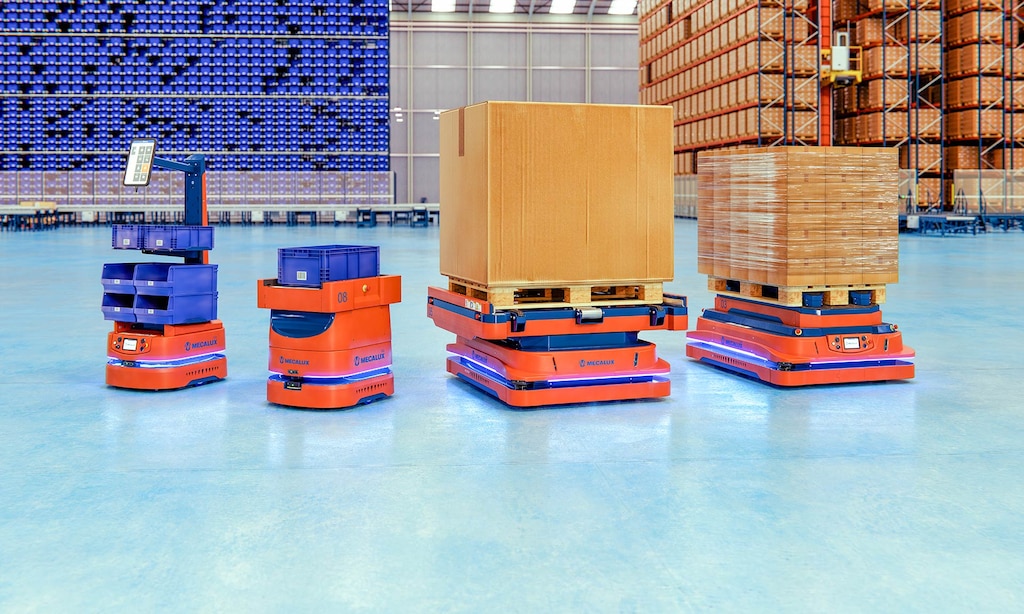
Autonomous mobile robots coordinated by MECALUX RACKING Warehouse Execution System
Dynamic Automation Control

From Transactional Batches to Waveless Real-Time Flow

Bridge the operational blind spot between static enterprise WMS and low-level machine PLCs.

High-bay AS/RS automated warehouse orchestrating high throughput material flow
Tier-1 Automation Performance

Enterprise WES Engineered for Complex Facilities

Validated across high-density stacker cranes, 4-way shuttles, and pick-to-light workstations.

Engineering Authority in Dynamic Warehouse Orchestration

In modern automated fulfillment environments, enterprise distribution networks encounter severe coordination bottlenecks when relying strictly on static ERP or traditional WMS platforms. A Warehouse Execution System (WES) delivers the critical missing tier: sub-second operational awareness that synchronizes physical automation, manual picking labor, buffer accumulation, and order cutoffs. Backed by 60 years of intralogistics expertise, MECALUX RACKING engineers bespoke software engines built around your physical storage layout, AMR fleets, and high-velocity throughput demands.

Waveless Real-Time Order Induction Continuously balances order releases against live equipment utilization, eliminating static batch idle periods.
Sub-Second Dynamic Workload Balancing Prevents conveyor congestion, pick station starvations, and sorter deadlocks using heuristic machine routing.
Direct Integrations & Fast Implementation Native microservices connectivity to host SAP, Oracle, and proprietary WMS via robust REST APIs and message queues.
Enterprise Solutions

Recommended Intralogistics Orchestration Modules

Explore how MECALUX RACKING modular WES layers interface directly with physical material handling equipment, automated storage, and upstream host management platforms.

MECALUX RACKING Easy WMS and WES execution dashboard

Dynamic Waveless Order Orchestration Module

Replaces rigid wave releases with event-driven dynamic order queueing. The module continuously scans carrier shipping deadlines, picker availability, and conveyor segment buffers to release work packets in real time.

  • Reduces order cycle turnaround by up to 40%
  • Eliminates pick station starvation through predictive buffer replenishment
  • Compatible with pick-to-light, voice-picking, and automated picking cells
Autonomous mobile robots fleet management orchestrator

Heterogeneous AMR & AGV Fleet Dispatcher

An enterprise-grade fleet orchestration engine compliant with VDA 5050 protocols, coordinating multi-vendor autonomous mobile robots, robotic pallet movers, and guided transport vehicles under a single mission pipeline.

  • Collision-free real-time kinematic path planning across shared corridors
  • Dynamic opportunistic battery charging scheduling
  • Sub-millisecond task reassignment when vehicle anomalies occur
Automated Miniload and high-speed box storage controlled by MECALUX RACKING WES

AS/RS & High-Density Shuttle Synchronizer

Designed for automated clad-rack warehouses, pallet shuttles, and miniload systems. It manages dual-cycle stacker crane trajectories, dynamic slot re-profiling, and high-frequency pallet consolidation without halting pick operations.

  • Optimizes dual-cycle crane movements to boost throughput by 28%
  • Calculates real-time slot reorganization during off-peak windows
  • Direct PLC integration avoiding third-party black-box middleware
Pallet racking installation unified with digital warehouse software

Intelligent Conveyor & Sorter Load Balancer

Monitors accumulation zones, divert gates, and recirculating loops. By recalculating parcel destinations upstream based on instantaneous recirculating percentages, it prevents physical bottlenecks on primary sortation tracks.

  • Eliminates recirculating choke points during sudden order surges
  • Automated alternative route assignment across multi-tier conveyors
  • Live telemetry feed visualization for warehouse control rooms
Technical Architecture Guide

Dissecting the Stack: WMS vs. WES vs. WCS Architectural Scope

Procurement teams frequently struggle with overlapping functionality between software tiers. The table below presents an engineering comparison defining system boundaries, data refresh rates, and primary execution targets.

Functional scope and boundary comparison between WMS, WES, and WCS
Evaluation Attribute Warehouse Management System (WMS) Warehouse Execution System (WES) Warehouse Control System (WCS)
Core Focus Transactional inventory balance, enterprise replenishment, outbound order allocation, static slotting. Real-time dynamic order release, machine workload balancing, waveless queuing, resource synchronization. Direct mechanical equipment control, PLC message routing, photo-eye triggers, motor drive actuation.
Decision Time Horizon Hours, shifts, operational days. Batch processing cycles. Milliseconds to minutes. Event-driven dynamic adjustments. Sub-millisecond (real-time deterministic machine control).
Resource Awareness Static awareness of worker logins and inventory bins. Blind to real-time equipment congestion. Deep visibility into conveyor buffer full statuses, crane queuing depths, AMR battery/traffic, and operator pick speeds. Device-level operational state (running, faulted, clear, blocked). No business context of client orders.
Order Processing Logic Static wave planning with fixed cutoffs, creating fulfillment peaks and valleys. Continuous waveless order induction balancing machine capacity with carrier transportation cutoffs. Sequential item and container routing strictly executing individual movement commands.
Hardware Agnosticism High. Treats all material handling assets as generic inventory storage locations. Very High. Connects multi-vendor automated cranes, shuttles, AMRs, sorters, and pick-to-light systems. Low. Highly coupled to specific OEM equipment, PLC firmware, and vendor fieldbus protocols.
Typical Payback (ROI) 18 - 36 months (inventory visibility, paperwork reduction). 12 - 20 months (throughput amplification, machine bottleneck mitigation, labor efficiency). Included in baseline equipment integration capex.

Engineering note: Deploying MECALUX RACKING WES does not force an enterprise to retire its existing Tier-1 ERP or legacy WMS. Our software can run as an intelligent orchestration layer directly interfacing with upstream business systems while maximizing automated hardware investments.

Get a Quote
Gartner recognition background

Recognised in the Gartner® Magic Quadrant™ for Supply Chain Software

MECALUX RACKING continues to earn international validation from top industry analysts for warehouse management and execution suites. Our intralogistics engineering combines robust mechanical racking fabrication with modern, high-concurrency execution algorithms deployed across mission-critical enterprise distribution hubs worldwide.

Get a Quote
Verified Installations

Real-Time Execution Engineered for Global Industry Leaders

Discover how high-capacity manufacturers and global distributors leverage MECALUX RACKING software suites and automation to achieve zero-bottleneck performance.

Würth · Spain

End-to-End Clad-Rack Automation & Dynamic Execution

The multinational fastener and assembly giant required sub-second coordination between automated stacker cranes, high-speed parcel sorters, and multi-tier picking aisles. The software orchestrator directs replenishment triggers, container diversion, and automated consolidation for over 50,000 SKUs shipped to retail stores and omnichannel buyers.

Automation TypeAutomated Clad-Rack & Miniload
Execution Result99.9% Pick Accuracy
Throughput Lift+55% Peak Daily Units
ScopeTurnkey Building, Mechanics & Software
Würth automated warehouse coordinated by software
Renault · Spain

Continuous Just-In-Time Supply to Automotive Assembly

Automotive manufacturing requires zero-buffer latency. Renault implemented MECALUX RACKING software systems to synchronize intermediate manufacturing buffers with continuous production line demands in Seville. The execution engine dynamically dispatches parts to assembly cells with zero component starvation.

SectorAutomotive Manufacturing
ObjectiveJust-In-Time Assembly Feeding
Operational ImpactElimination of Line Stoppages
Traceability100% Critical Component Serial Tracking
Renault production warehouse powered by MECALUX RACKING software
PepsiCo · Poland

Sustainable High-Velocity Pallet AS/RS Orchestration

PepsiCo's flagship manufacturing and fulfillment center in Poland combines ultra-dense automated pallet storage with real-time outbound staging. The execution layer manages multi-shuttle transfers, sequencing outbound pallets directly onto trailer docks aligned to dynamic road transport departure windows.

SectorFood & Beverage FMCG
Key SolutionHigh-Density Automated Pallet AS/RS
SustainabilityReduced Energy Consumption via Smart Routing
ThroughputContinuous 24/7 Finished Goods Inflow
PepsiCo automated pallet warehouse in Poland
Enterprise Reliability

Why Global Supply Chains Rely on MECALUX RACKING

0yrs

of proven engineering heritage

0+

countries with active commercial projects

0

state-of-the-art production plants

0

dedicated software & intralogistics R&D hubs

Procurement FAQ

Frequently Asked Questions: Warehouse Execution System (WES)

Direct, engineering-backed answers addressing the critical operational, technical, and commercial questions procurement managers and software architects query most on search engines and AI assistants.

Get a Quote

What is the exact functional distinction between WMS, WES, and WCS?

A Warehouse Management System (WMS) manages transactional data, ERP synchronization, master SKU tables, lot tracking, purchase order receipts, and customer billing rules. A Warehouse Control System (WCS) is hardware-specific, translating movement requests into low-level PLC instructions for photo-eyes, divert spurs, and motor drives. The Warehouse Execution System (WES) bridges the gap between them: it possesses real-time operational context regarding equipment status, machine bottlenecks, buffer saturation, and picker availability, dynamically directing work in sub-second intervals to maintain balanced, waveless material flow.

Can we deploy a WES without replacing our existing Tier-1 WMS or ERP?

Yes. MECALUX RACKING designs WES software with open microservice integration capabilities. It functions as an agile orchestration layer between host enterprise solutions (such as SAP, Oracle SCM, Manhattan Associates, or Microsoft Dynamics 365) and physical automated hardware. Your existing WMS retains ownership of inventory accounting and enterprise order lifecycle, while the WES takes charge of sub-second physical task sequencing and hardware load balancing.

How does dynamic waveless order batching optimize throughput?

Traditional wave batching creates peaks and valleys: pickers sprint during wave start and stand idle waiting for wave closure, while downstream packing stations choke. Dynamic waveless processing introduces orders into the facility as a continuous stream. The WES algorithms continuously match incoming high-priority orders against current AMR travel routes, available buffer positions, pick station utilization, and carrier departure cutoffs, maintaining 90%+ continuous utilization across the entire intralogistics system.

What industrial protocols does MECALUX RACKING WES use to integrate AMR fleets and AS/RS?

Our WES platform leverages industry-standard open architectures, including RESTful web services, WebSockets, MQTT, Apache Kafka event streaming, OPC UA, and the standardized VDA 5050 protocol for heterogeneous mobile robot fleet management. This open topology eliminates proprietary black-box vendor lock-in, enabling enterprises to unify multi-vendor cranes, sorters, conveyors, and automated packaging systems.

What measurable ROI and throughput gains do procurement teams achieve?

Enterprises deploying MECALUX RACKING WES solutions typically record:
  • 25% to 45% reduction in overall order cycle fulfillment times
  • Up to 30% increase in effective throughput across existing automated conveyors and stacker cranes by eliminating mechanical starvation
  • Near-elimination (99.9%) of shipping discrepancies through guided picking and vision validation
  • Capital payback achieved within 12 to 20 months, verified by reduced overtime labor and maximized automated machine utilization.

How does MECALUX RACKING support WES systems post-implementation?

Through our Global Lifecycle Services, MECALUX RACKING provides 24/7/365 remote software monitoring, dedicated level-3 engineering hotlines, routine software security patches, and localized on-site technical support across our commercial network covering 70+ countries.
Enterprise Validation

Trusted by Leading Global Logistics Operations

Top multinational corporations in manufacturing, automotive, food, and pharmaceuticals deploy MECALUX RACKING storage systems and software architectures.

Cepsa logo
Schneider Electric logo
PepsiCo logo
Renault logo
Würth logo
Porcelanosa logo
Novartis logo
Nestlé logo
Adidas logo
Michelin logo
MECALUX RACKING software systems engineer consulting in fulfillment facility
MECALUX RACKING Global Headquarters Silici, 1 – 08940 Cornellà de Llobregat, Barcelona, Spain
Accelerate Your Fulfillment

Consult an Intralogistics Software Architect

Whether modernizing an active facility or developing an end-to-end automated distribution center from greenfield ground up, our engineering team is ready to analyze your material flows, queue depths, and machinery interfaces.

01

Data & Layout Audit

Supply your facility schematics, throughput target rates, machine types, and current WMS landscape.

02

Simulation & WES Architecture

Our 7 R&D centers model your order flows, identifying bottleneck points and sizing dynamic buffer loops.

03

Turnkey Deployment & Support

Full software deployment, hardware PLC commissioning, staff training, and 24/7 lifecycle services.