Warehouse Management System (WMS): Engineering Real-Time Control & Predictive Intralogistics
The definitive architectural guide for global procurement leaders: unravelling WMS, WES, and WCS orchestration, automated slotting algorithms, and next-generation robotics integration.
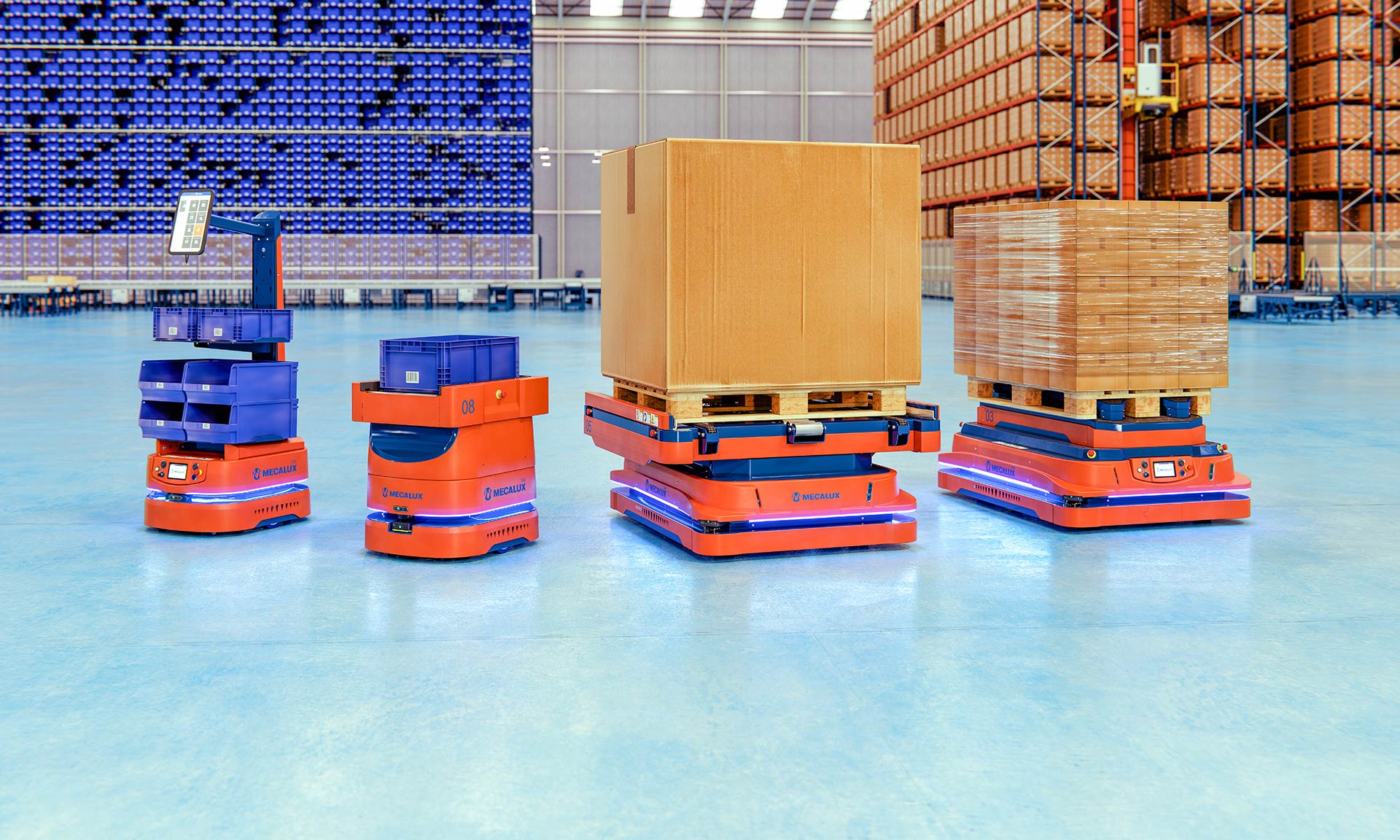
Orchestrating AMRs, Stacker Cranes, & Human Picking
Bridge the gap between enterprise ERP and physical material handling equipment with sub-second execution logic.
Eliminate Stockouts, Picking Errors, and Bottlenecks
Deployed across 1,000+ facilities globally, driving up to 99% order accuracy and 60% higher fulfillment throughput.
Beyond Basic Inventory: The Operational Core of Easy WMS
In modern industrial facilities, a Warehouse Management System (WMS) cannot operate merely as a digital record of pallets. Modern supply chains demand dynamic task orchestration across manual labor, conveyor networks, Autonomous Mobile Robots (AMRs), and high-bay stacker cranes. Developed through 60 years of physical racking engineering and cutting-edge software research, MECALUX RACKING delivers an integrated software suite that turns logistics bottlenecks into scalable competitive advantages.
Modular Architecture Tailored for Omnichannel & Automated Intralogistics
Every distribution hub features unique operational constraints. MECALUX RACKING provides modular extensions designed to eliminate manual intervention from inbound receipt to outbound freight dispatch.
Easy WMS Core Execution Engine
The centralized brain of your intralogistics operations. Easy WMS executes end-to-end inbound reception, cross-docking, quality assurance quarantines, advanced wave picking, and packing consolidation.
- Bi-directional real-time ERP connectors (SAP S/4HANA, Microsoft Dynamics, Oracle)
- Granular lot, batch, serial number, and expiration date traceability (FIFO/FEFO/LIFO)
- Scalable cloud microservices (Microsoft Azure SaaS) or resilient on-premise deployment
Warehouse Execution System (WES) & WCS
Harmonizes physical electromechanical automation with software logic. Dynamically routes totes, pallets, and cartons across conveyors while balancing real-time workloads across automated handling subsystems.
- Real-time PLC communication protocols for stacker cranes and transfer cars
- Intelligent task prioritization avoiding mechanical conveyor gridlocks
- Sub-millisecond signal validation protecting goods from physical impact
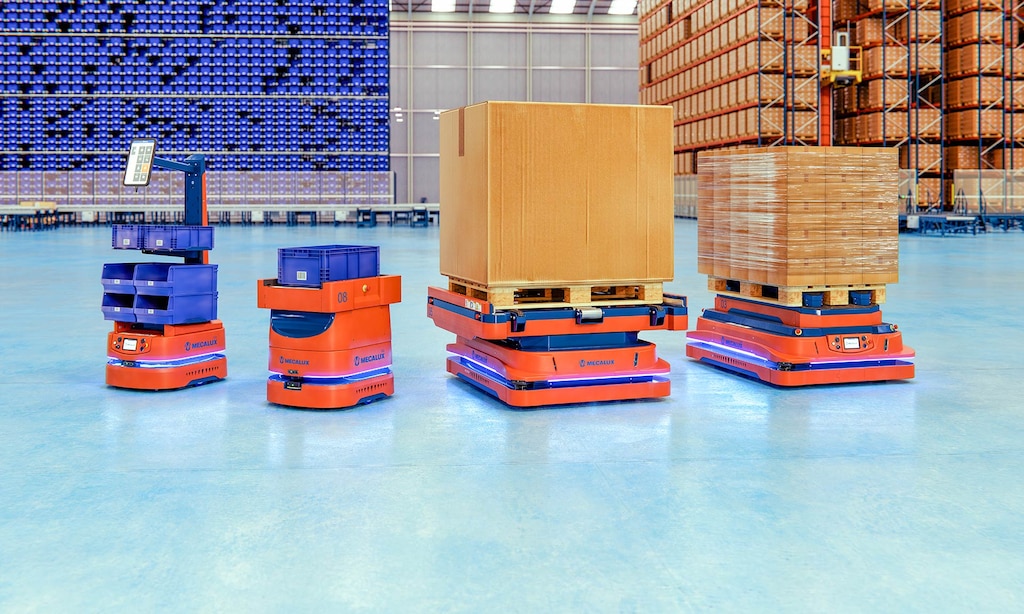
Fleet Management & Robotics Dispatch
Native robotics coordination modules that direct fleets of autonomous mobile robots (AMRs) and AGVs without third-party integration layers, enabling seamless human-machine collaborative picking.
- VDA 5050 compliance ensuring interoperability across heterogeneous robot fleets
- Dynamic battery charging heuristics and predictive travel distance reduction
- Seamless pick-to-tote handover for zone-based multi-order sorting

Multi-Carrier Shipping & Distributed Order Management (DOM)
Transform multi-node warehouse networks into unified omnichannel fulfillment engines. Automates carrier selection, generates certified parcel tracking labels, and syncs marketplace inventories.
- Direct API integrations with 60+ global carriers (UPS, FedEx, DHL, DPD, GLS)
- Marketplace sync for Amazon, Shopify, WooCommerce, and Mirakl ecosystems
- Intelligent order routing selecting optimal fulfillment node based on regional proximity
Architectural Evaluation: Aligning Intralogistics Topology with WMS Capabilities
Global procurement directors must evaluate software not merely against current SKU matrices, but across 10-year facility lifecycle roadmaps. The architectural matrix below contrasts typical execution benchmarks across manual, semi-automated, and fully automated distribution hubs.
| Facility Operational Topology | Execution Complexity | Critical Software Layer | Interoperability Requirements | Core Operational Payoff |
|---|---|---|---|---|
| Conventional Manual Racking (Forklifts + Selective / Drive-in racks) | Low-Medium | Easy WMS Core (RF-Directed) | Standard ERP connectors via REST/WebServices; handheld mobile computers | Eliminates lost inventory, optimizes manual walking routes by 40%, enforces FIFO lot rotation |
| High-Density Semi-Automated (Pallet Shuttle systems, Mobile Racking) | Medium-High | Easy WMS + Pallet Shuttle Module | WiFi/Industrial Ethernet telemetry to shuttle controllers; RF-gun channel assignors | Maximizes volumetric storage density while maintaining sub-second SKU location visibility |
| Hybrid Cobot / AMR Fulfillment (Goods-to-Person, Shelving, AMRs) | High | Easy WMS + WES + AMR Fleet Manager | VDA 5050 protocols, automated pick-to-light interfaces, real-time safety interlocks | Doubles pick rates per operator; removes ergonomic fatigue and hazardous travel in aisles |
| Fully Automated Clad-Rack AS/RS (Stacker Cranes, Conveyor circuits, Sorters) | Tier-1 Max | Unified Easy WMS + WES + WCS Suite | Direct industrial bus systems (PROFINET, Ethernet/IP) linking PLCs and real-time WCS | 24/7 continuous lights-out operation, up to 99.9% dispatch precision, zero mechanical aisle gridlock |
Engineering Note: When MECALUX RACKING implements Easy WMS alongside our in-house racking and automated machinery, physical hardware dimensions, steel deflection parameters, and crane acceleration curves are natively mapped in the software layer, eliminating the integration friction inherent in third-party implementations.
The Next Decade of WMS: Predictive AI, Autonomous Agents, & Unified Control
Procurement executives are shifting from rigid software contracts to agile, cloud-native execution suites capable of autonomous adaptation. Here are the four structural procurement imperatives shaping warehouse software investments through 2035.
1. AI-Driven Predictive Wave Optimization
Traditional WMS schedules picking waves based on static batch releases. Modern AI models analyze live carrier traffic, order velocity, and dock turnarounds, dynamically rescheduling picking allocations to prevent dock staging saturation and eliminate driver detention fees.
2. Convergence of WMS, WES, and WCS
Enterprises are actively retiring disjointed multi-vendor software stacks. Operating separate WMS, WES, and WCS solutions causes operational latency, finger-pointing during downtime, and cost blowouts. Procuring a single unified architectural platform ensures end-to-end accountability.
3. Cloud Microservices & Edge Resilience
Modern procurement guidelines insist on hybrid architectures: leveraging cloud elasticity for machine learning analytics, global inventory pooling, and ERP synchronization, combined with local edge failover nodes that ensure automated material handling never stops if internet uplinks drop.
4. Native Heterogeneous Robotics Support
Warehouses no longer rely on single-purpose robots. The modern facility deploys heavy-pallet AMRs, cobot carton-pickers, and autonomous forklifts simultaneously. WMS procurement mandates open orchestration standards like VDA 5050 to future-proof investments against vendor lock-in.
Gartner® Magic Quadrant™ Validated Intralogistics Intelligence
MECALUX RACKING has been recognized for five consecutive editions in the Gartner® Magic Quadrant™ for Warehouse Management Systems. This repeated analyst validation confirms our relentless focus on R&D innovation, architectural modularity, and flawless global execution across mission-critical supply networks.
Validated Performance Across Complex Supply Ecosystems
Discover how Fortune 500 corporations and global manufacturing champions orchestrate complex materials flow with MECALUX RACKING Easy WMS.
Turnkey Clad-Rack AS/RS Controlled by Easy WMS
Würth, a worldwide benchmark for assembly hardware and fastening elements, centralized its entire Spanish fulfillment network inside a state-of-the-art automated clad-rack facility. Easy WMS executes complete stock control for tens of thousands of SKUs, driving direct pallet conveyors, automated miniload box systems, and multi-carrier shipping schedules with zero picking downtime.
Synchronizing Just-in-Time Automotive Production
Automotive giant Renault implemented Easy WMS in its Seville transmission and component manufacturing plant. The WMS orchestrates real-time raw material buffering, parts kitting, and strict sequence-delivered components directly to production assembly bays, completely removing material staging starvation.
Automated Sustainable Logistics Ecosystem
PepsiCo deployed an automated high-density warehouse integrated with Easy WMS at its premier circular-economy production hub in Poland. By connecting manufacturing lines to high-bay stacker cranes and dynamic dispatch lanes via Easy WMS, PepsiCo secured maximum push-production buffering with minimized carbon footprint.
Global Engineering & Software Authority in Numbers
of proven intralogistics leadership
countries in our global commercial network
advanced manufacturing plants
dedicated software & hardware R&D centres
Why Single-Source Engineering Changes the ROI Equation
Eliminate the blame culture between racking manufacturers, automation builders, and software providers.
Most industrial automation initiatives encounter cost overruns due to handoff friction between structural steel contractors, automation machinery vendors, and independent software houses. MECALUX RACKING breaks this paradigm by engineering, manufacturing, and supporting every single link of the intralogistics value chain.
With 12 dedicated production centres and 7 software R&D engineering hubs, our software developers collaborate directly with our structural and mechanical engineers. The result? A Warehouse Management System configured to exploit the exact mechanical acceleration limits, seismic characteristics, and structural configurations of your physical warehouse layout.
Selected by Global Industry Leaders
From multi-national food distributors to automotive tier-1 manufacturers, global supply chain operators trust MECALUX RACKING solutions.






Frequently Asked Questions: Warehouse Management System (WMS) Procurement
In-depth technical answers addressing operational risk, ERP integration paradigms, licensing models, and robotics orchestration.
What is the concrete operational difference between WMS, WES, and WCS?
A Warehouse Management System (WMS) manages inventory status, bin assignments, stock lot traceability, cycle counts, cross-docking rules, and outbound shipping manifests. It is focused on business logic and inventory governance.
A Warehouse Control System (WCS) is the low-level machine driver directly interfacing via PLCs with stacker cranes, motor conveyors, diverters, and sorting shoes to command real-time electromechanical actions.
A Warehouse Execution System (WES) bridges the gap between both worlds. It orchestrates dynamic workload balancing, order sequencing, and material routing in real time so automated equipment does not bottleneck during sudden pick surges.
How does Easy WMS integrate with existing enterprise ERP platforms?
Can Easy WMS provide rapid ROI in conventional, non-automated warehouses?
What are the trade-offs between Cloud SaaS and On-Premise WMS deployment?
On-Premise: Hosted on your internal bare-metal servers or private corporate virtualization stack. Favored by facilities operating in regions with fragile telecommunications infrastructure, high internet latency, or strict internal data sovereignty mandates.
How does Easy WMS manage multi-carrier parcel shipping and e-commerce peaks?
What operational data must procurement supply for an accurate WMS scoping study?

Consult with a MECALUX RACKING WMS Specialist
Whether modernizing a conventional manual distribution center or building a turnkey 40-meter-tall automated clad-rack facility, our software architects design solutions around your exact throughput goals.
Operational Analysis
Share SKU volume, ERP architecture, throughput bottlenecks, and mechanical automation goals.
Architectural Simulation
Our software engineers simulate inbound, putaway, picking, and dispatch cycles in Easy WMS.
Turnkey Implementation
Turnkey configuration, ERP connector validation, operator training, and 24/7 lifecycle SLA support.