Certified Heavy-Duty Storage Racks & Automated Systems
Precision-rolled cold steel systems engineered in compliance with EN 15512, ANSI MH16.1, and AS 4084 standards, customized for high-volume parts storage, tote picking, and automated distribution.
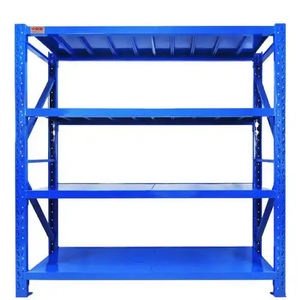
Mracking 4-Level Boltless Angle Steel Shelving Rack White/Black Corrosion Protection Freely Shelves Stacking Racks Shelves
- Load: 150 - 350 kg/layer
- Boltless slot-in assembly
- Powder coating with epoxy-polyester
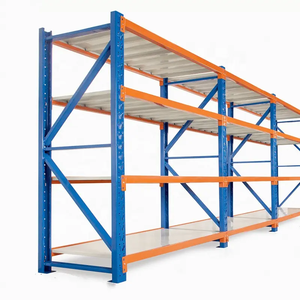
Stacking Long Span Shelving Storage Metal Shelf Rack Assembly Shelves For Warehouse Heavy Duty
- Load: 500 - 1,200 kg/tier
- Q235B cold rolled high-grade steel
- Multi-tier mezzanine convertible
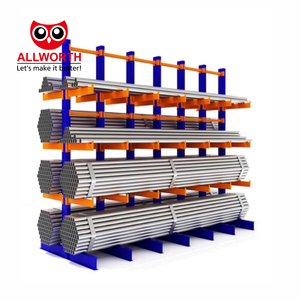
Best Price High Quality Carbon Steel Material Cantilever Style Metal Rack
- Load: Up to 4,000 kg/arm
- Single/double-sided configurations
- For long tubes, timber & heavy packs
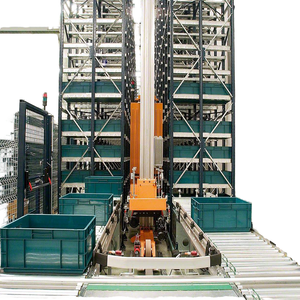
Automatic Picking System Heavy Duty Pallet Rack Automated Storage Asrs Labor Saving Retrieval Racking System ASRS
- Height: Clear mast up to 40 meters
- 24/7 autonomous dual-cycle crane
- WMS/WCS native interoperability
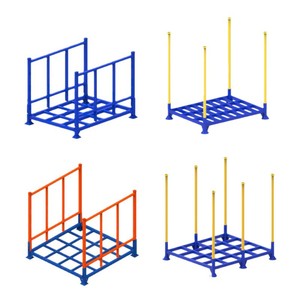
Steel Tube Foldng Stacking Rack, Fabric-Covered Rack, Modular Flexible Rack Units, Cold Storage Shelves, Stacking Racks
- Foldable 1:4 return shipping ratio
- Load: 1,000 - 2,000 kg capacity
- Cold storage rated to -30°C
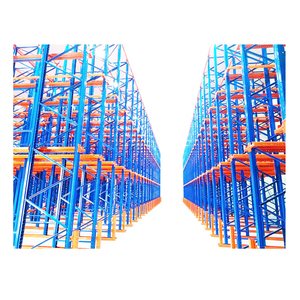
High Quality Shelves Heavy Duty Push Back Racking Cold Rolled Steel Selective Adjustable Beam Warehouse Storage Pallet Rack
- 2 to 6 pallets deep dynamic gravity
- LIFO rotation for medium-turnover SKUs
- Eliminates dedicated forklift entry aisles
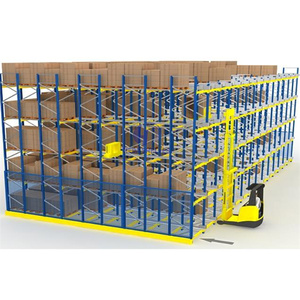
High-Density Shuttle Rack System Asrs 4-Way Shuttle Racking
- Multi-directional automated navigation
- 90%+ cubic building utilization
- High-speed supercapacitor power cell
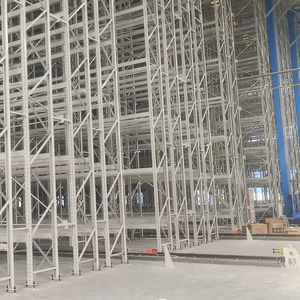
1000kg Warehouse Rack System with High Density Layout
- Verified 1,000 kg safe working load
- Seismic reinforcement cross-bracing
- Heavy bin and container storage shelf
Engineering Heavy-Duty Bin Storage Racking for Modern Distribution Resilience
In contemporary high-throughput supply chain networks, the procurement of warehouse storage racking has transitioned from simple commodity hardware purchasing to a critical systems-engineering discipline. Global facilities managing diverse small-parts inventories, automotive subassemblies, industrial hardware, and e-commerce fulfillment hubs face unprecedented pressure to consolidate footprints while driving picking velocity. Heavy-duty bin storage racking systems—engineered specifically to support concentrated bin loads, steel containers, and plastic totes ranging from 150 kg up to 1,500 kg per storage plane—form the vital structural backbone of this operational shift.
Chinese manufacturing excellence in intralogistics has evolved far beyond raw material cost advantages. Modern Chinese Tier-1 racking manufacturers utilize continuous cold roll-forming lines, automated laser profiling, and closed-loop robotic welding to manufacture upright columns and load beams from high-tensile structural carbon steels (predominantly Q235B and Q355B grades). Every profile undergoes rigorous Finite Element Analysis (FEA) and dynamic live-load testing in full compliance with European standard EN 15512, American Rack Manufacturers Institute (RMI MH16.1), and Australian standard AS 4084.
Engineering Metric Definition: Heavy-duty bin racking integrity is fundamentally governed by beam deflection limits (strictly capped at L/200 for standard manual operations and L/250 to L/300 for robotic and automated mini-load interfaces) and column Euler buckling factors under concentrated asymmetric live loads.
Structural Metallurgy and Upright Profile Mechanics
The load-bearing reliability of an industrial bin rack begins with structural geometry. Unlike standard lightweight commercial shelving, heavy-duty bin racking columns feature an Omega (Ω) or multi-bend closed-profile configuration. These multiple cold-formed return bends introduce localized work hardening at corner radii, significantly increasing the section modulus and polar moment of inertia without adding dead-weight tonnage.
To prevent catastrophic rack collapse caused by unexpected fork-truck impacts or bin drops, beam connectors utilize 3-claw or 4-claw forged suspension brackets designed with self-locking wedge tapers. When loaded, gravitational force pulls the connector tighter into the upright perforations (often engineered at 50mm or 75mm standardized pitch intervals), eliminating horizontal racking sway and ensuring dynamic stiffness across longitudinal bay runs.
Future Procurement Trends in Industrial Storage Racking (2025–2030)
Actionable intelligence for logistics executives, procurement directors, and warehouse architects navigating automation transitions and capital equipment lifecycle investments.
1. Convergence with Autonomous Mobile Robots (AMRs)
Traditional static bin racking is rapidly giving way to AMR-compatible hybrid layouts. Procurement teams now specify ground-level clearance tolerances, magnetic tape / 2D matrix floor integration, and standardized pick-station cantilever portals. Warehouses increasingly procure low-level bin storage integrated with Autonomous Case-Handling Robots (ACRs) to achieve 400+ lines/hour picking speeds without human pickers navigating aisles.
2. Total Cost of Ownership (TCO) Over Upfront CapEx
Leading international buyers in North America, Europe, and Australia have shifted procurement evaluation models. While Chinese FOB pricing remains globally competitive, purchasing specifications now weigh zinc electro-galvanization vs. hot-dip galvanizing, electrostatic hybrid epoxy-polyester coatings tested to 500+ salt-spray hours (ASTM B117), and seismic compliance certification to lower insurance premiums and eliminate structural retrofitting costs.
3. High-Density Modular Clad-Rack & 4-Way Shuttles
Skyrocketing land acquisition and warehouse construction costs have accelerated the demand for high-bay rack-supported buildings (clad-rack structures) where racking uprights support the exterior wall and roof cladding. In parallel, 4-Way pallet and tote shuttles are displacing standard drive-in racks by providing up to 90% cubic utilization with intelligent FIFO or LIFO dynamic inventory control operated by central WCS systems.
Industrial Heavy-Duty Storage System Selection Matrix
A comparative structural evaluation matrix to assist engineering and procurement teams in matching operational throughput with optimal storage density.
| System Architecture | Typical Load Capacity | Cubic Space Utilization | Direct SKU Accessibility | Picking Speed / Throughput | Optimal Application Scenario |
|---|---|---|---|---|---|
| Heavy Longspan Shelving | 500 – 1,200 kg / level | Medium (50-60%) | 100% Immediate | Manual (60-110 picks/hr) | High-SKU spare parts, automotive maintenance, retail distribution |
| Heavy Push-Back Racks | 1,000 – 1,500 kg / pallet | High (70-80%) | Per Lane (LIFO) | Forklift (30-45 cycles/hr) | Cold storage, medium-rotation bulk SKUs, raw materials |
| 4-Way Automated Shuttle | 500 – 1,500 kg / carrier | Maximum (85-92%) | Deep lane (WMS controlled) | Automated (70-130 moves/hr) | High-throughput distribution, frozen food, pharmaceutical buffers |
| Automated AS/RS Mini-Load | 50 – 350 kg / bin or tote | Maximum (Up to 40m) | 100% Automated Access | Rapid (250-450 cycles/hr) | Electronics components, precision hardware, high-value small parts |
| Heavy Cantilever Racks | Up to 4,000 kg / arm | Medium (Linear) | 100% Clear Access | Forklift / Crane direct | Extruded aluminum, steel bars, lumber, continuous sheet crates |
Why Tier-1 Global Supply Chains Choose Our China Manufacturing Base
Combining 60 years of intralogistics manufacturing heritage, in-house structural engineering, and end-to-end quality assurance certified by international bodies.
In-House Structural Engineering
Over 80 dedicated structural and mechanical engineers conducting site seismic load calculations, FEA deflection simulations, and certified 3D CAD/BIM layouts for global regulatory approvals.
Direct Mill Manufacturing
12 advanced production centres equipped with 40+ precision continuous roll-forming lines, automated laser cutting, and closed-loop electrostatic powder coating booths ensure total quality control.
Global Commercial Network
Exporting to more than 70 countries worldwide with dedicated engineering support hubs, multilingual project managers, and localized commissioning technicians across Europe, Americas, and APAC.
Software & Lifecycle Support
From initial facility audits and load certification plaques to proprietary WMS/WCS integration and lifelong rack safety inspection services in accordance with EN 15635 protocols.
Frequently Asked Questions: Heavy-Duty Bin Racking Procurement
Technical and commercial answers compiled by senior intralogistics project engineers to guide cross-border warehouse development.
What steel grades and mill standards are used in heavy-duty bin racking fabrication?
We strictly utilize certified hot-rolled coil and cold-rolled steel meeting GB/T 700 Q235B (equivalent to ASTM A36 / EN 10025 S235JR) and Q355B (equivalent to S355JR) for structural uprights and primary load-bearing box beams. Mill test certificates (MTC 3.1) verifying chemical composition and tensile strength are provided with every export shipment batch.
How do you calculate seismic zone ratings and floor anchor requirements?
Every export racking project is engineered against the project site's seismic acceleration parameters (such as USGS or Eurocode 8 seismic zone coefficients). Baseplates are sized to transfer moment loads into the warehouse slab without exceeding allowable concrete shear and bearing stress, utilizing high-tensile wedge anchors tested to ACI 355.2 standards.
What surface coatings are recommended for sub-zero cold chain storage facilities?
For sub-zero cold storage down to -30°C, we recommend hot-dip galvanization (HDG in compliance with ISO 1461) with minimum zinc coating thickness of 65–85 μm, or specialized cold-resistant thermosetting epoxy coatings that retain elasticity and eliminate coating embrittlement and micro-cracking under prolonged thermal contraction.
Can standard heavy-duty bin racking be retrofitted for automated AS/RS or AGV operations?
Yes. Our modular upright profiles feature standardized CNC punch spacing designed for easy integration of photoelectric sensor brackets, tote drop-off cantilever brackets, guided inductive wire tracks, and crane top-guide rails. Our engineering team routinely supports automation retrofits in existing brownfield warehouses.
How are heavy bin racks packaged to ensure zero transit damage during sea freight?
Upright frames and long beams are packed in tailored steel-channel bundling cradles, wrapped with multi-layer waterproof stretch film, and interleaved with corrugated buffer pads. All accessories, safety pins, and baseplates are sealed in reinforced wooden cases labeled with ISPM 15 heat treatment stamps to streamline customs clearance and protect precision tolerances.
What project parameters are required to generate an engineering quotation and layout drawing?
To deliver a preliminary structural proposal within 24 hours, our engineering team requires: (1) Building architectural layout with clear ceiling heights and column grids; (2) Bin/tote or pallet dimensions (W x D x H) and maximum gross weight; (3) Desired turnover methodology (FIFO or LIFO); and (4) Handling equipment specifications (forklift reach or automated robotic interface).
Partner with China's Premier Heavy-Duty Racking Manufacturer
Whether planning a new multi-tier distribution center, expanding heavy bin picking lines, or retrofitting for automated shuttle robotics, our project engineers are ready to provide no-obligation structural calculations, 3D layouts, and direct export quotations.