Direct-from-Manufacturer Heavy Duty Pallet Racking Systems
Engineered for extreme structural integrity, high inventory throughput, and seamless multi-level vertical expansion across general distribution, cold chain logistics, and automated operations.
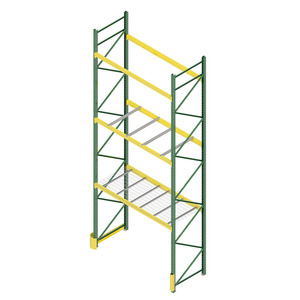
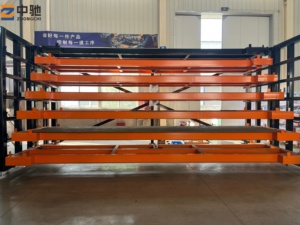
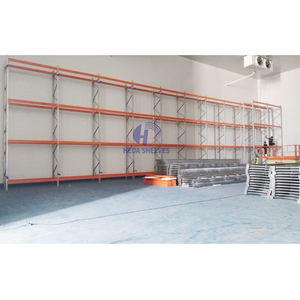
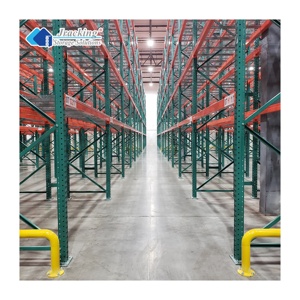
Architectural Rationale for High-Rise & Multi-Level Pallet Racking
In modern logistics infrastructure, industrial real estate pricing demands absolute vertical cubic optimization. Selecting a tier-one multi-level pallet racking factory requires moving past pure steel tonnage pricing toward evaluating structural elasticity, frame rigidity, and seismic resilience.
Structural Metallurgy & Cold Rolling
The structural load-bearing performance of high-density multi-level racking depends directly on the mechanical yield strength of the steel. Leading manufacturing facilities utilize certified Q235B and Q355B hot-rolled strip steel formed through progressive continuous roll-forming lines.
Continuous profile roll-forming ensures consistent profile thickness without residual micro-fractures along critical bend radii, maximizing the load-bearing moment of inertia under dynamic live forklift impacts.
Finite Element Analysis (FEA) Engineering
Multi-tier installations exceeding 12 meters in height experience severe complex stresses, including second-order P-Delta deformations, asymmetric seismic base shears, and non-uniform live pallet loads. Factory engineering suites conduct 3D finite element simulation prior to roll-forming.
By simulating dynamic racking sway under cyclic harmonic vibrations and emergency braking of heavy turret trucks, engineers engineer custom beam-to-column connector tabs and back-bracing systems suited for specific sites.
Epoxy Powder Coating & Galvanization
Corrosion protection dictates the lifecycle integrity of racking systems, especially within deep-freeze cold chains (-30°C) and high-humidity ambient hubs. Automated pre-treatment cleaning, phosphating, and thermosetting polyester powder coating ensure resilient surface protection.
For corrosive environments, salt-spray resistance, or outdoor clad-rack applications, hot-dip galvanized upright columns and pre-galvanized roll-formed beams eliminate oxidation risks and flaking issues.
Total Cost of Ownership (TCO) in High-Volume Logistics Procurement
Procurement teams prioritizing initial steel quotes over engineering validation frequently incur severe secondary retrofit expenditures. Poorly fabricated upright punches cause loose connector clips, resulting in vertical creep, beam deflection past the allowable 1/200th span threshold, and accelerated warehouse equipment wear. Modern enterprise supply chains demand verifiable manufacturing tolerances: hole spacing accuracy within ±0.1mm, structural beam twist below 0.5 degrees per meter, and verifiable mill test certificates matching ASTM, EN 15512, and RMI MH16.1 specifications.
Multi-Level Storage Systems: Engineering Parameter Matrix
Evaluate density, mechanical selectivity, seismic resistance, and automated material handling compatibility across core racking configurations.
| Racking Typology | Volumetric Space Utilization | Access Selectivity | Standard Pallet Capacity | Throughput Velocity | Automation & AMR Readiness |
|---|---|---|---|---|---|
| Selective Pallet Racking | 40% – 50% | 100% Direct Access | Up to 4,500 kg / Level | High (Manual Forklift) | Standard Pallet AMRs |
| Narrow Aisle (VNA) Multi-Level | 65% – 75% | 100% Direct Access | Up to 3,500 kg / Level | Very High (Wire Guided VNA) | Semi-Automated Turret Cranes |
| Double Deep Systems | 60% – 68% | 50% Direct (2 Pallets/Lane) | Up to 3,000 kg / Level | Moderate (Deep-Reach Trucks) | Telescopic Fork AGVs |
| Radio Shuttle High-Density | 75% – 85% | Lane Indexed (FIFO / LIFO) | Up to 2,000 kg / Pallet | High (Automated Shuttle Runs) | Integrated 4-Way Shuttles |
| Automated Rack-Clad AS/RS | 85% – 95% | 100% Automated Access | Custom Engineered (>5,000 kg) | Ultra-High (24/7 Operations) | Integrated Stacker Cranes & WCS |
Emerging Sourcing & Technology Trends in Industrial Racking
The global warehouse automation transition is redefining physical storage requirements. Warehouses are shifting from passive steel racks to dynamic, sensor-enabled intralogistics ecosystems.
1. Direct Integration with 4-Way Shuttles and AMRs
Procurement teams are shifting away from static narrow-aisle setups toward integrated automated runner systems. Racking structures now feature continuous laser-leveled cold-rolled guide tracks capable of supporting autonomous 4-way shuttles and Autonomous Mobile Robots (AMRs) for automated material handling.
2. Stringent Seismic & Resiliency Codes
Global warehouse deployments increasingly mandate strict adherence to complex international standards, including EN 15512:2020, RMI ANSI MH16.1, and AS 4084. Facilities with in-house structural seismic modeling and laser-cut base plate fabrication provide verified engineering compliance for global permitting.
3. Green Steel & Sustainable Coating Finishes
Corporate ESG mandates require auditable low-carbon steel procurement along with closed-loop VOC-free powder coating operations. Modern production facilities run closed-loop water treatment systems and energy-optimized curing ovens to supply sustainable infrastructure projects.
Why Global Supply Chains Rely on Our Manufacturing Network
Combining over 60 years of intralogistics engineering heritage with direct Chinese industrial scale, we supply end-to-end storage structures that reduce operational risks and system deflection.
In-House Calculation & FEM Modeling
Every proposal begins with custom structural load analysis. Our structural engineers review building slabs, seismic classifications, dynamic wind shear, and pallet weight distributions using proprietary calculation software.
Certified Production Standards
Our production facilities maintain continuous ISO 9001, ISO 14001, and CE certifications. All roll-formed columns, interlocking box beams, safety locks, and drop-in wire decks undergo strict batch-level yield testing.
Turnkey Lifecycle Execution
From custom layout CAD drafting and containerized packing to global shipping logistics and field installation supervision, we provide end-to-end project management across regional operations.
Request an Engineering Calculation & Direct Factory Layout
Planning a new distribution facility or modernizing your multi-level vertical storage? Connect with our project engineering teams for a customized load assessment, AutoCAD blueprint, and transparent factory pricing.
Inquire NowFrequently Asked Questions by Industrial Racking Buyers
Critical engineering, load capacity, and logistical factors to evaluate when sourcing pallet racking directly from China.