Engineered Industrial Racking & High-Density Storage Solutions
Precision-manufactured high-yield cold-rolled steel structures designed for maximum pallet density, extreme stability, and long lifecycle performance across global distribution hubs.
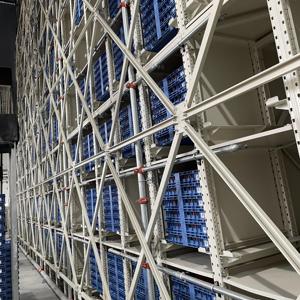
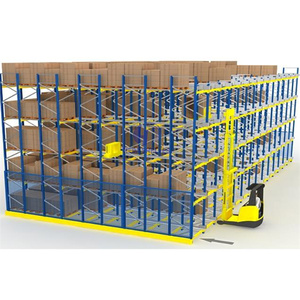
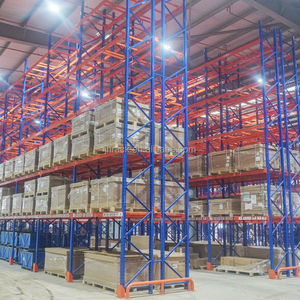
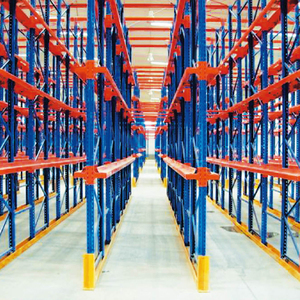
The Engineering Mechanics of Industrial Double Deep Racking Systems
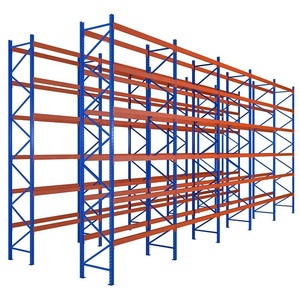
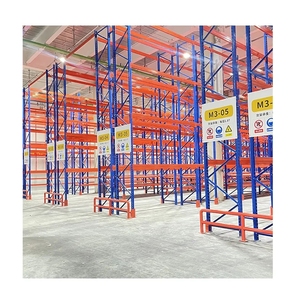
Double deep racking represents an intermediate density paradigm between conventional selective pallet racks and high-density dynamic systems (such as drive-in or automated radio shuttle lines). By arranging back-to-back selective racks to a depth of two pallet locations per face, double deep racking reduces the overall aisle footprint by approximately 50%. This configuration achieves an aggregate floor utilization rate exceeding 60% to 65%, compared to the standard 35% to 40% typical of single-selective racking networks.
From an intralogistics kinematics perspective, accessing the second deep storage position requires either a pantograph-reach mechanical reach truck or a specialized double-deep telescopic fork attachment. This operational model balances storage density with material handling cycle times. Structural upright frames must withstand not only standard axial compression loads (ranging from 12,000 kg to over 24,000 kg per bay configuration) but also eccentric torsional loads induced by the cantilevered moment arm when the forklift pantograph is extended at high elevations. Our certified roll-forming processes leverage Q235B and Q355B structural steel, calculated under strict compliance with the FEM 10.2.02 and RMI (Rack Manufacturers Institute) guidelines to neutralize torsional deflection and ensure permanent structural equilibrium.
Engineering Rigor: Why Global Supply Chains Choose Our Racking Infrastructure
Enterprise-grade structural integrity, vertical manufacturing governance, and world-class seismic certification engineering.
High-Yield Structural Steel Sourcing
We source cold-rolled coils exclusively from premier domestic steel mills. Every production run undergoes automated metallurgical testing to confirm yield strengths between 235 MPa and 355 MPa, ensuring zero micro-fracturing along continuous profile punches.
Advanced Robotic Roll-Forming Lines
Our plants operate high-precision automated profiling lines with continuous punching stations. Multi-stage cold-roll formers manufacture uprights with optimized cross-sections and dual-taper teardrop or omega slots for weldless, rigidity-locking beam connections.
Automated Electrostatic Coating
Upright posts and cross-beams pass through a rigorous 7-stage surface treatment sequence, including zinc phosphate pre-treatment, nano-ceramic cleaning, and an electrostatic epoxy-polyester hybrid powder cure, delivering salt-spray resistance beyond 500 hours.
FEM & AS4084 Certified Load Sizing
All load tables and beam calculations are validated by proprietary finite element analysis (FEA). We analyze buckling modes, beam deflection thresholds (L/200 standard), and seismic lateral displacement in accordance with international building codes.
Seismic Engineering Customization
For installations in high-risk seismic zones across the Pacific Rim, the Americas, and Southern Europe, our civil and structural engineers incorporate reinforced footplates, back-to-back horizontal bracing trusses, and seismic anchor bolt assemblies.
Direct Global Factory Supply
Eliminate intermediary trading margins. As tier-1 original equipment manufacturers, we provide end-to-end support: from DWG/BIM engineering schematics and containerized maritime loading plans to overseas installation supervision and commissioning.
Future Sourcing & Technology Trends in Industrial Racking
Critical intralogistics advancements shaping global warehouse infrastructure procurement from 2026 to 2035.
Convergence with Automated Shuttle & AMR Systems
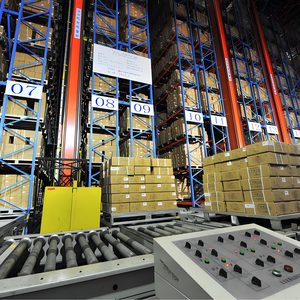
The industrial landscape is moving rapidly toward hybrid automated operations. Double deep static bays are increasingly re-engineered as hybrid double-deep shuttle racking channels. This architecture enables Autonomous Mobile Robots (AMRs) and automated stacker cranes to handle deep-lane inventory without manual forklift reach constraints. Procurement teams should specify guide rails, run-out tolerances, and beam safety stops that allow future shuttle integration without structural tear-down.
Cold-Chain Density Optimization Requirements
High energy costs in refrigerated distribution centers make double deep systems the preferred baseline for temperature-controlled storage (-25°C to +4°C). By reducing conditioned cubic volume overhead and increasing thermal retention through dense pallet packing, facilities lower HVAC expenditure per pallet position by up to 28%. When procuring cold-storage steel, ensure your supplier uses steel compositions with tested Charpy impact values to prevent low-temperature brittle fractures.
Data-Driven SKU Profiling & Dynamic Slotting
Procurement is no longer just about purchasing steel tonnage; it is driven by slotting algorithms and warehouse management systems (WMS). Double deep racking operates on a FILO (First-In, Last-Out) discipline within each channel. Buyers must conduct Pareto velocity analyses: high-velocity SKUs with 2 to 4 pallets per lot are prime candidates for double deep bays, whereas single-pallet fragmented SKUs must be routed to standard selective racks to prevent double-handling bottlenecks.
Life-Cycle Durability & Structural Safety Sensors
Future-ready warehouse operators are adopting digital health monitoring for static structures. Smart load cells, post-impact deflection sensors, and 3D LiDAR alignment inspections are becoming standard across high-bay facilities. Modern procurement contracts now mandate sacrificial column guards, heavy-gauge wrap-around post protectors, and strict floor anchorage pull-out testing to minimize structural fatigue and avoid operational shutdowns.
Frequently Asked Questions: Double Deep Racking Procurement
Technical guidance for warehouse directors, operations managers, and international procurement teams.
What is the primary operational trade-off of double deep racking compared to standard selective racking?
What specific forklift equipment is required for double deep racking installations?
How do engineers determine bottom beam elevation and floor capacity requirements?
What quality and manufacturing standards should overseas buyers inspect when sourcing from China?
Can double deep racking be modified into dynamic automated or shuttle racking later?
What structural data must be supplied to generate an accurate layout proposal?
Request an Engineered Layout & Factory-Direct Quotation
Connect directly with our structural engineering team. Submit your warehouse parameters to receive a complimentary DWG layout plan, capacity calculations, and factory-direct pricing within 24 hours.