Profiles & Bars
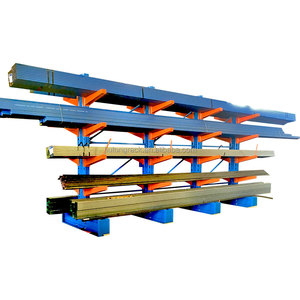
Steel Profile Cantilever Rack Heavy Duty 5 Layer Powder Coated System for Beams
- Payload: Up to 5,000 kg/Arm
- Material: Q235B / Q355 Hot-Rolled
- Clear arm length: 600 - 1800mm
Direct from world-class manufacturing centers, our storage systems bridge high-capacity structural fabrication with safe, ergonomic die-retrieval mechanisms. Fully certified under international FEM, EN 15512, and ANSI MH16.1 structural standards.
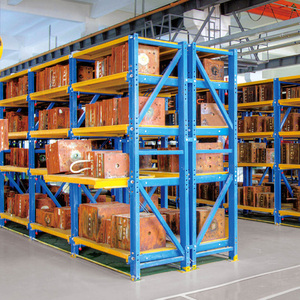
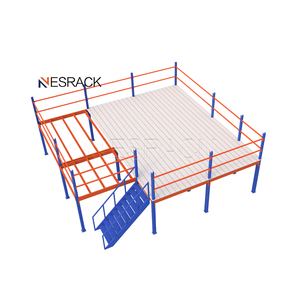
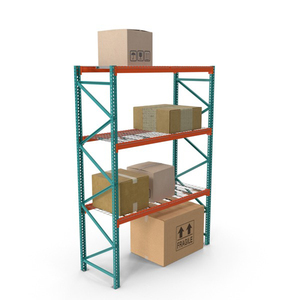
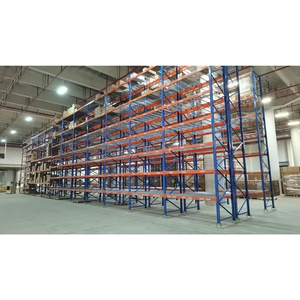
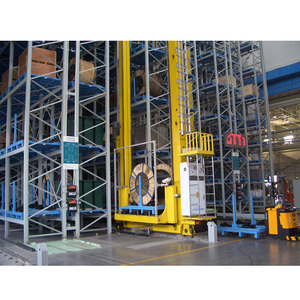
In high-tonnage stamping, aluminum extrusion, plastic injection molding, and progressive automotive die manufacturing, tooling represents millions of dollars in capital allocation. Yet, within conventional plant logistics, multi-ton dies are routinely stored on concrete floor pads, single unreinforced pallets, or inadequate cantilever arms. This archaic practice creates bottlenecked machine changeovers, excessive die surface oxidation, handling damage, and substantial occupational risk.
The transition toward high-density mold storage racking is driven by strict Single-Minute Exchange of Die (SMED) requirements and the global digitization of the shop floor. When dies weighing between 1,000 kg and 5,000 kg are arranged vertically inside engineered drawer systems, horizontal warehouse footprint is recovered by up to 60%, and die retrieval cycles drop from over 35 minutes to under four minutes.
Procurement Insight: Engineering calculation reports should always evaluate dynamic point loading rather than merely static uniform distributed load (UDL). Injection molds and stamping dies exert intense concentrated pressures over small steel base areas.
Procurement officers often compare the capital expenditure of heavy-duty drawer die racks against standard selective pallet racks fitted with steel wire decking or timber supports. While standard beam pallet racking incurs a lower upfront steel cost, it introduces profound operational friction when managing high-frequency die changes:
| Racking Architecture | Standard Unit Payload | Aisle Access Method | Safety Mechanism | Optimal Manufacturing Use Case |
|---|---|---|---|---|
| Heavy-Duty Roll-Out Drawer | 1,000 kg – 4,000 kg / level | Overhead Crane / Monorail Hoist | Single-drawer mechanical interlocking pins | Plastic injection molds, metal stamping dies, die casting tools |
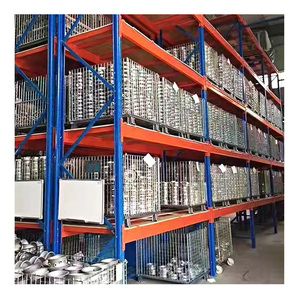
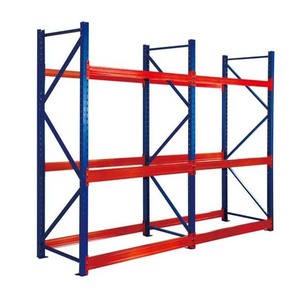
| Heavy Structural Beam Rack | 2,000 kg – 5,000 kg / level | Heavy Counterbalance Forklift | Locking beam connector pins, ground impact barriers | Bulk raw steel billet storage, backup tool inventory, slow SKUs |
| Heavy Profile Cantilever | 800 kg – 3,500 kg / arm | Side-loader or Wide-aisle Forklift | Tapered arm geometry, load-retaining stops | Long extrusion dies, bar stock, cylindrical tooling mandrels |
| Automated Die AS/RS System | Up to 10,000 kg / cell | Automated Stacker Crane / AGV | Continuous optical positioning, automated latching | Automotive stamping lines, 24/7 high-mix appliance production |
The manufacturing sector in Europe, North America, and Southeast Asia is re-evaluating intralogistics through the lens of automation, space containment, and personnel safety. As China's leading heavy-duty mold racking manufacturers modernize their production with automated laser profiling, robotic multi-axis welding, and high-performance thermoset powder coatings, buyers are encountering three seismic shifts in tooling storage technology:
High-volume automotive press shops are transitioning from manual overhead crane rigging to fully enclosed die Automated Storage and Retrieval Systems (AS/RS). Automated shuttle cranes retrieve 5-ton to 15-ton stamping dies and dispatch them directly onto robotic die-changing carts (QDC) without manual intervention.
Smart die racking now features integrated IoT micro-sensors inside the drawer beds. These monitor real-time tooling weight, cycle counts, maintenance due intervals, and ambient storage humidity, preventing expensive surface corrosion and misplacement across vast manufacturing plants.
For tooling exceeding 3,000 kg, manual push-pull action increases ergonomic worker strain. The industry is rapidly adopting integrated electric-geared screw drives and electro-hydraulic pushers that smoothly extend and retract massive tooling trays at the touch of a pendant or button.
When procuring heavy industrial tooling racks across borders, relying on generic catalog load ratings can lead to structural non-compliance. International supply chain managers and project engineers should systematically verify the following technical qualifications before issuing purchase orders:
1. Finite Element Method (FEM) Static & Dynamic Simulation: Demand certified FEA stress strain reports for upright frames, cantilever arms, and drawer slide brackets. Inquire whether your supplier designs under FEM 10.2.02, EN 15512, or RMI ANSI MH16.1 specifications, particularly regarding structural safety factors (typically 1.5 to 1.65 under maximum working load).
2. Structural Steel Grade Integrity: Ensure the factory uses hot-rolled or cold-rolled sheet with verified mill certs. Low-cost vendors frequently substitute non-standard steel that lacks adequate elongation percentage, which can crack under shock loads during heavy crane placement.
3. Bearing Mechanism and Guide Channel Tolerances: The true test of a heavy mold drawer rack is its performance after 5,000 cycles. Verify that the drawer slide guide channels are formed from thick structural channel steel (minimum 4mm to 6mm thickness) rather than thin bent sheet metal.
4. Industrial Surface Treatment: Stamping and plastic injection facilities are humid, oily environments. The finishing process must include a 7-stage chemical pre-treatment (degreasing, phosphating, acid clean) followed by high-voltage electrostatic epoxy-polyester powder coating cured at over 180°C to withstand impact and lubricant spatter.
Clear, direct answers from our structural engineers to clarify technical specifications, international shipping, safety standards, and project customization.
Standard heavy-duty drawer mold racks accommodate between 1,000 kg and 2,000 kg per shelf level with 65% pull-out extension. Custom reinforced models fitted with dual-race industrial bearings and heavy structural columns are routinely engineered to safely support 3,000 kg to 5,000 kg per level.
Yes. The roll-out drawer design allows the tool shelf to extend directly into the open plant aisle. Operators can lower crane hooks and hoist slings vertically onto the mold eyebolts without any obstruction from upper levels, eliminating awkward horizontal dragging.
Our heavy-duty mold racks feature a proprietary mechanical interlock system. When an operator pulls out a single drawer, all other levels in that bay automatically lock shut. Furthermore, the racking frame includes heavy base anchors bolted deep into the concrete slab.
We require your maximum and minimum mold dimensions (Length × Width × Height), individual weight per die, total number of molds to store, plant clear ceiling height, slab thickness, and whether retrieval will be handled by crane, forklift, or manual hoist.
Upright columns, horizontal beams, and slide frames are bundled with protective corrugated paper, edge protectors, and steel banding. Drawers, bearings, and precision interlock pins are secured inside export-grade fumigated plywood crates to avoid ocean transit damage.
Yes. We frequently supply hybrid mold racks featuring roll-out drawers on the lower 3 to 4 levels for heavy, active tooling, with fixed steel decking or pallet beams on the topmost levels to store light dies, accessories, or spare parts via forklift.
Consult directly with our intralogistics engineering department. We evaluate your building floor slab, die weight profiles, and handling machinery to design an optimized, turnkey mold storage solution within 24 business hours.