Featured Industrial Heavy-Duty Storage & Automated Shuttle Systems
Discover our OEM and ODM certified heavy-duty warehouse inventory systems, manufactured with structural Q235B/Q355B cold-rolled steel to maximize cubic warehouse density and streamline logistics cycles.
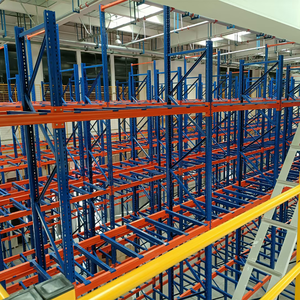
Unmanned Patrol Intelligent Sorting 5 Layer Heavy Duty Metal Automated Warehouse Rack System
Corrosion protection with load capacities up to 1000-4000kg per level. Built for automated sorting and high-frequency intralogistics distribution lanes.
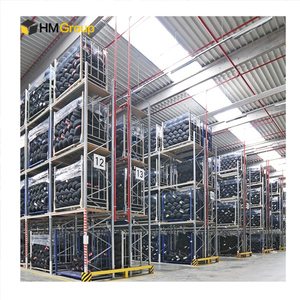
Customized Heavy Duty Transport Warehouse Metal Steel Stacking Folding Tire Storage Rack
Modular collapsible tire transport frames tailored for rugged distribution networks, eliminating pallet distortion during high-density multi-tier stacking.
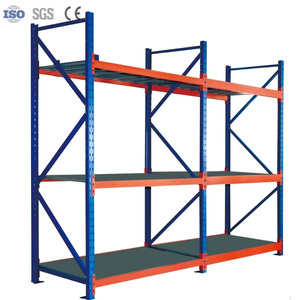
Heavy-Duty 2000KGS Large Capacity Warehouse Storage Pallet Rack Shelving Unit
Engineered for extreme point-loading distribution. Features precision-punched teardrop/diamond uprights and reinforced dual-C box beams.
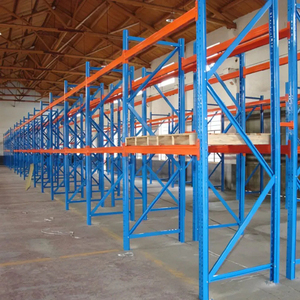
Professional Grade Selective Pallet Rack Industrial Storage High Density System
Cold-rolled structural alloy framework treated with electro-deposition primer and polymer powder coating for anti-corrosion life cycles in chemical and cold bays.
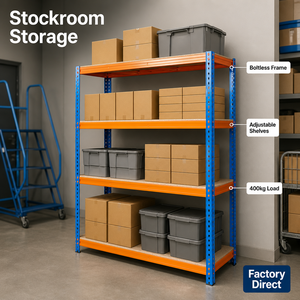
Industrial Steel Storage Rack Heavy Duty Boltless Warehouse Racking System
Adjustable 4-tier modular engineering designed for workshops and factory pick-faces with rapid clip assembly and zero weld deformation.
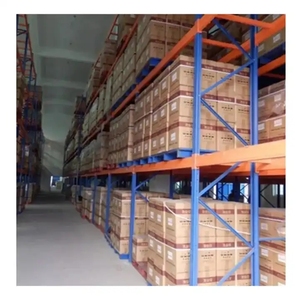
Industrial Shelving Medium Shelf Duty Steel Rack Storage Equipment
Certified high-grade warehouse metal racks optimized for multi-tier carton buffering, light automotive assembly, and manual pick access.
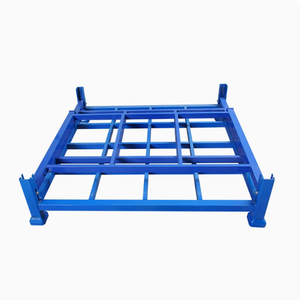
Heavy Duty Industrial Stacking Fabric Roll Rack Stillage Foldable Racks 1 Ton
Heavy duty post stillage design offering 1000kg dynamic capacity per nest; interlocks for rapid vertical volumetric expansion without permanent aisle fixtures.
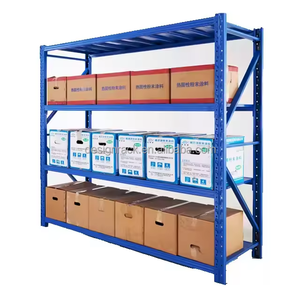
High-Performance 5 Layer Steel Storage Commercial & Distribution Shelves
High-gauge structural shelf framing for multi-functional B2B fulfillment hubs, FMCG sortation hubs, and dense carton flow configurations.
Engineering Blueprint: The Heavy Duty Radio Shuttle Racking Revolution
A comprehensive technical guide for Chief Supply Chain Officers, Warehouse Operations Directors, and Procurement Managers evaluating deep-lane automation against traditional high-bay storage.
As global real estate lease rates rise and industrial cold chains face acute footprint shortages, traditional static racking configurations—such as selective pallet racks and drive-in bays—are increasingly failing to deliver adequate returns on floor space. Heavy duty radio shuttle racking systems have emerged as the premier intralogistics benchmark, bridging the gap between passive mechanical storage and complex automated storage and retrieval systems (AS/RS). By replacing structural forklift aisles with continuous, software-guided shuttle carts gliding along deep rails, enterprise warehouses can achieve up to an 85% utilization rate of total clear building volume while dramatically reducing operational cycle times.
Core Mechanical Architecture and Kinematic Principles
A standard heavy-duty radio shuttle racking installation combines cold-formed vertical uprights, dynamic cantilever beam supports, galvanized guided entry funnels, and precision-rolled shuttle tracks. Inside these channels travels a low-profile, self-powered carrier vehicle driven by brushless servo motors and powered by industrial-grade lithium-iron-phosphate (LiFePO4) or supercapacitor energy units. When loaded with palletized goods weighing from 500 kg to over 2,000 kg, the carrier lifts the pallet platform via an internal hydraulic or electromechanical eccentric cam mechanism and indexes the load smoothly down the storage lane.
Because handling operators never steer forklifts directly into the deep lanes—as required by obsolete drive-in racking—structural collisions with uprights are reduced by up to 92%. In addition, optical laser rangefinders, dynamic decelerators, and safety ultrasonic collision sensors maintain millimeter-level positioning accuracy throughout both First-In, First-Out (FIFO) and First-In, Last-Out (FILO) workflows.
| System Type | Volumetric Density | Pallet Access Speed | Forklift Damage Risk | Cold Chain Energy Efficiency | Suitability Factor |
|---|---|---|---|---|---|
| Heavy Duty Radio Shuttle | 80% – 88% (Ultra High) | 1.0 – 1.5 m/s (Automated) | Extremely Low (Aisle Only) | Maximum (Reduced Air Volume) | High SKU Volume, Bulk FMCG, Cold Bay |
| Standard Drive-In Racks | 60% – 70% (High) | 0.3 – 0.5 m/s (Manual Crawl) | Severe (Aisle Collision Prone) | Moderate (Slow Air Exchange) | Uniform Goods, Low Turn Rates |
| Selective Pallet Racking | 35% – 45% (Low) | Manual Lift Truck Bound | Moderate (Aisle Flank Hits) | Inefficient (High Open Volume) | Massive SKU Variety, Rapid Single Pick |
| Push-Back / Gravity Flow | 65% – 75% (Medium-High) | 0.4 – 0.6 m/s (Incline Speed) | Low-Medium | Good | FIFO Buffer Queues, Staging Zones |
Next-Generation Procurement Trends (2026–2030)
Global supply chain intelligence identifies several structural shifts shaping international procurement decisions for pallet management solutions:
Why Global Supply Chains Rely on Our Engineering Infrastructure
Backed by decades of dedicated intralogistics manufacturing, 12 state-of-the-art production hubs, and 7 R&D innovation centers, we deliver certified structural integrity to 70+ countries.
Rigid Structural Alloys
All profiles are formed from certified structural coils, verified by finite element analysis (FEA) to exceed EN 15512, RMI, and AS4084 seismic and static shear thresholds.
Automated Production Lines
CNC roll-forming systems, continuous inline laser hole punchers, and automated robotic welding ensure precision tolerances across all shuttle rail channels and beam locking brackets.
Gartner Recognized Software
Our proprietary WMS/WES platforms integrate directly with major enterprise ERP systems (SAP, Oracle, Microsoft Dynamics) to manage shuttle routing and real-time inventory allocation.
Turnkey Lifecycle Support
From site floor slab flatness analysis and building layout engineering to worldwide dispatch, commissioning, safety load audits, and spare-parts delivery, we manage your project end to end.
Frequently Asked Questions: Heavy Duty Radio Shuttle Procurement
Direct, practical answers to common technical, architectural, and financial questions raised during warehouse engineering reviews.
What floor slab tolerances are required for radio shuttle installations?
Unlike narrow-aisle VNA systems that require strict DIN 18202 or VDMA floor flatness classifications across every lane, shuttle racking transfers loads down standard upright baseplates. Standard industrial slab specifications (such as ASTM FF45/FL35 or DIN 18202 Table 3 Line 3) are typically sufficient, because the shuttle travels on its own precision-aligned rails rather than the concrete surface.
How many shuttle carts are required per total pallet capacity?
Shuttle quantity is determined by throughput cycles (pallets moved per hour), not total static pallet count. A single heavy-duty shuttle can execute between 25 and 45 pallet storage or retrieval cycles per hour, depending on average travel depth. In bulk storage warehouses, a ratio of one shuttle per 800 to 1,500 pallet positions is common, with carts transferred between levels by standard forklifts.
Can the system support different pallet sizes within the same facility?
Yes. Shuttle rails and wheel assemblies can be engineered to support multi-spec pallets, including Euro-pallets (800x1200mm), Industrial pallets (1000x1200mm), and North American pallets (40x48 inch). Dynamic photoelectric sensor arrays on the cart auto-detect pallet bottom profiles, deck overhauls, and pallet depths before initiating travel.
What is the typical battery lifespan and charging protocol for deep freeze installations?
Our cold-room shuttles use high-capacity Lithium Iron Phosphate (LiFePO4) power cores rated for 3,000+ full charging cycles while retaining over 80% capacity. Rapid swap stations allow operators to exchange battery packs in under 30 seconds. Alternatively, automated rail-mounted charging shoes at lane mouths provide continuous opportunity charging during normal operation.
How does radio shuttle compare to standard drive-in racking from an investment perspective?
While the initial capital expenditure of shuttle racking is higher due to precision rails and electronic carts, overall total cost of ownership (TCO) is lower within 18 to 36 months. Shuttle systems eliminate upright damage from forklift entries, decrease cycle times by up to 50%, reduce forklift fleet size, and increase overall cubic density by an additional 20% to 30% compared to drive-in bays.
What safety systems protect workers around automated shuttle aisles?
Every shuttle includes redundant multi-layer safety features: active laser rangefinding, mechanical obstacle limit switches, pallet misalignment sensors, and emergency stop systems. In addition, physical entry funnels, structural end-stops, and optional optical light curtains at access points safeguard operators during pallet placement and retrieval.
Ready to Engineer Your High-Density Automated Facility?
Connect with our technical storage engineers for a customized structural layout review, pallet density analysis, and comprehensive price quotation for your warehouse.