Featured Industrial Racking & High-Density Storage Deployments
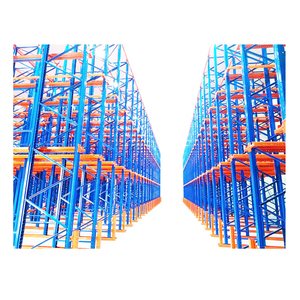
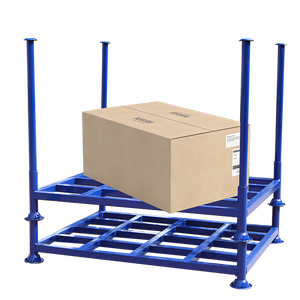
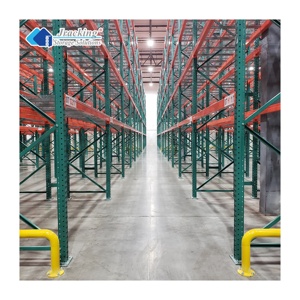
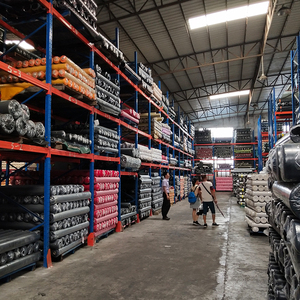
Explore our field-tested heavy-duty storage configurations, spanning precision boltless rivet shelving, cold-rolled selective beam systems, automated shuttles, and custom stacking solutions.

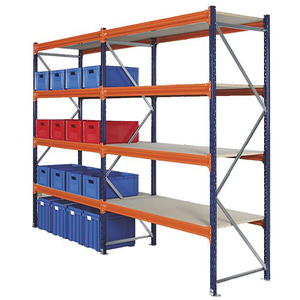

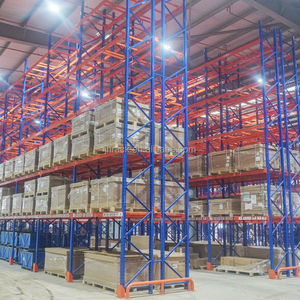
Industrial Engineering Standards: Anatomy of High-Capacity Rivet Racking
Demystifying the structural parameters that allow rivet-locked beams to withstand dynamic lateral shifts, seismic disturbances, and continuous operational strain without structural fatigue.
In modern high-throughput intralogistics, Heavy Duty Rivet Racking stands out as the ultimate convergence of mechanical simplicity and rigorous load distribution. Unlike traditional nut-and-bolt architectures prone to operational loosening under mechanical vibrations or welding configurations that eliminate structural adaptability, rivet racking uses precision-tapered teardrop or keyhole slots paired with cold-forged cylindrical steel pins. As shelf levels receive vertical loading, the downward vector forces the rivet head deeper into the machined taper, generating a natural self-locking friction hold that stiffens the frame under increasing weight.
Our OEM/ODM manufacturing protocols prioritize prime structural grade Q235B and Q355B cold-rolled steel coil stocks. These high-tensile alloys are subjected to multi-stage roll-forming continuous profiling, which preserves metallurgical crystal cohesion without creating high-stress micro-fissures along post corners. Every column profile is punctuated with laser-calibrated 38.1mm or 50.8mm pitch intervals, granting facility directors complete freedom to adjust vertical tier spacing according to evolving volumetric inventory patterns.
Dual-Riveted C-Profile Beams
Configured with twin cylindrical alloy pins per bracket end. This architecture reduces deflection ratios below L/250 under full static capacity, counteracting longitudinal torsional stress during heavy hand picking or pallet transit.
Electrostatic Epoxy Coating
Pre-treated across nine immersion stages including zinc phosphate passivation, our automated electrostatic powder coats exceed 500 hours of continuous salt-spray testing, delivering superior corrosion and abrasion resistance.
Modular Decking Interchangeability
Engineered to accommodate 18mm high-density melamine timber boards, galvanized flush-fit steel panels, or drop-in welded wire mesh decks with integrated channel stiffeners to meet stringent NFPA 13 in-rack fire suppression mandates.
OEM/ODM Technical Specifications & Structural Baseline
Compare mechanical dimensions, dynamic payload boundaries, and metallurgical certifications for engineering-led industrial procurement.
| Structural Parameter | Standard Duty Rivet Shelving | Industrial Heavy-Duty Rivet Racking | Extra Heavy Selective Configuration |
|---|---|---|---|
| Load Capacity Per Tier | 150 kg – 350 kg (330 – 770 lbs) | 500 kg – 1,200 kg (1,100 – 2,645 lbs) | 1,500 kg – 3,500 kg (3,300 – 7,715 lbs) |
| Raw Material Specification | Cold-Rolled Carbon Steel Q195 | Structural High-Tensile Q235B / Q355B | Heavy Gauge Structural Mill Steel Q355B |
| Upright Column Profile | 38 × 38 × 1.2 mm L-Section | 55 × 55 × 1.8 - 2.0 mm L/C-Section | 80 × 60 × 2.0 - 2.5 mm Omega Post |
| Horizontal Beam Construction | Single Rivet Angle Beam | Double Rivet Channel Beam (C-Profile) | Step Beam / Boxed Beam with Welded Claws |
| Adjustment Pitch | 38.1 mm (1.5 in) Increments | 50.0 mm or 50.8 mm (2.0 in) Increments | 75 mm or 76.2 mm Increments |
| Surface Protection | Dry Electrostatic Powder (60-80 μm) | Thermosetting Hybrid Epoxy (80-100 μm) | Pre-Galvanized or Hot-Dip Galvanized Zinc |
| Global Safety Compliance | ISO 9001, CE Certified | RMI (ANSI MH16.1), FEM 10.2.02, CE | EN 15512, AS 4084-2012, RMI Approved |
Future Procurement Trends & Technological Evolution
Navigating the next decade of warehouse evolution: How automation, green supply chain mandates, and modular micro-fulfillment are redefining pallet and rivet racking procurement.
1. Hybridization with AMRs & AGVs
Heavy-duty rivet and selective systems are transitioning from static manual picking stations into automated hybrid interfaces. Procurement teams now require bottom-tier clearances and guide fixtures that allow Autonomous Mobile Robots (AMRs) to pick directly beneath high-density racking channels without manual forklift staging.
2. Low-Carbon Steel & Circular LCA
International buyers governed by CBAM (Carbon Border Adjustment Mechanism) and ESG frameworks prioritize manufacturers offering Environmental Product Declarations (EPDs). Our closed-loop manufacturing recycles scrap metal and utilizes non-toxic thermoset powder polymers to drastically reduce product lifecycle emissions.
3. Rapid-Deployment Micro-Fulfillment
The explosion of quick-commerce and urban logistics hubs has driven demand for boltless rivet systems that assemble in under 10 minutes per bay without skilled welders. Future contracts emphasize standardized knocked-down modularity to ensure swift warehouse reconfigurations as SKU velocities fluctuate.
Global Manufacturing Competencies & Enterprise Advantages
Decades of international manufacturing excellence give B2B procurement heads and commercial racking distributors unmatched cost-efficiency, precision, and reliable delivery.
In-House Structural Simulation
Our engineering team performs Finite Element Analysis (FEA) and dynamic stress simulations on every custom OEM design, ensuring full compliance with European EN 15512, US RMI, and Australian AS 4084 building codes before production begins.
Massive Industrial Scale
Operating across 12 modern production centers equipped with automated rolling mills, robotic laser punching units, and continuous powder-coating lines, our daily throughput exceeds hundreds of metric tons with strict delivery punctuality.
Complete OEM/ODM Customization
From bespoke post punched teardrop hole designs and customized beam lengths to unique corporate RAL color schemes and retail-ready knock-down flat packaging, we adapt our output to your exact market specifications.
Comprehensive Lifecycle QA
Every manufacturing batch undergoes rigorous raw steel spectroscopy, weld penetration inspection, zinc-layer micrometer evaluation, and yield deflection testing to ensure absolute reliability on your warehouse floor.
Frequently Asked Questions on Heavy-Duty Rivet Racking
Essential answers for warehouse directors, purchasing agents, and project consultants preparing facility upgrades.
What makes heavy duty rivet racking preferable to conventional bolt-and-nut shelving?
What steel grades and structural certifications do you provide for international projects?
Can rivet racking systems be customized for automated picking or multi-tier mezzanine layouts?
How is uniformly distributed load (UDL) calculated, and how do deck choices influence capacity?
What lead times, shipping configurations, and container utilization can we expect?
Ready to Engineer Your Optimized Facility Layout?
Connect directly with our senior intralogistics structural engineers. We provide free warehouse CAD layouts, seismic load calculations, and turnkey OEM/ODM quotations tailored to your operational budget.
Send an Inquiry