Engineered High-Bay & Heavy-Duty Structural Systems
Compare precision-engineered cold-rolled and structural steel storage solutions built to maximize volumetric capacity, withstand severe seismic demands, and integrate with autonomous picking machinery.
Years of Global Engineering Heritage
Dedicated Production Facilities
Countries in Operational Network
R&D Centers for Intralogistics & WMS
The Definitive Buyer's Guide to High Bay & Heavy Duty Racking
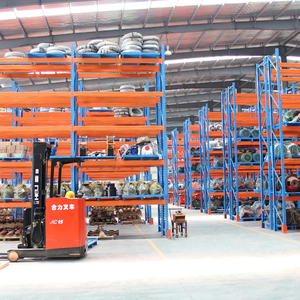
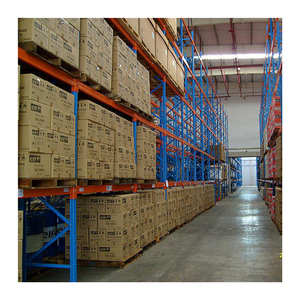
Modern intralogistics demands unprecedented vertical integration, precision manufacturing, and compliance with structural engineering frameworks. In high-density warehouses where vertical heights exceed 12 to 40 meters, Heavy Duty High Bay Racking shifts from a static warehousing asset to a mission-critical structural envelope. Sourcing from global tier-1 manufacturers requires supply chain directors and facility managers to assess not only the raw steel metric (such as Q235B or cold-rolled structural steel coils) but also Finite Element Analysis (FEA) modeling, seismic coefficient resilience, and seamless integration with Automated Storage and Retrieval Systems (AS/RS).
Dynamic Load Capacities
Structural calculations must balance static dead loads, dynamic forklift impacts, and seismic vibration spectra. Beams configured with 3-hook and 4-hook connector clips ensure maximum torsion resistance across open spans.
Anti-Corrosion Surface Finishing
State-of-the-art automatic continuous powder coating lines provide 60-80μm polymer film adhesion, preventing moisture penetration in sub-zero cold stores and humid distribution facilities alike.
Rack-Clad Building Viability
In clad-rack automated developments, upright frames bear both the pallet payloads and external architectural loads—eliminating standalone building columns and reducing civil engineering costs by up to 25%.
Future Procurement Trends in High Bay Racking (2026–2030)
Procurement workflows are undergoing a digital transformation. Enterprise buyers are moving away from manual bill-of-materials (BOM) evaluations toward algorithmic lifecycle procurement models. Key structural and commercial shifts shaping international specifications include:
1. Convergence with Autonomous Mobile Robots (AMRs)
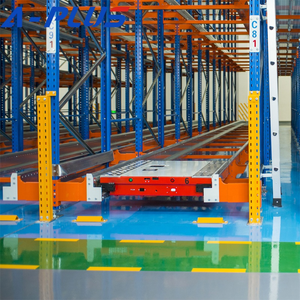
Static drive-in configurations are being upgraded to multi-directional autonomous shuttle systems. Racking baselines now require tight manufacturing tolerances (±1.0mm upright deviation) to accommodate sensor-guided laser navigation.
2. Digital Twin Engineering & Structural Health Monitoring
Advanced installations embed strain gauge IoT sensors directly onto structural baseplates. These monitor deflection limits under asymmetrical loading, alerting facility executives prior to steel fatigue or micro-fissuring.
3. Decarbonized Steel Sourcing & CBAM Compliance
With cross-border carbon regulations tightening in Europe and the Americas, tier-1 racking exporters must supply Environmental Product Declarations (EPDs) reflecting scrap-recycled electric arc furnace (EAF) steel coils.
| System Architecture | Volumetric Space Density | Direct Selectivity | Handling Machinery Compatibility | Optimal Industry Application |
|---|---|---|---|---|
| Automated High-Bay Clad-Rack (AS/RS) | 98% Max | 100% Automated | Stacker Cranes / 4-Way Shuttles | Deep-Freeze Cold Storage, High-Volume 3PL, FMCG |
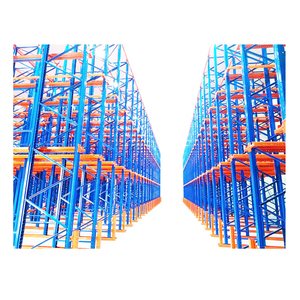
| High-Density Drive-In Racking | 85% High | Lane-Based (LIFO) | Counterbalance / Reach Trucks | Homogeneous SKU Stocks, Seasonal Food Buffers |
| Heavy-Duty Push-Back Racking | 78% Medium-High | Face-Based (LIFO) | Standard Forklifts | Medium SKU Velocity, Staging Buffers |
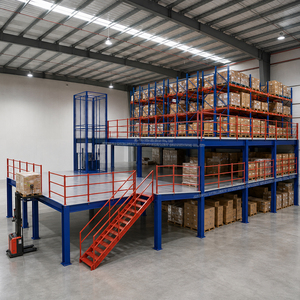
| Structural Multi-Tier Mezzanine | 90% Vertical Expansion | 100% Manual / Cart Picking | Conveyors, Vertical Goods Lifts | E-commerce Fulfillment, Apparel, Automotive Spares |
| Selective Pallet Racking | 60% Standard | 100% Direct Access | Universal Reach Trucks, VNA Turret Trucks | High SKU Diversity, Pharmaceutical Distribution |
Enterprise Strengths & Engineering Assurance
Decades of intralogistics leadership provide clients with turnkey assurance from preliminary structural calculation to global site delivery.
In-House Structural FEA Engineering
Our structural engineers calculate upright section profiles, seismic moment frames, and deflection tolerances in full compliance with EN 15512, RMI, and FEM standards before tooling starts.
12 High-Capacity Manufacturing Centers
Automated roll-forming lines, robotic continuous seam welders, and eco-friendly powder coating plants ensure on-schedule container dispatch for mega-distribution infrastructure.
Comprehensive WMS & Automation Integration
We bridge the physical-digital divide by co-developing proprietary Warehouse Management Software (WMS) recognized repeatedly in the Gartner® Magic Quadrant™.
Frequently Asked Questions by Industrial Buyers
Essential guidance covering load ratings, slab requirements, seismic compliance, and lead times.
How are structural load capacities verified for high-bay uprights?
Capacities are calculated per bay according to EN 15512 or RMI guidelines. Engineers consider the vertical distance between beam levels, building clear height, frame buckling coefficients, forklift impact resistance, and local geotechnical seismic criteria.
What concrete slab specifications are needed for heavy-duty racking?
For standard heavy installations, a reinforced concrete slab (minimum 150mm to 250mm thickness, compressive strength class C20/25 to C28/35) is required. High-bay automated systems (VNA/AS/RS) require strict floor flatness conforming to DIN 18202 or ASTM E1155 F-min 75+.
Can standard selective pallet racking be modified for automated shuttles?
In many retrofit scenarios, yes. Selective racking frames can be reconfigured or reinforced with guide rails, pallet runner tracks, and optical positioning brackets. A preliminary engineering review ensures the upright profiles can withstand the concentrated point loads of shuttle mechanisms.
What is the standard manufacturing and shipping lead time for export?
Custom structural systems typically require 4 to 8 weeks for roll-forming and powder-coating, contingent on overall steel tonnage. Export packaging utilizes steel-banded crating to safeguard upright profiles and beam connectors during maritime container transit.
Plan Your Next Intralogistics Facility with Engineering Precision
Connect with our technical design team to review your CAD layout, optimize payload densities, and secure mill-direct competitive quotes for your upcoming heavy-duty high bay project.
Send an Inquiry