Engineered Heavy Duty Racking Systems & Configurations
Precision-profiled structural beams and upright columns verified under FEM 10.2.02, EN 15512, and RMI (Rack Manufacturers Institute) mechanical loading guidelines.
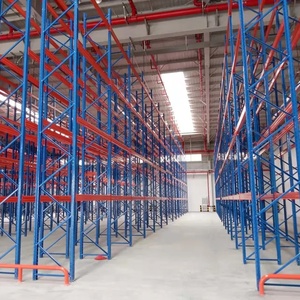 500 kg / Tier
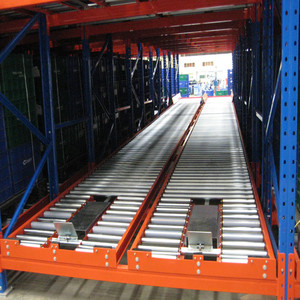 Gravity Dynamic Flow
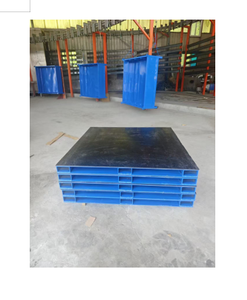 1000 kg / Pallet
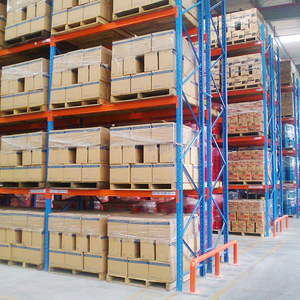 2000 kg / Level
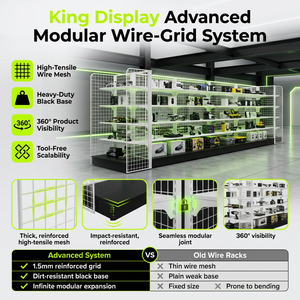 Retail & Big-Box Hub
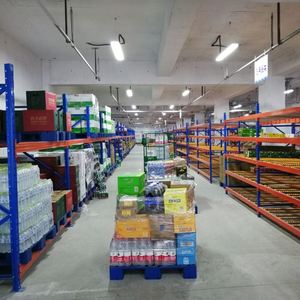 Heavy Carton Dynamic
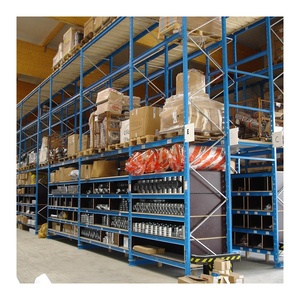 High Flexibility
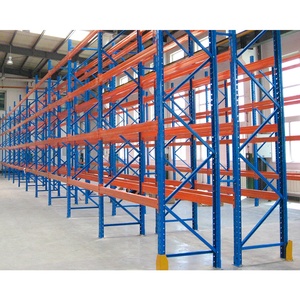
Vetting Heavy Duty Structural Steel Racking Manufacturers: The Global Benchmark
Structural steel storage racking systems represent critical life-safety assets within contemporary logistics infrastructure. Unlike secondary interior fittings, structural pallet racks operate under immense continuous loads, sustained dynamic impact from mechanical handling equipment (MHE), and lateral seismic oscillations. Vetting high-caliber manufacturers requires an examination of manufacturing precision, mill cert authentication, weld seam non-destructive testing (NDT), and Finite Element Analysis (FEA) validation.
Global supply chain managers face volatile commodity price fluctuations, strict carbon disclosure directives, and disparate building code mandates across Europe, North America, and the Asia-Pacific region. Evaluating a Tier-1 manufacturing factory requires moving beyond nominal per-ton pricing to analyze total structural integrity, cold-formed section modulus ratios, and life-cycle operational durability.
The top manufacturing factories distinguish themselves through vertical integration: cold-roll profiling lines equipped with automated CNC continuous punching, inline robotic welding stations for beam-to-claw assemblies, and multi-stage automated pre-treatment lines for electrostatic powder deposition. These facilities control micro-tolerances within ±0.5mm across upright column runs exceeding 12 meters.
Engineering compliance under EN 15512 (European Standards), RMI MH16.1 (North American Specifications), and AS 4084 (Australian Standards) guarantees that column buckling, torsional-flexural deformation, and beam deflection ratios stay well within engineered safety margins (e.g., span/200 under maximal working payload).
| Evaluation Parameter | Tier-1 Integrated Manufacturers | Conventional Standard Fabricators | Procurement Risk Factor |
|---|---|---|---|
| Steel Grade & Yield Strength | Certified Q235B / Q355B (EN S235 / S355JR), Charpy V-notch tested | Uncertified commercial hot-rolled re-rolled coil | Catastrophic Buckling Risk Mitigated |
| Cold-Roll Forming Profile | 12-16 Station Roll Formers; Continuous Patented Geometry | Manual brake forming; non-uniform thickness distribution | Section Modulus Inconsistency |
| Welding Precision (NDT) | Robotic GMAW / MIG; Ultrasonic + Magnetic Particle NDT | Manual arc welding; variable penetration depths | Claw Connector Fatigue Failure |
| Corrosion & Pre-Treatment | 7-Stage Zinc-Phosphating or Hot-Dip Galvanizing (85μm ISO 1461) | Single-stage wipe; air-dry low-grade primer | Early Rust & Flaking in High-Humidity |
| Seismic FEA Modeling | Non-linear dynamic pushover modeling calibrated for regional ground acceleration | Static lookup tables without site-specific seismic engineering | Code Violation & Permitting Rejections |
Next-Generation Structural Steel Racking: Industry & Purchasing Trends
Technological transformation across automated warehousing and sustainability metrics is reshaping capital equipment allocation for high-bay intralogistics.
High-Bay Clad-Rack Structures
Transitioning from standard building-contained racks to rack-supported buildings (Clad-Rack Architecture). Structural racking acts as the building's primary skeleton, carrying wind, roof, and seismic loads directly, reducing civil engineering timelines by up to 35%.
High-Strength Eco-Steel Metallurgy
Procurement mandates require documented carbon footprint accounting. Modern factories deploy ultra-high-yield steel formulations (Yield strength ≥ 450 MPa) paired with scrap-fed Electric Arc Furnace (EAF) production to reduce structural mass while lowering Scope 3 embodied carbon.
IoT Structural Health Monitoring
Integrating wireless fiber-optic strain gauges and triaxial MEMS accelerometers within upright footings. Real-time telemetry notifies warehouse facility controllers of forklift collision impacts and structural deflection beyond permissible elastic limits.
Enterprise Production Engineering & Global Execution
Direct manufacturer integration ensures complete supply chain transparency, from billet casting to on-site mechanical erection.
In-House Calculation & FEA
In-house structural engineering teams produce complete static and dynamic calculation dossiers, certifying load safety signs and ensuring regional regulatory approval across 70+ jurisdictions.
12 Global Production Facilities
Direct ownership of twelve modernized production plants ensures strict quality oversight, mitigating regional supply disruptions while meeting fast shipping windows for multi-site deployments.
Gartner-Recognized Software
Beyond structural steel, our integrated WMS / WCS ecosystem balances mechanical storage with automated high-velocity picking, AMR fleet routing, and stacker crane controls.
Total Lifecycle Engineering
End-to-end coverage spanning structural layout simulation, laser-guided anchoring, routine safety audits per EN 15635, and certified OEM spare part fulfillment.
Frequently Asked Questions: Structural Racking Procurement
Authoritative technical guidance addressing critical operational variables, structural dynamics, and project execution specifications.
What determines beam deflection limits and structural safety factors?
Under European EN 15512 and US RMI standards, maximum allowable beam deflection is calculated as L/200 (the beam clear span length divided by 200). For delicate robotics or shuttle integrations, tighter criteria (L/300 to L/400) are enforced. The structural safety factor against yielding typically ranges between 1.5 and 1.95, incorporating combined dead loads, working payloads, and dynamic placement coefficients.
How are seismic parameters calculated for industrial racking installation?
Seismic structural verification uses site-specific Spectral Acceleration coefficients (Ss and S1), soil classification factors (Class A-F), and building risk categories according to Eurocode 8 or IBC Chapter 16. Finite Element structural models run response spectrum analysis to evaluate base-shear loads, anchor bolt pull-out shear forces, and frame brace buckling risks, ensuring life safety during earthquake activity.
What floor slab specifications are required for heavy-duty structural uprights?
Post loads from heavy-duty upright frames can exceed 150 kN per baseplate, demanding reinforced concrete floor slabs with compressive strengths typically rated at C25/30 or C30/37 (3,500 to 5,000 PSI). Furthermore, floor flatness must comply with DIN 18202 Table 3 or ASTM E1155 (F-min / FF/FL standards), particularly in Narrow Aisle (VNA) configurations to avoid mast sway and collision risks.
What is the difference between cold-rolled vs. hot-rolled structural steel racking?
Cold-rolled racking relies on precision cold-forming of coiled steel into complex profiles (e.g., omega columns with return lips), yielding an exceptional strength-to-weight ratio and design flexibility for standard and VNA facilities. Hot-rolled structural racking utilizes thick structural channels (e.g., I-beams or structural C-shapes), offering superior impact resistance in rough forklift environments, heavy manufacturing, and outdoor yards.